
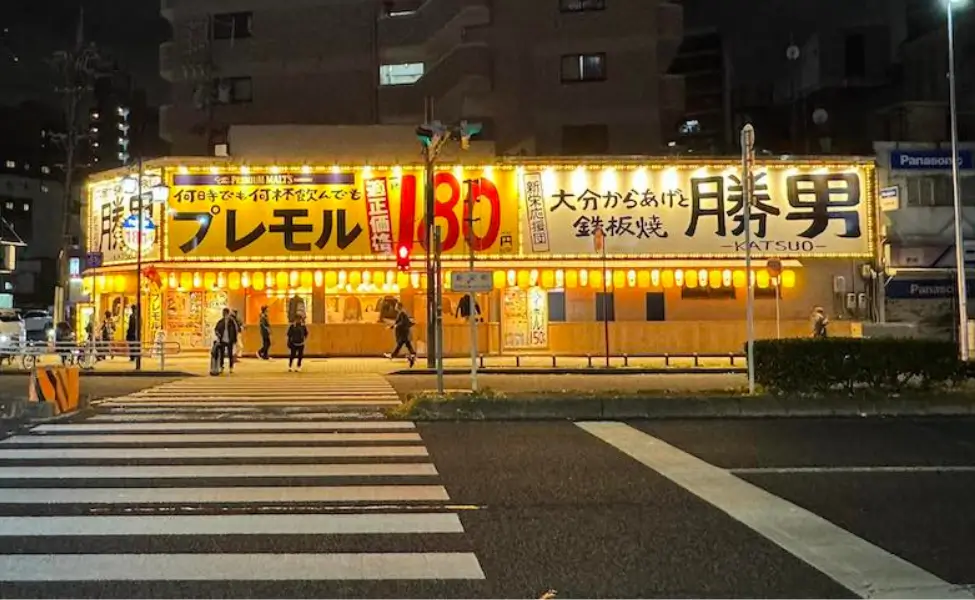
An izakaya (居酒屋) is a casual Japanese pub where food arrives in small, tapas-style plates meant for sharing.
To navigate one without speaking Japanese, say “Sumimasen” to get the waiter’s attention, point to the menu, and know that you’ll sometimes be charged a mandatory seating fee called an otoshi, which comes with a small appetiser.
Japan has thousands of izakayas, and once you’ve been to one, you’ll want to go back.
They’re loud, sociable, and built around the idea of drinking with food rather than dining with drinks. That distinction matters, and it shapes everything about how an izakaya works.
Some tourists avoid them out of anxiety.
But that anxiety is mostly unfounded.
And knowing three or four things in advance is enough to walk in confidently and have a genuinely good night.
I’ve spent three decades eating my way through izakayas across Japan.
From budget chain spots in Nagoya to tiny local places with no English on the wall, this is what you actually need to know.
The Izakaya Cheat Sheet (Your First Visit Script)
- Walk in and hold up your fingers for the number of people in your group.
- Sit down and immediately order a drink (say “Toriaezu nama” for draft beer).
- Accept the small appetiser (otoshi) without arguing. It’s a mandatory table charge.
- When ready for food, say “Sumimasen” loudly to call the waiter over.
- Point at the menu and hold up fingers for the quantity you want.
- When finished eating, cross your index fingers into an X to ask for the bill.
The Unspoken Rules of an Izakaya
Every izakaya runs on a set of unwritten expectations.
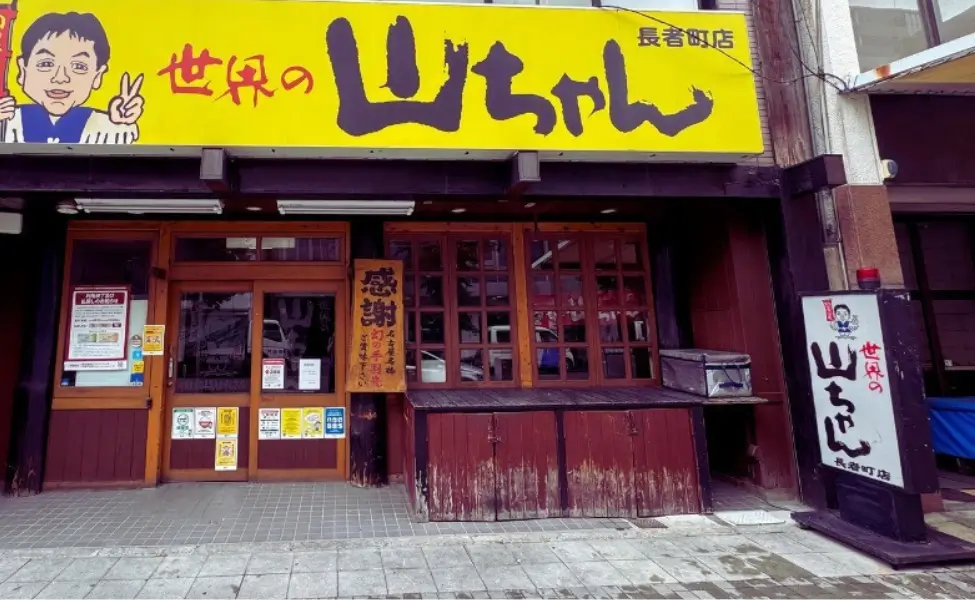
Most of them are easy once you’re aware of them.
But walking in without knowing them is how tourists end up confused and slightly overcharged.
The First Drink Rule
When you sit down at an izakaya, the expectation is that you order a drink straight away.
And the good news is that you don’t even need to think about it.
“Nama” is the phrase to know.
It means roughly “a draft beer”.
If there are three of you and you cannot speak Japanese, then say NAMA and hold up three figners.
Say it, get your drinks, then take your time with the food menu.
The Otoshi (Table Charge)
When your drinks arrive, a small dish will sometimes appear alongside them.
This is the otoshi.
It’s a mandatory table charge that covers a small appetiser, added automatically to your bill per person.
Tourists frequently think they’re being overcharged when they spot it on the receipt but it’s completely standard practice.
Most otoshi cost between 300 and 700 yen per person, and the dish itself varies from pickled vegetables to a small tofu preparation or a portion of edamame.
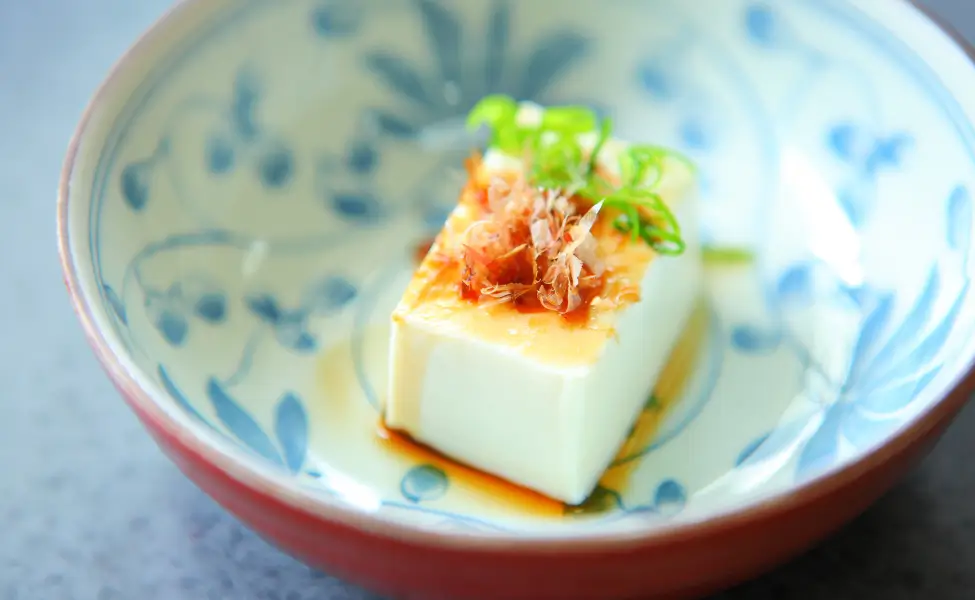
Technically you can refuse it, but you need to do so the moment the dish arrives at the table, not at the end of the meal.
In practice, very few places will let you off the hook, and attempting to decline can create an awkward moment.
Think of it as a cover charge that comes with a snack, accept it with good grace, and move on.
No Tipping
Japan doesn’t have a tipping culture, and this applies fully at izakayas.
Leaving money on the table after your meal won’t be appreciated in the way you might expect.
In some cases it can cause mild confusion or even embarrassment for the staff.
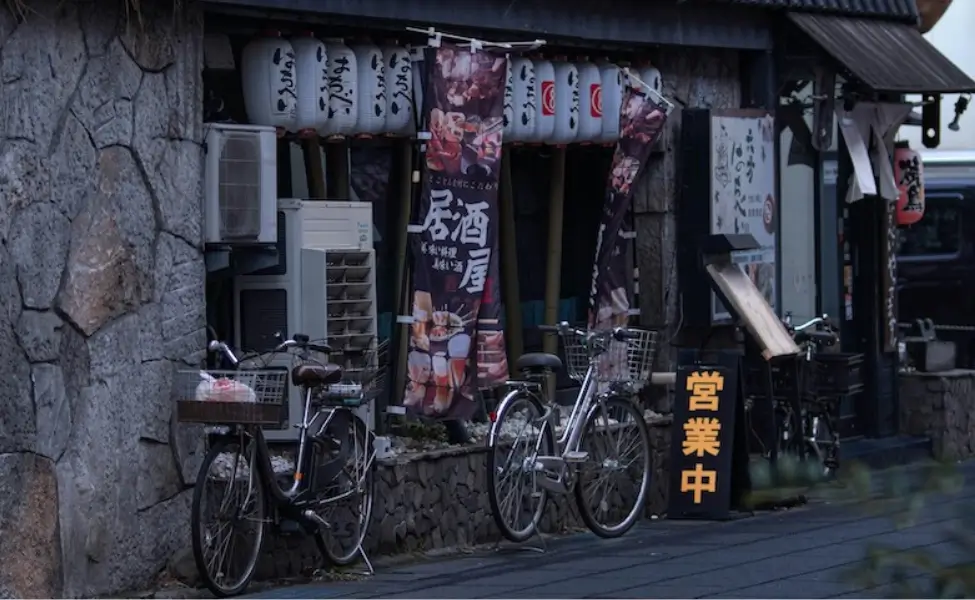
The service is included so leave nothing extra and don’t feel awkward about it.
I have seen some people on Social media sharing images of places asking for tips.
Funnily, these are in English and only for tourists that isnst on pushing their own culture on the Japanese.
Avoid these places.
How to Order (Even if There’s No English Menu)
Ordering at an izakaya is far less stressful than it sounds.
The tools available to you range from full iPad menus in English to simply pointing at the table next to yours.
Say Sumimasen
Staff at an izakaya will not come to check on you.
This isn’t rudeness.
It’s simply how the system works, and you’re expected to call them over when you’re ready.
The word is “Sumimasen” (すみません), which means “excuse me.”
Say it clearly toward any passing member of staff and they’ll come straight over.
And if you’re not confident with the pronunciation, a raised hand and eye contact works just as well in a noisy izakaya.
Touchscreen and iPad Ordering
Many chain izakayas have tablet ordering systems built into the table, and plenty of them offer English as a language option.
You tap, you confirm, and the food appears.
Even in chains without an English option, the photographs on the touchscreen make it easy enough to point and press.
Most items have a picture.
The Point-and-Hold Method
In a smaller local izakaya, there may be no tablet and no English anywhere.
When the staff member arrives, point clearly at the item on the menu.
Hold up the number of fingers for the quantity you want.
One finger for one, two for two.
Most izakaya staff are completely accustomed to this and will respond without any fuss.
If you’re genuinely unsure what to order, glance at the next table.
Pointing at their food and saying “Are to onaji mono” (the same as that) is completely accepted and often leads to a very good meal.
Chain Izakayas vs. Local Red Lantern Spots
Choosing between a chain izakaya and a local neighbourhood spot is really a question of how much uncertainty you’re comfortable with.
Both have real appeal.
The Chain Route
Chain izakayas are built for accessibility.
Prices are low, menus are standardised, and the ordering systems are usually touchscreen.
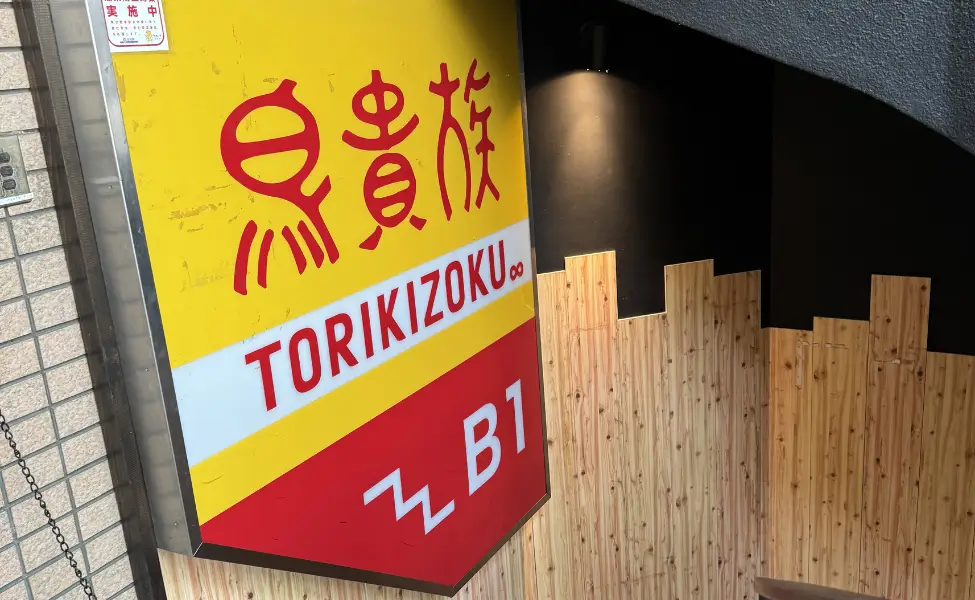
Many have English-language menus available on request.
Torikizoku in particular operates on a flat per-item pricing model, which makes budgeting easy.
It also doesn’t charge an otoshi, so what you order is all you pay for.
Because the experience is consistent across locations, there’s very little that can surprise you.
The Local Red Lantern Spots
The places with a red lantern (赤提灯, aka-chochin) hanging outside the entrance are something else entirely.
These are neighbourhood izakayas, often run by the same family for years.
Menus are handwritten, the atmosphere is lived-in, and the food is frequently excellent.
But they do require a slightly different approach.
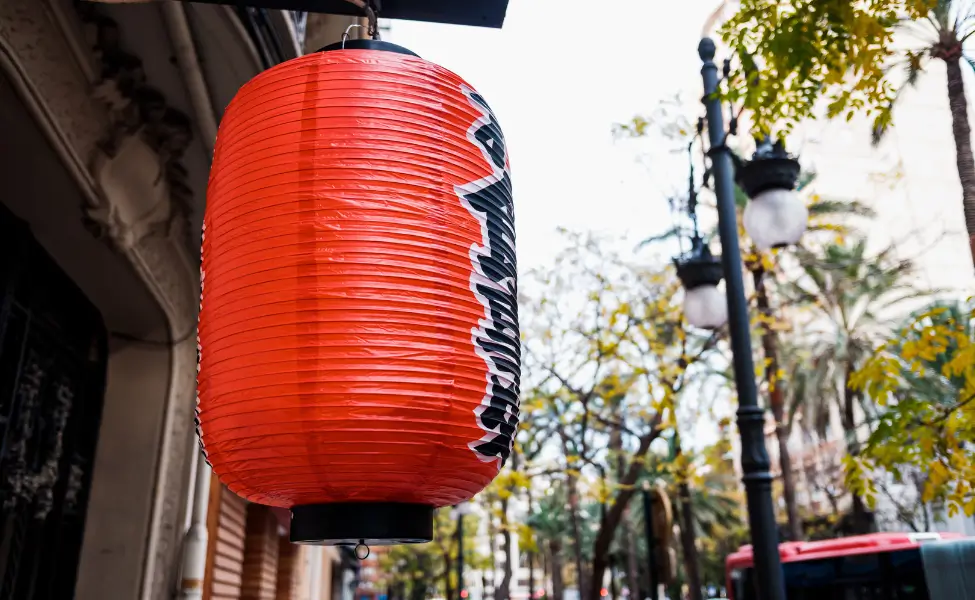
Before you commit, it’s worth pausing at the entrance and taking a quick look inside.
If there’s an English menu visible, or if the staff look relaxed when they notice you, that’s a good sign.
If the staff suggest dishes, point you toward the handwritten daily specials, or offer a set assortment, go with it.
Pointing at the specials board and saying “Osusume” (recommendation) often leads to the best meal of the trip.
One important difference worth knowing before you choose.
While major chains have largely banned indoor smoking or restricted it to sealed booths, many small independent izakayas still allow smoking at the table.
If you’re sensitive to smoke, stick to the chains or peek inside a local spot to check the air quality before you commit to sitting down.
What to Eat at an Izakaya
Izakaya menus can be long and slightly overwhelming.
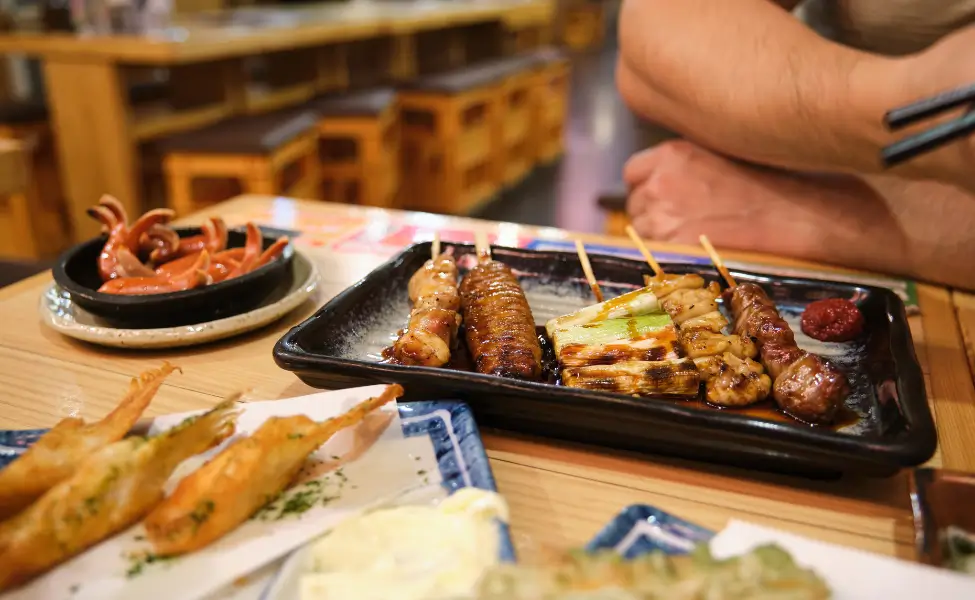
At some you can find odd or weird delicacies like this:

Honestly, they were tasty despite the appearance.
These are the dishes worth knowing before you sit down.
- Yakitori (grilled chicken skewers): Order shio (salt) or tare (sweet soy sauce).
- Karaage (Japanese fried chicken): Usually served with mayonnaise and a lemon wedge.
- Edamame (salted boiled soy beans): A default starter at most izakayas.
- Sashimi moriawase (assorted raw fish): Quality is often better at local spots.
Yakitori
Yakitori is grilled chicken on a skewer and it’s the dish most closely associated with the izakaya experience.
When you order, you’ll usually be asked whether you want shio or tare.

Shio means salt, which lets the flavour of the chicken come through cleanly.
Tare is a sweet soy-based glaze, stickier and richer. Both are worth trying, and ordering a mix of the two is perfectly normal.
Different parts of the chicken appear as separate options on the menu.
- Momo is thigh meat.
- Negima is chicken with spring onion.
- Tsukune is a chicken meatball.
- And kawa is crispy skin, which is either exactly what you want or very much not, depending on who’s eating.
Karaage
Japanese fried chicken, karaage, is consistently one of the most ordered dishes at any izakaya in Japan.
It’s marinated in soy, ginger, and garlic before frying, which gives it a depth of flavour noticeably different from Western fried chicken.
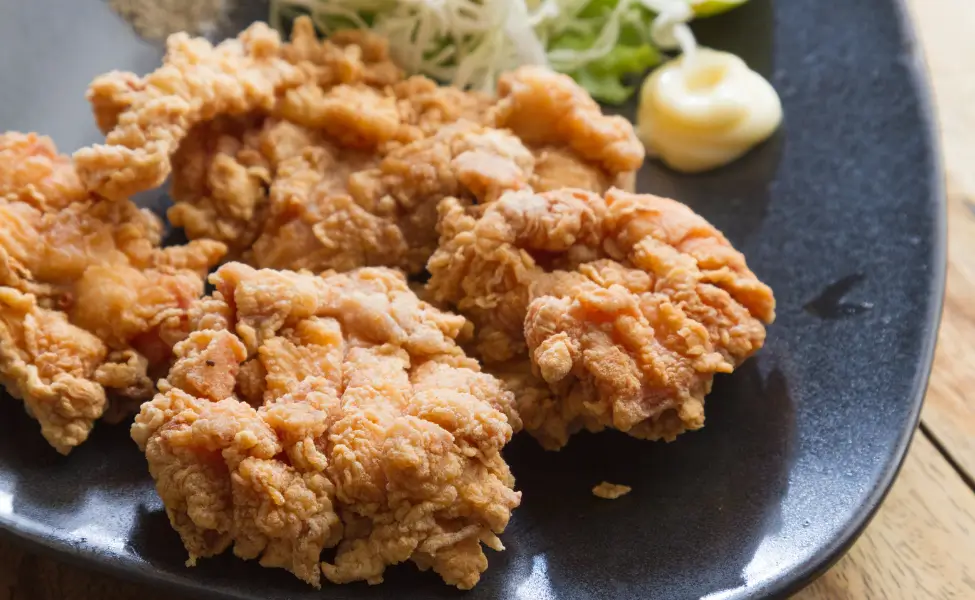
It arrives with a wedge of lemon and often a small pot of mayonnaise.
Squeezing the lemon over the top before eating is standard.
And the mayonnaise is Japanese-style, which is richer and slightly sweeter than what you might be used to at home.
Edamame
Edamame are salted boiled soy beans still in the pod, and they’ll show up at most izakaya tables whether you order them or not.
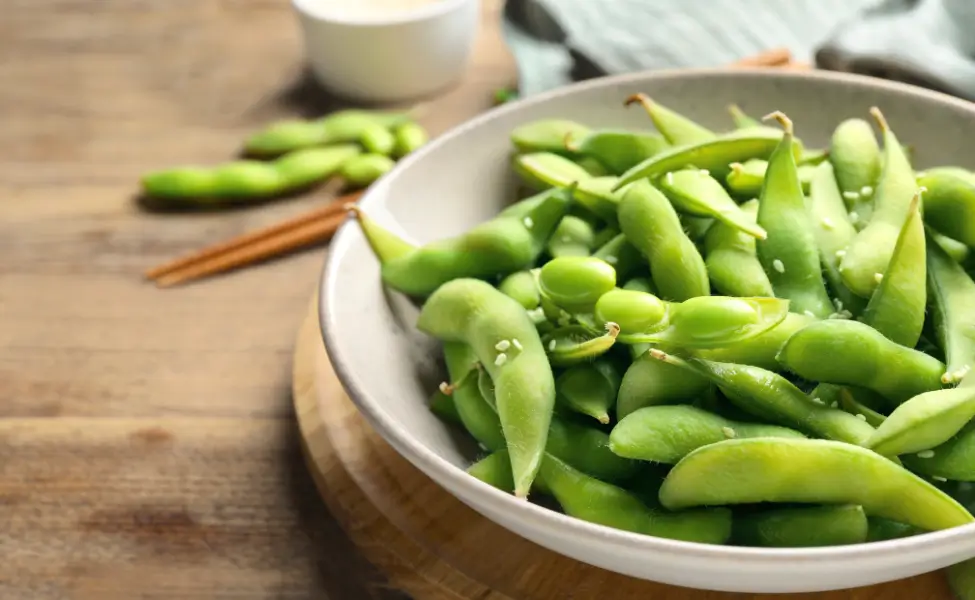
They’re cheap, they’re snackable, and they’re a good thing to have arriving while you’re still deciding on everything else.
You eat them by squeezing the beans directly from the pod into your mouth. Don’t eat the pods themselves.
Sashimi Assortments
Most izakayas offer a sashimi moriawase, which is an assorted plate of sliced raw fish.
Chain izakayas tend to offer a reliable but fairly standard selection.
At a good local spot, it can be genuinely excellent and well worth ordering.
Dip the fish lightly in soy sauce, with a small amount of wasabi mixed in if you want it.
But there’s no obligation to use wasabi, and most sashimi is worth tasting once without it first.
Izakaya FAQ
Yes, but timing matters. In the early evening, usually before 8:00 PM, most izakayas are family-friendly enough, and chains like Torikizoku actively welcome families. Later in the evening, as the alcohol flows and the noise climbs, they become less suitable for children. Some izakayas also allow indoor smoking, which makes them unsuitable for kids regardless of the hour. Check whether the izakaya has a non-smoking section before you go if you’re bringing children along.
Yes. Izakayas are generally safe environments, and solo dining and drinking is completely normal in Japan. That said, sitting at the counter rather than taking a table alone tends to feel more comfortable. Counter seating puts you close to other customers and staff, making the whole experience feel more sociable and less exposed. If you’re visiting a local spot on your own, arriving earlier in the evening when it’s quieter is also worth considering.
Cross your index fingers to make an X shape and hold them up toward a staff member. This is universally understood across Japan as a signal for the bill. In some smaller izakayas, you’ll be given a clipboard with your tally during the meal and asked to take it to the register at the front when you’re ready to leave. Either way, you won’t need any Japanese to make it happen.
Final Thoughts
You don’t need fluent Japanese to enjoy an izakaya.
You just need a few basic phrases, a willingness to point, and an understanding that the immediate first drink, the otoshi fee, and the shared plates are simply part of the rhythm.
Once you accept that rhythm, izakayas stop being intimidating and quickly become the best part of eating in Japan.
