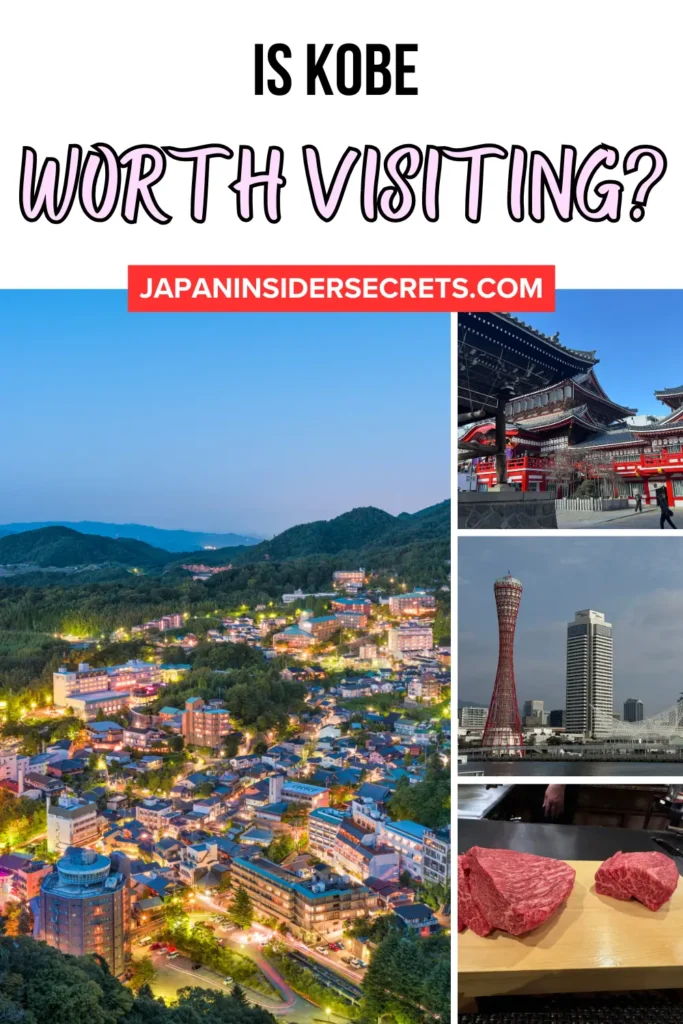
I first came to Japan in 2000. A year later, in 2001, I visited Kobe for the first time and absolutely loved it. Since then, I’ve been back to Kobe and the surrounding areas of Hyogo Prefecture many, many times. I’ve always said that if I could turn the clock back, I’d probably move to Kobe instead of Nagoya.
I do love Nagoya, and I’m settled here now, but Kobe has always held a special place for me.
As far as I’m concerned, Kobe is worth visiting.
Kobe is best when:
- You want an easy day trip from Osaka or Kyoto without a complicated route
- You care about food, especially Kobe beef and the harbourside dining scene
- You like walkable neighbourhoods and a calmer pace over a long sightseeing list
- You want a city that mixes food, harbour views, hills, and easy side trips
Skip Kobe if:
- Your trip is already tight and only one extra city realistically fits
- You want temples, major landmarks, or classic bucket-list sights more than atmosphere
- You’d rather put that day into Osaka, Kyoto, or Nara instead

The Straight Answer For Your Itinerary
Kobe is definitely worth visiting if you are not focused on super famous landmarks, temples, and shrines. You can visit in one full day if your base is Osaka or Kyoto, but honestly, I’d try to spend a couple of days there at minimum if you can.
It’s not just Kobe beef and Chinatown that are the big pulls. There are plenty of other areas. Kobe has a great harbour, the food is good, it’s got a much calmer pace than places like Kyoto and Osaka. And while there are some tourists, it’s nowhere near as crowded as those aforementioned areas.
The main thing is to understand what Kobe is good for. It is not the place I’d choose if I wanted one huge temple day, or a packed list of famous sights. It is much better as a food, harbour, walking, and scenery stop.
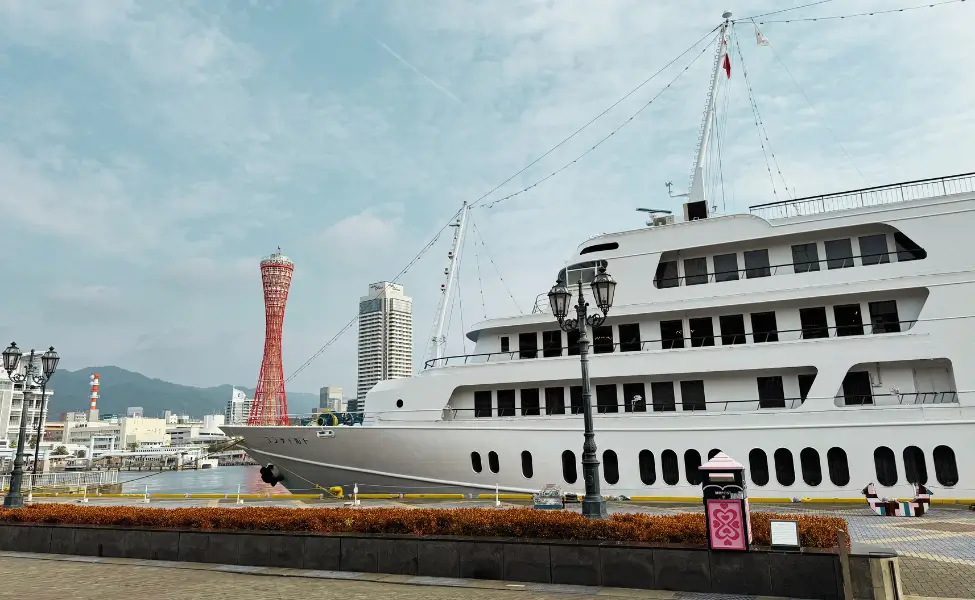
That is why Kobe works so well as either a day trip from Osaka, or as a one-night stop if you want to slow the pace down.
When Kobe Earns A Day In Your Plan
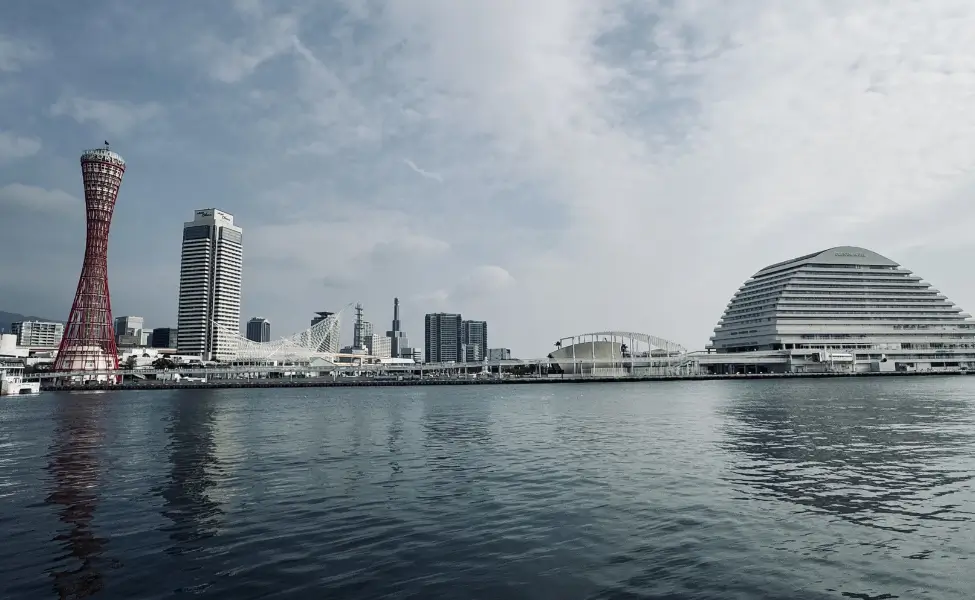
Kobe is an easy city to enjoy without packing the day too tightly. You can have a Kobe beef dinner, walk along the harbour, visit a shrine in the middle of the city, and head up into the hills for the view over the city.
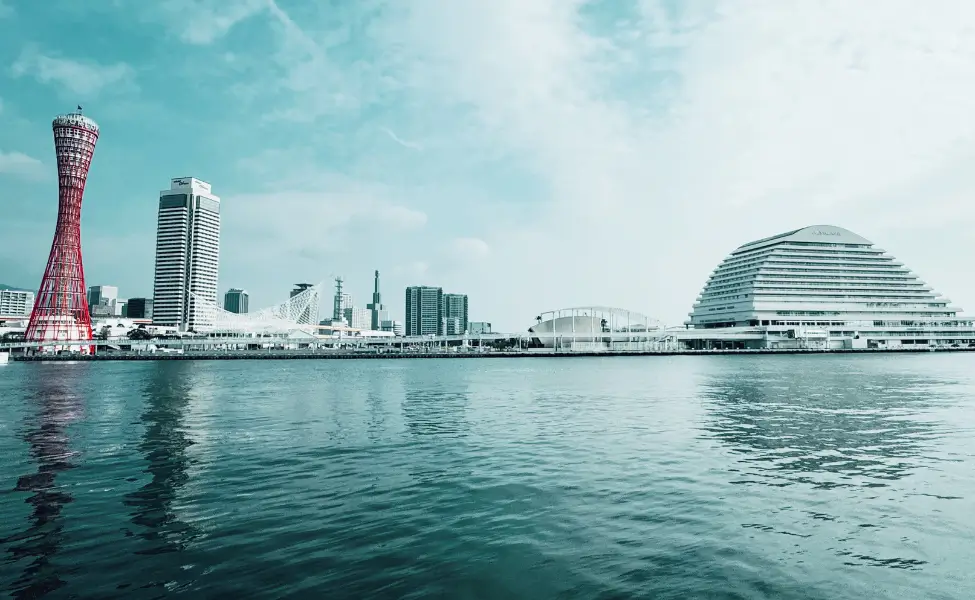
That alone can make the trip feel worthwhile. You do not need to rush around five different places just to justify being there.
That is also what makes Kobe feel different from Osaka or Kyoto. It is not only about the steak. It is the mix of food, sea, hills, city views, and easy walking that gives Kobe its appeal.
Kobe is easy to move around. Sannomiya works as the main base, and from there you can reach Motomachi, Nankinmachi, Harborland, Kitano, and several transport links without making the day feel complicated.
What Kobe Actually Feels Like
Kobe’s atmosphere is the part most articles describe vaguely, so here’s the specific comparison.
Calmer Than Osaka, Less Crowded Than Kyoto’s Centre
Osaka has a much faster, louder feel, with neon, crowds, and late-night energy that can be fun but also tiring.
Kobe feels calmer without feeling dull. It still has restaurants, bars, shopping streets, and a working port, but the pace is easier and the noise level drops.
Kyoto has the opposite problem in its busiest areas. Around the famous temples and historic streets, the crowds can build early and stay heavy for much of the day.
Kobe rarely feels like that. Most visitors pass through or only stay briefly, so the city never seems to reach the same level of pressure as Osaka or Kyoto.
Compact Enough To Walk Most Of It
Sannomiya sits at the centre of nearly everything. It’s the point where the JR, Hankyu, Hanshin, and subway lines all meet. From there, a short walk or a one-stop ride reaches Motomachi, the harbour, or the base of the hills.
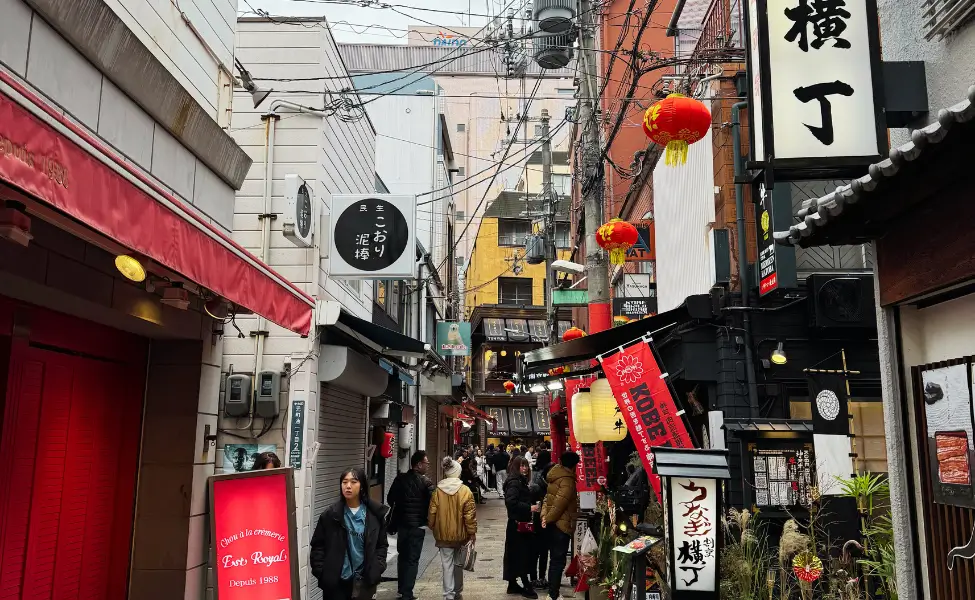
Most first-time visitors can cover the worthwhile central areas on foot, filling gaps with a short train ride, subway ride, or ropeway when needed.
You do not need to treat Kobe like Tokyo, where every move can feel like a separate journey. In central Kobe, a lot of the day can happen in a fairly simple line.
The Two Things Worth Building A Day Around
Kobe’s case starts with food and scenery, but it does not end there.
The food side is obvious. Kobe beef gets most of the attention, and that is fair enough, but there is also Chinatown, cafés, harbourside restaurants, bakeries, and plenty of easy places to stop without making every meal feel like a big event.

The scenery is what gives the city more shape. Kobe has the sea on one side and the mountains behind it. That makes a simple day feel more varied than just walking from shopping street to shopping street.
That is why the best Kobe plan has a bit of movement to it. Start around Sannomiya or Kitano, move through Motomachi and Nankinmachi, then finish around the harbour or in the hills.
The Kobe Beef Question, Answered With Numbers
Kobe beef has its reputation for a reason, but it is not a cheap meal. For a proper teppanyaki dinner, you are usually looking at around 8,000 to 30,000 yen per person, depending on the cut and the restaurant.
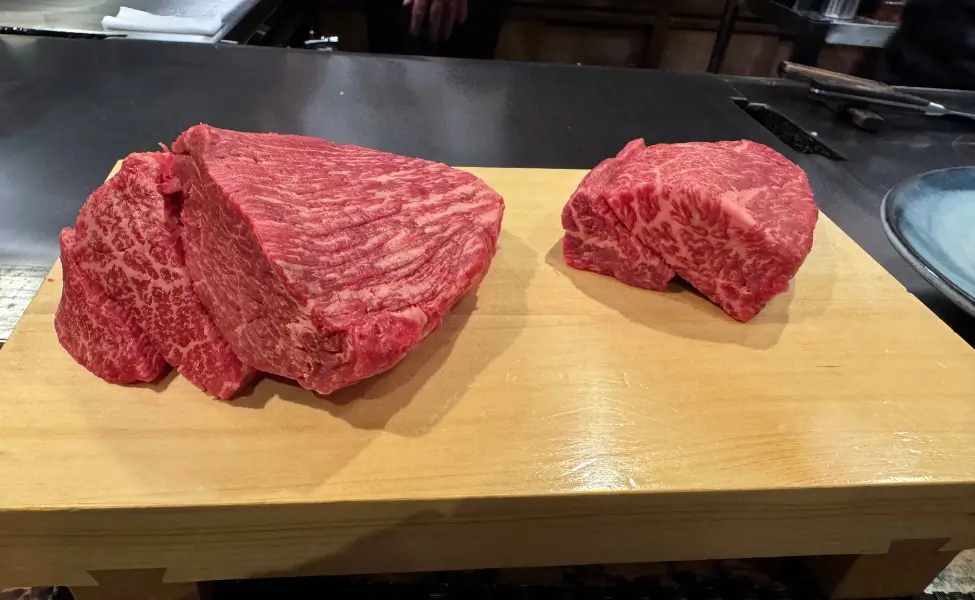
The higher end of that range buys a full course rather than a single steak. That range does more to answer is Kobe beef worth it than opinion ever could, since it lets you decide against your own budget.
I would treat Kobe beef as a once-per-trip meal rather than the whole reason to visit. It can be the highlight of the evening, but it should not be the only thing in the plan.
Where To Actually Eat And Walk
Five neighbourhoods do most of the work, each suited to a different part of the day.
- Sannomiya: the base for transport, food, shopping, and an evening Kobe beef dinner
- Motomachi: one stop from Sannomiya, best for an unhurried daytime stroll
- Nankinmachi: Kobe’s compact Chinatown, good for street food rather than deep sightseeing
- Harborland: the waterfront mall and harbour view, especially good after dark
- Kitano: the old foreign settlement houses, worth a half-day if you enjoy architecture
You do not need to treat all of these as separate missions. Sannomiya, Motomachi, Nankinmachi, and Harborland can fit together naturally if you are happy to walk and take the day slowly.
The Places That Make Kobe More Interesting
This is the part that often gets skipped when people reduce Kobe to beef, Chinatown, and a harbour walk. Those things matter, but they are not the whole city.
Ikuta Shrine
Ikuta Shrine is one of the easiest additions to a Kobe day because it sits right in Sannomiya. You do not need to build half the day around it, and that is part of the appeal.
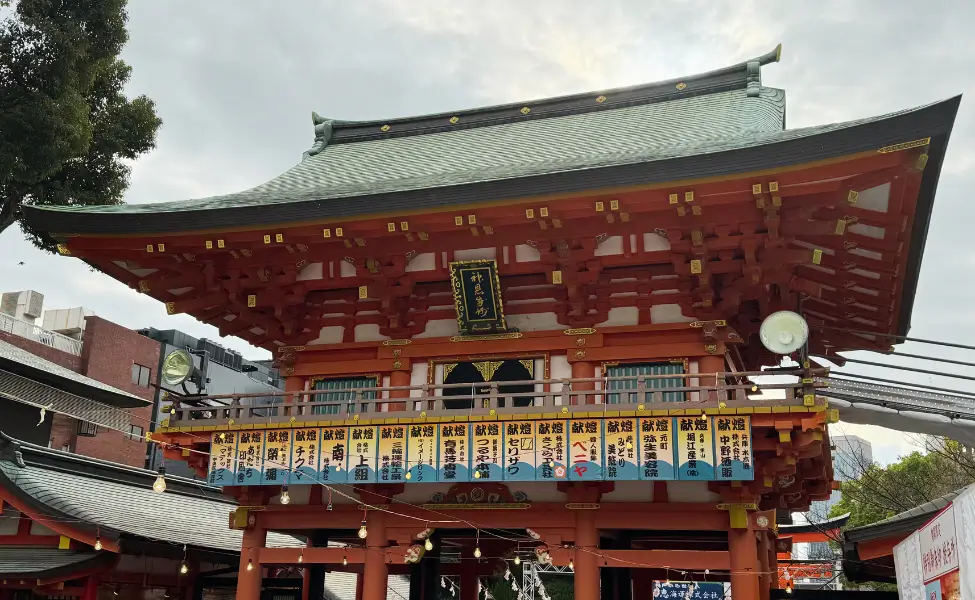
You can stop there before lunch, after coffee, or before walking towards Motomachi. It gives the centre of Kobe a small historical stop without sending you out of the way.
If you are expecting a huge Kyoto-style temple or shrine experience, this is not that. But as a short city-centre stop, it adds something Kobe needs. It breaks up the shopping, food, and harbour side of the day.
Harborland And Mosaic
Harborland is worth more than a throwaway mention. It is one of the places where Kobe’s port-city feel actually comes through.
The Mosaic side is the best part for most visitors. You get restaurants, shops, the harbour view, and an easy place to walk without needing a strict plan. It is especially good later in the day when the lights start coming on around the water.
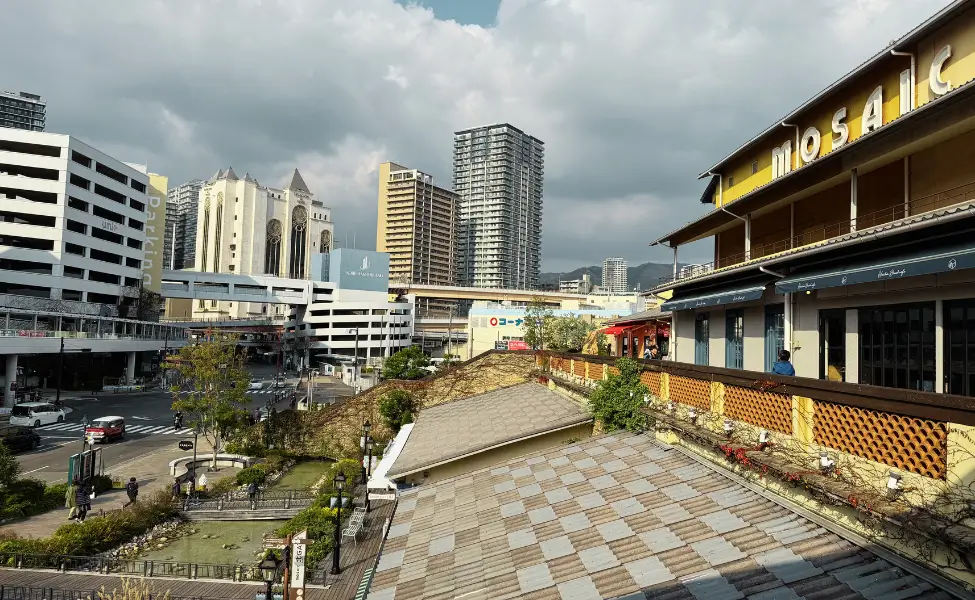
Walk, eat, take photos, sit by the water, then decide whether to stay for dinner or move back towards Sannomiya.
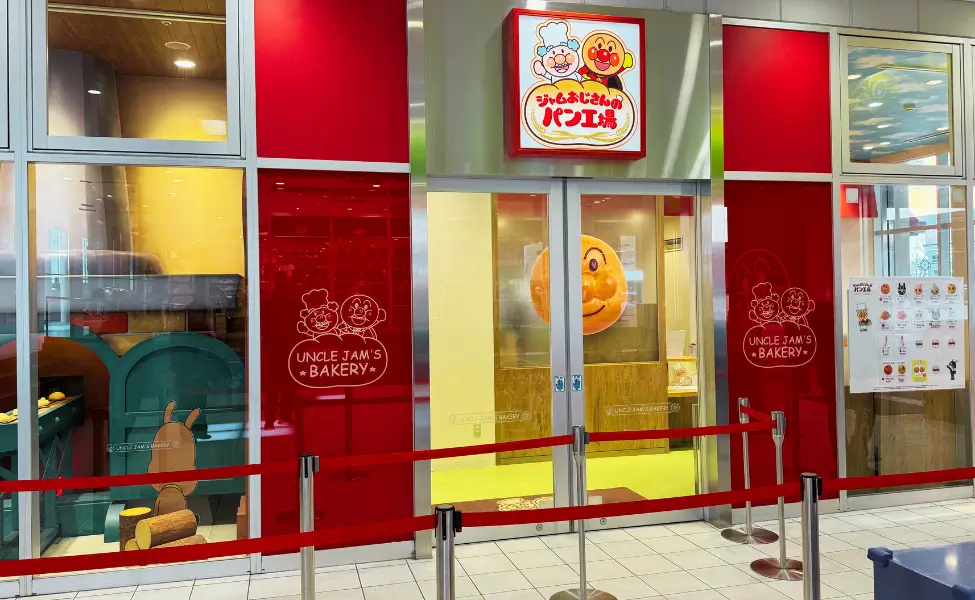
Kobe Anpanman Children’s Museum And Mall
If you are travelling with young children, Kobe becomes easier to recommend because of the Anpanman place near Harborland.
Adults without kids can ignore it, but families should know it exists. It gives children something that is actually for them, rather than another adult-friendly walk where they are expected to behave and keep moving.
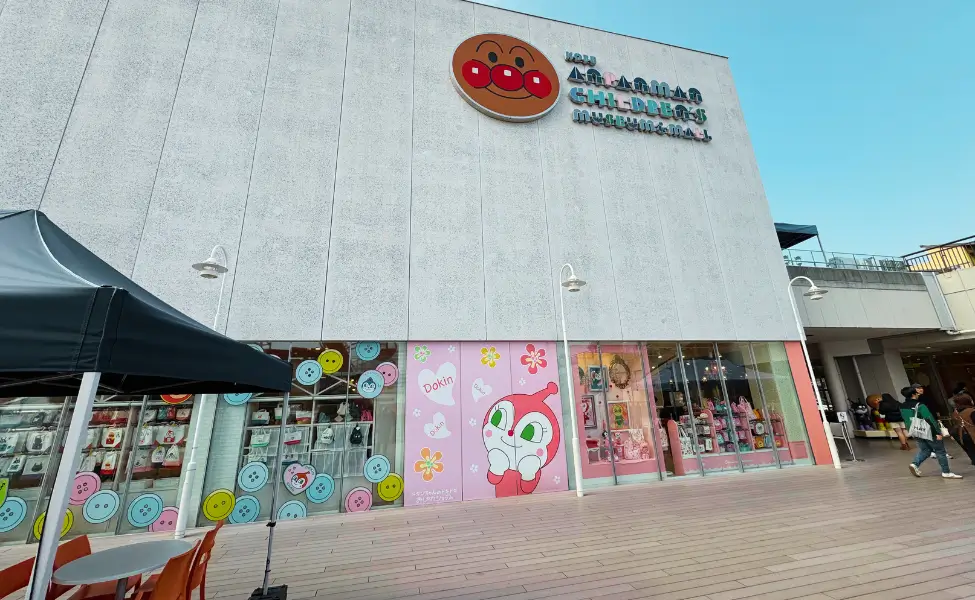
The location also helps. You can combine it with Harborland and Mosaic, which means the family part of the day does not pull you across the city.
Kitano
Kitano is the area I’d include if you like old buildings and foreign settlement history. It sits uphill from Sannomiya and has a very different feel from the port and shopping areas.
The old Western-style houses are the main reason to go. Not everyone will care enough to pay to enter several of them, but the area itself is still worth a look if you want Kobe to feel less like a simple food stop.
It also pairs well with a slower morning. You can start around Sannomiya, walk uphill into Kitano, then come back down for lunch or continue towards Motomachi.
Rokko-san, Mt. Maya, And The Mountain Side Of Kobe
Kobe’s mountain side needs separating because people often talk about Nunobiki, Mt. Maya, and Rokko-san as if they are interchangeable. They are not.
Nunobiki
Nunobiki is the easiest mountain view for most visitors. The ropeway leaves from beside Shin-Kobe Station, so it works well if you arrive by Shinkansen or already plan to be in that area.
It gives you a quick view over the city without turning the day into a full mountain trip. If time is limited, this is the easiest way to add scenery without making the route awkward.
Mt. Maya
Mt. Maya is different. The famous night view is from Kikuseidai, and this is the one linked with Japan’s Three Major Night Views, along with Mt. Hakodate and Mt. Inasa in Nagasaki.
Getting there from Sannomiya takes more effort, with a bus, cable car, and ropeway, so it is better when the night view itself is the main reason for going.
Nunobiki works well if you are short on time or already near Shin-Kobe. Mt. Maya is the better choice if you want the proper night view experience.
Rokko-san
Rokko-san is better when you want more than a quick viewpoint. It is the mountain area to think about if you want a half-day rather than a short stop.

This is where Kobe starts to feel less like a simple city day and more like a city-and-nature trip. You can go for views, gardens, cafés, and a slower mountain atmosphere before coming back down into the city.
I would not try to squeeze Rokko-san into a packed first-time Kobe day unless you are happy to drop something else. But if you have one night in Kobe, or you are returning to the city, it makes much more sense.
Arima Onsen: The Easy Add-On If You Have More Time
Arima Onsen is one of the best reasons to give Kobe more than a quick day trip.
It sits on the other side of the Rokko range and gives you something completely different from the harbour, Chinatown, and Sannomiya. Instead of another restaurant or shopping street, you get an old hot spring town close enough to combine with Kobe.

This is where an overnight starts to make more sense. You could spend one day in central Kobe, enjoy dinner and the harbour, then use the next day for Rokko-san or Arima Onsen.
You can technically rush more into one day, but that misses the point. Kobe is better when you let the city breathe a little.
Kobe Versus Osaka, Kyoto, And Nara
Osaka has more energy and a wider range of food. Kyoto has more famous sights packed into a smaller area. So if you only have one spare day, those two cities usually give you more to work with than Kobe.
Nara is closer to Kobe in scale. Both work well as a calmer day trip built around one or two main highlights. Nara probably has the edge if you want the classic Japan photos, especially around the deer park and temple grounds.
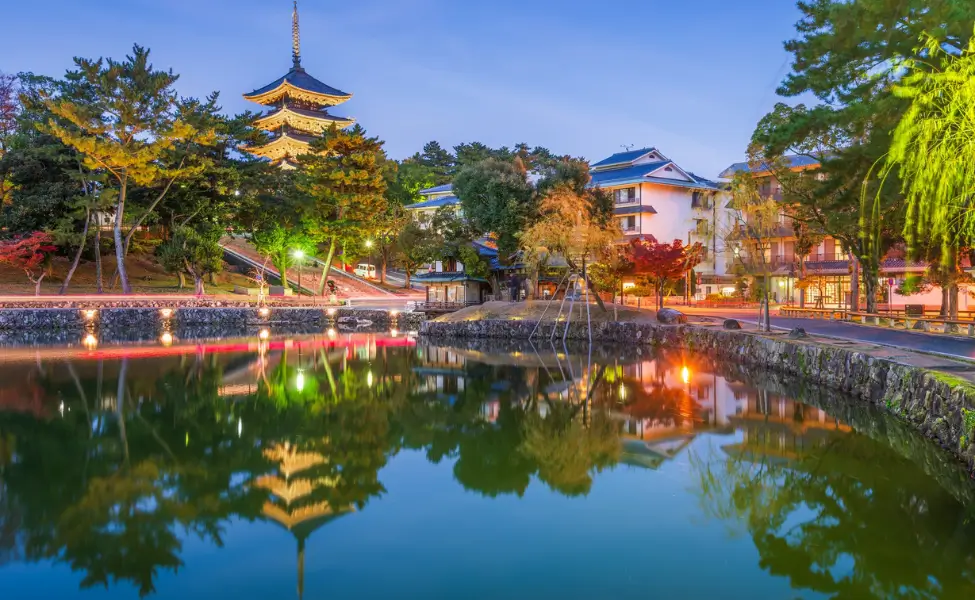
Kobe offers something different. It is less about ticking off major sights and more about food, harbour views, hillside scenery, and a slower pace.
That does not make Kobe weaker. It just means you need to choose it for the right reason.
Day Trip, Overnight, Or Skip It Entirely
Three honest options exist for fitting Kobe into a Kansai trip, and only one of them wastes time.
| Option | Best for | What you’d miss |
|---|---|---|
| Day trip from Osaka or Kyoto | Visitors short on time who still want one Kobe beef meal and a look at the harbour | A relaxed evening, the night view from the hills, and Arima Onsen |
| One night in Kobe | Visitors who want dinner, a sunset walk, and breakfast before moving on | Very little, since one night covers the city well |
| Two or more nights | Repeat visitors, food-focused travellers, or people adding Rokko-san and Arima Onsen | Nothing, though most first-time visitors won’t need that much time |
Both day trip routes start from Sannomiya. Rapid JR services reach Osaka Station in about twenty-one minutes and Kyoto Station in about fifty-two minutes, so either base works without an early start.
Himeji sits even closer, about forty minutes away on the Rapid train. The train isn’t the obstacle for a combined Kobe and Himeji day. Himeji Castle deserves more than a quick look, and Kobe works best when you still have room left for dinner or the evening view.

A few mistakes show up in nearly every overpacked Kansai itinerary.
- Treating Kobe as a full sightseeing city instead of a food and pace stop
- Booking too much time there and shortening Osaka or Kyoto without meaning to
- Staying outside Sannomiya or Motomachi and losing time on transit you didn’t need
- Assuming you’re finished planning once you’ve booked the Kobe beef dinner
- Trying to add Rokko-san or Arima Onsen without giving them enough time
Who This Plan Actually Suits
Kobe works best for food-focused travellers, couples who want one slower day in the middle of a busy trip, families who want an easy harbour area with something for younger children, and repeat visitors to Kansai who have already seen the main sights.

If your goal is to see as many famous landmarks as possible in a short time, you are probably better giving that day to Kyoto or Osaka instead. That is a perfectly reasonable choice.
But if Kobe does feel right for your trip, the next step is to plan it properly. A one-night Kobe itinerary can help you enjoy the city at the right pace without giving it more time than it needs.
Frequently Asked Questions
Yes, but only as one day or one night rather than a longer stay. The case for Kobe rests on food, harbour views, mountain scenery, and pace, not on a long list of famous landmarks. If your time in Kansai is already tight, Osaka and Kyoto should probably come first. But if you have space for one calmer day, Kobe is easy to justify.
One full day or one overnight is enough for most first-time visitors. A day trip works if you mainly want Kobe beef, Chinatown, the harbour, and a general feel for the city. One night is better if you want the evening view, a slower dinner, or time for Rokko-san or Arima Onsen.
Most visitors find it worth the price once, as part of a single special meal rather than a daily habit.
A full teppanyaki meal typically costs between 8,000 and 30,000 yen per person, which is enough to confirm the reputation rather than a tourist trap.
Technically yes, since Himeji sits about forty minutes from Sannomiya by Rapid train, closer than Kyoto. The real limit isn’t the train. It’s that Himeji Castle deserves more than a rushed visit, so treat the combination as a deliberate trade-off rather than a relaxed double feature.
It feels calmer rather than boring, since the energy comes from food and scenery instead of crowds and landmarks. Visitors expecting Osaka’s intensity sometimes read that calm as dull, but it’s a different kind of city rather than a weaker one.
Yes, especially if you keep the plan simple. Harborland and Mosaic are easy areas for walking, eating, and taking breaks, and the Kobe Anpanman Children’s Museum and Mall gives younger children something aimed at them.
Yes, if you have more than a quick day trip. Arima Onsen makes the most sense when you have one night in Kobe or you are happy to spend part of the next day outside the city centre. It gives the trip a different feel and pairs naturally with Kobe’s mountain side.
Rokko-san is worth visiting if you want a proper mountain-side add-on rather than just a quick view.
For a short Kobe day, Nunobiki is easier. For a night view, Mt. Maya is the stronger choice.