
Why do so many travellers skip onsen day trips even though some are only thirty minutes from a major station?
This list shows how easy it is to reach places like Yunokawa, where a tram ride takes exactly thirty minutes.
I’ll explain what each type of mineral water feels like.
It also gives clear directions so you can relax instead of planning.
If you want a simple escape, these ten spots can get you there fast.
Onsen Water
Before choosing a destination, it helps to understand what the different waters actually feel like.
The minerals in the water define the experience.
Chloride Springs (Sodium, Calcium): These are the most common.
The salts in the water create a fine layer on your skin, which helps prevent sweat from evaporating and keeps you feeling warm long after you leave the bath.
Perfect for a cold day.
Simple Alkaline Springs: Known as bijin-no-yu or “waters of beauty,” these springs have a smooth, slightly soapy feel.
They help to gently exfoliate the skin, leaving it feeling supple and refreshed.
Sulphur Springs: You will know these by their distinct, egg-like aroma.
Sulphur water is excellent for softening and healing skin and is often sought out for its therapeutic reputation.
Iron-Rich Springs (Kinsen): These waters are rich in iron, which oxidises and turns the water a deep, rusty brown.
They are known for being intensely warming.
Radon Springs: These springs contain trace amounts of natural, harmless radon.
The mild radioactivity is believed to stimulate the body’s cells and is traditionally sought after for soothing joint pain.
For more onsen articles, check these out:
- Sento vs Onsen: What is the difference?
- Nishiyama Onsen Keiunkan: The World’s Oldest Hotel is in Japan
- 7 Best Onsen Towns in Japan You Must Visit
- Onsen Etiquette: Your Guide to Japanese Hot Spring Culture
From Hokkaido’s Cities
Yunokawa Onsen, Hakodate
Just a short tram ride from the city centre, Yunokawa offers a classic seaside onsen experience.
Its sodium-calcium chloride water is famous for its heat-retaining properties, leaving you feeling cosy for hours.

Some inns even feature a reddish, iron-rich water alongside the more common clear variety.
The best part?
Many outdoor baths, known as rotenburo, face the Tsugaru Strait.
In winter, you can watch snowflakes fall into the steam around you while listening to the ocean.
Best for: A quick, classic seaside soak with great views.
Getting there: Take the city tram from Hakodate Ekimae (in front of the main station).
The ride to the Yunokawa Onsen stop takes exactly 30 minutes.
Jozankei Onsen, Near Sapporo
Situated in a forest valley just an hour from Sapporo, Jozankei is a true mountain retreat.
Its sodium chloride spring is wonderfully warming, making it a favourite for soothing tired muscles after a day of exploring.

The town lines the Toyohira River, and you can follow short walking paths to enjoy the scenery before your bath.
For a unique local treat, look for onsen tamago stands where you can cook eggs in the naturally hot spring water.
Best for: A scenic mountain escape close to the city.
Getting there: The Kappa Liner direct bus from JR Sapporo Station is the easiest option, taking about 60 minutes.
From Sendai in the North
Akiu Onsen
One of Sendai’s most beloved retreats, Akiu Onsen has a history stretching back centuries.
The chloride springs here are perfect for warming up on a cold day.
Many inns welcome day visitors with plans that include a soak and a delicious lunch featuring local ingredients.

For a memorable experience, combine your onsen visit with a trip to the nearby Akiu Great Falls, a powerful 55-metre waterfall that is especially dramatic when surrounded by winter snow.
Best for: Combining a historic onsen with impressive natural sights.
Getting there: From JR Sendai Station, the Miyagi Kotsu bus takes around 50 minutes to reach the Akiu Onsen Yumoto bus stop.
Sakunami Onsen
Located along the Hirose River, Sakunami is famous for its gentle, skin-softening water.
Local reputation holds that the water here leaves your skin feeling exceptionally clean and smooth.
It is a quiet, refined alternative to busier resorts.
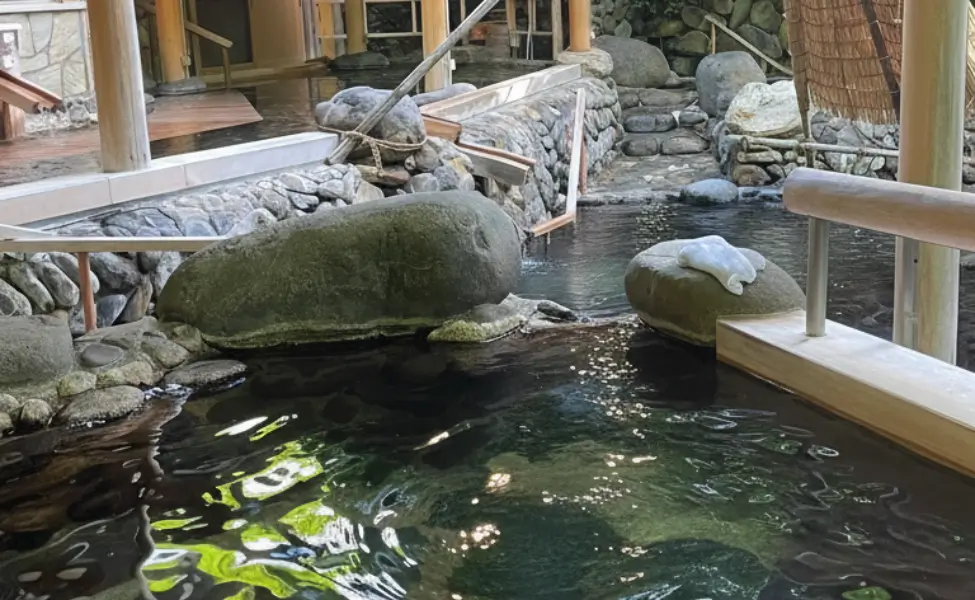
The long-established Yosenkaku Iwamatsu inn offers huge, natural stone baths that feel deeply connected to the surrounding landscape.
Its outdoor baths face wooded slopes, offering a peaceful and immersive soak.
Best for: A tranquil, riverside bath with famously soft water.
Getting there: Take the JR Senzan Line from Sendai to Sakunami Station (about 40 minutes).
From there, most inns are a short taxi or pre-booked shuttle ride away.
From the Kansai Region (Osaka & Kobe)
Inunakiyama Onsen, Osaka Prefecture
Proof that you do not need to travel far for a proper escape, Inunakiyama is a hidden gem within Osaka Prefecture.
Tucked into the hills, this area is known for its simple alkaline spring, which feels silky smooth on the skin.
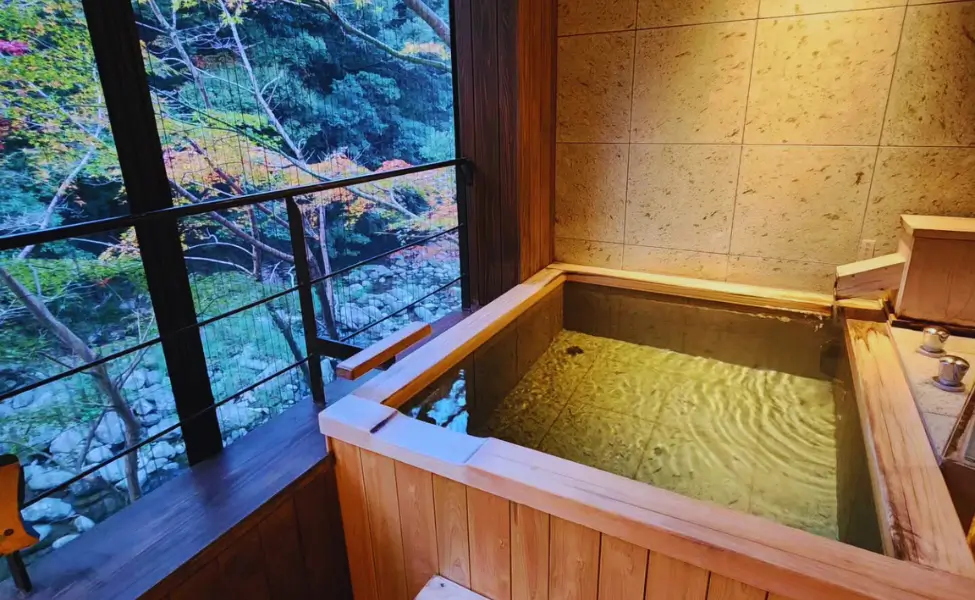
It is a popular spot for hikers, and a visit to the historic Shipporyuji Temple nearby adds a cultural touch to your day.
The Fudouguchikan inn offers beautiful outdoor baths overlooking the river.
Best for: A convenient nature retreat without leaving Osaka.
Getting there: From central Osaka, take a train to JR Hineno Station, then the Nankai bus towards Inunakiyama.
The total journey is about one hour.
Arima Onsen, Near Kobe
Arima is one of Japan’s oldest and most prestigious onsen towns, and for good reason.
It boasts two distinct, powerful spring types.
Kinsen (Gold Spring) is a muddy, iron-rich water that provides an intense, lasting warmth.

In contrast, Ginsen (Silver Spring) is clear and contains either natural carbonation or radium, which is said to soothe the body.
You can sample both at public bathhouses like Kin-no-Yu and Gin-no-Yu.
Best for: Experiencing famous, historically significant mineral waters.
Getting there: From Sannomiya Station in central Kobe, a direct bus will get you there in just 30 minutes.
From Central Japan (Nagoya)
Yuya Onsen, Aichi Prefecture
If you enjoy a scenic journey as much as the destination, Yuya Onsen is for you.
The train ride there on the JR Iida Line winds through beautiful countryside.
This relaxed town along the Toyokawa River feels a world away from the city.
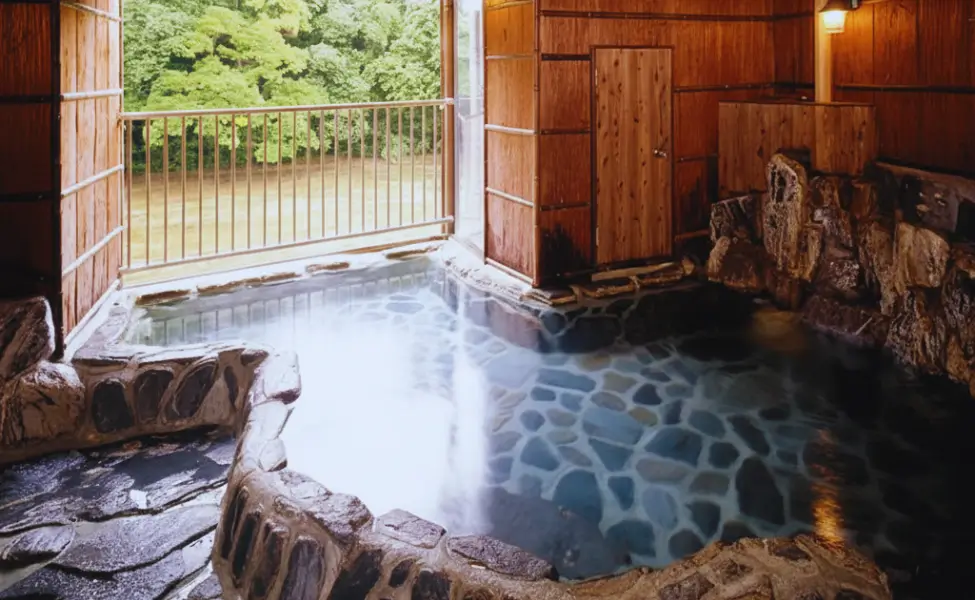
Even if you do not pay for entry to an inn, you can enjoy one of the free public ashiyu (foot baths) dotted around the town.
For a full experience, Yu no Kaze Hazu offers stunning valley views from its outdoor baths.
Best for: A scenic trip for those who enjoy the journey.
Getting there: Take the JR Iida Line from Toyohashi to Yuya Onsen Station.
The trip from Nagoya takes over two hours, so plan for a full day out.
From Western Honshu (Hiroshima)
Yuki Onsen, Hiroshima Prefecture
Located in a low-key valley west of Hiroshima, Yuki Onsen is a therapeutic retreat known for its rare, natural radon springs.
While best viewed as a wellness experience, the water is traditionally sought by those with joint pain.
With only a few small inns, the area remains unspoiled.
Meals here often feature fresh river fish and local mountain vegetables, completing the restorative experience.
Best for: A therapeutic soak in a low-key valley.
Getting there: From JR Itsukaichi Station (a short train ride from Hiroshima Station), local buses run to Yuki Onsen in about one hour.
From Kyushu (Fukuoka)
Harazuru Onsen, Fukuoka Prefecture
Harazuru offers the best of both worlds with its unique “Double Beauty” water, a combination of skin-smoothing simple alkaline water and healing sulphur springs.
Located along the Chikugo River, many of the larger hotels offer extensive bathing facilities.
Taisenkaku is a standout, featuring a sprawling garden bathing area with multiple pools set among stunning greenery, making it feel like a tropical oasis.
Best for: A resort-style experience with two types of “beauty water.”
Getting there: Highway buses from Hakata Bus Terminal in Fukuoka City run directly to the Harazuru area.
Final Thoughts
You do not need a full weekend or a complicated itinerary to enjoy a proper onsen.
Most of these spots are reachable within an hour, and the experience stays with you long after you return to the city.
Pick a water type that appeals to you, check the transport details, and go.
The hard part is choosing which one to visit first.
