
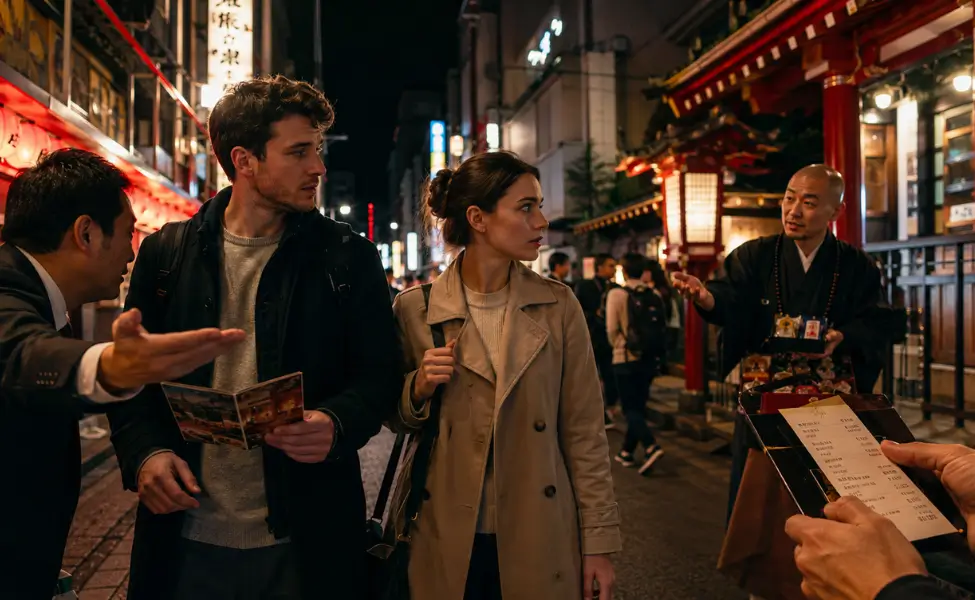
Japan’s one of the safest countries on the planet. But it’s not completely scam-free, and the traps that do exist are specifically designed to catch tourists off guard. Knowing what to watch for before you arrive is genuinely the only reliable protection you’ve got.
The Quick Answer
- Street Touts (Kabukicho/Roppongi): Never follow a promoter into a bar or club.
- Fake Monks (Major Temples): Real monks don’t aggressively solicit cash. Keep walking and don’t accept amulets.
- Hidden Bar Charges: Always confirm the cover charge or otoshi fee before sitting down at a small bar.
- The “Friendly Local” (Roppongi): Decline any unsolicited invites from strangers to their “friend’s bar” to avoid drink spiking.
Is Japan Safe? The Reality Check
Yes, absolutely. Japan consistently ranks among the safest countries in the world for violent crime, and that reputation is well-earned.
Walking home at 2:00 AM through a quiet Tokyo neighbourhood is genuinely fine.
But here’s the thing. Because Japan feels so safe, tourists let their guard down in ways they’d never dream of at home.
You wouldn’t follow a stranger into a bar at midnight in London or New York. Somehow, in Tokyo, it feels different.
It isn’t.
The people running these operations rely entirely on that misplaced comfort.
They know you’ve read that Japan is safe, and they use it as the hook.
Financial scams targeting tourists are real, they’re organised, and they’re concentrated in a handful of nightlife districts you’re almost certainly planning to visit.
Scam 1: The Street Touts (Catchers)
This is the one that matters most.
If you only take a single thing away from this article, let it be this section.
What a Tout Actually Is
In Japan, they’re called kyakkuhiki (キャッチ), or just “catchers.”
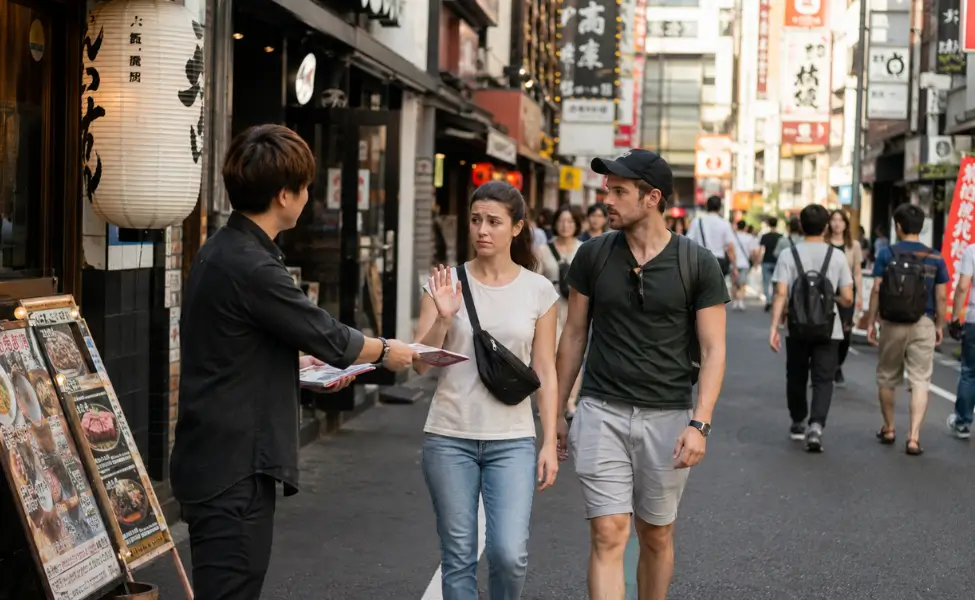
You’ll find them standing outside bars and clubs in the busy nightlife strips, usually dressed smartly, speaking decent English, and pitching deals that sound genuinely reasonable.
“All you can drink for 3,000 yen.” “First drink’s free.” “Best bar in Roppongi, just upstairs.”
They work in Kabukicho in Shinjuku, Roppongi in Minato, and Dotonbori in Osaka.
Many of them are not Japanese.
Nigerians being the most common nationality.
These are the three districts where you’re most likely to encounter them.

What Happens Once You’re Inside
The drinks come out watered down.
That’s the smallest problem you’ll face.
When the bill arrives, it’s loaded with charges nobody mentioned outside on the street.
A typical scam bill can look something like this:
* Note: This table is ultra conservative. It can be MUCH more.
| Charge | Amount (per person) |
|---|---|
| Table charge | ¥2,000 |
| Weekend surcharge | ¥1,500 |
| Ice fee | ¥500 |
| Service charge | ¥1,000 |
| Drinks (as advertised) | ¥3,000 |
| Total | ¥8,000+ |
And if you refuse to pay, large bouncers block the door.
They’ll physically accompany you to a nearby ATM.
What to Do
It’s actually illegal in many Tokyo wards for bars to tout on the street.
Good bars don’t need to drag people in off the pavement.
If a bar needs a catcher outside to fill its seats, that tells you everything.
Don’t make eye contact.
Don’t engage, even to politely say you’re not interested.
Just keep moving.
The moment you stop to listen, you’ve given them an opening.
Scam 2: The Friendly Local Drink Spiking Trap
This one’s nastier, and it’s worth taking seriously.
How It Starts
A well-dressed, friendly person approaches you on the street.
Their English is good.
Before long, they mention a great little bar nearby where their friend works and the drinks are incredibly cheap.
It sounds perfectly plausible.
And that’s exactly what makes it work on smart, experienced travellers.
What Actually Happens
The drinks get spiked.
You lose consciousness or become severely disorientated.
When you wake up the next morning, your credit card has been charged with thousands of pounds in transactions you have no memory of.
This isn’t an urban myth.
Roppongi in particular has a documented history of this going back years. It’s organised, not opportunistic.

What to Watch For
Japanese people are genuinely reserved by culture.
Strangers don’t typically approach foreign tourists aggressively on the street the way you might experience in other countries.
So when someone does approach you in Roppongi at 11:00 PM, full of warmth and enthusiasm and eager to take you somewhere, something’s wrong.
Trust that instinct. Walk away without engaging.
Scam 3: The Fake Monks
The Setup
You’re walking near Senso-ji in Asakusa, or approaching one of Kyoto’s major temple areas, when someone dressed in Buddhist robes steps into your path.

They place a small golden amulet or a laminated “peace petition” directly into your hands. Then they point to a list of other tourist names and amounts, creating the impression that donation is expected.
They’ll ask for 1,000 yen or more, sometimes considerably more.
What You Need to Know
Real Japanese Buddhist monks don’t solicit cash donations aggressively from tourists on the street.
These are organised scammers.
Many aren’t Japanese nationals at all.
Don’t accept anything they hand you.
If something’s already been placed in your hands, put it back and keep walking.
You don’t owe them a conversation, an explanation, or eye contact.
Scam 4: The Bait and Switch Izakaya Menu
How It Works
A tout approaches you on a busy street, often in Dotonbori or parts of Shinjuku, and shows you a laminated menu with attractive prices.
Everything looks good and the deal seems fair, so you follow them upstairs.
Upstairs, they hand you a completely different menu.
The prices are two or three times higher than what you saw on the street.
What to Do
If you realise this has happened, stand up and leave before you order anything at all.
Once you’ve ordered your first drink, you’ve accepted the menu in front of you and they’ll hold you to it.
Don’t wait around to be polite.
Don’t try to negotiate on the stairs. Get up and walk out.
What to Do If You Get Scammed
Find a Koban
A koban (交番) is a small neighbourhood police box, and you’ll find them scattered throughout every major Japanese city. Most are staffed around the clock.
They’re your first stop if something goes wrong.

Google Maps lists the majority of them.
Look for the small police box icon, or simply search “koban near me” with your location on.
The staff won’t always speak English, but they’re experienced with tourist incidents and will do their best to help.
The Honest Reality of Reporting
Here’s something important to understand about how these situations tend to play out.
If you handed over your credit card and signed a receipt, even if you felt pressured or you’d been drinking, the Japanese police will often classify it as a civil dispute rather than a criminal matter.
That’s not a criticism of Japanese policing.
It’s just how these scams are deliberately structured.
The operators know exactly where the legal line sits and they stay just behind it.
Prevention is your only real defence.
Once you’re inside and the drinks have arrived, your options narrow considerably and quickly.
What About Taxi Scams? The Good News
Licensed Taxis Are Genuinely Trustworthy
Unlike a lot of major tourist destinations where broken meters and flat-rate cons are standard risks, Japan’s licensed taxis are strictly regulated and reliably honest.
The doors open automatically when you pull up.
The meter starts the moment you set off. And drivers take genuine pride in their profession.
You don’t need to worry about being overcharged by a licensed taxi driver in Japan.
It’s one of the things that consistently surprises first-time visitors.
Understanding the Late-Night Surcharge
Many tourists arrive home from a night out convinced their driver scammed them because the fare was higher than expected.
But what they’ve actually encountered is the Shin’ya Ryokin (深夜料金), Japan’s legally mandated late-night surcharge.
The driver doesn’t set it. It applies automatically via the meter during specific hours.
| Time Period | Surcharge |
|---|---|
| 10:00 PM to 5:00 AM | Approximately 20% added automatically |
| All other hours | Standard meter rate |
If your taxi home from dinner at midnight cost noticeably more than you expected, this is almost certainly the reason.
The driver was doing everything correctly.
The One Real Risk at Airports
This is worth knowing about before you land.
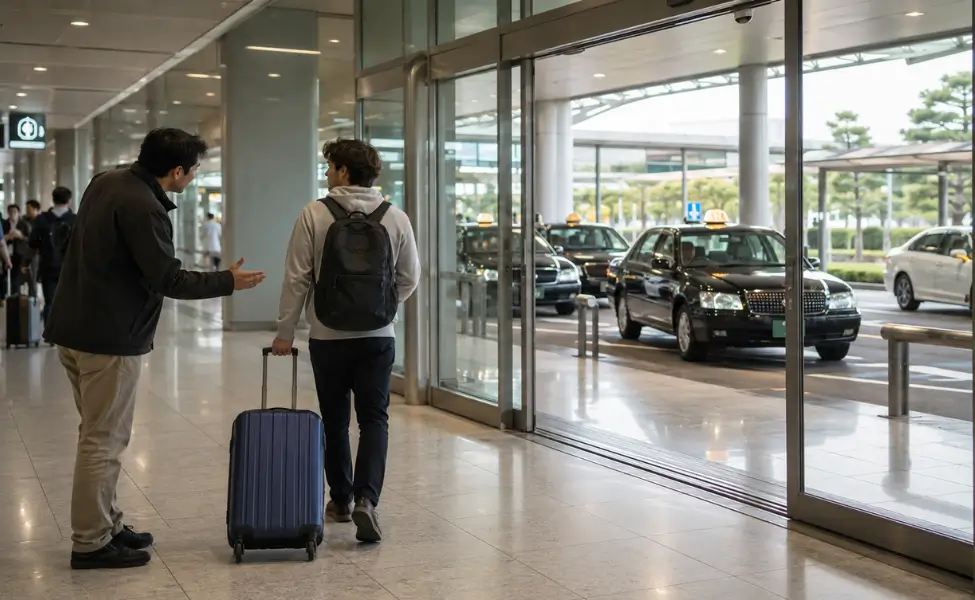
At Haneda and Narita, you may encounter men in plain clothes inside the terminal building itself, approaching arriving passengers and offering flat-rate rides into Tokyo.
These are shirotaku (白タク), meaning “white taxis,” and they’re illegal.
They’re unlicensed, completely unregulated, and the fares are entirely arbitrary.
The solution is straightforward.
Only board taxis at the official taxi ranks outside the terminal, or book via a regulated app like GO or Uber.
Licensed taxis in Japan display a green licence plate.
If someone approaches you inside the arrivals hall offering a ride, ignore them and keep moving towards the official stands.
The Bigger Picture
Japan really is extraordinarily safe by any global standard.
But the scams that do exist here are clever, they’re well-organised, and they’re specifically built around the trust tourists extend to Japan’s reputation.
After three decades living here in Nagoya, I’ve watched these operations run in the same districts year after year.
They survive because tourists let their guard down in exactly the moments they shouldn’t.
The golden rule holds for every scam on this list.
Never follow a stranger somewhere you weren’t already planning to go.
Not into a bar, not to a “friend’s place,” not for a cheaper deal just upstairs.
Japan will give you one of the best travel experiences of your life.
Just don’t let the catchers get their hooks in before it starts.
