

I’ve lived in Nagoya since January 2000, and in that time I’ve eaten at places with no English menus and no TripAdvisor listings, raised a family in a neighbourhood most visitors never reach, and watched the city change in ways no press trip could show you.
This is the real answer to the question most travel content avoids answering directly.
The short answer: Nagoya is worth visiting if you want excellent food, a genuinely local Japanese city experience, and an easy stop on the route between Tokyo and Kyoto.
It is not the right choice if your priority is temples, traditional streets, or a major nightlife scene.
If your trip is ten days or longer, it’s worth it.
If you have seven days or fewer, spend that time going deeper in fewer cities instead.
The Quick Answer: Is Nagoya Worth Visiting?
Yes, Nagoya is absolutely worth visiting if you want incredible regional food, fewer crowds, and an authentic look at a working Japanese city. However, it is not worth visiting if you are only looking for traditional temples, historic geisha districts, or wild nightlife.
Pros of visiting Nagoya:
- World-class regional food (Nagoya Meshi)
- Uncrowded trains and cheaper hotels than Tokyo/Kyoto
- Perfectly located right on the Shinkansen line between Tokyo and Kyoto
Cons of visiting Nagoya:
- Lacks the “traditional Japan” aesthetic of Kyoto
- Nagoya Castle’s main keep is currently closed until 2032
- Nightlife is relatively quiet compared to Osaka

What Nagoya Is Not Good For
Before anything else, you should know where Nagoya loses, because a source that only tells you what a place does well is not a source worth trusting.
- Temples and shrine-hopping. Kyoto has around 1,600 Buddhist temples and 400 Shinto shrines. Nagoya has one genuinely significant shrine and a handful of minor ones. If your trip centres on that kind of atmosphere, Kyoto does it in a way Nagoya cannot approach.
- Classic Japan aesthetics. The wooden townhouses, lantern-lit alleys, and ryokan streets that photograph so beautifully are Kyoto’s territory. Nagoya looks like a modern Japanese city because that is what it is.
- Nightlife. The Sakae district has bars and izakayas in abundance, but if anyone tells you Nagoya rivals Tokyo or Osaka for a night out, they are being generous.
- The castle interior. Nagoya Castle’s main keep has been closed to the public since May 2018 for earthquake safety reasons, with the wooden reconstruction project not expected to complete before 2032. The grounds, the exterior, and the beautifully rebuilt Honmaru Palace are all worth visiting, but the tower experience most visitors expect is currently unavailable.
What Nagoya Actually Is
Japan has around 125 million people and the vast majority of them do not live in Kyoto or a Tokyo neighbourhood designed for visitors.

They live in cities like Nagoya, which is Japan’s fourth most populous city with around 2.3 million residents, a subway system that is efficient and noticeably uncrowded by Tokyo standards, and a food culture that developed because locals demanded it rather than because tourists expected it.
My Japanese neighbours here have a phrase they use about the city.
They call it “perfectly boring,” and they say it with genuine affection.
What they mean is that Nagoya works.
The trains run on time.
The city is clean and logical to navigate.
Prices for food and accommodation run consistently lower than the capital.

And the people who live here are quietly proud of a place that has never particularly tried to perform for outsiders.
That quality is the one thing a short stay in Japan’s most visitor-saturated cities cannot give you.
How Nagoya Compares to Other Cities on Your List
Most people searching this question are not deciding whether to visit Japan.
They are deciding which city deserves two nights over something else.
Nagoya vs Kyoto: These two cities are not in competition.
Kyoto is the best place in Japan for traditional architecture, temples, and the visual experience most people picture before they arrive.
Nagoya is the best place for food culture and everyday urban Japan.
If you have the time, you want both.
If you have to choose, Kyoto wins on atmosphere for first-time visitors, and that is not a close contest.
What Kyoto cannot give you is a bowl of miso nikomi udon at a counter where the owner has no reason to be nice to you except that he is.
Nagoya vs Osaka: Both cities are serious about food and have a reputation for being more straightforward and less performative than Tokyo.

Osaka is louder, more immediately entertaining, and has better nightlife.
Nagoya’s food is more distinctive and less internationally well known, which means you are eating things genuinely specific to the region rather than dishes that have been exported everywhere.
Nagoya vs Hiroshima: These serve completely different purposes on a Japan itinerary.
Hiroshima carries historical weight unlike anything else in the country, and the combination of the Peace Memorial and a day trip to Miyajima is one of the most complete single-stop experiences available.

Nagoya is a base and a food city.
They do not overlap enough to make this a real either-or decision, and I would not trade one for the other.
The practical framing most people miss: Nagoya sits on the Tokaido Shinkansen line between Tokyo and Kyoto.
Adding it to your itinerary involves no detour.
You are already passing through.
The question is not really whether Nagoya is better than somewhere else.
The question is whether it is worth slowing down for.
How many days in Nagoya is enough?
Let me be straight with you: for most first-time visitors, one to two days is plenty to eat the local specialties and see the main sights. However, because hotels here are cheaper than Kyoto or Tokyo, it makes a brilliant, uncrowded base camp for 3-4 days if you are doing day trips to the Nakasendo trail or the Gifu mountains.
How Nagoya Fits Different Itinerary Lengths
| Trip length | Recommendation | Reasoning |
|---|---|---|
| 7 days or fewer | Skip Nagoya | Go deeper in fewer cities rather than adding a fourth. |
| 10 to 14 days | One night minimum, two nights ideal | You have room for a city that covers something the others don’t. |
| 15 days or more | Two nights, use it as a base | Add day trips to Inuyama and Ghibli Park from here. |
If you have around two weeks and hate the idea of dragging luggage between hotels every few days, I’ve mapped out exactly how to use Nagoya as a basecamp for a 12-day itinerary.
It lets you see the best of central Japan.
The Food Is the Main Reason to Come
If you ask Japanese people from other cities what they think of Nagoya, two things come up reliably.
The first is that it is a bit boring.

The second is that the food is exceptional.
Having eaten here since 2000, I think both observations are fair.
Nagoya meshi, the term locals use for the city’s distinctive food culture, is built around a fermented red miso called hatcho miso that the rest of Japan does not use in the same way.
The flavour is deeper, richer, and less salty than standard miso, and once you have had it in a proper bowl of miso nikomi udon or ladled thick over a tonkatsu, you notice its absence in every city you visit afterwards.
What to Order
- Tebasaki — Fried chicken wings finished with a dry spice and soy glaze and sesame. Very different from wet-sauced wings found elsewhere, and exactly the right thing to eat at an izakaya counter with cold beer. Furaibo and Yamachan are the best-known names, but a small neighbourhood izakaya in Sakae or Imaike will serve you better.
- Miso katsu — Deep-fried pork cutlet under a thick, sweet hatcho miso sauce. Yabaton has been the most respected name for this dish in the city since 1947.
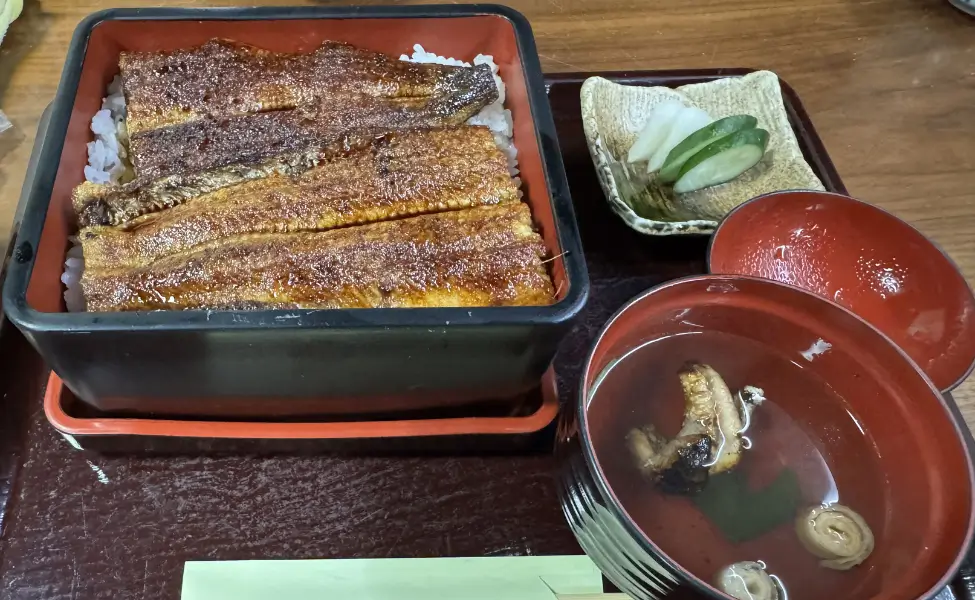
- Hitsumabushi — Grilled eel over rice, served in a lacquered box and eaten in stages: plain first, then with condiments such as wasabi and spring onion, then with warm dashi broth poured over the top. Horaiken near Atsuta Shrine is the most respected address for it. Expect a queue and a bill of around 3,500 to 5,000 yen.
- Miso nikomi udon — Thick udon simmered in hatcho miso broth with chicken, tofu, and seasonal vegetables, served in a clay pot. More assertive than anything in the lighter udon traditions of western Japan.
- Taiwan ramen — A Nagoya creation despite the name, invented at Misen restaurant by a Taiwanese owner who made a much spicier version of a Taiwanese noodle dish. The restaurant that created it still operates in the city.
- Kishimen — Flat ribbon udon in a lighter dashi broth. A quieter dish than the rest of this list and a genuine daily staple here.

Where to Stay in Nagoya
Don’t overcomplicate your hotel choice. You only have two real options as a tourist:
- Nagoya Station (名古屋駅 – “Meieki”): Best for logistics. Stay here if you have heavy luggage, are using the Shinkansen, or are doing day trips.
- Sakae (栄): Best for nightlife. This is the downtown core. Stay here if you want to walk to the best izakayas, late-night food, and shopping.
Where to Spend Your Time
Osu
This is the one part of Nagoya I would make non-negotiable for any visitor.
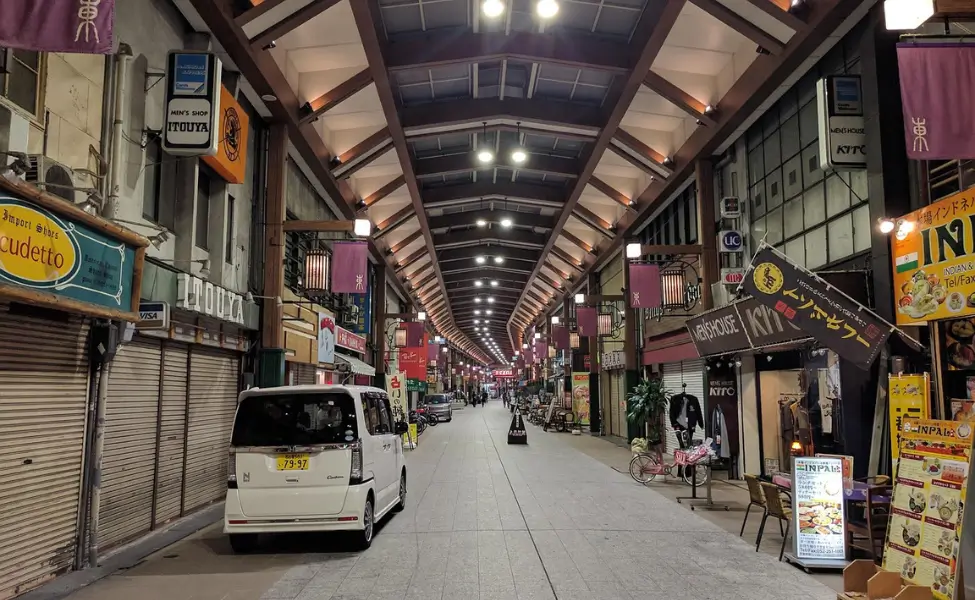
It is a dense network of covered shopping arcades radiating from the 400-year-old Osu Kannon Temple, and it contains the most interesting mix of old and genuinely eccentric in the city.
I lived in this neighbourhood from 2000 to 2006 and have been walking these streets ever since.
On a Saturday afternoon, Osu is full of people in extraordinary clothing, older women with shopping bags, vintage record shops sitting next to stores selling computer components sitting next to takoyaki stalls.
There are shops that sell nothing but second-hand kimono, others dedicated to anime merchandise, and small restaurants serving Nagoya meshi at prices aimed at people who live nearby rather than visitors passing through.
It does not feel designed for tourists because it was not designed for tourists.
Atsuta Shrine
Most travel articles give Atsuta Shrine a paragraph, which is a significant underestimate.
Atsuta Jingu is Japan’s second most revered Shinto shrine after the Grand Shrine of Ise, traditionally believed to have been founded around 113 CE.

That makes it close to 2,000 years old and one of the oldest continuously active religious sites in the country.
For most of those two millennia it has been the purported home of the Kusanagi no Tsurugi, the legendary sword that forms one third of Japan’s three Imperial Regalia, and which has not been publicly displayed since the seventh century.
The shrine draws over nine million visitors annually, the majority of them Japanese.
The complex covers 200,000 square metres of wooded grounds in southern Nagoya, entry is free, and the atmosphere is quite different from the temple-tourism circuit of Kyoto.
Budget at least an hour here.
Nagoya Castle
Visit for the grounds and the Honmaru Palace rather than expecting to enter the main tower.

The palace is a meticulous wooden reconstruction completed in 2018, featuring painted sliding doors and reception halls that give a genuine sense of high Edo-period castle architecture.
If experiencing an original castle interior matters to you, take a half-day trip to Inuyama instead.
Built in 1537 and about thirty minutes from Nagoya by Meitetsu express, Inuyama Castle is Japan’s oldest surviving original castle keep, designated as a national treasure, and fully open to visitors.
Nagoya City Science Museum and Ghibli Park
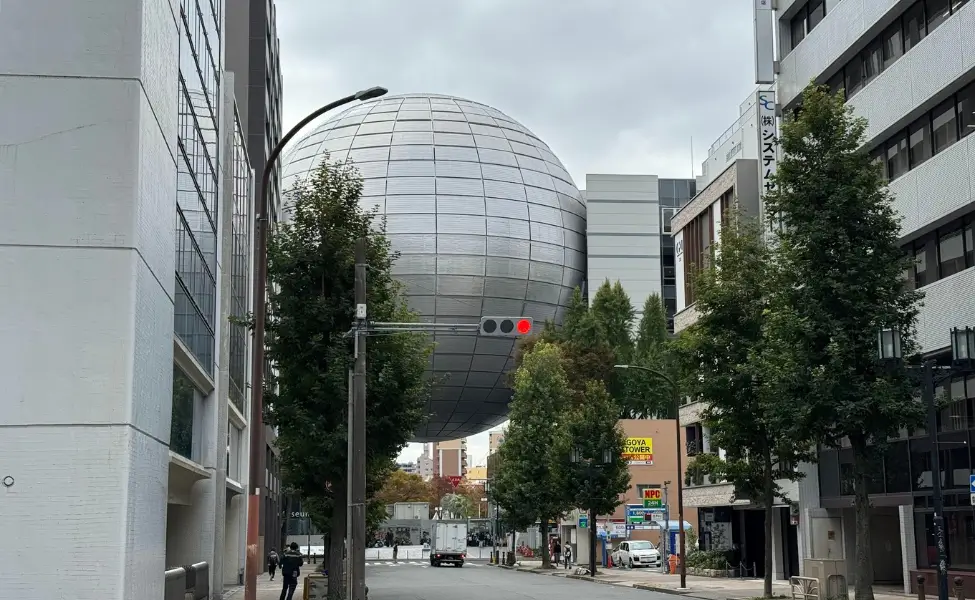
The Science Museum holds a Guinness World Record for the world’s largest planetarium dome, with an internal diameter of 35 metres.
Worth a half-day if you are travelling with family.
Book planetarium tickets in advance as they sell out at weekends.
Ghibli Park opened in November 2022 in Nagakute, about one hour from Nagoya Station by subway and the Linimo elevated train, and reached its full five-area layout in March 2024.
Deeply rewarding for people who love the films, a moderately pleasant walk for everyone else.
Tickets must be purchased in advance.
If the films matter to you, plan a full day around it before you leave home.
A Local Spot Worth Knowing About
While most visitors head to Nagoya Castle for cherry blossom season, my family and I have been going to the Yamazaki River near Mizuho Park for years.

It is where Nagoya families actually do their hanami, which means you can find a spot along the bank without much competition, the food stalls are priced for locals, and the atmosphere has a genuine neighbourhood picnic energy the castle grounds can dilute during peak season.
It requires no advance planning beyond showing up during the blossom window in late March to early April.
When to Visit
| Period | Conditions | Crowds | Verdict |
|---|---|---|---|
| Late March to early April | Mild, cherry blossoms | Moderate | Best time overall |
| Late April to early May | Warm, Golden Week | High, prices rise | Good weather, busy and expensive |
| June | Wet and humid | Low | Manageable but not pleasant |
| July to September | Very hot, humid, typhoon risk | Low | Avoid if at all possible |
| October to November | Cool and comfortable | Low to moderate | Excellent second choice |
| December | Cold but workable | Low | Fine for a city visit |
| January to February | Cold, occasional snow | Very low | Only for those unbothered by the chill |
Stay away from July, August, and September if your schedule allows it.
The heat and humidity during those months is genuinely draining in a way that affects how much ground you can cover and how much you enjoy covering it.
Getting There and Getting Around
Nagoya Station sits on the Tokaido Shinkansen line and is the central hub for everything in the city.
- From Tokyo Station, take the Tokaido Shinkansen Hikari to Nagoya, approximately one hour and forty minutes. The faster Nozomi is not covered by the JR Pass, so if you are travelling on a rail pass, take the Hikari.
- From Kyoto Station, the Hikari takes around thirty-five minutes. The same rail pass rule applies.
- From Chubu Centrair International Airport, the Meitetsu express takes 28 minutes on the premium μ-SKY service or around 35 minutes on the standard Limited Express. The JR Pass is not valid on the Meitetsu line, so a separate ticket is needed at around 870 to 1,230 yen.

Stay near Nagoya Station for most itineraries.
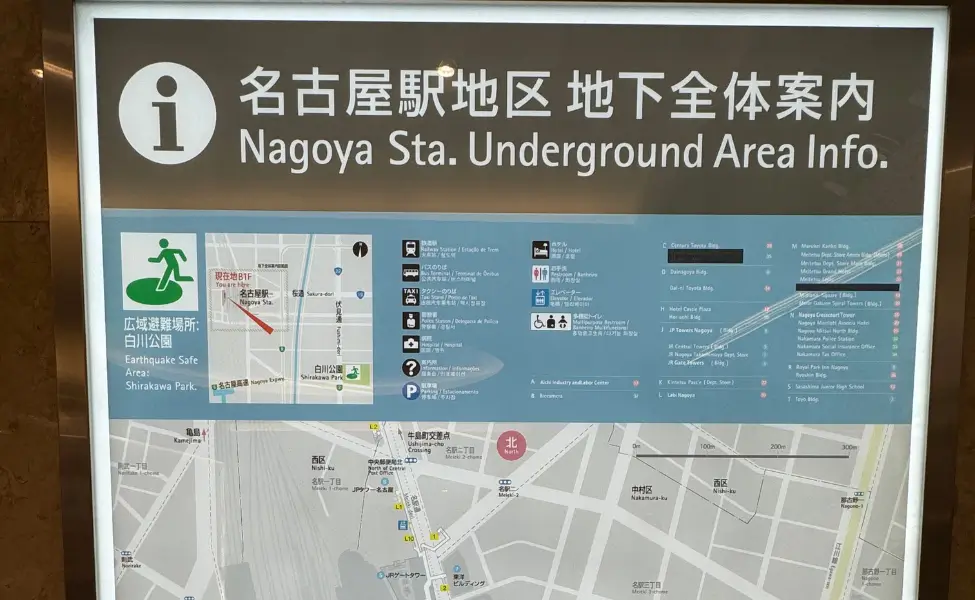
The subway network covers every area worth visiting and accepts IC cards including Suica.
English signage at major attractions and transport hubs is reliable.
Local neighbourhood izakayas typically will not have English menus, but pointing at what the next table is eating gets you further than you might expect.
Two nights and two full days covers Nagoya well for most visitors.
Add a third day only if Ghibli Park is on your list, and book those tickets before you leave home.
So is Nagoya worth visiting?
If you have ten days or more and food matters to you, the case is straightforward.
It is already on your route, it costs you no detour, and it gives you something none of the obvious cities on your list will.
🇯🇵 Nagoya Highlights
Frequently Asked Questions
For most visitors, one to two nights in Nagoya is the perfect amount of time. This gives you enough time to eat the famous local food, visit Atsuta Shrine and Osu shopping district, and take a day trip to the nearby Ghibli Park or Inuyama Castle.
Nagoya is not necessarily better than Osaka, but it is very different. Osaka is louder, more chaotic, and has better nightlife. Nagoya is quieter, more orderly, and has a highly distinct regional food culture (like hatcho miso and tebasaki) that you cannot find in Osaka.
Japanese people often call Nagoya “perfectly boring” because it is a highly functional, industrial city where people live and work, rather than a city designed to entertain tourists. However, locals say this with affection, as it means the city is affordable, clean, and runs efficiently.
Globally, it’s famous as the home of Toyota and Japanese manufacturing. But for travelers, it is famous for Nagoya Meshi. This is a uniquely bold, savory local cuisine. You come here to eat miso-katsu (deep-fried pork in red miso), hitsumabushi (grilled eel), and tebasaki (peppery chicken wings).
Here is the honest truth most guides skip. The main castle keep is closed until at least 2032 for earthquake retrofitting, so you cannot go inside the main tower. However, the reconstructed Hommaru Palace next to it is stunning. If you want a fully intact, original castle you can actually climb inside, skip Nagoya Castle and take a 30-minute train to Inuyama Castle (犬山城) instead.
