

If you are travelling between Osaka and Nagoya, you have four realistic options.
Most people default to the Shinkansen.
It is fast, painless, and runs constantly.
But it is not always the best choice.
It depends where you are staying in Osaka, where you are going next from Nagoya, and how much you care about speed versus cost.
I’ll show you the simplest decision path, then walks through each option properly, including the stuff that catches first time visitors out.
Quick answer summary
Fastest option:
Shinkansen from Shin Osaka to Nagoya
Time: 49 to 60 minutes
Cost: ¥6,680 (standard reserved seat)
Best for: Speed and frequent departures
Best value option:
Kintetsu Limited Express Hinotori from Osaka Namba to Kintetsu Nagoya
Time: About 2 hours
Cost: ¥4,990 (standard car) or ¥5,690 (premium car)
Best for: Staying in central or south Osaka, avoiding transfers
Budget option:
Highway bus
Time: 3 to 4 hours
Cost: ¥2,000 to ¥3,000
Best for: Tight budgets, flexible schedules
First, ask this one question
Where are you actually starting from in Osaka.
If you are near Shin Osaka or you do not mind getting there
Shinkansen is usually the cleanest choice.
If you are staying around Namba, Dotonbori, or south Osaka
Hinotori is often the smarter option because you avoid the extra transfer and still get a comfortable reserved seat.
That one detail changes the best answer for a lot of people.

Option 1: Shinkansen from Shin Osaka to Nagoya
How long does it take
Fast services take about 49 minutes.
Other services on the same line take around an hour.
The bigger time cost is often not the train itself.
It is getting to Shin Osaka and navigating the station if you are new to Japan.
How much does it cost
A standard reserved seat on the Nozomi is typically ¥6,680.
You may also see slightly different totals depending on seat type and train type, so treat that as the normal reference point, not an unbreakable rule.
Does the Japan Rail Pass help on this route
If you are using a Japan Rail Pass, the detail that matters is this.
Nozomi is not included in the pass in the normal way, but you can ride it if you buy an additional ticket designed for pass holders.
If you do not want any extras, use Hikari instead.
In practice, on a short route like Osaka to Nagoya, the pass is rarely the main deciding factor unless it is part of a bigger multi city plan.
Which train should you take
Nozomi is the one most people want. It is the fastest and most frequent on this route.
Trains run multiple times per hour throughout the day.
Hikari is slightly slower and usually makes sense if you have a Japan Rail Pass and do not want to pay any extras. There are usually a few services per hour.
Kodama is the slowest.
For Osaka to Nagoya it is rarely worth choosing unless you are doing something very specific with stops.
Where you actually board in Osaka
You board at Shin Osaka Station.
This is not Osaka Station and it is not Namba.
It is a separate station built specifically for the Shinkansen.
How to get to Shin Osaka quickly from central Osaka
Osaka Metro Midosuji Line gets you there without thinking too hard.
If you are staying near Umeda or Osaka Station, JR also works.
Build in time for the transfer, especially if this is your first visit.
Arriving in Nagoya and getting out of the station
You arrive at JR Nagoya Station.
Nagoya Station is a whole transport complex.
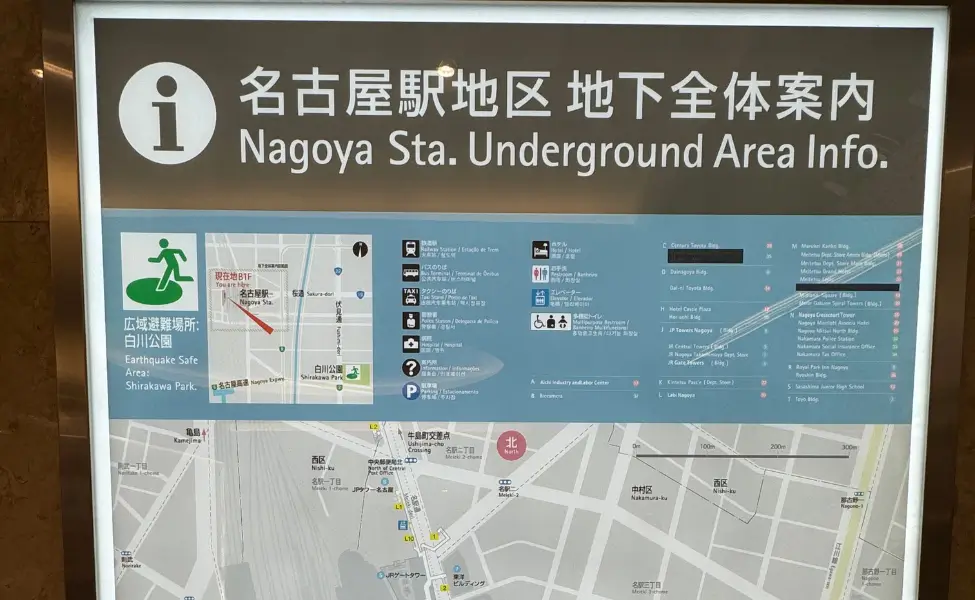
JR, Meitetsu, Kintetsu, subways, underground malls, department stores, and more.
It is brilliant once you get used to it, but it can feel like a maze on your first visit.
If you are heading to Sakae, Nagoya Castle, Osu, or anywhere in the centre
You will usually end up on the subway. Build in a few extra minutes just to find the right entrance.
If you are connecting to somewhere like Takayama, the Kiso Valley, Gifu, or elsewhere on JR lines
Shinkansen into JR Nagoya makes that connection straightforward.
Buying tickets in a way that does not waste time
If you want the simplest in station method
Use the Shinkansen ticket machines or the ticket office at Shin Osaka.
If you like having it sorted before you arrive
Use JR Central online booking.
If you are travelling in a busy period, do not leave it to the last minute. You might still get a seat, but you may not get the seat you want.
Reserved seat or not
On this route, the journey is short, but trains can still be crowded.
If you are travelling with luggage, kids, or you just want a smoother day, reserve a seat.
On a crowded train, big cases become awkward fast, and you do not want to be searching for space while people are boarding behind you.
If you are travelling midweek, outside rush times, and you are fine being flexible, unreserved can work. J
ust do not assume it will always be relaxed, especially in peak travel seasons.
Option 2: Kintetsu Limited Express Hinotori
This is the option most tourists miss, and it is often the best compromise.
You travel in a reserved seat, it is comfortable, and it is cheaper than the Shinkansen.
When Hinotori is the smarter move
If you are staying in Namba, Dotonbori, Shinsaibashi, or anywhere with easy access to Osaka Namba Station
This can save you time and hassle because you skip the transfer.
For many real itineraries, the total door to door time can end up closer to the Shinkansen than you expect.
If your Nagoya destination is better served by Kintetsu than JR
Kintetsu Nagoya Station can be very convenient depending on where you are staying.
Price
Standard car adult fare Osaka Namba to Kintetsu Nagoya is ¥4,990.
Premium car adult fare is ¥5,690.
Those numbers are one reason this route is so attractive.
Time
It takes longer than the Shinkansen, but it is still very reasonable.
Think a bit over 2 hours depending on service and schedule.
Services run roughly every hour throughout the day, so you do not need to plan your entire day around a single departure time.
Where you board and where you arrive
You board at Osaka Namba Station and arrive at Kintetsu Nagoya Station.
If you are staying in Namba, this can feel ridiculously convenient.
Buying tickets
Kintetsu sells limited express tickets and they explain the purchase process clearly.
In plain terms, you are buying a base fare plus a limited express seat.
You do not need to overthink it. You just need the right ticket for the right train.
Option 3: Highway bus
This option prioritises budget over speed and comfort.
How long does it take
Usually around 3 to 4 hours depending on traffic.
How much does it cost
It is common to see fares around ¥2,000 to ¥3,000 depending on service and timing.
Where to buy tickets
Most highway buses can be booked through Willer Express or Japan Bus Online.
Some operators also sell tickets at bus terminals, but booking ahead is usually smarter, especially during busy periods.
When it makes sense
If your budget is tight and you are not trying to squeeze sightseeing into the same day, it can work.
If you are visiting Japan for the first time and you are already doing lots of transfers, the extra time and uncertainty might not be worth the savings.
Option 4: Driving
Driving between Osaka and Nagoya takes around 2.5 to 3 hours on the expressway, plus tolls that can run ¥5,000 to ¥7,000 depending on your exact route.
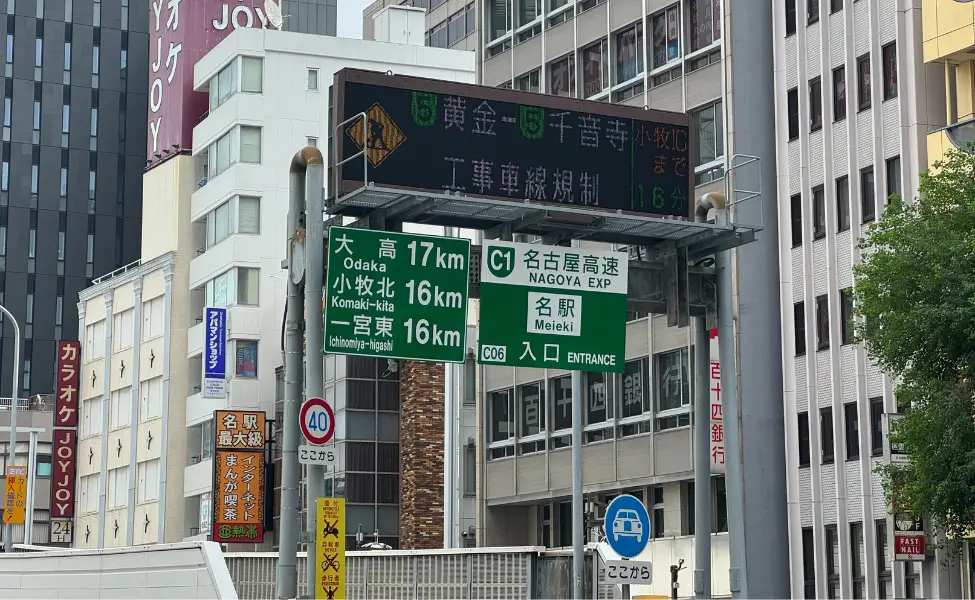
It makes sense if you are travelling with family and lots of luggage, or if you want to stop somewhere specific along the way like Iga or the pottery towns around Seto.
For example, if you are doing a wider road trip through central Japan and the journey itself matters, driving fits the plan.
It usually does not make sense if you are just trying to get from city centre to city centre.
Parking and traffic can make the whole thing feel like work, and you lose the ability to relax on the journey.
Which option should you actually choose
Choose Shinkansen if:
- You are staying near Shin Osaka or do not mind the transfer
- Speed matters more than cost
- You are connecting to another JR line in Nagoya
- You want maximum frequency and flexibility
Choose Hinotori if:
- You are staying in Namba, Dotonbori, or south Osaka
- You want a reserved seat without the Shinkansen price
- Your Nagoya destination is near Kintetsu Nagoya Station
- You value door to door convenience over raw speed
Choose the bus if:
- Budget is the main priority
- You have time flexibility and are not cramming sightseeing into the same day
- You do not mind longer travel times
Choose driving if:
- You are doing a wider road trip through central Japan
- You want to stop at specific places between Osaka and Nagoya
- You are travelling with family and lots of luggage
Common mistakes first time visitors make on Osaka to Nagoya
They assume Shin Osaka is the same thing as Osaka Station
It is not. Shin Osaka is a separate station, and that one assumption causes missed trains.
Build in time for the transfer if you are staying near Umeda or central Osaka.
They buy the wrong ticket type and only realise at the gate
This happens more than people admit.
If you are unsure, use the staff at the counter. It is normal to ask.
They plan this route on the same day as heavy sightseeing and wonder why they feel rushed
This is a short trip, but it still eats a chunk of your day once you include packing, transfers, and check in times.
FAQs
How long does the Shinkansen take from Shin Osaka to Nagoya
Around 49 minutes on the fastest services.
How much is the Shinkansen from Osaka to Nagoya
A standard reserved seat on the Nozomi is typically ¥6,680.
Can I go from Osaka to Nagoya without using Shin Osaka
Yes. Take the Kintetsu Limited Express Hinotori from Osaka Namba instead.
Is Hinotori cheaper than the Shinkansen
Usually yes. Standard car is ¥4,990 compared with the typical Shinkansen reserved fare of ¥6,680.
Can I use the Japan Rail Pass on Nozomi
You normally cannot use it, but you can ride Nozomi if you buy the special additional ticket for pass holders.
How to use this route in a real itinerary
Osaka base, Nagoya as a half day or day trip
If you have a reason to visit Nagoya, you can do it without moving hotels.
Go early, do your main target, and return in the evening.
This works well if you want a single highlight rather than trying to “do Nagoya” in one day.
For example, you could leave Osaka at 8am, spend a few hours at the Toyota Commemorative Museum of Industry and Technology or Nagoya Castle, have lunch in the station area, and be back in Osaka by mid afternoon.

Nagoya as a smart stop between regions
Nagoya is not just a place you pass through.
It is also a useful pivot point.
It connects cleanly to places that are awkward from Osaka without doubling back.
If your next plan is somewhere like Takayama, the Kiso Valley, or parts of Gifu, breaking the journey in Nagoya can make your itinerary feel calmer.
