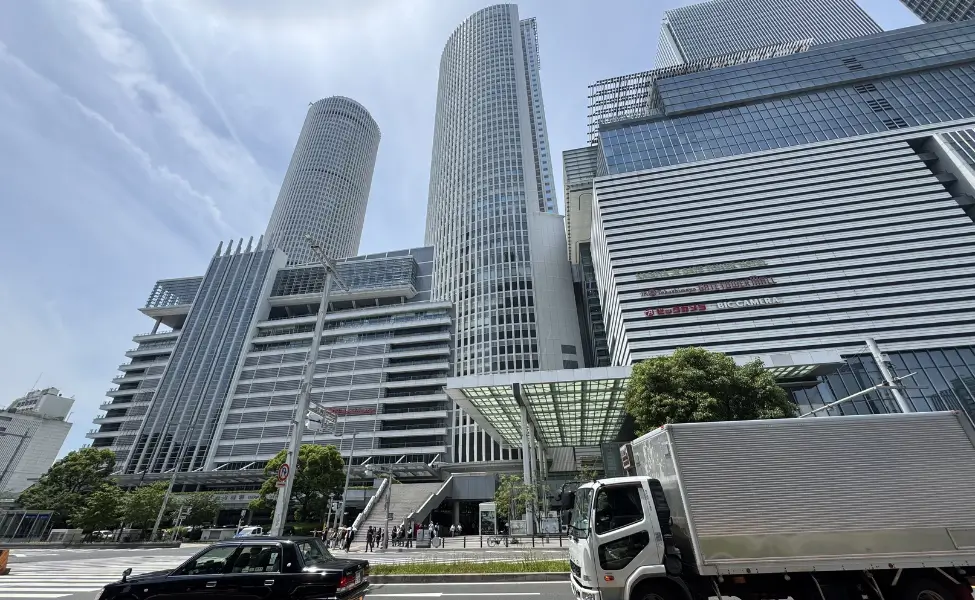
Nagoya Station, known locally as Meieki, isn’t one station but effectively five different rail systems stacked on top of and underneath each other, and understanding that basic fact makes everything else fall into place. The main JR concourse runs in a fairly straight east-west line, but the transfers down to Meitetsu and Kintetsu are genuinely confusing for first-time visitors, and even repeat visitors end up on the wrong side wondering where it all went wrong. Don’t follow the crowd blindly. Look up at the ceiling signs instead, and know before you arrive whether you need the Taiko-dori side for the Shinkansen or the Sakura-dori side for the city centre, because heading to the wrong one wastes more time than you’d think.
Quick-Reference Cheat Sheet
Taiko-dori Side (West) The Shinkansen gates are here, along with cheap business hotels, BIC Camera, and the Esca underground mall for food and shopping below street level.
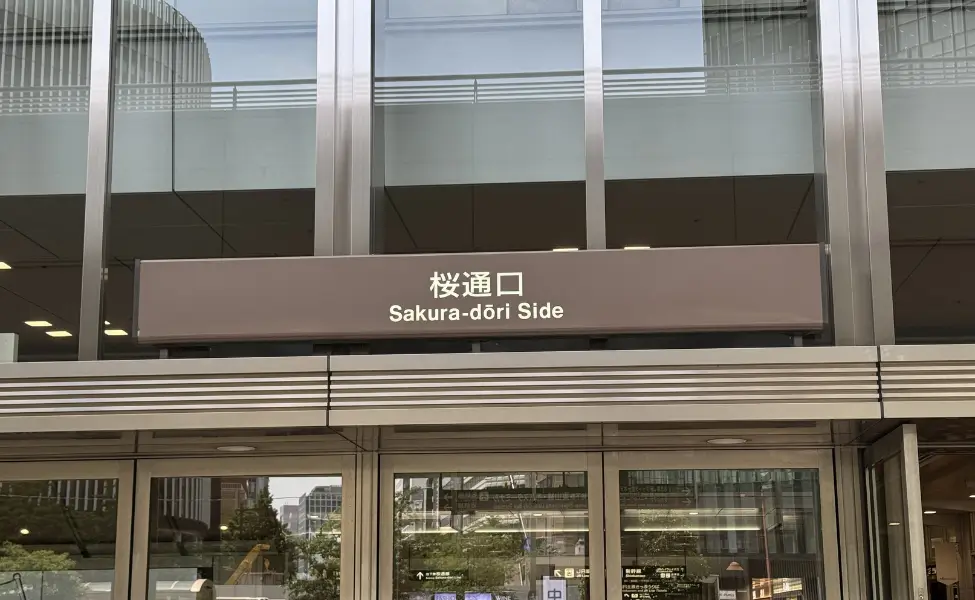
Sakura-dori Side (East) This is where you’ll find the Golden Clock, Takashimaya department store, the Meitetsu and Kintetsu transfers, and the pedestrian route toward Sakae.
The Silver Clock The main meeting point on the Shinkansen side. If someone says “meet me at the Silver Clock,” you want the Taiko-dori exit.
The Golden Clock The main meeting point on the city side. If someone says “meet me at the Golden Clock,” you want the Sakura-dori exit.
Three Networks, Three Separate Tickets JR, Meitetsu, and the city subway are entirely separate systems with no shared ticketing. You can’t carry a single ticket across all three, and your JR Pass covers none of them except JR itself. Know which network your next journey uses before you walk through any gate.
Surviving the Shinkansen Transfer
If you arrive at Nagoya by Shinkansen, you enter the main central JR concourse, not the street.
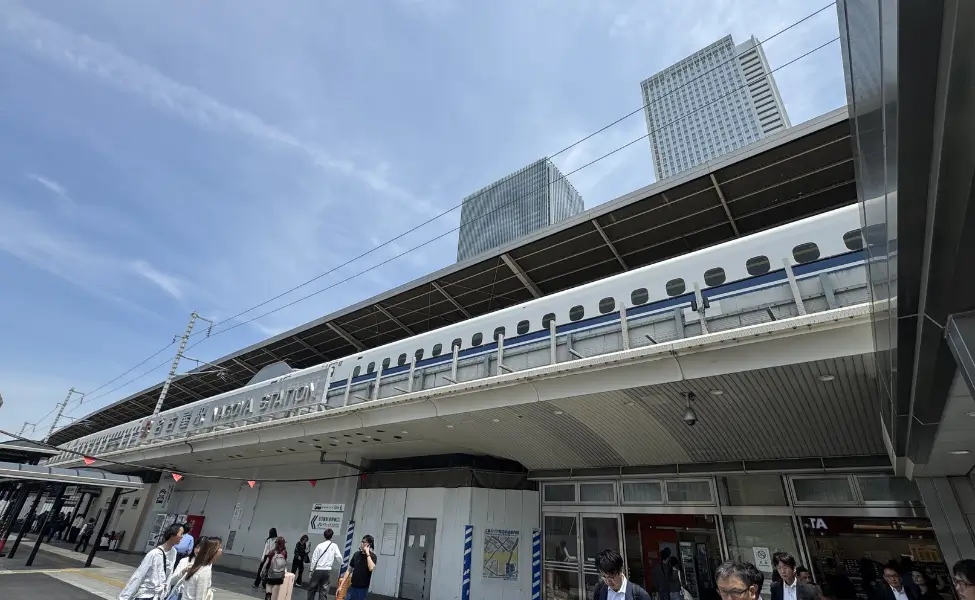
That is actually the most convenient place to land.
The problem starts when you transfer from the Shinkansen to a local JR service.
This includes trains like the Hida Express bound for Takayama.
The signage does not always make one important difference clear.
Transfer Gates and Exit Gates are not the same thing.
Transfer Gates sit inside the paid zone.
They let you move between the Shinkansen platforms and regular JR platforms without leaving the station.
The Exit Gates are everything else.
If you pass through an Exit Gate, the machine consumes your Shinkansen ticket.
You will also leave the paid zone.
That means you may need to buy a new ticket and queue again.
Before you move anywhere after leaving the Shinkansen, look for signs marked “JR Lines Transfer”.
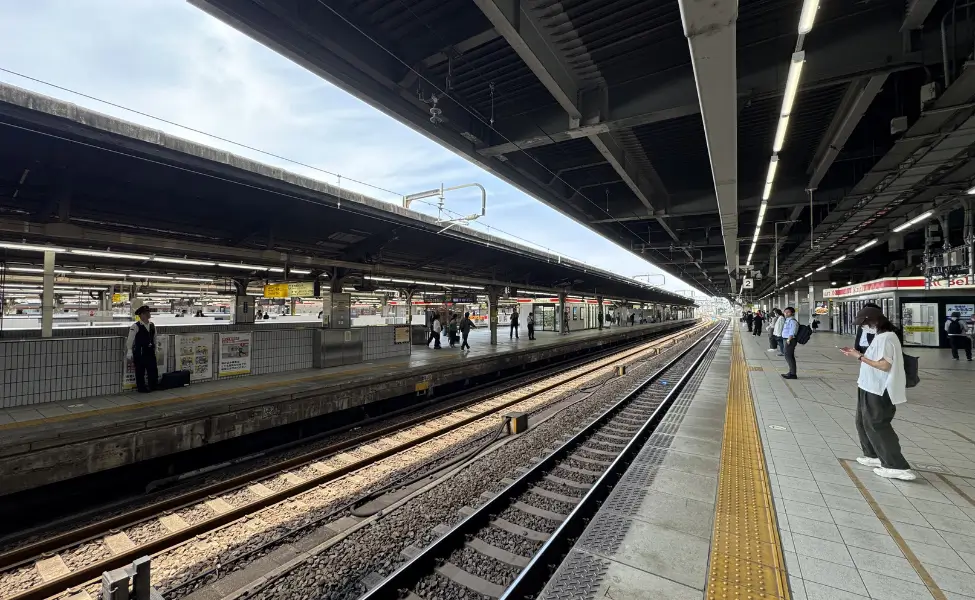
Follow those signs specifically.
Ignore anything that says “Central Exit” or “North Exit” for now.
Only follow exit signs once you know you have finished with JR entirely.
The Meitetsu Airport Transfer
The biggest source of frustration for travellers heading to Centrair International Airport is that the Meitetsu station is entirely separate from the JR station, hidden underground to the south of the Sakura-dori exit.
You can’t reach it from inside the JR paid zone, which surprises people who assume the connections are integrated the way they are at Osaka or Tokyo.
Once you know to exit through Sakura-dori and head underground into the Meitetsu concourse, though, you face a second problem.
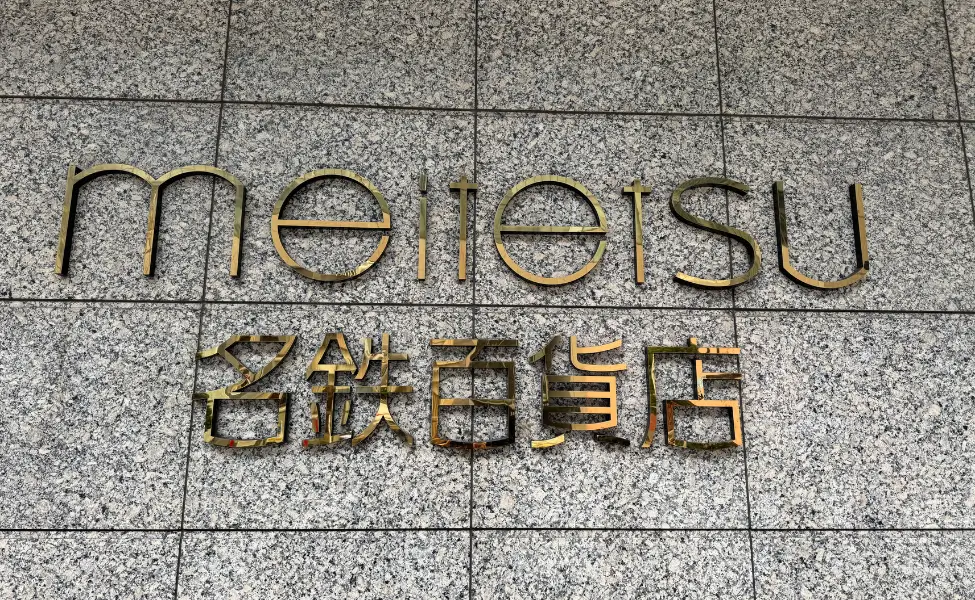
The Meitetsu Nagoya platform is arguably the most chaotic train platform in Japan. Trains going to completely different destinations, including Gifu, Inuyama, Nishio, Toyohashi, and Centrair Airport, all use the exact same tracks.
The overhead display board saves you here, because the trains themselves will not.
For the µ-SKY limited express to Centrair, look for the designated waiting area markers.
Then check the overhead board before boarding.
Make sure the train type and destination match what you need.
The µ-SKY needs a separate limited express ticket on top of the base fare.
It runs to Centrair in roughly 28 minutes.
If you board the wrong Meitetsu train, you could face anything from inconvenience to a missed flight.
Where the Coin Lockers Actually Are
Start with the banks inside the main JR concourse because they’re the most convenient, but don’t count on them.
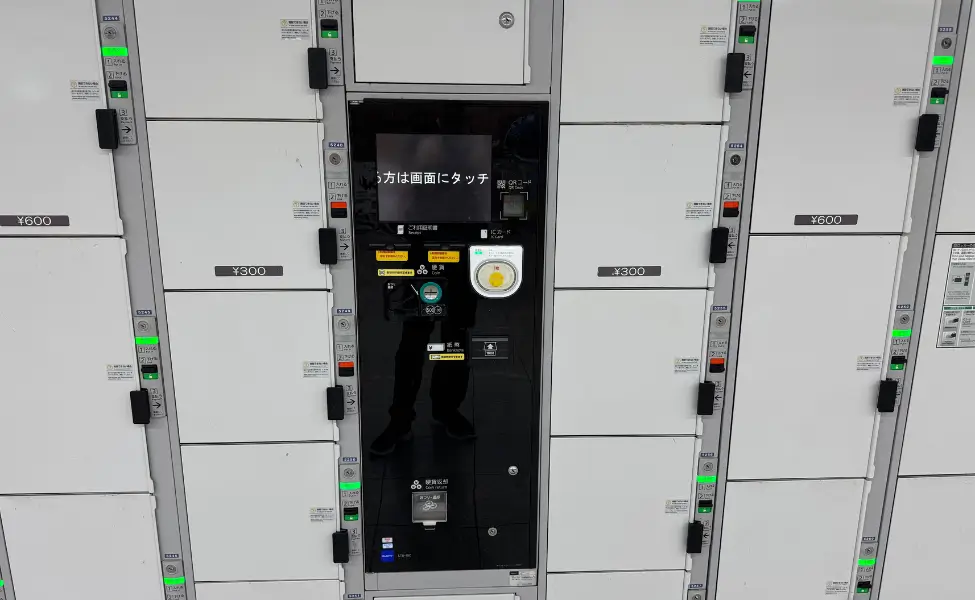
They’re almost always full by nine in the morning on any day that isn’t a quiet winter weekday, and if you arrive with luggage on a Saturday morning during cherry blossom season, expecting to find a free one in the obvious spots is optimistic to the point of fantasy.
Large lockers for full-size suitcases run out even faster than the standard ones, so if you’re travelling with a big bag, that’s your most pressing problem to solve first rather than last.
The overflow option most tourists never find is the Esca underground mall on the Taiko-dori side.
Walk down into Esca and there’s a bank of lockers that sees considerably less traffic than the main concourse banks, partly because most visitors don’t know Esca exists and partly because the entrance isn’t signposted from the main flow of foot traffic.
Esca carries larger lockers too, which makes it worth going there first if you’ve got oversized bags.
And if those are full, try the locker bank near the Aonami Line entrance.
It sits northwest of the main building and often stays available well into the afternoon on busy days.
All of these lockers accept IC cards, including Toica, Suica, and Manaca, as well as coins.
That is worth knowing if you are running short on change.
Most lockers allow storage for up to three days.
So if you are taking a day trip from Nagoya, you will not need to rush back for your bags.
Food and Coffee Without the Wait
If you see the queue outside Misokatsu Yabaton and have a train within the hour, walk away.
The misokatsu is genuinely worth eating in Nagoya, but peak time waits often reach 45 minutes.
Nobody rushes there, so save it for a day when you have nowhere to be.
For a quicker option, try Kimen tei, the ramen corridor on the station’s basement level.
It turns tables fast, and the food is consistently good.
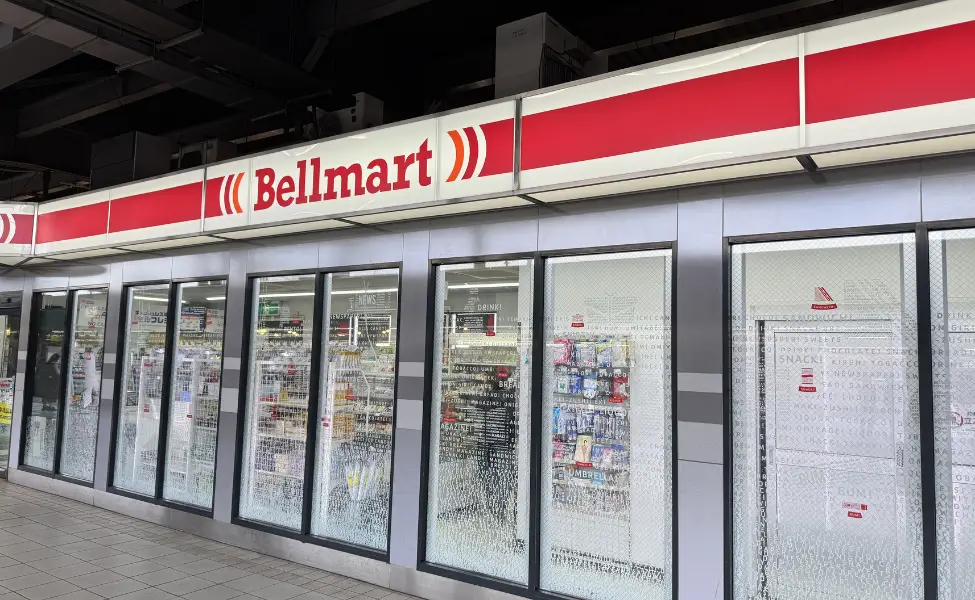
On the Shinkansen platform, Bellmart Kiosk sells ekiben and decent canned coffee in under two minutes.
For a proper sit down coffee before a long ride, the Shinkansen platform café opens early enough for first departures.
Getting to the Subway Without Going in Circles
Most tourists staying in Nagoya need the subway, because that’s how you get to Sakae, Fushimi, Osu Kannon, and the areas around Nagoya Castle.
But the subway entrance isn’t inside the JR paid zone and it isn’t inside the Meitetsu paid zone either.
It’s a third entirely separate thing, and you need to be in the free public area of the station to access it.
Head to the Sakura-dori exit and follow the signs for the Nagoya Municipal Subway.

The two lines you’ll use most are the Higashiyama Line and the Sakura-dori Line, both of which run roughly east from Nagoya Station.
On the Higashiyama Line, Fushimi is two stops away and Sakae is three, which makes it the fastest option for reaching the city’s main shopping and entertainment district.
Neither the Higashiyama Line nor the Sakura-dori Line accepts a JR Pass or Meitetsu tickets.
You’ll need either a separate subway ticket from the machines near the entrance or an IC card set up with subway credit.
The machines have English language support, so buying a single-journey ticket is straightforward even if you don’t read Japanese.
If you’re planning to use the subway several times in a day, a one-day pass works out cheaper than buying individual tickets, and the machines sell those too.
FAQ
No. They share the same city block and are connected by underground passages, but they’re physically separate stations run by different companies with entirely separate ticketing. JR tickets won’t get you through the Meitetsu gates, and Meitetsu tickets won’t get you through the JR gates. When people say Nagoya Station without any qualification, they almost always mean the JR station.
Taiko-dori side, which is the west side of the station. The easiest way to remember it is that if you can see the Golden Clock above you, you’re on the wrong side.
Exit through the Sakura-dori side and walk south along the base of the Meitetsu department store building for about two minutes. Nana-chan stands roughly 6.1 metres tall outside the Meitetsu department store entrance and changes her outfit seasonally, so she’s hard to miss once you’re on the right side of the station.
No. The Higashiyama Line and the Sakura-dori Line are run by the Nagoya Municipal Transportation Bureau, a city-run system with no connection to JR. Your JR Pass covers JR trains only. To get between Nagoya Station and Sakae or Fushimi, you’ll need to buy a separate subway ticket or tap with a compatible IC card. The subway entrance is on the Sakura-dori side.