
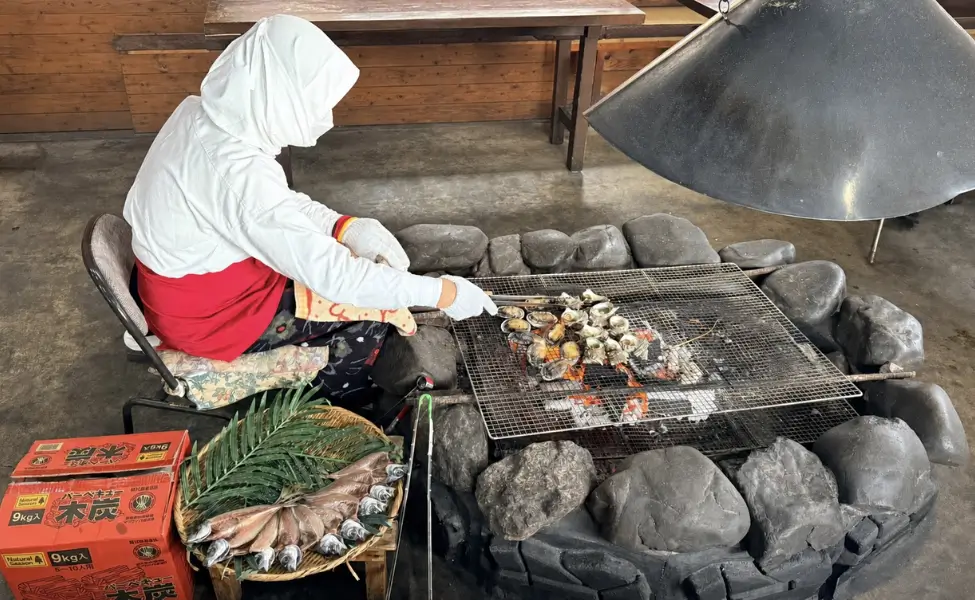
Most visitors to Japan never come into contact with the people who keep its older coastal traditions alive. In Toba on the Mie coast, you can sit inside an ama hut, eat seafood grilled by working female freedivers, and talk with women who still dive for shellfish by hand.
Around Toba and the Shima Peninsula in Mie Prefecture, tourists can meet Japan’s ama divers without specialist connections or fluent Japanese. Hachiman-Kamado is the most visitor-friendly option, where active ama divers cook fresh seafood in a traditional hut and talk with guests over a meal. Everything that follows covers what the experience actually involves, how to book it, and how to plan your day.
What the Ama Divers Actually Are
The word ama (海女) translates as “sea women,” and the name is accurate in every sense.
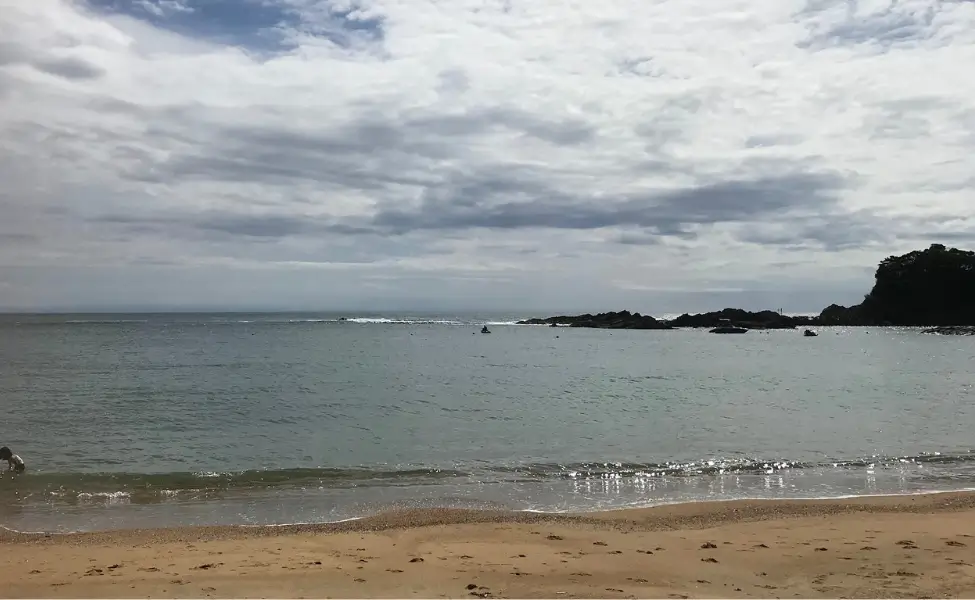
These are female freedivers who work Japan’s coastal waters, collecting shellfish and seaweed on a single breath of air.
The tradition stretches back at least two thousand years, with written references appearing in the Man’yoshu, Japan’s oldest major poetry anthology.
Women came to dominate this work for practical rather than ceremonial reasons.
Their bodies generally offered better cold tolerance and buoyancy for repeated breath hold diving.
Over time, the work became a female led tradition, even as most other coastal fishing remained male dominated.
Historically, ama divers wore white loincloths, with the colour thought to repel sharks.
Those photographs from the early and mid-twentieth century still circulate widely online, and they are genuine historical records rather than staged recreations.
Modern divers wear white wetsuits, a practical change that became standard during the 1960s and 1970s, and the white colour tradition has carried forward.
The most distinctive thing about watching an ama diver surface is sound rather than sight.
On resurfacing, she releases a controlled whistle called the isobue, a technique that equalises pressure and manages the release of carbon dioxide before the next breath.
An experienced diver holds her breath for between one and two minutes per dive, reaching depths of five to twenty metres.
The work is physically demanding, and the divers treat it as exactly that.
Where to Meet Japan’s Ama Divers
The heartland of ama culture is Mie Prefecture, specifically the coastline around Toba City and the Shima Peninsula.
Active ama divers concentrate here in greater numbers than anywhere else in Japan, and the combination of good rail connections and visitor infrastructure makes it the natural starting point.

Two attractions in Toba itself are worth visiting alongside the hut experience.
Mikimoto Pearl Island sits a five-minute walk from Toba Station and runs hourly diving demonstrations throughout the season.
Watching one before visiting a hut gives you useful context for what the work actually involves, and the technique on display is authentic rather than theatrical.
Admission is 1,650 yen for adults.
The Toba Sea-Folk Museum (鳥羽市立海の博物館) sits in the Uramura district, roughly thirty-five minutes from Toba Station by the Kamome Bus along Pearl Road.
Admission is 800 yen for adults, and the collection covers over sixty thousand items related to coastal fishing traditions and ama culture.
If you have more than a passing interest in the history, it is worth the journey.
The best approach is to go before the hut rather than after.
Other ama communities exist in parts of Chiba, the Noto Peninsula in Ishikawa, and sections of Fukui.
The Shima Peninsula’s quieter southern villages are also worth exploring if time allows.
Mie remains the heartland, and the infrastructure around Toba makes it more accessible than anywhere else.
What Happens at an Ama Hut
Scattered along the coastline near Toba are small structures called amagoya, or ama huts.
These are the places where divers have always gathered after a session to warm up and rest around an open fire, and some have opened to visitors.
At Hachiman-Kamado, you arrive and take a seat around the irori, a traditional sunken charcoal hearth.
Divers grill the morning’s catch over the coals while you watch.
Abalone, turban shells, spiny lobster, and oysters appear depending on the season.
The women at the hearth are the same women who were in the water that morning.
The honest answer to whether this is authentic is that it largely is, with one important caveat.
Hachiman-Kamado opened in 2004 specifically to welcome visitors, and the format reflects that. There is a try-on of traditional diving attire, an optional folk dance, and a structured meal course.
None of that is how things worked before tourism arrived.
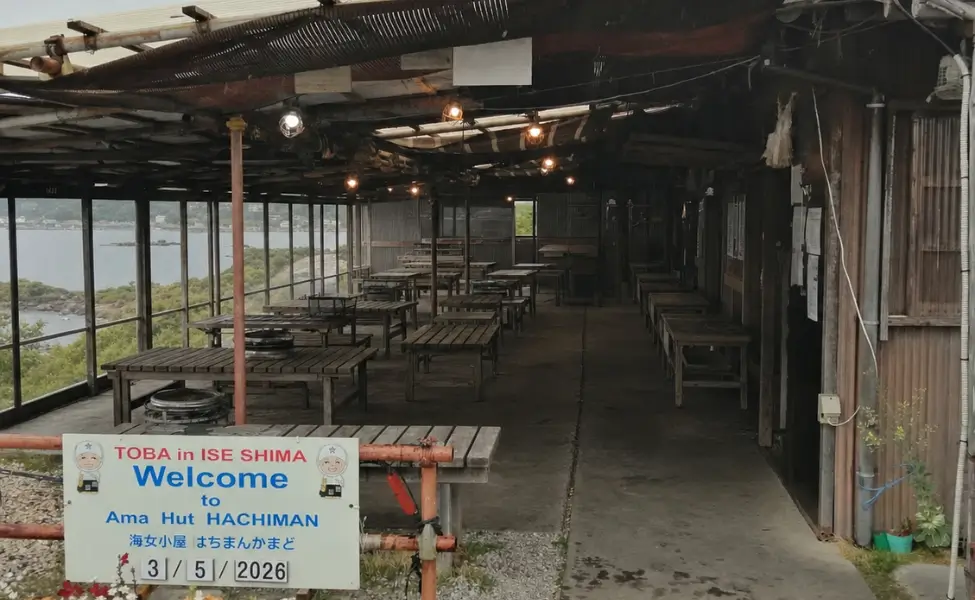
The women running the hearth are active divers who choose to do this work.
Their income supports a coastal community where the sea provides the livelihood.
The distinction worth holding onto is between staged and structured.
At Hachiman-Kamado, the operators made the format accessible for visitors who do not speak Japanese.
It is not staged in the sense of performing something that no longer exists.
The diving is real, the divers are real, and the conversation is genuine. Visitors who arrive expecting a performance leave feeling slightly flat.
Those who arrive expecting a meal and a conversation come away with a story they will tell for years.
Some of the divers are in their eighties and still working.
Booking Hachiman-Kamado
The hut operates in Osatsu Town, roughly twenty-five minutes south of Toba Station by car.
A free shuttle called the Ama Bus runs from Toba Station with advance reservation, which removes the transport problem for anyone without a rental car.
All meal courses require a booking, and the team handles reservations directly.
English support is available throughout the process.
Pricing depends on what you order.
A standard course with grilled shellfish runs from around 4,500 to 7,000 yen per person.
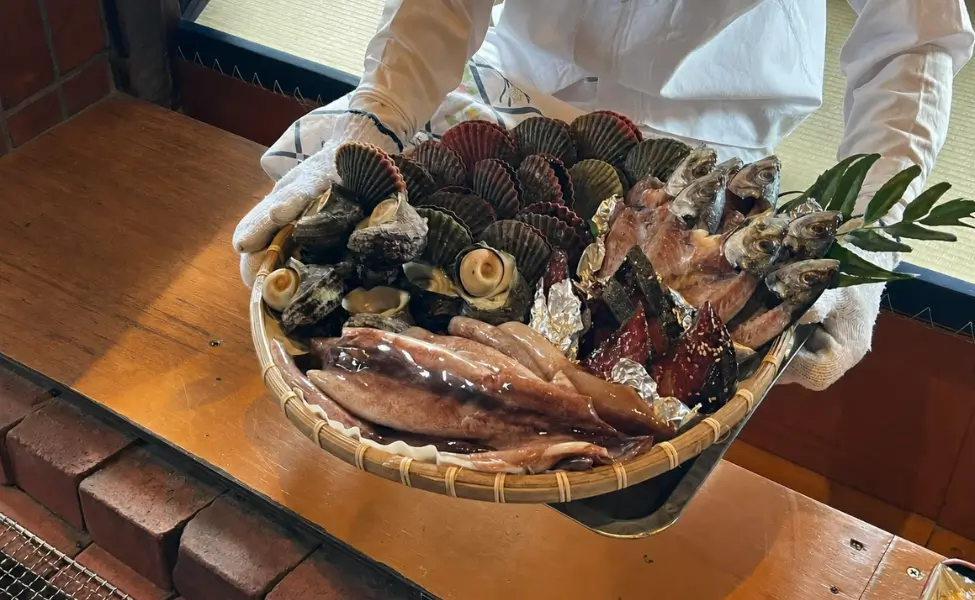
Premium courses featuring Ise lobster or abalone push toward 10,000 yen.
Book in advance, particularly in summer and on weekends.
Getting to Toba and Planning Your Day
Getting to Toba is straightforward from the main cities:
- From Nagoya (Kintetsu-Nagoya Station), approximately 1 hour 40 minutes by limited express, with services departing hourly.
- From Osaka-Namba, approximately 2 hours 15 minutes via Ise. Services also depart from Osaka-Uehonmachi.
Kintetsu is a private railway, so the Japan Rail Pass does not apply.
Limited express trains have fully reserved seating, meaning you need both the basic fare and a limited express charge.
Tickets are easy to buy at the station, and the machines offer English language options.
What to Combine With Your Visit
Most visitors pair the ama experience with Ise Jingu, Japan’s most significant Shinto shrine complex.

It sits roughly fifteen to twenty minutes from Toba by train, and the shrines justify half a day on their own.
You can combine Hachiman-Kamado and Ise Jingu as a long day trip from Nagoya, but the pace will feel rushed.
Staying overnight in Toba or Ise makes the experience considerably more relaxed, and both towns offer good accommodation and evening seafood.
Best Time to Go
The diving season runs from late April through September, with June, July, and August the most productive months.
Early September offers slightly lighter visitor numbers without much loss in terms of activity.
April and May are cooler but workable, and the Shima Peninsula is noticeably quieter during those months.
Outside the season, Hachiman-Kamado may reduce its schedule, so checking ahead rather than turning up unannounced is the practical approach.
Who This Experience Is Best For
This suits travellers who like food, coastal culture, slower travel, and meeting local people on their own terms.
It works well for anyone looking to spend a morning in an unusual setting without needing to organise complex logistics.
It is less suited to anyone expecting a dramatic live diving show at the hut itself.
Divers arrive after their morning session, not before it, and the focus is on the meal and the conversation rather than the water.
For a live diving demonstration, Mikimoto Pearl Island is the more reliable option.
Combining both in the same visit gives you the full picture.
Travelling with children is workable, since the format is relaxed and the food is excellent.
Parents should check with the hut in advance about seating and minimum age requirements for specific courses.
Questions Visitors Usually Ask
Modern ama divers wear white wetsuits, and have done so since the 1960s and 1970s when the suits became available. Historical photographs from the early and mid-twentieth century document the earlier practice, but it is not current. The white colour tradition has carried forward into the wetsuit era.
The short answer is yes. Most practitioners are now in their sixties, seventies, or eighties. Younger women in coastal communities are not taking up the profession in sufficient numbers to sustain it. The tradition is not about to disappear overnight, but the current generation of active divers is likely the last large cohort. Visiting now rather than adding it to a future list is the realistic advice.
The demonstration at Mikimoto Pearl Island runs on a regular schedule throughout the diving season. It is the most reliable way to watch divers in the water from close range. Watching working divers from the shoreline is possible in some villages but requires more local knowledge and is unpredictable. Hachiman-Kamado focuses on the post-dive gathering rather than the diving itself.
No. Hachiman-Kamado built its programme around international visitors from the start, and English support is available throughout the booking process and at the hut. The Ama Bus from Toba Station removes the transport complexity, and the staff are experienced with non-Japanese-speaking guests.
No. Female breath-hold divers known as haenyeo have practised the same tradition on Jeju Island in South Korea for centuries. The Jeju haenyeo joined the UNESCO Intangible Cultural Heritage list in 2016. Japan’s ama culture carries separate recognition as a national folk cultural asset. Mie Prefecture holds the largest active community of ama divers in the world.
