Fukui Prefecture serves Japan’s finest crab to the Imperial Family, yet most travellers rush past on the shinkansen without stopping.
This coastal region along the Sea of Japan houses one of the country’s most important Zen monasteries, features volcanic cliffs found in only three places worldwide, and offers authentic cultural experiences without Kyoto’s overwhelming crowds.
Who Fukui is perfect for:
- Travellers seeking culture without tourist masses
- Food enthusiasts focused on seasonal Japanese seafood
- Repeat Japan visitors wanting deeper experiences
- Anyone exploring Hokuriku or extending a Kansai itinerary
Quick Overview:
- Location: Northwest Honshu, part of the nine-prefecture Chubu region
- Best for: History, seafood, nature photography, temple seekers
- Ideal visit: 2-3 days
- Peak seasons: Spring (cherry blossoms), winter (crab), summer (fireworks)
Historic Sites and Landmarks
Eiheiji Temple: Where Zen Training Happens
If you want to see real Zen practice in action rather than temple tourism, this is the place.
Founded in 1244 by the monk Dogen, Eiheiji functions as one of two head temples of Soto Zen Buddhism.
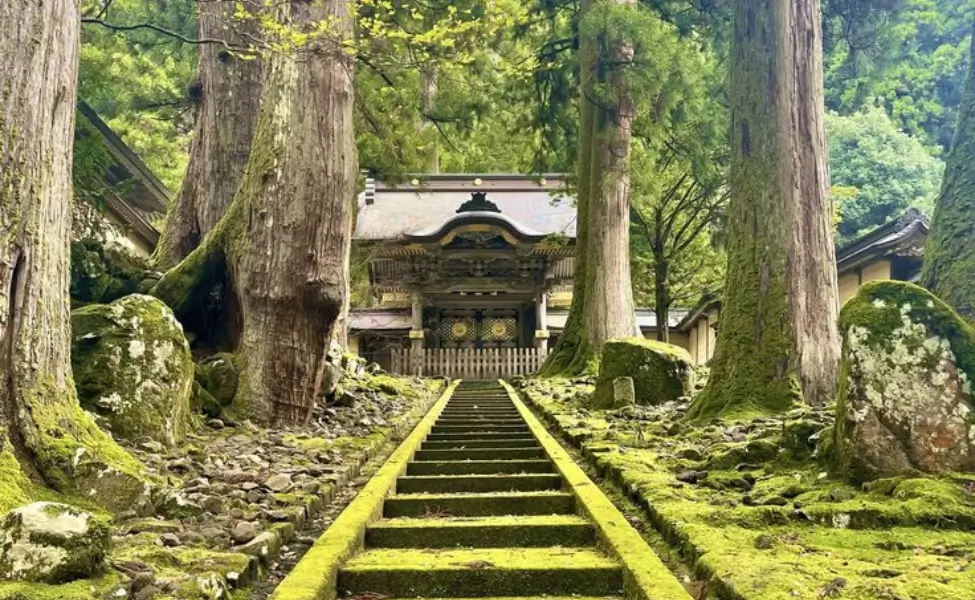
Over 150 monks train here in traditional practices, and the difference is palpable the moment you arrive.
Covered corridors connect more than 70 buildings across cedar-forested slopes.
Monks move purposefully between buildings, bells mark meditation periods, and the atmosphere carries genuine religious weight.
What to experience:
- Sanmon Gate (1749), the oldest structure still standing
- Buddha Hall with statues of past, present, and future Buddhas
- Founder’s Hall containing Dogen’s ashes
- Optional zazen meditation or overnight training (advance booking required)
Practical notes: The temple treats visitors as religious trainees, not tourists.
Photography of monks is prohibited.
You’ll remove your shoes at the entrance and carry them in provided bags.
English signage is limited.
How it compares: Kyoto’s Kinkakuji dazzles with gold leaf and Nara’s Todaiji impresses with size, but Eiheiji offers something rarer.
Witnessing living monastic practice in an authentic setting.
Getting there: Direct buses from Fukui Station (30 minutes, ¥720).
Alternative: Echizen Railway to Eiheiji-guchi Station, then connecting bus (12 minutes, ¥420). Admission: ¥500.
Maruoka Castle: Survival Through Disaster
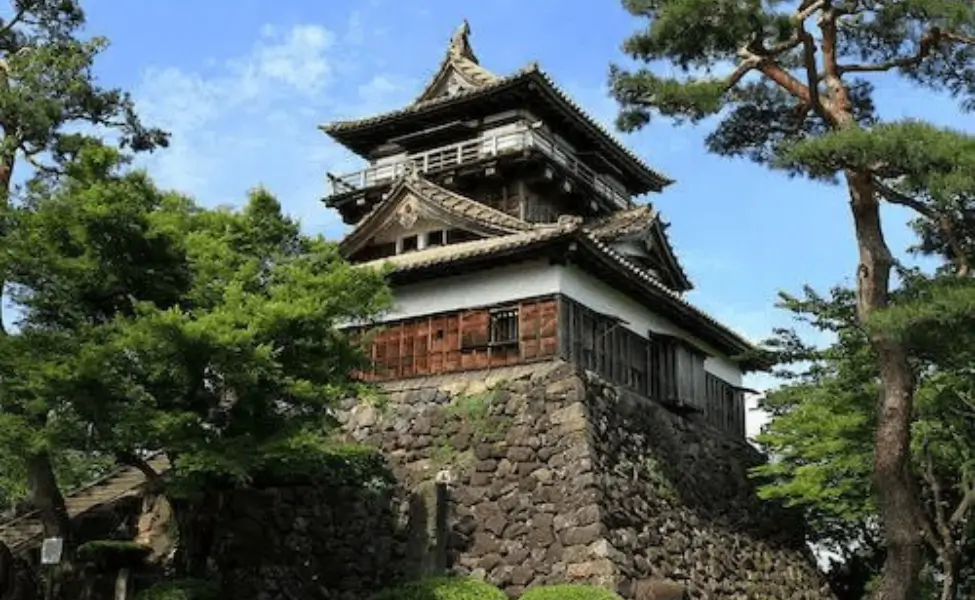
Built in 1576, Maruoka Castle sits at the centre of a fascinating debate.
It claims to possess one of Japan’s oldest castle keeps, though Inuyama and Matsumoto contest this.
Recent research suggests major reconstruction in the 1620s, complicating the story.
Then the 1948 Fukui earthquake completely destroyed it.
What makes Maruoka remarkable is what happened next.
Preservationists meticulously reconstructed the castle in 1955 using more than 70 percent of the original timbers.
This careful restoration created a legitimate historical structure rather than a concrete replica.
What makes it distinctive:
- Extremely steep interior staircases (65-67 degrees) functioning more like ladders
- Stone tile roof instead of typical clay (better for snowy winters)
- Original wooden interior preserving authentic atmosphere
- Compact size revealing true castle proportions
Best time: Early April when approximately 400 cherry trees bloom around the grounds.
Getting there: Keifuku Bus from Fukui Station (50 minutes, ¥670) or Awara Onsen Station (20 minutes). Combine with Tojinbo or Eiheiji for a full day.
Natural Wonders
Once you’ve covered temples and castles, the coastline delivers some of Fukui’s most dramatic scenery.
Tojinbo Cliffs: Rare Geology and Dark History
These cliffs are one of only a few columnar basalt formations of their kind in the world.
Twelve to thirteen million years ago, volcanic activity forced magma into sedimentary layers.
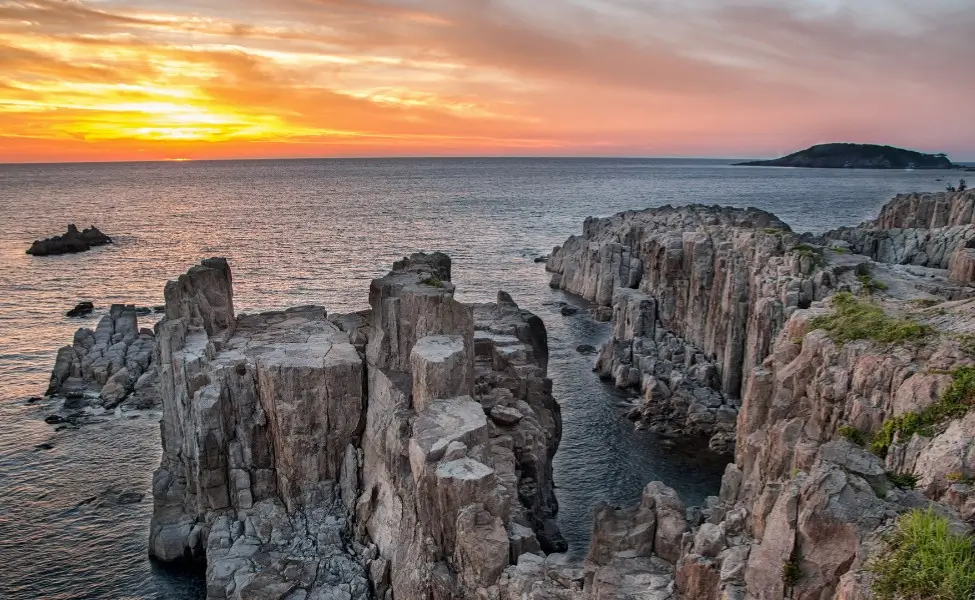
As it cooled, it formed dramatic hexagonal and pentagonal columns.
Wave erosion carved these into cliffs rising 30 metres above the Sea of Japan.
What you’ll see: Walking paths allow close approach to cliff edges, with metal railings at key points.
On clear days, views extend across the sea to distant coastlines.
The rock faces show distinct column patterns creating an almost architectural appearance.
Boat tours: 30-minute cruises navigate close to formations with local names like Lion Rock and Honeycomb Rock. The sea-level perspective reveals the cliffs’ true scale.
Tours operate 09:00 to 16:00 (¥1,300 adults, ¥650 children).
The legend and reality: Local folklore tells of a troublesome monk named Tojinbo pushed from these cliffs in 1182.
His vengeful spirit supposedly stirred the seas for 49 days until prayers calmed the waters.
The darker truth: approximately 15 to 25 people take their lives here annually.
Emergency phones connect to counselling services, and local NPO volunteers patrol offering help.
This sobering reality coexists with undeniable natural beauty.
Practical tips:
- Wear sturdy shoes (rough, uneven surfaces)
- Visit late afternoon for best light
- No barriers in many areas—watch your footing
- Allow 1-2 hours
Getting there: Keifuku Bus from Awara Onsen Station (40 minutes) or Mikuni Station via Echizen Railway (10 minutes by bus).
Commercial area nearby features seafood restaurants.
Asuwayama Park
This hillside park overlooking Fukui City offers both city views and natural trails.
Multiple paths accommodate different fitness levels.
Cherry trees dominate spring, whilst maples provide autumn colour.
Karikomichi Mountain Valley
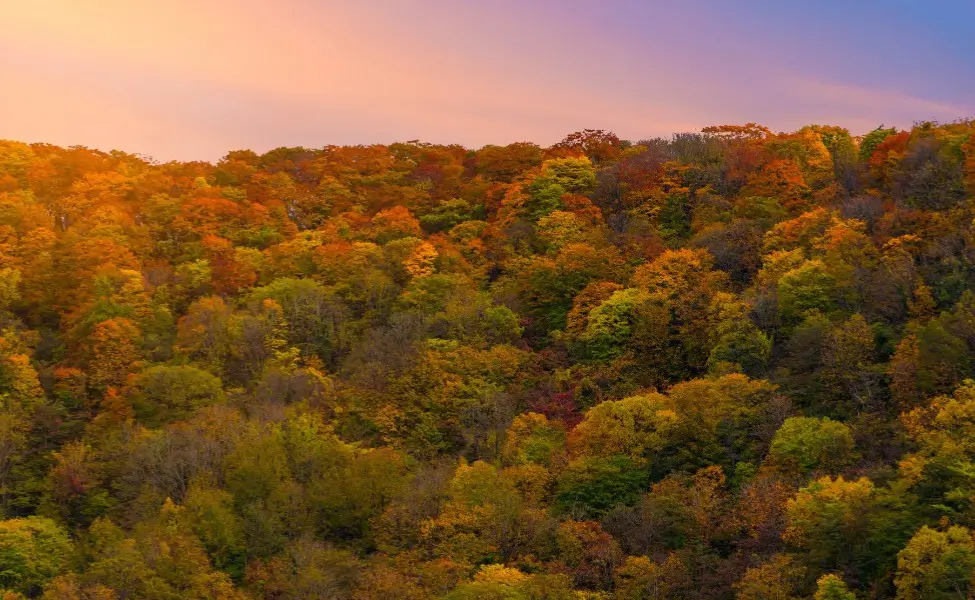
Karikomichi is a quiet mountain valley in Fukui Prefecture, known for its autumn colours and peaceful forest scenery.
The area sits near Ikeda town and draws visitors looking for a rural landscape rather than a crowded viewpoint.
One of the highlights is a traditional vine bridge that crosses a steep river valley.
Built from vines and wooden planks, it gives a light sway as you walk across and offers clear views of the water below through its gaps.
The surrounding forest is the real appeal.
Cedar groves, streams and simple walking paths make it easy to enjoy the landscape, especially in late October and early November when the valley turns red and gold.
Facilities are limited, so it is best suited to travellers who like quiet places and don’t mind a more rustic stop.
Cultural Experiences
Fukui Prefectural Dinosaur Museum
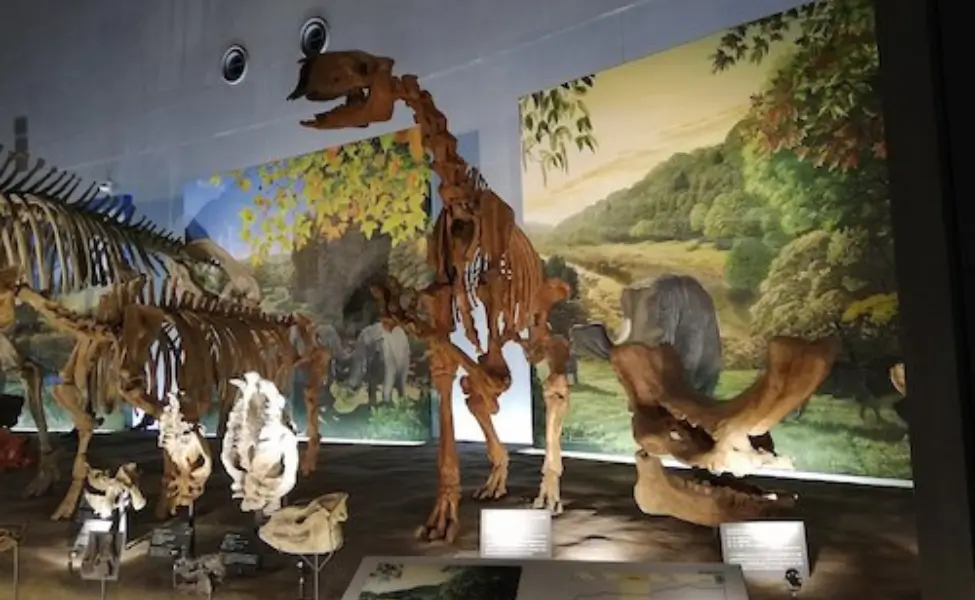
This world-class facility explains why Fukui earned its reputation as Japan’s premier dinosaur fossil site.
The massive building houses full-size reconstructions, many from local excavations.
What’s special:
- Interactive exhibits on palaeontology and geology
- Hands-on workshops and guided tours
- Actual fossil hunting at nearby dig sites (seasonal)
- Two local species: Fukuiraptor and Fukuisaurus
Serves both serious enthusiasts and families.
Access: Echizen Railway from Fukui Station to Katsuyama Station (45-50 minutes), then bus.
Consider the day pass (¥1,900) including museum admission and transport.
Yokokan Garden: Edo Period Retreat
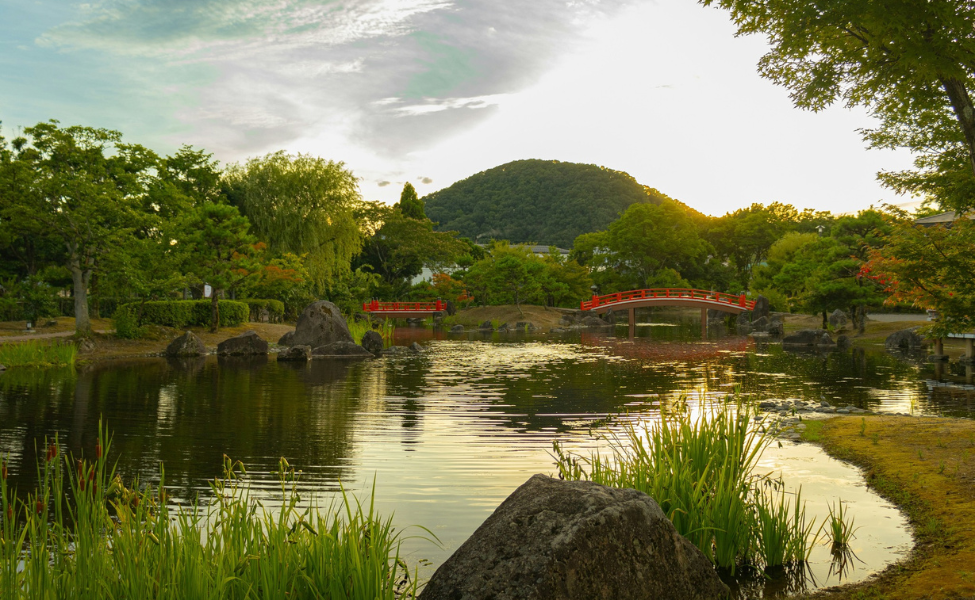
This traditional garden once formed part of the Matsudaira clan’s secondary residence.
The preserved villa shows how feudal lords lived, whilst the garden exemplifies classical landscape design.
Key features:
- Central pond creating mirror reflections
- Deliberately composed views from specific vantage points
- Winding paths revealing new perspectives
- Mature trees providing seasonal colour
Winter illumination: Evening lighting transforms the garden December to February, creating ethereal atmosphere against snow.
Peaceful contemplation in central Fukui. Admission: ¥220.
Food and Nightlife
Echizen Crab: Imperial-Quality Seafood
Fukui’s culinary reputation centres on Echizen crab.
Since 1922, this has been the only variety presented to Japan’s Imperial Household.
The finest specimens earn “Imperial Presentation Grade” certification marked by purple tags.
This one was a yellow.

What makes it special: Each authentic Echizen crab bears a yellow tag certifying Fukui port landing.
Boats depart at night, reach crab beds 35 kilometres offshore, and return the same evening.
Live crabs arrive within hours of capture.
Season: Early November to mid-March. Prices spike mid-December through early January.
Visit mid to late November or February to March for better value.
How it’s served:
- Boiled (classic preparation requiring precise timing)
- Sashimi (only possible near source, prepared like blooming flowers)
- Grilled, shabu-shabu, or kani miso (creamy innards)
Female crabs (seiko gani), available only November through December, are prized for their roe.
Price reality: ¥15,000 to ¥50,000 for a single premium male crab.
Restaurant set meals start around ¥8,000 to ¥10,000.
Soba and Sake
Fukui produces high-quality buckwheat resulting in excellent soba noodles.
Try oroshi soba with grated radish or in hot broth.
Local breweries like Tokoyama offer tastings and tours.
Fukui’s pure mountain water creates clean, refined sake profiles.
Nightlife
Fukui City – Katsuyama District: Cosy izakayas serve local sake with small dishes.
These fill with local workers, offering genuine interaction rather than tourist-focused service.
Takefu area near Nishiyama Park: Similar atmosphere with neighbourhood izakayas.
Warning: Last trains from outlying areas can depart before 22:00. Check schedules before settling in.
Transportation and Practical Details
Getting to Fukui
From Tokyo: Hokuriku Shinkansen to Tsuruga (approximately 3 hours), then transfer to limited express or local trains. Total journey: roughly 3.5 hours.
From Kyoto: Limited Express Thunderbird provides most convenient option. No transfers required. Journey time: approximately 1 hour 25 minutes.
From Osaka: Multiple Thunderbird services via Shin-Osaka and Kyoto. Journey time: approximately 1 hour 45 minutes.
From Kanazawa: Regular trains on JR Hokuriku Main Line. Journey time: roughly 1 hour 10 minutes.
IC card coverage: Suica, ICOCA, and major IC cards work on JR lines and some local buses. Coverage can be spotty in rural areas—carry cash.
Local Transport in Fukui
Trains: Echizen Railway serves local destinations, but frequency drops dramatically outside major stations. Some rural routes run only 3-4 times daily.
Check return schedules immediately upon arrival.
Buses: Keifuku Bus connects major tourist sites (Tojinbo, Eiheiji, Maruoka Castle).
Last buses from remote areas may depart by 16:00 or 17:00.
Luggage: Use coin lockers at Fukui Station (¥300-¥600) or hotel storage rather than hauling bags on local transport. Many rural buses have limited space.
Practical transport tips:
- Download offline maps and timetables
- Photograph station names in Japanese to show drivers
- Miss a bus and you might face expensive taxi rides
- Last trains depart earlier than major cities
Goodwill Guides: Volunteer guides at major sites provide free assistance with directions, transport, and orientation. Ask at tourist information centres.
Accommodation Options
Awara: Hot Spring Town
Located in northern Fukui, Awara has welcomed onsen visitors for over 135 years.
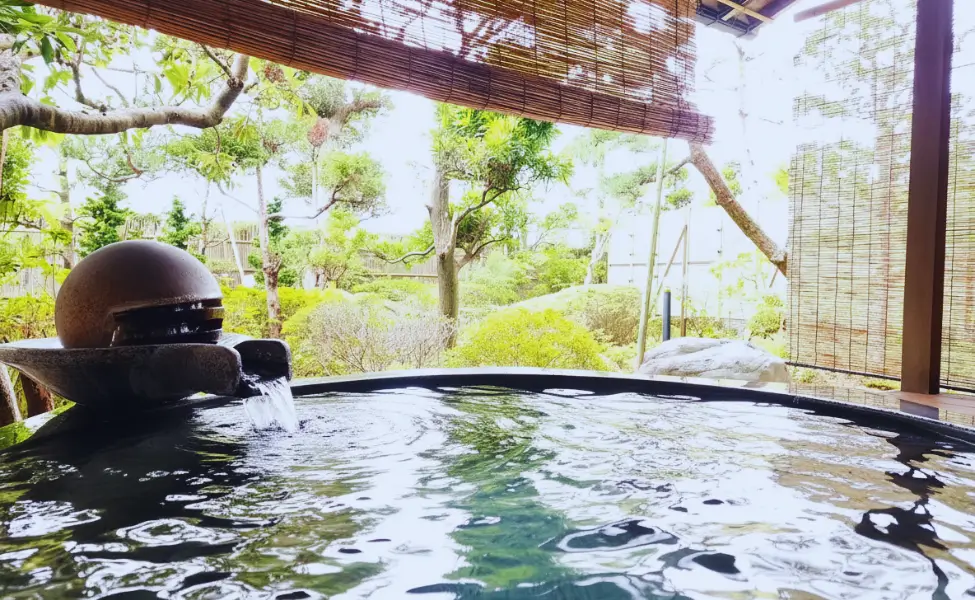
What to expect: Prices generally range ¥15,000 to ¥40,000 per person per night, including kaiseki-style dinner and breakfast.
Most ryokan include private onsen facilities, though several public bathhouses welcome day visitors.
Examples include: Traditional options like Mimatsu (gardens and open-air baths), Yukai Resort Hakusan Shoubutei (Japanese and Western rooms), or smaller family-run places like Yumeya (intimate atmosphere, home-cooked meals).
Look for options for Fukui accommodation here:
Who it suits: Travellers wanting traditional ryokan experience whilst maintaining access to Tojinbo and coastal attractions. Less convenient for temples and castles around Fukui City.
Booking: Reserve well in advance for weekends, holidays, and crab season (November to March).
Some ryokan have minimum stays or don’t accept solo travellers.
Fukui City
For budget-conscious flexibility, base in Fukui City.
Business hotels near the station (¥6,000-¥10,000 per night) provide straightforward accommodation with easy access to trains and buses.
Seasonal Events
Mikuni Fireworks: Coastal Spectacle
Held annually on August 11 at Mikuni Sunset Beach, this display ranks among Hokuriku’s most spectacular summer events.

Award-winning Horiuchi Fireworks launches 10,000 to 15,000 fireworks over 60 minutes.
We have visited 3 times overall and loved it.
What makes it special: “Water fireworks” serve as the signature.
Pyrotechnicians throw lit fireworks from boats into the sea, creating semicircular explosions reflecting on the water.
Combined with giant two-foot shells and music-synchronized displays, this creates effects impossible at inland venues.
Viewing options:
- Free viewing along beach (arrive several hours early)
- Premium reserved seating
- Local ryokan viewing parties (book months ahead)
Practical reality: Expect massive crowds (200,000+ people).
Public transport gets overwhelmed. Consider staying overnight in Mikuni or Awara.
Last trains depart earlier than normal, and taxis become impossible after the show.
Fireworks run 19:30 to 20:30.
Bring:
- Folding chairs or mats
- Insect repellent
- Drinks and snacks (vendors sell out early)
- Portable charger (networks get congested)
Beaches Worth Visiting
Mikuni Sunset Beach: Golden sand and dramatic sunsets.
Hosts summer fireworks.
Swimming July to August.
Public facilities available.
Suishohama Beach Park: Clear water and peaceful atmosphere.
Less developed than Mikuni but maintains clean facilities.
Ideal for families.
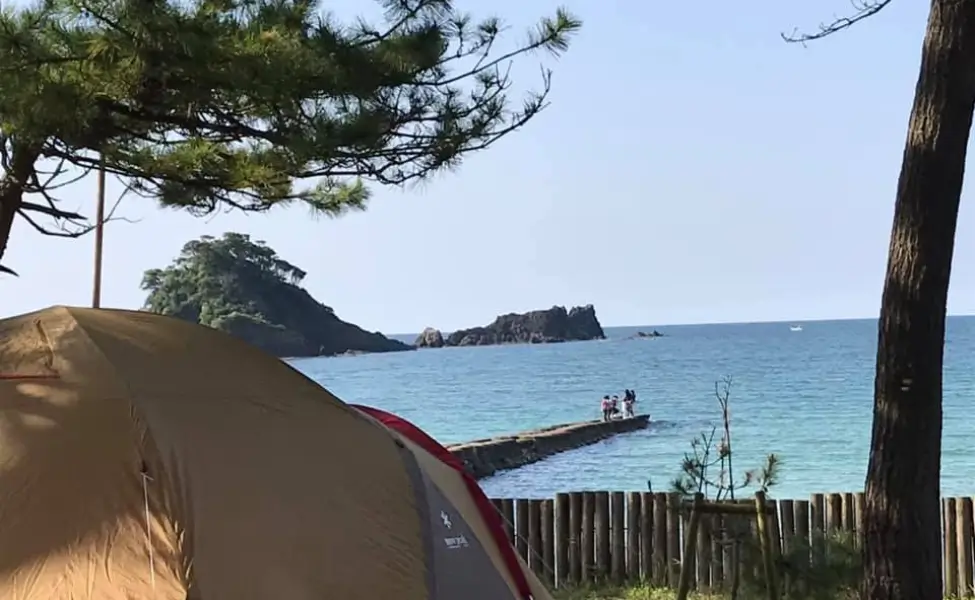
Takahama’s Blue Flag Beach: Meets international environmental standards (rare in Japan).
Excellent swimming and windsurfing.
Blue Flag indicates consistent water quality monitoring and lifeguard presence.
Planning Your Visit
Suggested Itineraries
2-Day Fukui Sampler:
- Day 1: Eiheiji Temple (morning), Fukui City lunch, Yokokan Garden, evening in Fukui City
- Day 2: Tojinbo Cliffs (morning), Mikuni seafood lunch, Maruoka Castle (afternoon)
- Base: Fukui City hotels
3-Day Deep Dive:
- Day 1: Arrive via Thunderbird from Kyoto, Eiheiji Temple, check into Awara onsen
- Day 2: Tojinbo Cliffs, Mikuni area, Maruoka Castle, return to Awara
- Day 3: Fukui Dinosaur Museum (morning), Yokokan Garden, depart via Thunderbird
- Base: Awara onsen (2 nights) + Fukui City hotel (optional)
Winter Crab Focus:
- Day 1: Arrive, Echizen Crab Museum, crab specialist dinner
- Day 2: Eiheiji Temple, evening at Awara onsen with crab kaiseki
- Day 3: Tojinbo Cliffs, departure
- Base: Mix of Fukui City and Awara
Best Times to Visit
Spring (April to May): Cherry blossoms, mild weather, comfortable walking.
Cherry peak (early April) brings crowds.
Highlight: Maruoka Castle with 400 blooming cherry trees.
Summer (June to August): Beach activities, fireworks, long daylight.
Heat, humidity, occasional typhoons, higher prices.
Highlight: August 11 fireworks spectacular.
Autumn (October to November): Comfortable temperatures, autumn foliage, smaller crowds.
Typhoon season extends into early autumn.
Highlight: Maple colours at Eiheiji and Asuwayama Park.
Winter (December to March): Echizen crab season, snow-covered scenery, fewer tourists.
Cold, potential transport delays, reduced hours.
Highlight: Fresh Echizen crab and winter illumination at Yokokan Garden.
What to Pack
All seasons: Comfortable walking shoes, IC card or cash, basic Japanese phrases, portable charger
Spring/Autumn: Layers, light rain jacket, sun hat
Summer: Sun protection, insect repellent, breathable clothes, water bottle
Winter: Warm coat, thermal layers, waterproof boots, hand warmers
Language Considerations
English signage and staff remain limited outside major sites like Eiheiji and the Dinosaur Museum.
Helpful strategies:
- Download offline translation apps
- Photograph station names to show taxi drivers
- Book accommodations confirming English communication
- Carry hotel address card in Japanese
- Learn basic phrases
Goodwill Guides help bridge gaps at major attractions, but don’t assume English availability everywhere.
Frequently Asked Questions
Yes, especially for travellers seeking authentic Japanese experiences without crowds. The combination of active Zen monastery, rare geological formations, Imperial-grade seafood, and relatively few international tourists makes it distinctive.
Two to three days covers major highlights comfortably. Two days suits those combining Fukui with Kanazawa or Kyoto. Three days allows for slower pace including onsen stays.
Echizen crab (November to March) is the signature, presented to Japan’s Imperial Family since 1922. Also known for buckwheat soba and local sake.
Technically yes (1 hour 25 minutes by Thunderbird), but you’ll only hit one or two attractions. Better as an overnight stop or 2-3 day destination.
Fukui City for budget and transport convenience. Awara for traditional onsen experience with access to coastal attractions.
No. It’s one of Japan’s less-visited prefectures, particularly compared to Kyoto, Kanazawa, or Tokyo. Expect authentic local atmosphere.
Is Fukui Worth Your Time?
Fukui rewards travellers who venture beyond Japan’s standard routes.
You can witness active Zen training in mountain monasteries, walk along 13-million-year-old geological formations, and eat crab good enough for the Imperial Family.
The prefecture’s relative obscurity enhances the experience.
You’ll encounter genuine local life, eat at restaurants serving locals rather than tour groups, and explore temples functioning as religious centres.
Just don’t expect everything to come easily.
But that’s what makes Fukui prefecture feel like discovering something special rather than ticking boxes on a standard itinerary.