
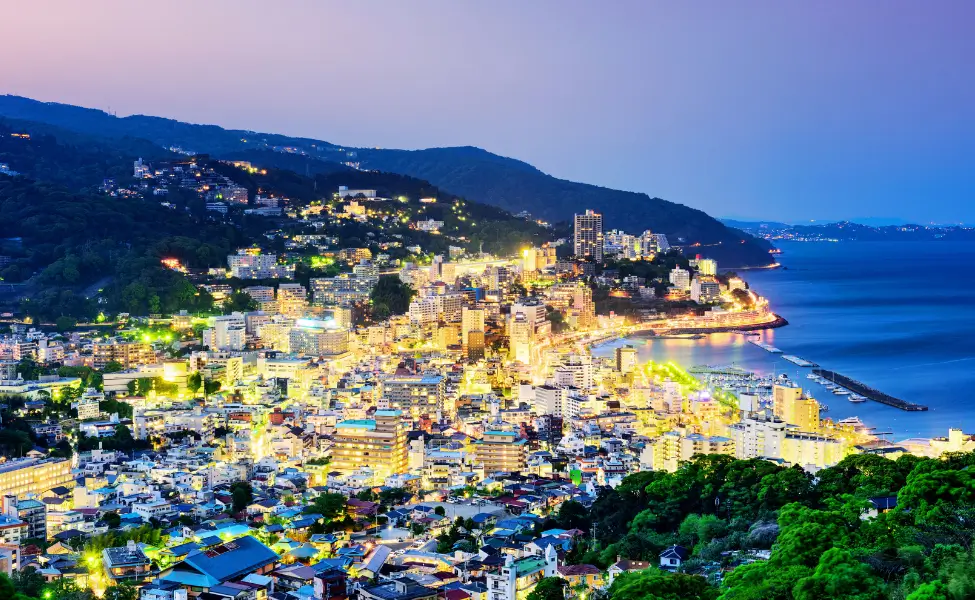
If you’ve done Tokyo, Kyoto, and Osaka and you’re planning a return trip that actually surprises you, you already know the problem.
Every itinerary online leads to the same cities.
Most places earn their English write-up long after the interesting work is done, leaving copy-and-paste recommendations clustered around the same handful of stops.
A while back, the Japan Insider Secrets community on Facebook received a single question.
“What is one place in Japan you loved that hardly anybody talks about?”
Hundreds of responses came back, and what they painted was not a tidy list of secrets.
It was a picture of Japan as it actually feels when you step away from the standard circuit and pay attention to places that earned their reputation through someone’s real experience rather than someone’s algorithm.
What unites the recommendations is specificity and feeling, often expressed years after the visit.
That is a better filter than any travel committee could produce.
Some of the most recommended places included:
- Matsusaka (Mie) for wagyu, castle ruins, and a pace of life nobody rushes
- Hagi (Yamaguchi) for samurai streets and ocean-facing ruins at the end of a long road
- Bizen (Okayama) for ancient pottery kilns and the town built around them
- Matsushiro (Nagano) for samurai heritage and a wartime tunnel network hidden under the hills
- Takayama (Gifu) for a preserved mountain town that earns every good thing said about it
- Hakodate (Hokkaido) for architecture, seafood, and a morning fish market unlike anything else in northern Japan
- Kamikochi (Nagano Alps) for a glacial valley that somehow escapes most itineraries
- The Kumano Kodo (Kii Peninsula) for one of only two UNESCO-listed pilgrimage routes in the world

If a place appears in this article, someone in the community put their name to it.
Tokyo Neighbourhoods Most Visitors Never Sleep In
Most people book accommodation in Shinjuku or Shibuya and never question it.
That’s understandable.
It is also a missed opportunity.
The Tokyo responses all pointed to places visitors never think to stay.
Shin-Koiwa earned real warmth.
One traveller described staying there with her husband and loving the quiet, unhurried quality of the neighbourhood, the ease of the train station, and what she called some of the best ramen of their entire trip.
She also noted that she often hears people speak negatively about Shin-Koiwa, which says more about internet travel advice than it does about the place.
The neighbourhood sits in the east of the city along the JR Sobu Line and feels nothing like Shinjuku or Shibuya.
A Monchhichi-themed park and a dense shopping street give it local texture.
The daily pace of life there is a reminder that Tokyo is where nine million people actually live.
Motosumiyoshi, in Kawasaki, runs along the Tokyu Den-en-toshi and Tokyu Meguro lines and has the same relaxed character you find in places where nobody has decided yet that they need to attract tourists.

Koenji kept coming up for its vintage record shops and second-hand toy stores rather than as a general destination. Treat it as an afternoon in second-hand culture rather than a neighbourhood to tick off.
Underrated Cities in Japan Worth a Proper Stay
Matsusaka
Most people skip Matsusaka.
That’s their loss.
The city, in Mie prefecture, drew some of the most enthusiastic responses in the thread.
One person described it as somewhere you truly feel like a local, with historical sites, cultural experiences, and outstanding food. Japanese people know Matsusaka primarily for its wagyu beef, which rivals Kobe in quality but attracts a fraction of the visitors.

Its castle ruins draw almost no international tourists.
The surrounding streets carry an unhurried quality that is increasingly rare in Japan’s more celebrated destinations.
If you are travelling through Mie to visit Ise Jingu anyway, Matsusaka deserves a night, not just a lunch stop.
Chiba City and the Greater Tokyo Fringe
Chiba City barely features on most Japan itineraries.
That is a mistake.

It featured repeatedly in the thread, surprising people who knew it only as the place the airport train passes through.
The city has a legitimate food scene, accommodation prices considerably lower than central Tokyo, and enough character to warrant a proper stay rather than a transit stop.
Machida, in Tokyo’s south-west, and Isehara, in Kanagawa, both attracted advocates who described them as second hometowns rather than tourist destinations.
One commenter had lived in Isehara for nearly twenty years and spoke about it with obvious affection.
That kind of sustained attachment tells you something about a place that no travel review can.
Historic Towns in Japan Worth the Journey
Hagi and Bizen
Hagi, in Yamaguchi prefecture, earned some of the strongest praise in the entire thread.

You reach it after a long journey to the far western end of Honshu, past the point where most itineraries stop.
From the station, you rent a bicycle and ride through streets that preserve their samurai-era layout, ending at castle ruins looking out over the ocean.
The effort required to get there is part of what Hagi is.
Geographic inconvenience has kept this town exactly as it is.
Bizen, in Okayama prefecture, produced a response specific enough to act on.
The commenter pointed to Bizen holding the oldest of Japan’s six ancient kilns, a town full of handmade pottery, welcoming locals, and a good café at the station.

Potters fire pieces for up to ten days at high temperatures without any glaze, and the flame patterns that result are unrepeatable.
A day wandering between kilns and studios gives you a more grounded sense of Japanese craft culture than any museum exhibit could manage.
Matsushiro
Matsushiro sits on the outskirts of Nagano City, and most visitors never go.
It was the castle town of the Sanada clan.

Preserved samurai streets, a partially reconstructed castle, and an underground imperial headquarters dug into the mountains in 1944 all survive there.
Visitors can walk 500 metres of the tunnel network.
The story it tells about Japan’s final year of the war is striking and almost entirely unknown to international travellers.
Takayama
Takayama drew more recommendations than almost anywhere else in the thread.

One person described visiting in winter when snow was falling and the microbreweries were open.
Evenings meant the lit-up Hida Folk Village.

Day trips covered Shirakawa-go and the Shinhotaka Ropeway.
Another commenter simply wrote the town’s name twice, as though once was not sufficient.
Takayama sits in the mountains of Gifu prefecture, accessible by limited express train or highway bus.
Its preserved old town centre feels clearly inhabited rather than maintained for display.
The morning markets and the sake breweries along Sanmachi Suji contribute to why people who have been there tend to feel strongly about returning.
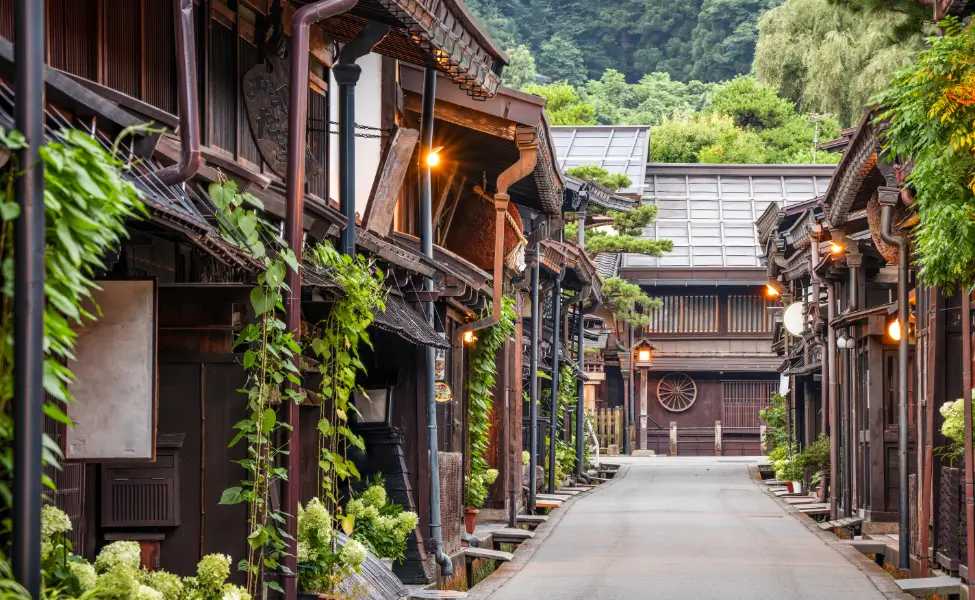
This is where Japan slows down.
Japan Landscapes Worth Going Out of Your Way For
Kamikochi, in the Northern Japan Alps, received a response that captured it simply.
One person wrote that it never gets mentioned but that it is beautiful, and left it at that.
The valley is a flat-bottomed glacial basin surrounded by peaks that include some of the country’s highest mountains.
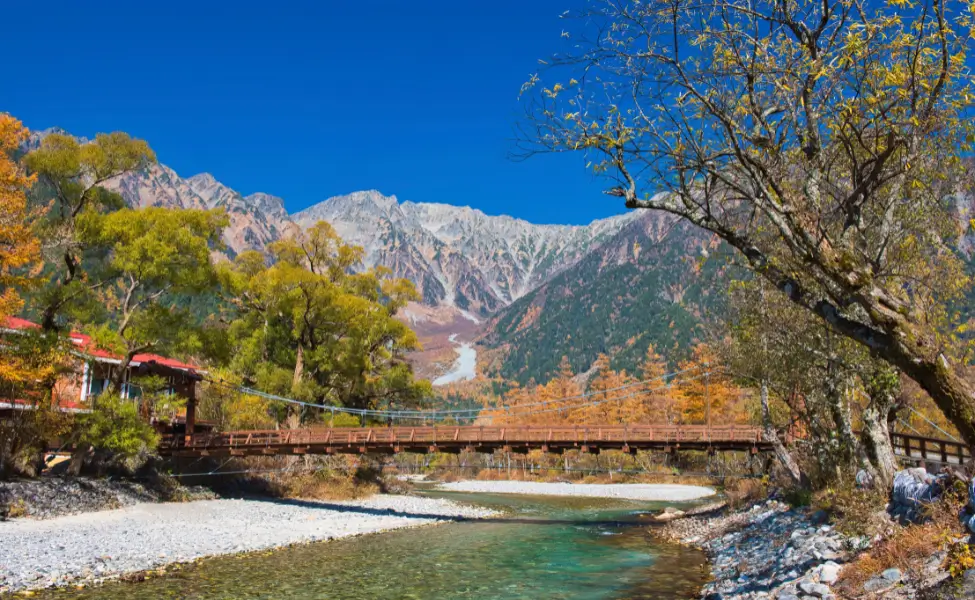
Private vehicles are banned, so you reach it by bus from the Matsumoto area.
Given how easy the access is and how extraordinary the scenery is, its near-absence from most English-language itineraries is hard to account for.
Kurobe Gorge, in Toyama prefecture, drew consistent personal feeling.

A narrow-gauge railway runs through the gorge from late April to late November.
The scale of the landscape does not translate well into photographs.
Toyama prefecture as a whole is one of Japan’s most underrepresented regions in travel writing, and Kurobe is its most dramatic feature.
The Izu Peninsula kept coming up for its coastline and relative absence of crowds, at least outside peak Japanese holiday periods.

The eastern coast around Ito and Shimoda and the wilder western side around Dogashima offer distinct experiences, both worth time.
The Tango Peninsula in northern Kyoto prefecture faces the Sea of Japan rather than the Pacific.
That gives it different weather and a different quality of light, and its small fishing villages and the sand spit of Amanohashidate attract far fewer visitors than proximity to Kyoto would suggest.

Remote Coastal Landscapes Most Travellers Miss
Haboro, a small town on Hokkaido’s north-west coast, earned a detailed and affectionate write-up from one commenter who had gone there to meet relatives she had never previously known.
She described the coastal road, remarkable plant life, and outstanding food with evident feeling.
The climate reminded her of the Pacific Northwest.

Haboro appears in conversations like this precisely because it has no obvious reason to be on anyone’s itinerary.
The people who end up there pay attention in ways that more obvious destinations rarely inspire.
Hokkaido Beyond Sapporo
Hakodate
Hakodate may be the most enthusiastically recommended city in the entire thread.

Multiple people came back to it with evident feeling.
One described the sea-facing temperatures as feeling like minus eighteen degrees.
The architecture struck them as completely unlike anywhere else in Japan, shaped by Western and religious influences that give the old Motomachi district a European quality that is completely disorienting in the best possible way.
Another wrote that it has everything without the crowds, and that the locals are among the friendliest in Japan.
A third gave it ten out of ten followed by a heart.
Hakodate sits at the southern tip of Hokkaido.
Since the Hokkaido Shinkansen opened in 2016, Tokyo is roughly four hours away, with a short shuttle onward from the bullet train terminal.
Its morning fish market, the ropeway night view, and outstanding seafood make it one of the most complete city experiences in northern Japan.

Most people never make it past Sapporo.
That is their loss.
Asahikawa, Mombetsu, and Noboribetsu
Asahikawa earned simple but clear endorsement.
The vast Daisetsuzan wilderness uses it as a main gateway, but the city gets only a fraction of the attention Sapporo attracts.
Its ramen tradition is serious, the winter snowfall is exceptional, and the surrounding wilderness is accessible in a way Sapporo’s urban sprawl cannot match.

Mombetsu, on Hokkaido’s Okhotsk Coast, drew repeated mention.
Drift ice in winter is its most striking feature, viewable from shore or from an icebreaker.
Very few international itineraries reach this far up the island’s northern coast, which is part of what gives it the remote character people describe.
Noboribetsu was pointed to consistently as a place that deserves far more attention than it typically receives.
Its Jigokudani thermal valley steams and bubbles in the middle of the town.

The range of bathing facilities there is remarkable.
Underrated Destinations in Southern Japan
Beppu, on Kyushu’s east coast, drew responses that positioned most of Kyushu as underrated.
Its onsen culture operates on a scale unlike anywhere else in Japan.
More hot spring sources flow through Beppu than through any other city in the world, with bathing experiences ranging from conventional ryokan baths to sand baths and mud baths.
The Jigokudani Hells thermal pools run in dramatically different colours that photographs barely convey.

Kirishima came up alongside Miyazaki, making the case for southern Kyushu beyond Fukuoka and Nagasaki.
Saga City also appeared, a prefectural capital within easy reach of Arita and Imari, two of Japan’s most important porcelain towns.

The Yaeyama Islands drew Ishigaki as the most frequently mentioned destination, with responses pointing to striking beaches and traditional pearl divers still working the surrounding waters.
Ferries from Ishigaki reach neighbouring islands, which include some of the most intact coral reef environments in the region.

Yonaguni Island, the westernmost point of Japanese territory, appeared with a single horse emoji that communicated considerable personality.
People come for the wild Yonaguni horses, the extraordinary diving, and a remoteness that feels absolute.
Amami Oshima, in the Ryukyu chain between Kyushu and Okinawa, carries a distinct cultural character shaped by its history as a separate kingdom. Its jungle interior and beaches need no comparison to justify themselves.
Tanegashima, directly south of Kyushu, combines space programme history, outstanding surfing, and a daily pace that feels disconnected from the mainland.
Pilgrimage Routes and Sacred Sites Worth Finding
The Kumano Kodo, the ancient pilgrimage network on the Kii Peninsula, was mentioned with the brevity that suggests it speaks for itself.
It holds UNESCO World Heritage status alongside the Camino de Santiago.
Together they are the only two pilgrimage routes in the world to carry that designation.
The Nakahechi route, from near Tanabe to Kumano Hongu Taisha, is the most accessible choice for walkers planning a multi-day trip.
Even a single section on foot gives a sense of why people have walked this trail for more than a thousand years.
The Shimanami Kaido, the cycling route connecting Honshu and Shikoku via bridges and islands across the Seto Inland Sea, drew consistent enthusiasm.

Despite being well known among cycling communities, it remains relatively unfamiliar to general visitors.
Sea views, island character, and the rhythm of the ride combine into an experience difficult to replicate anywhere else in Japan.
Ise Jingu, in Mie prefecture, is Japan’s most sacred Shinto site, home to the inner shrine dedicated to Amaterasu, the sun goddess.

Priests rebuild the complex every twenty years in a ceremony that has run continuously for around 1,300 years.
The buildings are spare, ancient-looking cypress structures set in forest that produces a quality of quiet that feels almost physical.
Most international visitors to Japan never go.
Ohara, a cluster of temples in the mountains north of Kyoto, earned quiet, certain endorsement. It sits far enough from the city centre that day-trippers rarely make it there.
What People Actually Remembered
Some of the most resonant responses in the thread were not place names at all.
Several things kept coming up across different people, different regions, and different types of trip.
- Outdoor onsens in winter. Hot water, cold air, open sky. Almost impossible to explain to someone who hasn’t tried it.
- Independent music scenes that keep pulling people back long after the famous sights have lost their novelty.
- Second-hand culture in neighbourhoods like Koenji, where an afternoon in vinyl and vintage toys felt as worthwhile as any temple.
- No plan at all. And better memories because of it.
The cities and towns people mentioned were containers for something else.
What they were really describing, even when they named a specific place, was the feeling of being somewhere that made attention worthwhile.
That is the difference.
Most itineraries show you Japan’s highlights.
These places show you Japan itself.

