
Have you ever dragged a heavy suitcase through crowded Tokyo streets while trying to enjoy your vacation?
It turns every fun outing into an exhausting chore.
You want to explore temples and shops, but the weight slows you down.
Coin lockers in Japan offer the perfect solution.
For just 300 to 1,000 yen per day (that’s about the cost of a coffee or two), you can store your luggage at thousands of locations across the country.
Whether you’ve checked out of your hotel early or have hours to kill before your flight, these sturdy metal boxes give you the freedom to explore without the burden.
You’ll see them at train stations, airports, and shops.
They come in sizes from small backpack compartments to extra-large units for full suitcases.
How Coin Lockers Work in Japan
Using a coin locker in Japan is easier than you might think.
The systems are simple, and you’ve got several payment options to choose from.
Each locker comes with time limits and hours that can change depending on where you are.
Types of Coin Lockers
You’ll usually see two main types of coin lockers around Japan.
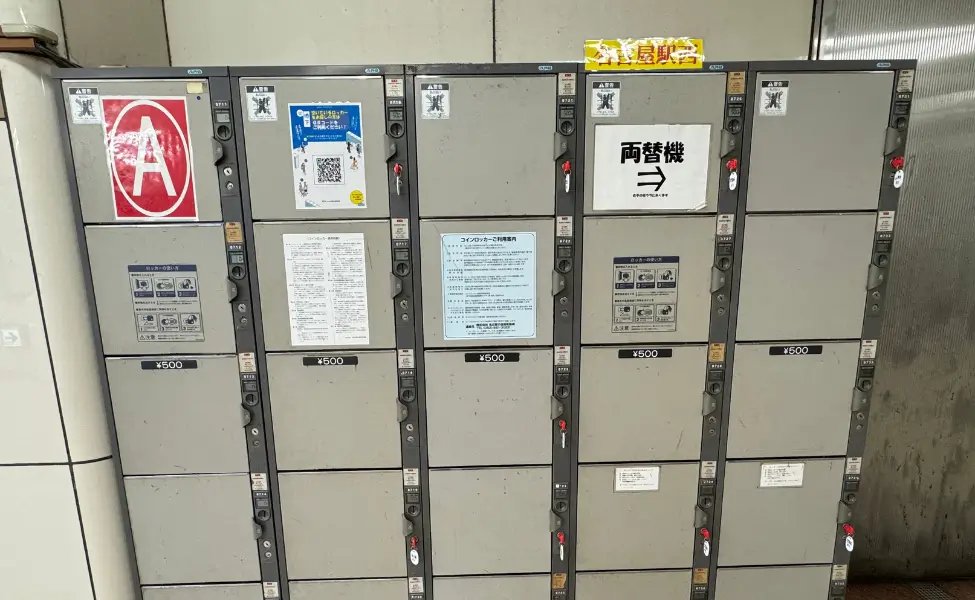
You’ll find traditional key-operated lockers at nearly every train station in Japan.
Key-Operated Lockers These are straightforward.
You put in your coins, store your luggage, and close the door.

The key pops out once you’ve paid and locked up.
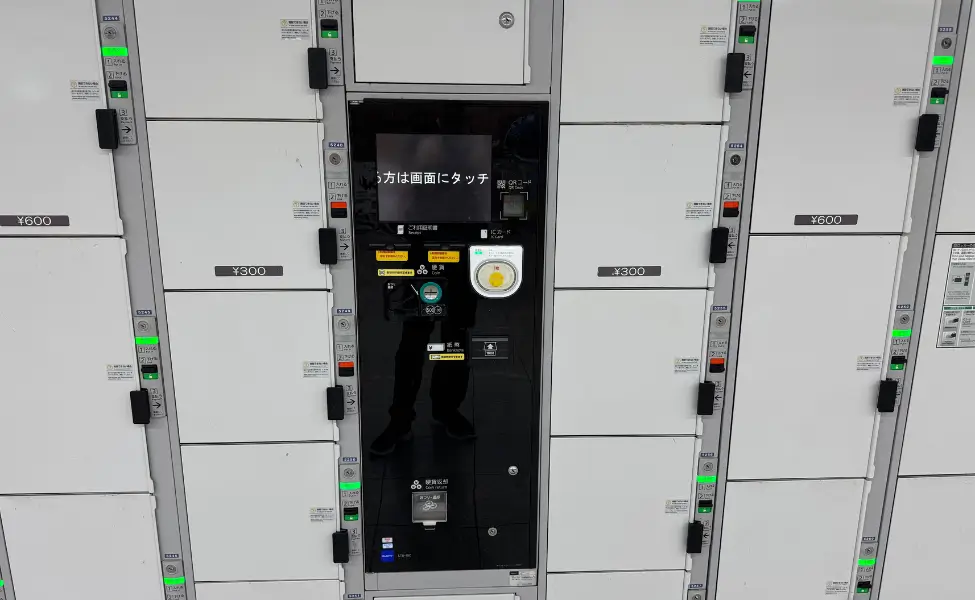
Digital Panel Lockers Modern stations have electronic lockers with digital displays.
You put your bag in, lower the lever until the light turns red, then pay and confirm at the panel.
Payment Options Most lockers take 100-yen coins only.
Newer ones in big stations also accept IC cards like Suica and PASMO.
If you’re planning to use trains frequently during your trip, you’ll probably have one of these cards anyway.
Some lockers even accept larger bills if you’re out of change.
Coin Locker Sizes and Fees
Now that you know which type of locker you’re looking for, let’s talk about what they’ll cost you.
Keep in mind that even the “large” lockers aren’t massive.
Oversized luggage might not fit, so it’s good to check the measurements ahead of time.
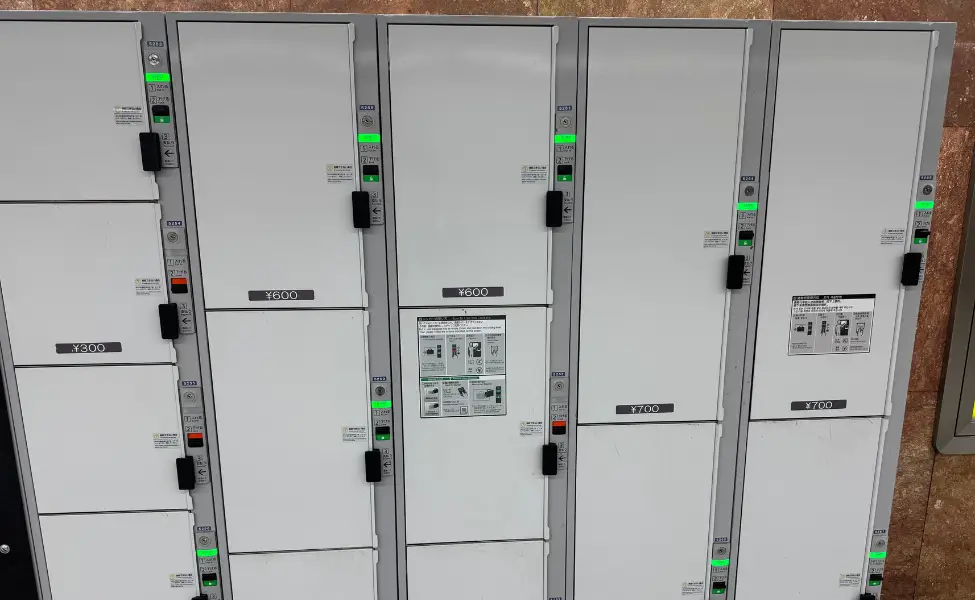
Lockers usually come in four sizes, with prices ranging from 300 to 1,000 yen per day depending on the station and size.
Small Lockers (300-400 yen) These are about 35cm x 34cm x 57cm.
You can use them for handbags, shopping bags, or a small backpack.
Medium Lockers (400-600 yen) Medium lockers measure roughly 57cm x 34cm x 57cm.
They fit a bigger backpack or a small suitcase.
Large Lockers (600-800 yen) The largest standard lockers are around 117cm x 34cm x 57cm.
You can fit big suitcases or a couple of bags, but these fill up fast.
Extra-Large Lockers (900-1,000 yen) Some major stations offer extra-large lockers measuring around 1,153mm x 355mm x 575mm.
These can hold two carry-ons or a large suitcase plus another bag, but availability is very limited.
Locker Availability and Reservations
Coin lockers traditionally work on a first-come, first-served basis.
However, some stations now offer reservation systems through apps and websites that allow you to check availability and reserve lockers in advance.
Operating Hours Most lockers open from the first train until the last, usually about 5:00 AM to midnight, depending on the station.
Time Limits You can use each locker for up to three calendar days.
Worried about the three-day limit?
Don’t be.
After that, staff clear them out and store your belongings somewhere else.
Peak Times Timing matters more than you might expect.
Large lockers disappear quickest during busy travel seasons.
On weekends and holidays, finding an available big locker is tough, especially in major stations.
Once you take your things out, you’ll need to rent a new locker if you want to store anything again.
Where to Find Coin Lockers: Major Locations and Tips
Coin lockers are everywhere in Japanese train stations, with the biggest clusters at places like Tokyo Station.
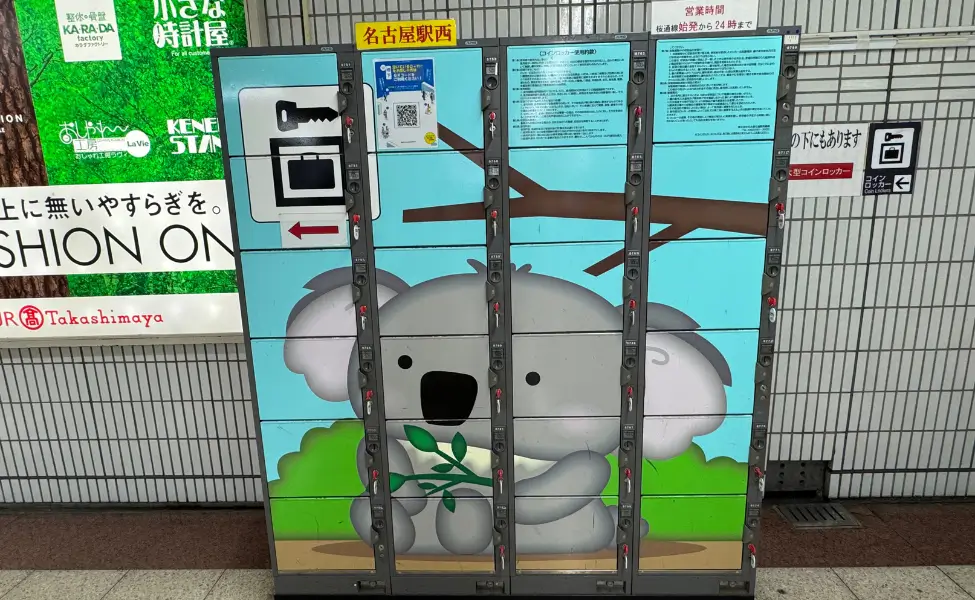
Regional stations like Kanazawa and Nagoya have reliable options, too, for when you’re venturing outside the big cities.
Coin Lockers at Train Stations
If you’re looking for coin lockers, head straight to the nearest train station.
That’s where you’ll find the most options.
Almost every station has them, from crowded city hubs to smaller local stops.

You look for lockers near ticket gates and main entrances.
Most stations place them in busy spots for easy access. You’ll usually find several sizes grouped together.
You’ll typically find coin lockers clustered near ticket gate entrances and exits, tucked into underground passages and walkways, positioned in main concourse areas, and sitting right next to tourist information centers.
The busiest stations often have several locker areas.
If you have no luck at the first spot, check another.
Airport stations like Narita and Haneda also offer plenty of lockers.
This makes them perfect for storing luggage between flights or before hotel check-in time.
Tokyo Station and Key Urban Hubs
Tokyo Station has more coin lockers than anywhere else in Japan, with over 1,500 lockers across more than 100 locations.
You’ll find them in Marunouchi, Yaesu, and the underground passages.
At Tokyo Station, prices typically range from 300 yen for extra-small lockers to 900 yen for large ones.
The Marunouchi Central Gate area has lockers both inside and outside the ticket gates.
You can usually store your bags here for quick access to the Imperial Palace.

Yaesu South Gate has another big cluster.
The B1F underground passage connects different areas and has plenty of lockers in all sizes.
Other major Tokyo stations worth knowing about include Shinjuku Station, where lockers are scattered around East and West exits.
Ueno Station has large lockers near the Asakusa Exit passage.
Shibuya Station offers multiple spots near major exits.
Osaka’s main stations are similar.
Shin-Osaka Station has lockers near Central and South gates, and Osaka Station has them around the Sakurabashi Exit.
At Osaka Namba Station, extra-large lockers cost 800 to 1,000 yen.
Regional Spots
Nagoya Station is a great example of reliable regional locker facilities.

You’ll find plenty of storage here, especially handy for exploring the historic districts without dragging bags around.
The main concourse area has most lockers, and they’re close to the tourist information desk, so you can’t really miss them.
Regional stations tend to have fewer lockers, but you’ll find they’re usually well-maintained and less crowded than big city hubs.
Kyoto Station covers the 2F walkway and Central exits pretty well, with prices ranging from 400 to 900 yen depending on size and location.
Sapporo Station has lockers in the underground passages, with the North and South gates offering the most options.
Small regional stops might only have 10-20 lockers.
You should always have a backup plan at these places since lockers fill up fast during tourist season.
Many regional stations also offer crewed luggage storage counters if you need to store oversized items.
These cost a bit more but take big bags that won’t fit in standard lockers.
Alternatives to Coin Lockers: Luggage Storage Services
Coin lockers are convenient, but they’re not your only option.
What if every coin locker is full and you’re running out of options?
Luggage storage counters at big stations and airports are reliable alternatives.
Delivery services and smart locker apps give you flexible options for longer-term storage, too.
Luggage Storage Counters
You’ll see luggage storage counters at most big airports and train stations in Japan.
These staffed counters charge about 500-1,000 yen per piece per day, depending on your bag’s size.
Airport counters let you leave bags for several days while you travel.
Station counters usually want you to pick up your belongings the same day.
Key benefits include no size limits like coin lockers, staff who can help with heavy bags, generally more secure storage than unmanned lockers, and availability at Tokyo Station, Shibuya, and other major spots.

The staff usually speak basic English in touristy areas.
If you’re traveling during busy times, get there early because space runs out fast.
Smart Lockers and Delivery Options
Apps like Ecbo Cloak connect you with local shops, hotels, or cafés that’ll store your luggage.
Prices start at about 400 yen per day.
You book through the app.
Popular choices include convenience stores near stations and tourist sights, so you get more flexibility than with lockers.
Modern reservation systems like Multi-Ecube allow you to check locker availability in real time and reserve lockers up to one month in advance at major stations.
There’s typically a 500 yen reservation fee, but this guarantees you’ll have a locker when you arrive.
Delivery services are also an option.
Yamato and Sagawa will deliver your bags between airports, hotels, and stations.
Same-day delivery runs about 1,500-2,800 yen per item.
Sagawa Service Centres in Tokyo and Kyoto let you store bags for up to three days.
This is handy for short trips when you want temporary storage between places.
Tips for Using Coin Lockers Safely and Efficiently
Ready to actually use these lockers?
Here’s how to do it smartly.
Finding available coin lockers takes a bit of timing, and knowing the rules about multi-day storage helps you avoid extra charges or missing luggage.
Best Times to Find Available Lockers
So when should you arrive to snag an empty locker?
Early mornings, between 6 and 8 AM, are your best shot at finding empty lockers.
Most people haven’t started their day, and overnight users often pick up their bags around this time.
Weekend mornings work well, too. In my experience, Friday evenings and Sunday afternoons are the worst because everyone’s traveling then.
You should check more than one exit if lockers seem full.
Big stations like Shinjuku or Tokyo have lockers tucked away in less obvious spots, and those are often less crowded.
Peak times to avoid include rush hours (7-9 AM, 5-7 PM weekdays), Friday evenings and Sunday afternoons, holiday periods and festival dates, and tourist season peaks (cherry blossom, autumn leaves).
Multi-Day Storage and Extra Charges
Coin lockers charge by calendar day, not by the hour.
If you store your bag at 11 PM and grab it at 1 AM, you pay for two days, even though it was just a couple of hours.
An additional day’s fee is typically charged every morning around 2:00 AM.
Most lockers allow storage for three or four days max. After that, station staff open the locker and remove your belongings.
You’ll need to pay the daily charges plus extra fees to get your belongings back.
Daily rates at most stations run small lockers at about 300-400 yen per day, medium lockers at 400-600 yen per day, large lockers at 600-800 yen per day, and extra-large lockers at 900-1,000 yen per day.
You should always snap a photo of your locker number and its location.
If you lose your key or PIN, you’ll have to talk to management, show ID, and pay a replacement fee on top of storage costs.

Frequently Asked Questions
Now that you know where to find these lockers and how to use them, let’s tackle the questions travelers ask me most often.
Coin lockers in Japan come in four main sizes, with daily fees from 300-1,000 yen.
You’ll find them at most train stations and major attractions, but there are rules about how long you can store things and what you can put inside.
What are the typical sizes and dimensions of coin lockers in Japan?
As mentioned earlier in the sizes section, Japanese coin lockers usually come in four sizes.
Small lockers are about 35cm x 34cm x 57cm and fit bags, backpacks, or shopping bags.
Medium lockers are 57cm x 34cm x 57cm.
These work for carry-ons or small luggage that won’t squeeze into a small locker.
Large lockers are 117cm x 34cm x 57cm.
You can use these for suitcases or bigger bags.
Extra-large lockers measure 1,153mm x 355mm x 575mm.
You can fit two carry-ons or a suitcase plus another bag in these, though they’re only available at major stations.
How much do coin lockers in Japan generally cost to use for a day?
Small lockers cost 300-400 yen per day.
Medium ones run 400-600 yen.
Large lockers cost 600-800 yen per day.
Extra-large lockers are around 900-1,000 yen at major stations like Tokyo Station and Osaka Namba.
The fee covers one calendar day, not a 24-hour period.
If you put your belongings in at 10 PM and pick them up at 8 AM, you’ll pay for two days.
Most stations charge an additional day’s fee around 2:00 AM.
Where can I find coin lockers in major Japanese cities like Tokyo and Osaka?
Most train stations in Tokyo and Osaka have coin lockers.
You’ll usually spot them near ticket gates or inside the main concourse areas.
Big stations like Shinjuku, Shibuya, and Ikebukuro offer many lockers both inside and around their buildings.
Osaka Station’s locker setup is pretty extensive too.
You’ll also see coin lockers at tourist spots, shopping centers, and airports.
Some key stations in Tokyo and Osaka now have smart lockers with reservation systems if you’re after something more modern.
Can I store my luggage in coin lockers at Japanese train stations overnight?
Most coin lockers let you keep your belongings overnight, but there are time limits.
You can usually store things for up to three days from the first day you use the locker.
As long as the station’s open, you can get to your locker.
Just make sure to pick up your things during those hours.
If you leave items for more than three days, staff will empty the locker and take your belongings.
They’ll hang on to your belongings for about a month, but you’ll have to pay extra fees and possibly a key replacement charge.
Are there any restrictions on what items I can store in Japanese coin lockers?
They don’t allow you to store cash, securities, or valuables like precious metals, antiques, or important documents.
You’re also not supposed to put electronic devices like cameras or computers inside.
Animals, hazardous materials, weapons, and stolen goods are strictly off limits.
Anything smelly, dirty, or likely to damage the locker isn’t allowed either.
Food isn’t banned, but strong-smelling or perishable items, like raw food, are seen as “items that emit odour.”
It’s best to avoid them.
How do I use a coin locker in Japan if I can’t read Japanese instructions?
Many modern keyless lockers have English, Chinese, and Korean language options.
Check the touch panel for language buttons right at the start.
For key-operated lockers, it’s pretty straightforward.
Put your luggage in an empty locker and insert 100-yen coins for the fee.
Turn the key left, then pull it out. That’s it, you’re all set.
If you get stuck, try asking station staff, “Sumimasen ga, koin rokka wa doko desu ka?”
That means “Excuse me, where are the coin lockers?”
Most staff can help out, even if their English isn’t perfect.
Don’t be shy about asking.
