

By 2030, most toll booths in Japan will stop taking cash.
Without an ETC card in Japan, you could be stuck with no way to pay highway tolls.
An ETC (Electronic Toll Collection) card pays toll fees wirelessly, letting you cruise through special lanes without stopping.
This guide covers everything you need to know about getting and using a Japanese ETC toll card as a foreigner.
Quick Guide: Tourists vs Residents
| Tourists | Foreign Residents | |
|---|---|---|
| Best option | Rent ETC card with rental car | Apply for personal ETC card |
| Cost | ¥330 per rental | ¥40,000 deposit + ¥2,750 setup |
| Timeline | Immediate | 3-7 business days |
| Requirements | Valid driver’s license | Vehicle registration, ETC unit |
| Monthly fees | None (tolls charged to rental) | ¥0-¥1,200 (depends on provider) |
What Is an ETC Card
An ETC card is a payment card designed for Japan’s Electronic Toll Collection system.
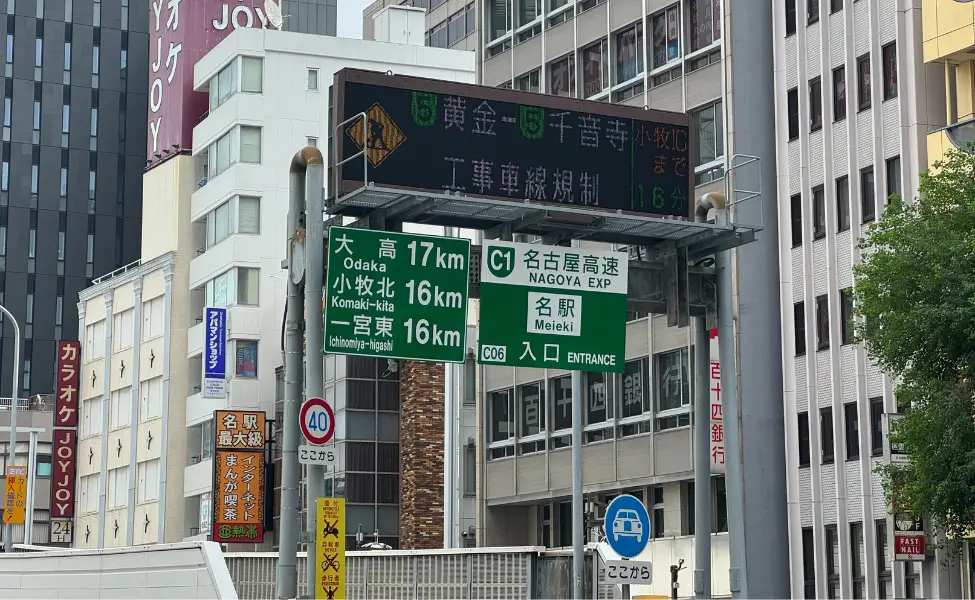
It looks like a credit card but communicates wirelessly with toll gates.
You insert the card into a device in your car.
As you drive through toll gates, the system automatically calculates and charges tolls.
The transaction takes seconds without stopping.
Types of ETC Cards
Credit-linked ETC cards connect to your Japanese credit card account.
Major providers like Aeon, Orico, and Mitsui Sumitomo offer these as add-ons.
ETC Personal Cards don’t require a credit card.
They work on a deposit system and charge an annual fee of ¥1,257.
All ETC cards work with any ETC device in Japan.
Lane Types
ETC-only lanes (purple signs) only accept ETC cards.
These are becoming standard.
ETC/General lanes (blue and purple signs) accept both ETC cards and cash.
General lanes (blue signs) accept cash only with manual payment.
Some toll gates now only have ETC lanes.
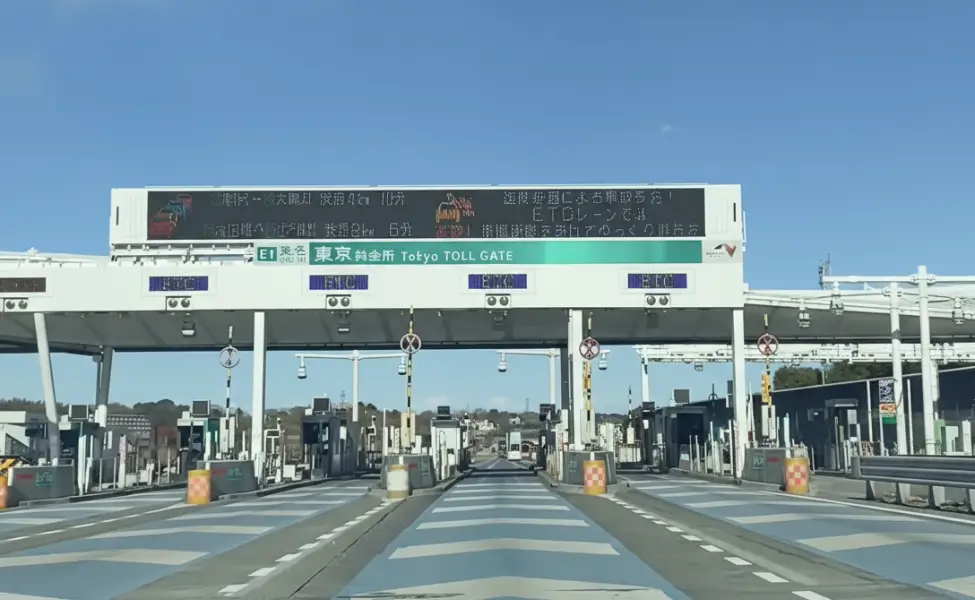
Use the emergency intercom if you arrive without a card.
Why Use ETC
Time savings. No stopping, no counting coins, no waiting in lines.
Automatic discounts. Off-peak hours (around 30% savings), weekends, holidays, and long-distance trips all get discounts applied automatically.
Future-proof. By 2030, cash payment won’t be available at most toll gates.
Getting an ETC Card: Residents
Three options exist for foreign residents seeking an ETC toll card in Japan.
Requirements
You need a vehicle registered in your name with an installed ETC unit.
| Document | Details |
|---|---|
| Vehicle registration | Shaken certificate |
| ETC unit paperwork | Installation documents |
| Valid identification | Residence card or passport |
| Address proof | Physical address in Japan |
ETC units cost ¥5,000 to ¥30,000.
Installation at AUTOBACS or Yellow Hat runs around ¥3,200.
Option 1: Credit Card Add-on
If you have a Japanese credit card, this is the simplest route.
Pros: Quick application, often free or minimal fees, integrated billing
Cons: Requires Japanese credit history
Contact your credit card company (Aeon, Orico, Mitsui Sumitomo, JCB) to add an ETC card.
Option 2: Specialized Services
Services like JapanETCcard work for foreigners without Japanese credit cards.
Pros: English support, no credit card needed, pay-as-you-go billing
Cons: ¥2,750 setup fee, ¥40,000 deposit, two-month billing delay
Good for military personnel, embassy staff, and foreigners without established credit.
Option 3: ETC Personal Card
The official ETC Personal Card system accepts residents without credit cards.
Pros: No credit check, government-backed
Cons: ¥1,257 annual fee, ¥40,000 deposit, requires Japanese language
Apply through the ETC Personal Card Center website.
Note: Use Google translate if you cannot read Japanese.
Application Steps
- Ensure vehicle is registered in your name
- Install and register ETC unit
- Gather documents (Shaken, ETC setup, ID)
- Choose provider
- Submit application with documents
- Pay deposit and fees
- Receive card (3-7 days)
Cost Breakdown
| Fee Type | Amount | Details |
|---|---|---|
| Security deposit | ¥40,000 | Fully refundable, can split into 2x ¥20,000 |
| Setup fee | ¥2,750 | One-time (specialist services only) |
| Monthly service | ¥1,200 | Only months when used (some providers) |
| Annual fee | ¥1,257 | ETC Personal Card only |
Billing happens two months after usage.
Deposits refund after final payment when you cancel.
Getting an ETC Card in Japan: Tourists
Rental Car ETC Cards
Most rental companies offer ETC cards for ¥330 per rental.
This is the simplest option for tourists.
Select “ETC card needed” when booking or request at pickup.
All tolls add to your rental bill. No deposit required.
Available from Times Car Rental, Toyota Rent-a-Car, Nissan Rent-a-Car, and Orix Rent-a-Car.
Tourist Expressway Passes
The nationwide Japan Expressway Pass (JEP) and Central Nippon Expressway Pass (CEP) were discontinued in December 2023.
Regional passes remain available:
| Pass | Coverage | Price From |
|---|---|---|
| Hokkaido (HEP) | Hokkaido | ¥7,700 (4 days) |
| Tohoku (TEP) | Northeast | ¥8,500 (4 days) |
| San’in-Setouchi-Shikoku (SEP) | West Honshu, Shikoku | ¥10,700 (3 days) |
| Kyushu (KEP) | Kyushu | ¥6,200 (2 days) |
These offer unlimited expressway use within their regions.
Available only to foreign passport holders.
Must be rented with an ETC card from designated rental companies.
Using Your ETC Card
Basic Operation
Insert your card into the in-car device before driving.

The device beeps to confirm.
Slow to under 20 km/h at toll gates.
The barrier opens automatically as payment processes.
Remove the card after each trip (for safety reasons only).
Never leave it in a parked car.
Multiple Vehicles
One card works in different vehicles if each has its own ETC device.
Move your card between vehicles as needed.
Discounts
All discounts apply automatically:
- Off-peak hours: Around 30% savings late night/early morning
- Weekends and holidays: Route-specific discounts
- Long distances: Increasing savings on longer trips
Check NEXCO East, Central, or West for regional programs.
ETC Card in Japan: Common Questions
Can I use my card immediately after receiving it?
Yes. Insert it and start driving.
What if I lose my card?
Contact your provider immediately. Replacement costs around ¥3,000.
Do I need separate cards for different cars?
No. Use one card in multiple vehicles.
Are discounts significant?
Yes. Regular drivers save thousands of yen monthly.
Planning for 2030
Japan is transitioning all toll gates to ETC-only by 2030.
Many Tokyo locations have already switched.
Tourists should budget ¥330 for rental ETC cards as they become essential.
Residents should apply now to benefit immediately from discounts while preparing for the cashless transition.
