
Many people don’t know that Japanese convenience stores can pay bills, print documents, and serve great meals, along with snacks.
Konbini are 24-hour shops that serve as community hubs, offering much more than regular retail.
While tourists grab rice balls and fried chicken, locals use the same stores to pay utilities, ship packages, and buy concert tickets.
Small shops are vital to daily life in Japan, but their importance shines through only when you grasp their full service ecosystem.
The Konbini System: More Than Shopping
Japanese convenience stores operate continuously, providing services that would require multiple stops elsewhere.
This integration reflects Japanese efficiency culture and urban density needs.

Fresh rice balls (¥150-220), complete lunch boxes (¥500-700), and hot meals that taste like restaurant food fit Japan’s busy lifestyle.
Bill payments, banking, package handling, and document services bring together errands.
This saves time by combining tasks that usually needed trips to banks, post offices, and print shops.
A typical konbini visit might involve withdrawing cash, paying the electric bill, heating a lunch box, and picking up a package.
All completed in under five minutes.
This efficiency model has shaped how Japanese people organize their daily routines.
The Big Three: Chain Personalities
7-Eleven: The Market Leader
7-Eleven operates Japan’s largest convenience store network with over 21,000 locations.
Since they opened their first Japanese store in Tokyo’s Koto ward in 1974, they set the konbini standard that others now follow.

Their Seven Premium private label shows how convenience stores can provide quality products at good prices.
The chain leads in technology with its advanced ATM network.
This network accepts international cards and offers English-language interfaces.
This proves crucial for foreign visitors and residents.
7-Eleven’s strength comes from its consistent service at every location.
This reliability makes it a solid choice across the country.
FamilyMart: The Food Innovator
FamilyMart has 16,500 stores known for their great food, especially their famous Famichiki fried chicken.

Founded in Saitama Prefecture in 1973, they have always improved convenience store food quality.
They focus on health-conscious choices, like salad chicken packs and balanced meals.
This shows changing dietary preferences in Japan.
FamilyMart stores often seem more focused on food than their rivals.
They have larger sections for fresh meals.
Lawson: The Premium Experience
Lawson’s 14,500 stores differentiate through multiple formats and upscale offerings.
Standard Lawson stores meet general needs.
Natural Lawson focuses on organic products.
Lawson Store100 targets budget shoppers.

Their dessert program rivals dedicated patisseries, establishing quality benchmarks that other chains follow.
This focus on premium products spans their lines, making Lawson the top choice among major chains.
Regional Players
Seicomart leads in Hokkaido by focusing on local products.
Their Hot Chef sections provide freshly cooked meals.
NewDays serves train station locations with commuter-friendly products.
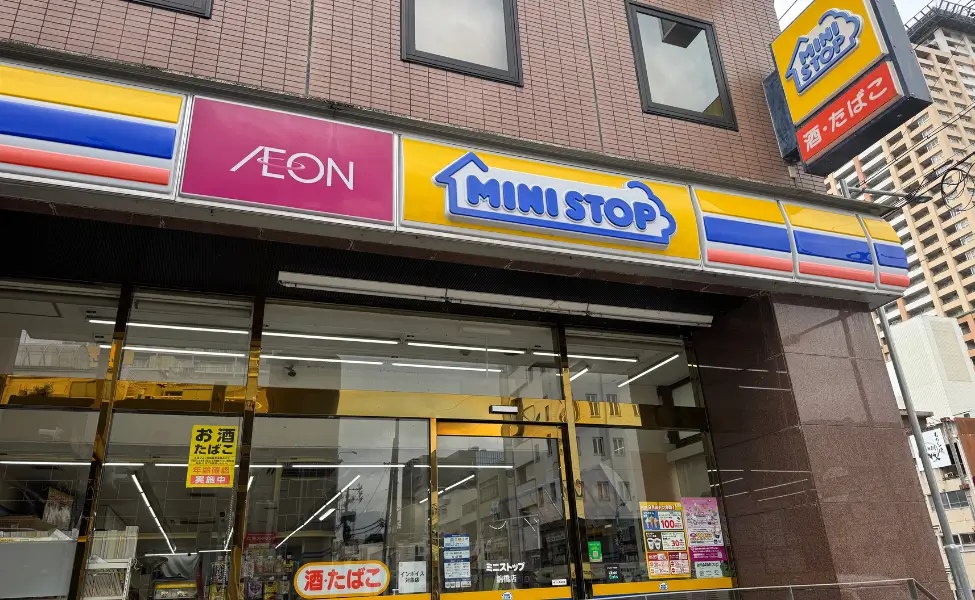
Ministop emphasizes eat-in spaces and fresh ice cream.
While Daily Yamazaki leverages its bakery connections for superior bread products.

These regional chains prove that konbini success doesn’t require national scale.
Local adaptation and specialized offerings can create loyal customer bases.
Konbini Food Culture
Japanese convenience stores have made quick dining better.
They focus on quality, freshness, and variety.
This approach challenges the usual fast food ideas.
Your First Konbini Experience: A Simple Checklist
The Essential Quartet: For newcomers, grab these four items to understand what makes konbini special:
- Salmon onigiri (¥150-200) for Japan’s perfect portable meal
- Famichiki or chain fried chicken (¥200-250) for hot, crispy, uniquely Japanese taste
- Seasonal dessert (¥180-250) for whatever’s featured that month
- Canned coffee (¥130-150) with Boss or Georgia brands for authentic flavor
Total cost: under ¥800.
This combination represents 50 years of convenience store evolution in one meal.
Rice Balls: The Foundation
Onigiri serve as Japan’s ultimate grab-and-go food.

The triangular rice parcels have clever packaging.
It keeps the nori (seaweed) separate until you eat them, which helps maintain texture.
Popular fillings include salmon, tuna mayonnaise, pickled plum, and spicy cod roe.
Premium versions with seasonal ingredients or special preparations cost ¥200-300.
However, standard varieties at ¥110-150 offer great value for a filling snack.
Complete Meals
Bento boxes demonstrate how convenience stores provide balanced nutrition efficiently.
These meals usually have rice, a protein like grilled fish, fried chicken, or pork cutlet, along with pickled vegetables and side dishes.
Staff will microwave purchases upon request, delivering hot, complete meals within minutes.
Regional variations occasionally appear, featuring local specialties or seasonal ingredients.
The Hot Food Counter
The heated counter by the registers is a new idea that has changed food retail worldwide.
Steamed pork buns (nikuman) are a warm treat any time of year, just like the well-loved fried chicken dishes above.
Winter brings oden hot pot service, where daikon radish, eggs, and fish cakes simmer in seasoned broth.
Each chain has its own recipes, leading to small but clear differences that shape customer choices.
Beverages: Beyond Basic
Coffee quality has really improved.
Now, convenience store machines make drinks that taste like those from cafés.
Freshly ground options cost ¥100-150, while premium varieties reach ¥250.
Traditional drinks include various green teas, barley tea, and seasonal treats such as yuzu citrus drinks.

The selection shows Japan’s seasonal awareness. It features cooling drinks for summer and warming options for winter.
Services That Define Modern Konbini
Financial and Administrative Functions
You can pay most household bills, like utilities, insurance, and taxes, at konbini counters for no extra fees.
This service is very hlepful for people like me who live in Japan.
ATMs work around the clock and accept international cards.
They often offer better exchange rates than currency exchange shops.
Some locations offer deposit and transfer services, effectively functioning as satellite bank branches.

Logistics Hub
Yamato Transport and Sagawa Express offer pickup and delivery from konbini locations.
More importantly, they can pick up online purchases at stores instead of having them delivered at home.
Business Services
Multi-function terminals handle document printing from smartphones, copying, scanning, and even fax services.
These machines make good money by helping customers who need business services now and then, without the need for home office gear.
You can buy tickets for events, transport, and entertainment at these terminals.
Konbini acts as unofficial box offices for the entertainment industry.
Cultural Etiquette and Practical Tips
Payment and Interaction
Cash is still an option, but IC transportation cards like Suica and Pasmo can be used for purchases everywhere.
Also mobile payment and credit services are being used more and more.
Credit cards are accepted at major chains but not for bill payments or some services.
Interactions should be quiet and efficient.
Staff provide professional service but don’t expect extended conversation.
The phrase “Atataemete kudasai” (please heat this) helps when requesting food warming.
Social Considerations
Late-night shopping should be respectful of surrounding residential areas.
Trash disposal occurs in sorted bins outside and inside stores.
Proper sorting reflects cultural awareness and shows care for community cleanliness.
Eating in designated areas has a higher consumption tax of 10%.
Takeaway has a lower rate of 8%.
This difference shows how Japanese tax policy treats restaurant and retail purchases differently.
Future Evolution
Sustainability Initiatives
Reducing plastic packaging is a big challenge for konbini.
They depend on individually wrapped items for food safety and convenience.
Some chains are experimenting with biodegradable packaging and reusable container programs.
Energy efficiency improvements include:
- LED lighting
- Advanced refrigeration systems
- Solar panel installations
These options lower environmental impact and help manage operating costs.
Service Expansion
Some places are trying out new services.
Services include:
- Laundry pickup
- Selling prescription medications
- Basic medical consultations via telemedicine
These experiments suggest konbini could evolve into even more comprehensive community service centers.
Wrapping Up
Japanese convenience stores combine food, services, and social functions.
They are now vital to modern life in Japanese cities.
For visitors, they provide authentic cultural experiences and practical solutions for daily needs.
They provide reliable and accessible services for residents.
These services adapt to changing lifestyles and keep quality standards high.
As Japan urbanises and ages, konbini will likely grow their community support roles.
They are already testing specific innovations to make this happen.
