
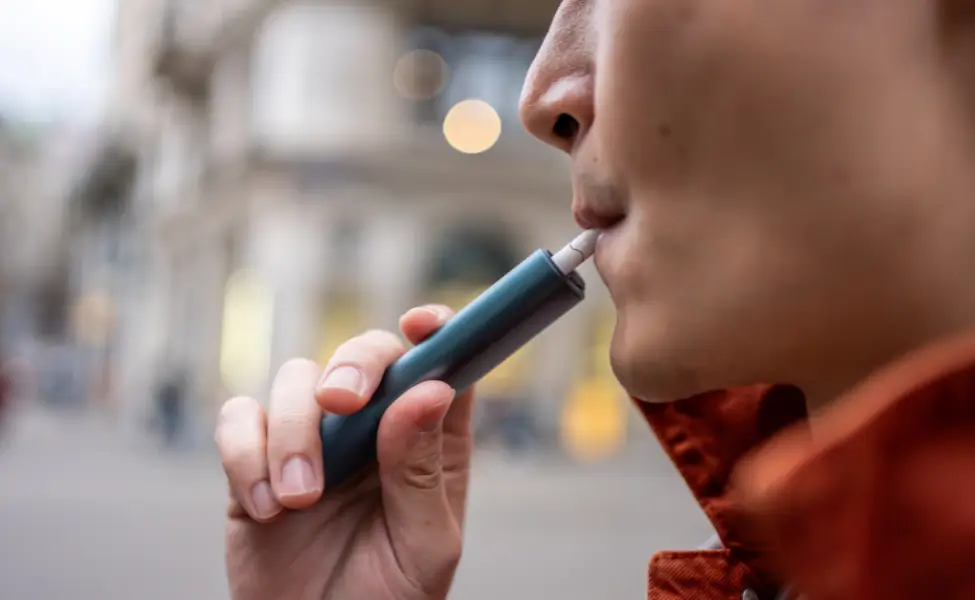
If you have been searching for a clear answer about vaping in Japan and found nothing but conflicting advice, you are not alone. Most sources treat nicotine e-liquid, non-nicotine products, and heated tobacco as a single topic, but under Japanese law they are three quite different things. Separating them is the key to making sense of all of it.
Quick answer
- You can bring nicotine e-liquid into Japan for personal use, up to 120mL in total
- You cannot buy nicotine e-liquid in Japan
- Zero-nicotine liquids and vape hardware are available in major cities
- Use your vape only in designated smoking areas
- Do not vape while walking
The most important thing to understand before you pack is straightforward. You can bring a personal supply of nicotine e-liquid into Japan, but you cannot buy it once you are there. Japanese law prevents every vape shop, pharmacy, and convenience store from selling it to you. If your plan involves picking up a bottle when you land, that plan will not work.
Why Nicotine E-Liquid Has Its Own Rules in Japan
Japan’s Pharmaceutical and Medical Device Act classifies nicotine as a pharmaceutical ingredient rather than a standard consumer product.
That one classification changes everything for travellers used to buying vape juice freely at home.
It means nicotine e-liquid cannot be manufactured, commercially imported, or sold in Japan without pharmaceutical licences that ordinary consumer products cannot realistically obtain.
Walk into a specialist vape shop in Tokyo or Osaka and you will find good hardware, plenty of coils and pods, and a decent range of 0mg liquids.
Ask about nicotine, and the answer will be no.
That refusal is not a shop policy or a stock issue.
The law prevents nicotine sales everywhere in Japan, and no shop is an exception.
Possession for personal use is not the issue here.
Domestic sale is the issue, and that distinction shapes everything about how you plan your trip.
Non-Nicotine Products
Non-nicotine vaping devices and e-liquids are legal and stocked in specialist shops in major cities.
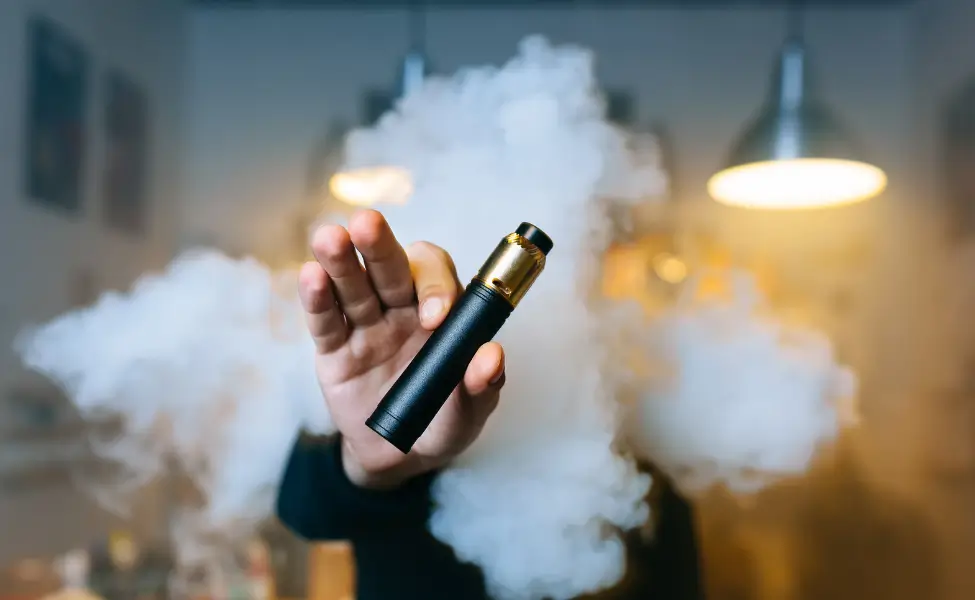
You will find hardware, accessories, and 0mg liquids without difficulty in Tokyo and Osaka, and occasionally in larger electronics or discount retailers.
The local selection tends toward compact hardware and flavoured 0mg options rather than the high-strength disposable formats many travellers expect.
Travellers who vape purely for flavour or habit without needing nicotine will manage Japan without much difficulty.
Those who depend on nicotine will need to bring their own supply.
Heated Tobacco Products
Cigarettes are legal and sold widely, though public use is heavily restricted.
Heated tobacco products such as IQOS, Glo, and Ploom are completely legal and very popular.
These products use actual tobacco leaf rather than nicotine e-liquid.
That places them under standard tobacco legislation rather than the pharmaceutical rules that govern vape juice, which is why they appear on convenience store shelves everywhere.
If you have been considering trying IQOS, Japan is one of the most convenient countries in the world to use one.
Sticks and accessories are sold in convenience stores, tobacco shops, and electronics retailers across the country.
The category dominates Japan’s reduced-risk product market in a way that makes conventional nicotine vaping look like a niche activity by comparison.
What You Can Bring Through Customs
Bringing your own supply is the practical solution for nicotine vapers visiting Japan.
Knowing the limits before you pack removes the anxiety of guessing at the airport.
The 120mL and Two-Device Limit
The personal import allowance for nicotine e-liquid is 120mL in total, treated as roughly a one-month personal supply.
Alongside that, the generally accepted personal limit is two vaping devices. Both limits apply together.
Arriving with three devices or 150mL of liquid puts you in a different position to a traveller who has clearly packed for personal use.
That 120mL is a combined total across all containers.
A short trip is unlikely to push you anywhere near it.
Longer stays or higher daily use are worth calculating before you leave rather than hoping for the best at the other end.
These points cover the personal import essentials.
- Keep total nicotine e-liquid at or under 120mL across all bottles and devices combined
- Bring no more than two vaping devices
- Leave products in original packaging where possible
- Keep quantities clearly personal rather than commercial in appearance
- Carry a receipt or proof of purchase in case you are asked
Disposable Vapes
If you normally use disposable vapes, this section matters more than most of the advice you will find about Japan.
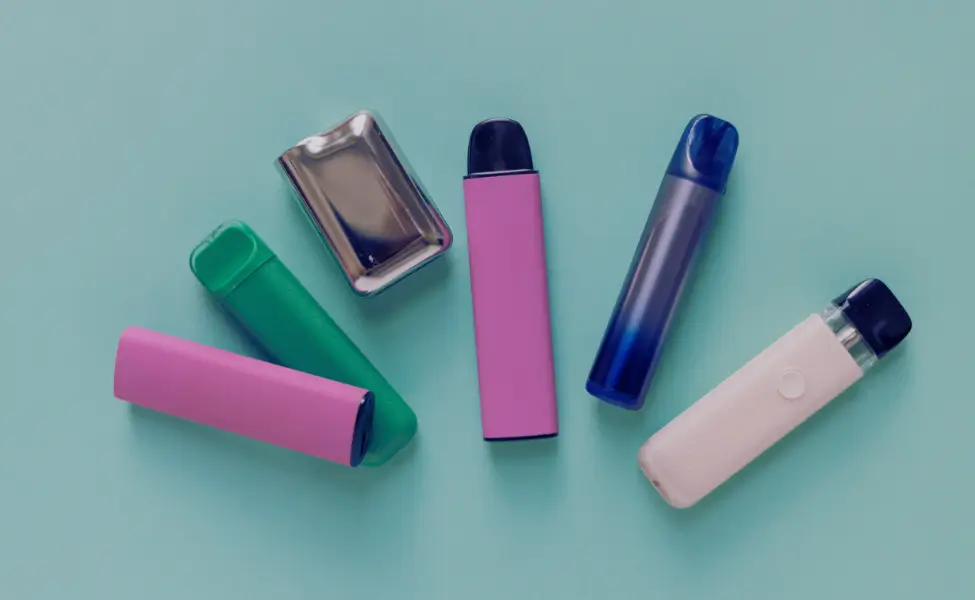
Disposable vaping devices have become much harder to buy in Japan recently, and travellers should not assume they can replace disposables locally.
Check current rules before you travel, especially if you rely on disposables as your main device.
If you bring nicotine-containing disposables, their total e-liquid volume counts towards your 120mL personal import limit.
Check the stated liquid capacity of each device before you pack and add it to your running total.
Non-nicotine disposables fall outside the pharmaceutical rules, but local availability is increasingly uncertain.
Pack what you need before you travel and do not count on replacing anything once you land.
When More Than 120mL Is Not Really an Option
There is a formal document called a Yakkan Shoumei.
It is an import certificate from Japan’s Ministry of Health, Labour and Welfare that covers imports above the personal limit.
Authorities rarely approve it for nicotine vaping products.
That makes the 120mL boundary a real limit for most people rather than a soft cap with easy workarounds above it.
Calculating your daily usage and packing within the limit is far more reliable than banking on paperwork that is unlikely to come through.
Packing Your Gear for the Flight
Customs staff are generally looking for obvious commercial quantities or clearly restricted items, not for a single traveller with a normal vaping setup.
Clear labelling and tidy packing help considerably.
Arriving with several unmarked bottles or a quantity that looks like commercial stock will attract more questions than two labelled bottles in their original packaging.
For the flight, standard airline battery and liquid rules apply:
- Pack vaping devices, e cigarettes, disposable vapes, and spare lithium batteries in your carry on bag, not checked luggage.
- Protect spare batteries from short circuit by using a battery case, original packaging, or taped terminals.
- Do not use or charge vaping devices during the flight.
- Follow standard cabin liquid restrictions for vape liquid.
- Empty or partly empty your tank before flying, as pressure changes can cause leaks.
For Japan, nicotine vape liquid is limited to personal use amounts, usually up to 120 ml of liquid, 60 cartridges, or 12,000 puffs.
Both Narita and Haneda airports have designated smoking rooms marked 喫煙室 (pronounced kitsuen-shitsu), available before and after security.
There is no need to arrive stressed or look for alternatives.
Use the smoking rooms and the airport part of your trip will be completely straightforward.
What Keeps You Out of Trouble
Most problems are avoidable once the rules are clear.
Customs confiscation is most likely when quantities look commercial rather than personal.
Fines for public use happen when people vape on streets or in buildings where local ordinances apply.
Staying on the right side of both is straightforward.
- Stay within the 120mL nicotine liquid total and the two-device maximum
- Keep everything in original packaging with clear labels
- Use designated smoking areas and never vape while walking
- Avoid refilling or tinkering with your device in crowded public spaces
- If staff or security ask you to stop, stop without argument
Where You Can and Cannot Use Your Vape
Japan treats vaping the same way it treats cigarette smoking when it comes to public use.
The safest working assumption is that vaping is not permitted unless you can see a designated area or have been specifically told otherwise.
Designated Areas and Indoor Rules
You will find designated smoking spots at many train stations, airports, office districts, and commercial areas.
Outdoor smoking areas are marked 喫煙所 (kitsuen-jo) and enclosed indoor smoking rooms are marked 喫煙室 (kitsuen-shitsu).
Both signs tell you that you are in the right place.
Japan’s revised Health Promotion Law, which came into effect in 2020, banned smoking and vaping in most indoor public spaces.
Restaurants, cafés, offices, and commercial buildings are generally smoke-free except in dedicated smoking rooms that meet specific enclosure and ventilation requirements.
Some smaller bars and restaurants operating before April 2020 carry limited exemptions, but checking before you vape is far smarter than assuming.
For hotels, request a smoking room specifically when you book if you plan to vape indoors. Vaping in a non-smoking room will almost certainly result in a cleaning charge or a complaint.
Street Use and Walking Etiquette
Vaping while walking is one of the most common mistakes visitors make, and it draws attention quickly.

Most city districts operate street smoking bans.
Across Japan, the expected behaviour is to stand still in a proper designated area rather than move through public spaces while vaping.
Producing a large cloud in a busy area attracts negative reactions fast.
The broader expectation of quiet, unobtrusive public behaviour runs deeply through everyday life in Japan.
These habits reduce the chance of a problem.
- Do not vape while walking
- Do not use your vape on train platforms or in stations without a clearly marked smoking room
- Avoid vaping near temple grounds, shrines, or crowded pedestrian streets
- Dispose of any waste in the correct receptacles
City Differences
Tokyo has had strict outdoor smoking rules for many years, particularly around major stations and shopping zones.
Local authorities enforce these rules seriously, and designated smoking areas are clearly marked.
Osaka tightened its rules significantly from January 27, 2025.
A citywide outdoor smoking ban took effect on that date, extending no-smoking zones to all roads, plazas, and public spaces throughout the city.
Violations carry a ¥1,000 fine.
Central areas around Umeda, Namba, and Shinsaibashi are busy enough that finding a designated spot beforehand is worth a moment of planning.
Kyoto applies similar restrictions in tourist-heavy areas.
Near temples, shrines, and historic streets, the expectation is to wait for a proper designated space.
Taking a few extra minutes to find the right spot is a small effort that saves a lot of awkwardness.
Finding Smoking Areas Near You
Some areas have more designated smoking spots than others, and knowing roughly where to look saves you a lot of wandering.
In Tokyo, check around Shibuya Station, Shinjuku Station, Tokyo Station, and Ginza. All four have marked smoking areas nearby.
In Osaka, look near Umeda (Osaka Station), Namba, and Dotonbori.
In Kyoto, Kyoto Station has smoking rooms inside. The Gion area has very few, so be extra discreet if you’re vaping nearby.
If you can’t spot a sign, ask a member of staff: “Kitsuen-jo wa doko desu ka?” (Where is the smoking area?)
Locations do change, so treat this as a starting point rather than a guarantee. Searching 喫煙所 on Google Maps also returns useful results near your location.
What to Expect From Local Shops
Hardware is not the problem.
Devices, coils, pods, batteries, chargers, and 0mg liquid are all available in major cities.
Vape shop staff in Tokyo and Osaka tend to be knowledgeable and helpful.
Some speak enough English to handle straightforward questions, and a translation app fills any gaps efficiently.
Nicotine liquid is the firm constraint.
No local shop can sell it to you legally, so the supply you bring is the supply you have for the trip.
Travellers who use IQOS or another heated tobacco product will not face this problem at all.
Sticks and accessories appear in convenience stores across the country.
For longer stays where the 120mL limit feels insufficient, ordering from an international retailer that ships to Japan is one option some long-term residents use.
This works far better as advance planning than as a mid-trip fix, since delivery times and import processing vary.
Calculate your daily usage before you leave, pack to the limit, and you are unlikely to find yourself short.
What Things Cost
Rough price ranges to expect, based on typical Tokyo and Osaka shop prices:
| Item | Typical Price |
| Pod system | ¥3,000 to ¥8,000 |
| Mod | ¥5,000 to ¥20,000 |
| 0mg e-liquid (30mL) | ¥1,000 to ¥2,000 |
| IQOS device | ¥3,000 to ¥10,000 |
| HEETS/TEREA pack | ¥500 to ¥600 |
Where to Buy Vape Gear
For hardware and hunting down 0mg liquid, head to the areas known for it.
In Tokyo, try Akihabara, Shibuya, or Ikebukuro. In Osaka, Shinsaibashi and Namba have several shops. Don Quijote stores across the country stock basic gear too, though selection varies by branch.

