
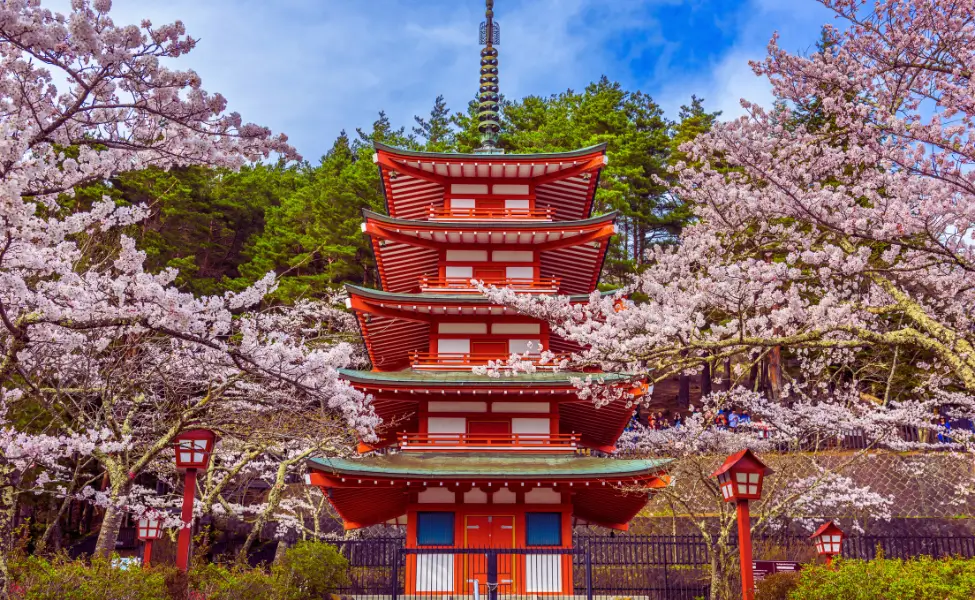
First time Japan travel should be fun, not worrisome.
If you have been half-planning a Japan trip for longer than you would care to admit, you are not alone, and the problem almost certainly is not Japan.
Every search produces three new worries, the worries stack up, and eventually the whole thing starts to feel like something that confident, experienced travellers do.
The anxiety does not measure your ability to manage this trip.
It reflects the absence of calm, specific information written for someone who thinks exactly the way you do.
Most travel content assumes you are already relaxed, broadly confident, and happy to figure things out as you go.
It skips the practical detail that actually matters to someone who is not.
Japan is, in practical terms, one of the more straightforward countries in the world for a first-time solo traveller with no Japanese language skills.
Signs in English mark every stage of the airport arrival process.
Immigration staff at Narita and Haneda deal with thousands of non-Japanese-speaking tourists every single day.

Emergency services have English interpretation available on the phone within seconds.
In major cities, train announcements are bilingual and station signage is in English throughout.
Convenience store staff across the country have handled confused tourists so often that it has essentially become part of the job.
Japan also has an exceptionally low rate of violent crime, making it one of the more comfortable destinations in the world for solo travel, including women travelling alone.
Knowing what all of this infrastructure looks like before you are standing inside it transforms this trip from a source of dread into something you can actually prepare for.
The Only Things You Actually Need to Sort Before You Fly
Before working through any of the detail below, it helps to see how short the real list is.
Most of Japan travel is easier than you think, and nearly everything else takes care of itself once these basics are covered.
- Passport valid for the full duration of your trip
- Proof of your return ticket, accessible on your phone or in print
- Your first hotel name and full address
- Travel medical insurance documents
- Visit Japan Web QR codes, completed before you fly
- An IC card loaded on your phone, or a physical one picked up at the airport
- The Safety Tips app downloaded and notifications turned on
- Any prescription medication checked against Japan’s rules in advance
That is the complete list.
Everything else in this article expands on these eight points so you understand what each one involves.
Nothing here is a hidden trap waiting to catch you out. Japan runs on clear systems, and once you know how those systems work, the trip becomes a practical exercise rather than a source of dread.
The Visa Question Is Already Answered for Most People
Citizens of the US, UK, Canada, Australia, and most European countries can enter Japan without a visa for stays of up to 90 days.
Your passport needs to be valid for the entire duration of your trip, not for six months beyond it.
That six-months-beyond rule applies to other destinations, not Japan.
One blank passport page for an entry stamp is all that is required.
Japan’s eVisa system exists for visitors who do need a document before they travel.
If you live in the US, Canada, UK, Australia, Brazil, Cambodia, Saudi Arabia, South Africa, or Taiwan and need a visa, you can apply online.
Applying online removes the need to visit a consulate in person, and processing takes around one to two weeks when you submit all documents correctly.
Before you set the visa question aside, note two practical points.
You will need to show proof of your return ticket and accommodation address at immigration, so have both accessible on your phone or in print.
Officers ask for these routinely, and having them ready takes ten seconds rather than triggering a flustered search through your bag.
Immigration officers hold the final authority on entry, and visa-free status is not technically an absolute guarantee of admission.
Tourists with standard travel documents, a return ticket, and a straightforward holiday itinerary pass through without drama. Japan’s entry system handles visitors like you efficiently every single day.
Visa rules and eVisa eligibility can change, so check the official Japanese government immigration page before you fly if you have any doubt about your specific situation.
Worried About the Long Flight and Changing Airports?
For some people, getting to Japan is more intimidating than Japan itself. A long-haul flight followed by a connection at an unfamiliar airport can feel like a lot, especially if you do not travel internationally very often.
When booking, avoid very tight connections if you have a choice.
Once you arrive at your transfer airport, follow the signs for connections or transfers and check the departure screens for your next gate.
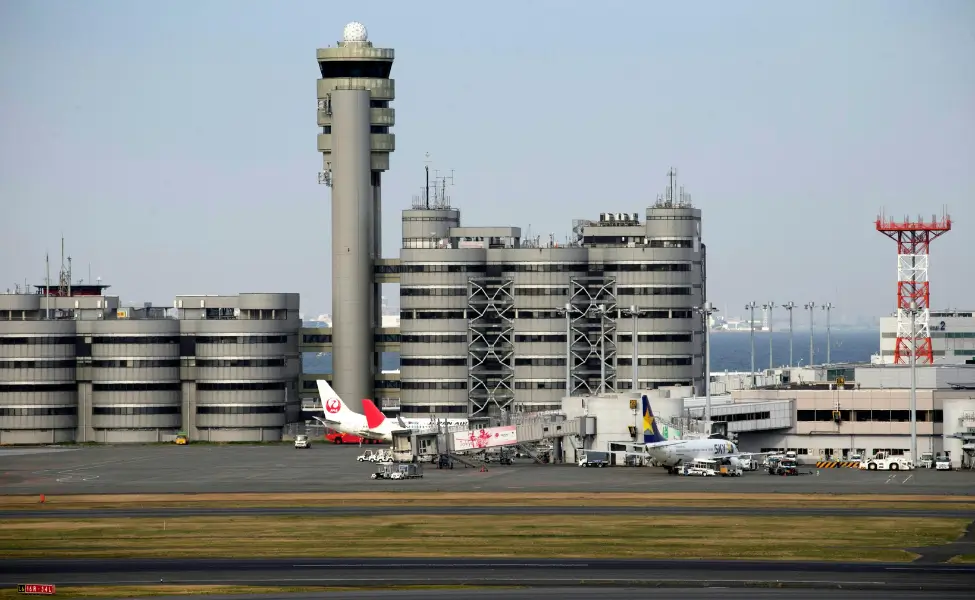
Whether you need to go through security again depends on the airport and your route, so simply follow the local instructions rather than trying to memorise every possible process beforehand.
It also helps to keep your first day in Japan light. After a long flight and several time zones, getting to your hotel, finding something to eat and settling in is more than enough.
What Actually Happens When You Arrive at Narita or Haneda
This part is worth reading before you fly, because knowing the arrival sequence in advance dissolves most airport anxiety.
Japan’s major airports follow a fixed order, with English signage at every stage.

For most passengers, everything from leaving the aircraft to walking out of customs takes between 30 and 60 minutes.
During peak arrival windows, when several long-haul flights land at the same time, it can run up to 90 minutes. Neither is unusual or a sign that something has gone wrong.
Before you fly, spend 20 minutes completing Visit Japan Web.
This is the Japanese government’s free pre-registration system, which allows you to submit your immigration and customs information before you leave home.
After entering your passport details, flight information, and accommodation address, the system generates QR codes for both immigration and customs.
Save them to your phone and take a screenshot as a backup, or print them out.
The codes work at all major international airports in Japan, including Narita, Haneda, Kansai, Chubu Centrair, Fukuoka, and the airports serving Sapporo and Okinawa.
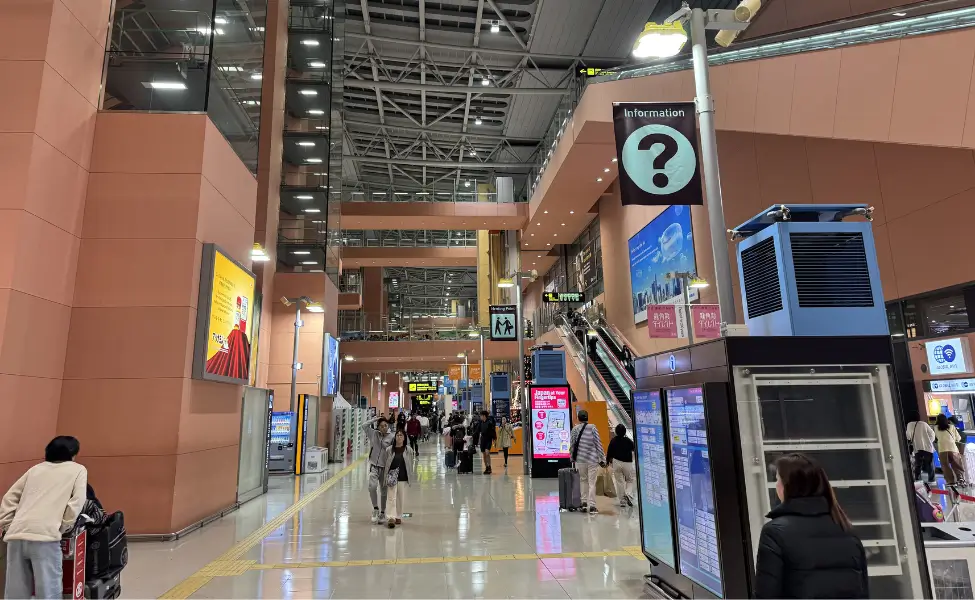
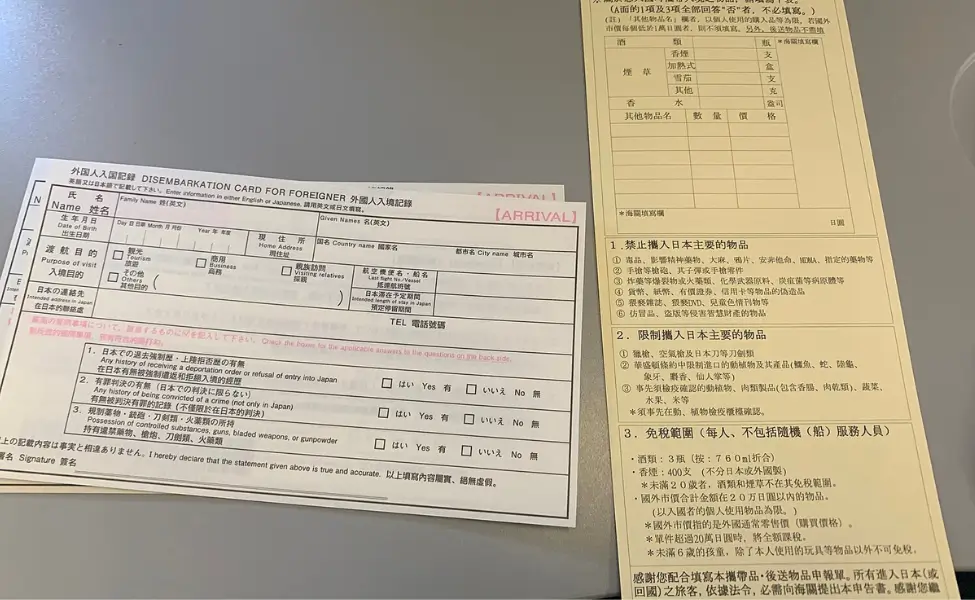
If you forget to register, paper forms are available on the plane and at the airport.
The manual processing queues are noticeably longer than the digital lanes, so pre-registration is worth the time.
The Arrival Sequence
- Immigration. Present your passport to the officer and show your QR code. Your photo will be taken and both index fingers will be scanned on a small digital reader. Place your fingers flat on the pad when the officer indicates and hold still for a few seconds. This takes under a minute and happens to every foreign visitor without exception.
- Baggage claim. Check the overhead screens for your flight number and follow the directional signs to the correct carousel. Your bag arrives in the normal way.
- Customs. Show your customs QR code at the automated gate. If you did not register with Visit Japan Web, present your completed paper declaration form to the officer instead. The green channel is for passengers with nothing to declare.
If your QR code does not scan for any reason, a manual lane and paper forms are always available.
Customs officers handle minor declaration errors with a correction and a signature, not a fine.
The serious penalties you may have read about apply to deliberate smuggling, not to first-time travellers making honest paperwork mistakes.
Customs Limits and One Food Rule Worth Knowing
The customs allowances that apply to most tourists are straightforward, and knowing them in advance means you clear customs without hesitation.
Japan’s duty-free allowance covers three categories for adults aged 20 or over.
- Alcohol, up to three bottles of approximately 760 ml each
- Tobacco, up to 200 cigarettes, 50 cigars, or 10 individual packs of heated tobacco
- Perfume, up to 2 oz
Clothing, toiletries, and personal items for your own use pass through without issue.
Beyond these categories, goods with a combined overseas market value under 200,000 yen are generally duty-free.
Anyone carrying cash or financial instruments totalling one million yen or more, roughly equivalent to 6,500 US dollars, must declare it at customs.
The one food rule worth knowing in advance concerns meat.

Most meat products are prohibited on entry into Japan.
This includes ham, sausages, bacon, and most processed snacks containing meat.
The rule also covers food brought from the plane and anything purchased airside before boarding.
Canned meat products are a permitted exception, but for everything else the safest approach is to finish any meat-containing food before you land or leave it behind entirely.
Quarantine teams enforce these rules seriously because the priority is animal disease prevention, and deliberately smuggling animal products can result in penalties of up to three million yen under the Animal Quarantine Act.
Honest travellers who simply did not know are handled differently, but the simplest path is to carry no meat products at all.
Medication Rules for Most Travellers Are Simpler Than They Sound
Medication is one area where it is worth checking carefully before you travel.
The good news is that most common prescription medication is entirely manageable once you understand the basic rule, and for the majority of travellers the process involves no extra paperwork at all.
The one firm line concerns a specific category of substances.
These are prohibited at the Japanese border regardless of any prescription you hold at home.
- Adderall and any ADHD medication containing amphetamines
- Methamphetamine-based products
- Cannabis and cannabis-derived products
If you take ADHD medication containing amphetamines, speak to your prescribing doctor well before your trip about whether a non-amphetamine alternative is clinically appropriate for the duration of your visit.

For every other prescription medication, you can bring up to a one-month supply for personal use without any additional paperwork.
Over-the-counter medications such as ibuprofen and most antihistamines carry a two-month supply allowance.
Carry prescription medication in its original packaging with the pharmacy label attached, and bring a brief letter from your doctor stating the drug name, dosage, diagnosis, and reason for use.
This letter is not a strict legal requirement for most medications, but it removes any ambiguity at customs and proves invaluable if you need medical attention while you are away.
Longer Supplies and Restricted Ingredients
Bringing more than a one-month supply of any prescription drug requires an import certificate called a Yunyu Kakunin-sho, commonly known by its older name the Yakkan Shoumei.
Injectable medication and CPAP machines fall under the same requirement.
Apply to the Regional Bureau of Health and Welfare closest to your arrival airport in Japan, either by email or post.
Processing takes around two weeks, so begin at least four weeks before you travel to allow for follow-up.
Some cold medicines containing pseudoephedrine and some pain relievers containing codeine are available freely in other countries but face restrictions in Japan.
If your regular medication contains either of these ingredients, contact the Ministry of Health, Labour and Welfare to confirm whether your specific product requires a certificate.
Getting an answer takes far less time than months of uncertainty, so it is worth asking early.
Pharmacies in Japan are well-stocked, clearly marked with a green cross, and carry a wide range of over-the-counter products.

For minor ailments that develop during your trip, you will have no difficulty finding something that helps.
Medication rules do change, so verify your specific situation against the official Ministry of Health, Labour and Welfare guidance before you fly if you have any doubt.
Getting Around Once You Land
The airport is the first hurdle, and it is the one most people worry about longest.
Once you are through it, Japan’s infrastructure actively works in your favour.

For the train from the airport to your hotel, the key tool is an IC card.
The most common types are Suica and Pasmo.
You can add either to Apple Pay or Google Pay before you fly, so your phone becomes your train pass from the moment you land.
If you prefer a physical card, buy one at the airport from a vending machine with an English-language option.
Tap in at the barrier when you board, tap out at your destination, and the machine deducts the fare automatically.
Most trains, buses, and convenience stores throughout Japan accept IC cards for payment.
Google Maps works reliably for navigation in Japan and provides real-time train and subway directions in English.
Download your city maps for offline use before you arrive so you can navigate without using mobile data.
For translation, the Google Translate app’s camera function reads Japanese signs and menus in real time by pointing your phone at them.
Taking this one step alone removes a large proportion of the situations that feel daunting in advance.
The Shinkansen Is Easier Than It Looks
The Shinkansen can look complicated when you first research it because you will see different train names, ticket types and seating options.
In practice, once you have a ticket or booking, you mainly need to know your train, departure time, platform and, if reserved, your carriage and seat number. Station departure boards display this information clearly.
One rule worth knowing concerns large luggage. On the Tokaido, Sanyo and Kyushu Shinkansen, luggage with total dimensions of more than 160 cm requires you to reserve an appropriate seat with oversized baggage space.
If anything goes wrong, including missing your booked train, speak to station staff before buying another ticket.
What happens next depends on your ticket and the service you booked, and staff can tell you exactly what your options are.
Your First Evening Is Easier Than It Feels
Hotel check-in follows a straightforward process.

Staff in most city hotels are accustomed to international guests and will walk you through a basic procedure that requires very little Japanese from you.
Japanese law requires hotels to record your passport at check-in, so have it accessible.
Front desk staff in tourist areas generally speak enough English to handle standard requests, and many properties display room instructions in multiple languages.
Convenience stores in Japan, particularly 7-Eleven, FamilyMart, and Lawson, are genuinely useful.
They stock hot food, onigiri, sandwiches, drinks, and basic toiletries, and they accept IC cards and most international credit cards at the till.

A visit on your first evening to buy a bottle of water and something to eat takes five minutes.
When you sit down in your room afterwards, you realise the trip is already working.
For solo women, Japan ranks among the safest countries in the world by violent crime statistics.
Cities are well-lit, public transport runs late, and asking for help produces a genuine response.
Many urban lines also run designated women-only carriages during rush hours, with platform markings showing exactly where to board.
Using them is entirely optional, but the option exists.
What If You Hate Crowds?
Some parts of Japan really are crowded, particularly major stations and popular tourist areas, so this is not something you need to pretend will never happen.
The good news is that you have much more control over it as a visitor than a commuter does. If possible, avoid travelling on busy city trains during the main morning and evening commuting periods. There is rarely any reason to take your suitcase through central Tokyo at 8 am when you could leave later.
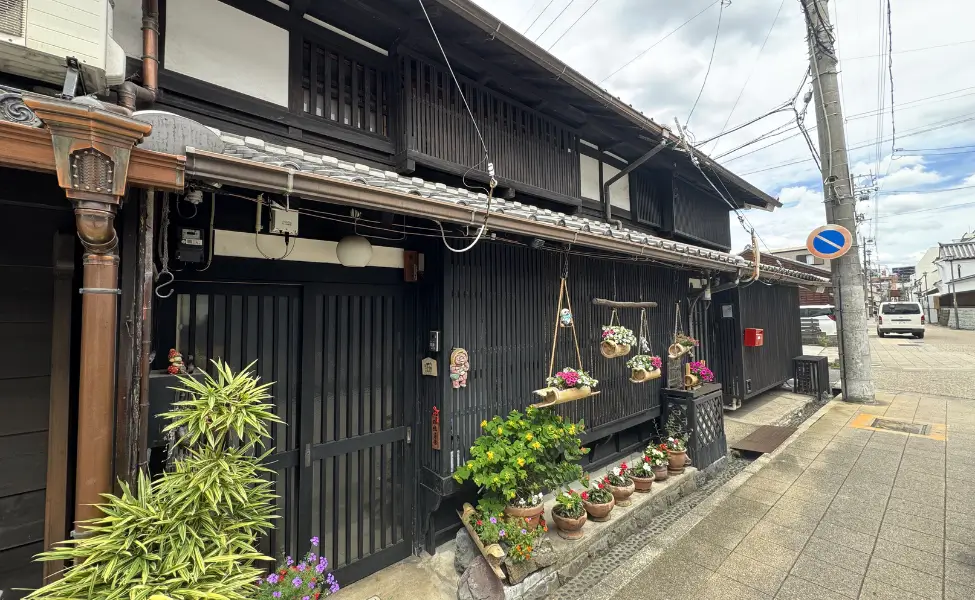
The same applies to sightseeing. Visiting popular places earlier in the day can make a considerable difference, and moving even a short distance away from the busiest attractions often changes the atmosphere completely.
If a train looks uncomfortably full, you can also simply wait for the next one. You are on holiday. You do not have to travel like someone rushing to work.
Emergencies, Earthquakes, and the Numbers to Save Before You Fly
Japan experiences earthquakes regularly, and the vast majority are small enough that you will not notice them or will feel only a brief, gentle tremor.
Occasionally a more significant event triggers an alert system, and understanding how it works in advance means the alarm will not catch you off guard.

The alert will not arrive automatically on most international visitors’ phones.
Japanese phones have J-Alert earthquake broadcasts built in, but most phones purchased outside Japan cannot receive them through the cellular network.
Before you fly, download the Safety Tips app, which is the official disaster information application from Japan’s Tourism Agency.
It pushes earthquake and tsunami alerts in English via your internet connection, so it works on your phone regardless of your SIM situation.
The NHK World app is also worth having, as it switches to continuous English emergency coverage during any significant event.
If an Earthquake Alert Arrives
- Drop to the floor and move away from windows or anything heavy that could fall.
- Cover your head and neck with your arms or with whatever is immediately available.
- Stay down until the shaking stops completely, then follow staff instructions or check the Safety Tips app for evacuation guidance.
Japan uses a five-level disaster alert system for floods, typhoons, and severe weather.
- Level 1 and Level 2 carry guidance to monitor conditions and prepare.
- Level 3 means people who need extra time to evacuate, including older travellers, should begin doing so immediately.
- Level 4 means an immediate evacuation order applies to everyone.
- Level 5 means a disaster is already in progress and your immediate priority is personal safety wherever you are.
Your hotel will advise you of relevant alerts and direct you to the correct evacuation point if needed.
For medical emergencies, dial 119 for an ambulance or fire service.
Dial 110 for police assistance. Both numbers work from any phone, including hotel phones, and both are free.
When you call 119, say “English please” and an interpreter will join the call.
For tourist assistance of any kind, the Japan Visitor Hotline at 050-3816-2787 operates every day of the year, around the clock, in English.
Save this number before you fly.
It handles medical queries, transport disruption, natural disaster guidance, lost documents, and most other urgent situations that come up during a trip.
The Tokyo Metropolitan Police advisory line at 03-3501-0110 provides English support on weekdays between 08:30 and 17:15.
Outside those hours, calling 110 and asking for “tsuyaku,” meaning interpreter, connects you to translation assistance on the main emergency line.
This sounds like a lot on paper, but in practice it usually means having one app installed and knowing which number to call
Start With One Small Step
Anxious travellers do not become confident travellers by waiting until they feel ready.
That feeling tends to arrive about 48 hours into the trip, once you have navigated something small on your own.

The gap between what you feared might go wrong and what actually happened is nearly always much smaller than the anticipation.
Japan suits that first independent step unusually well.
The systems work as advertised, the signage is clear enough that getting briefly lost is manageable, and asking for help produces a genuine response.
Confidence is not a prerequisite for this trip.
The preparation you bring with you is what makes it work.
The trip does not stay on a list because Japan is too difficult.
It stays on a list because planning has no fixed end point when you are afraid of getting something wrong.
At some point the planning must become a booking.
Start with the first hotel booking.
Then complete Visit Japan Web.
Then save the emergency numbers.
You do not need to feel fearless to do any of those things.
