

- Airport Code: NGO (Chubu Centrair International)
- Distance to City: 35km (about 28 mins by fast train)
- Best Transit: Meitetsu μ-SKY Limited Express
- Luggage Forwarding: Yamato Transport counter on the Arrivals floor
Chubu Centrair International, or Nagoya Airport, won the World’s Best Regional Airport award for the 11th consecutive year in 2025.
Yet most international travellers still default to Tokyo or Osaka for their Japan entry point.
This airport handles around 10 to 12 million passengers annually without the overwhelming crowds.
The compact T-shaped design means you can move from train to gate in under 15 minutes.
Nagoya itself makes a practical base for exploring Japan.
The city sits in the centre of the country, offers a calmer pace than Tokyo or Kyoto, and provides comfortable access to food, culture and day trip destinations throughout the Chubu region.
Centrair (NGO) vs Komaki (NKM) and the Mistake You Must Avoid
Centrair (NGO) is the main international hub where almost all major flights land, while Komaki (NKM) is a tiny domestic airfield used mostly by Fuji Dream Airlines.
Showing up at the wrong airport will completely ruin your travel day since they are on opposite sides of the city, so always double check your ticket for the NGO airport code.
How to Get to Nagoya Airport (NGO)
Most people arrive by car or train.
If you drive, parking can be reserved up to 12 weeks in advance through the airport website.
Every time I’ve driven, there has been ample parking with no need to reserve.
Pro tip: Park on the 3rd floor as this is the same floor as the travelator.
Here is a shorter, visitor friendly version with no dashes.
The first hour of parking at Centrair is free.
After that it costs 400 yen per hour, with a daily maximum of 1,800 yen on normal days or 3,000 yen during busy seasons.
From the sixth day the rate becomes 1,000 yen per day.
There are payment machines as you leave the airport.
From there, as you exit the barrier should open automatically if you have paid.
Peak season rates apply during Golden Week, Obon, year end holidays, and three day weekends.
Two hotels connect directly to the terminal: Centrair Hotel and Comfort Hotel.
Both sit within a two minute walk of the arrivals area.
Train Access: The Meitetsu μ-SKY
Trains provide the main route for most travellers.

The Meitetsu Airport Line terminates at Central Japan International Airport Station, which connects directly to the terminal building with no outdoor walking required.
Direct trains run from Meitetsu Nagoya Station, Kanayama, and Jingu Mae.
The fastest option is the μ-SKY Limited Express, which takes 28 minutes from Meitetsu Nagoya Station and costs 1,230 yen.

All seats are reserved first class.
Regular Limited Express trains take 35 minutes and offer both first class reserved seats (870 yen base fare plus 360 yen reserved seat fee) and ordinary unreserved seats (870 yen base fare only).
Express and local trains take around 45 minutes with ordinary seats only.
Trains depart every 30 minutes throughout the day.
The earliest trains start around 05:00 and the last trains end around 23:30.
The station exit leads straight into the terminal Access Plaza, so getting lost is nearly impossible.
Bus Options
The Centrair Limousine bus connects the airport to Nagoya Station, Sakae, and major hotels.
The journey takes approximately 60 to 90 minutes depending on traffic and costs 1,200 yen for adults and 600 yen for children.
Buses run multiple times per day with no reservation required.

Additional bus routes serve regional destinations including Hamamatsu, Toyokawa, Toyota, Gifu, and even longer distance services to Kyoto via Mie Prefecture.
All bus services depart from the first floor of the Access Plaza.
Visiting central Japan? Then check out these articles:
Inside the Terminal
When you exit the train station, you step directly into the Access Plaza on the ground level.
This area contains a convenience store, ATMs, toilets, a large waiting area, currency exchange services, free WiFi, and a central information desk.

Clear English signs point to all departures and arrivals areas.
Currency exchange counters typically operate from approximately 07:00 to 22:00, though hours may vary.
The terminal uses a simple three floor layout.
International arrivals process on the second floor, departures handle check in on the third floor, and the fourth floor holds the main shopping and dining area.
Domestic and international flights share the same terminal building, which makes connections straightforward.

The T-shaped design keeps walking distances short, typically under 300 metres to any gate.
Lifts and escalators are available throughout the terminal, making all floors easily accessible for travellers with wheelchairs, prams, or heavy luggage.
Wheelchair assistance can be arranged through your airline or at the information desk.
Staying Connected
Multiple options exist for getting online immediately upon arrival.
WiFi rental counters and SIM card vending machines sit on the second floor near the international arrivals area.
Several providers operate here including WiFiBOX self service kiosks, NINJA WiFi counters, and various prepaid SIM card vendors.
You reserve online and collect the device from the airport machine.
SIM card vending machines operate 24 hours and accept cash or credit cards.
Options range from 3GB to unlimited data plans with validity periods from 5 to 90 days.
eSIM options are also available if your phone supports them.
Staffed counters provide setup assistance during business hours, typically from 08:00 to 20:00.
Staff can help install SIM cards, configure settings, and answer questions about data plans.
This service works well if you arrive without prior arrangements or need technical help.
USB and AC power outlets are widely available throughout the terminal, including in lounges, Sky Town seating areas, and near gates.
Luggage Storage & Forwarding (Takuhaibin)
Coin lockers are available on the second floor arrivals level and third floor departures level.

Lockers come in small, medium, and large sizes with prices ranging from approximately 300 to 900 yen per day.
Most lockers now accept IC cards such as Suica or Pasmo in addition to cash.
For longer term storage or oversized items, a staffed baggage storage counter operates on the second floor.
This service can hold luggage for multiple days and handles items too large for standard lockers.
Family Facilities
Nursing rooms are located on multiple floors throughout the terminal, providing private spaces for feeding and nappy changing.
Pram and stroller rental is available at the information desk for travellers with young children.
The airport maintains dedicated family toilets with baby changing facilities on each floor.
Shopping and Dining
The fourth floor, known as Sky Town, holds the main concentration of restaurants, souvenir shops, and stores selling Nagoya specialities.

You can find miso katsu snacks, shrimp crackers, local sake, and regional food products here.
The floor includes plenty of seating, a Starbucks, and both Japanese and international restaurant options.

Duty free shopping is available after passing through security in the international departures area.
Tax free shopping for eligible purchases can be completed before security at designated stores.
Airport Lounges
Centrair offers several lounge options.
Airlines operate their own lounges for eligible passengers in the international departures area.
The Centrair Global Lounge provides a paid lounge option airside for passengers who want a quiet space to wait before their flight.
Designated smoking rooms are available both airside and landside for passengers who need them.
SOLA SPA: The Airport Onsen with Runway Views
Centrair houses SOLA SPA Kaze no Yu, located within the Kutsurogi-Dokoro relaxation facility on the fourth floor.

This onsen operates from 08:00 to 22:00 daily, with last entry at 21:00.
Entry costs approximately 1,000 to 2,000 yen depending on the services you choose.
The facility provides face wash, body wash, shampoo and conditioner in the shower areas.
The main bath overlooks the runway, allowing you to watch aircraft taking off and landing whilst you soak.
Additional facilities include a jacuzzi, reclining bath, and sauna.
An outdoor area with chairs lets you step outside between soaks.
The spa also offers massage services and has a restaurant attached.

Towels are provided.
This is an exceptionally rare feature for any airport worldwide, and it works particularly well for travellers on long layovers or those arriving after extended flights who need to refresh before continuing their journey.
The Sky Deck
The outdoor Sky Deck runs 300 metres along the fourth floor and gives you close views of the runway operations.
On clear days, the deck provides excellent aircraft watching opportunities.
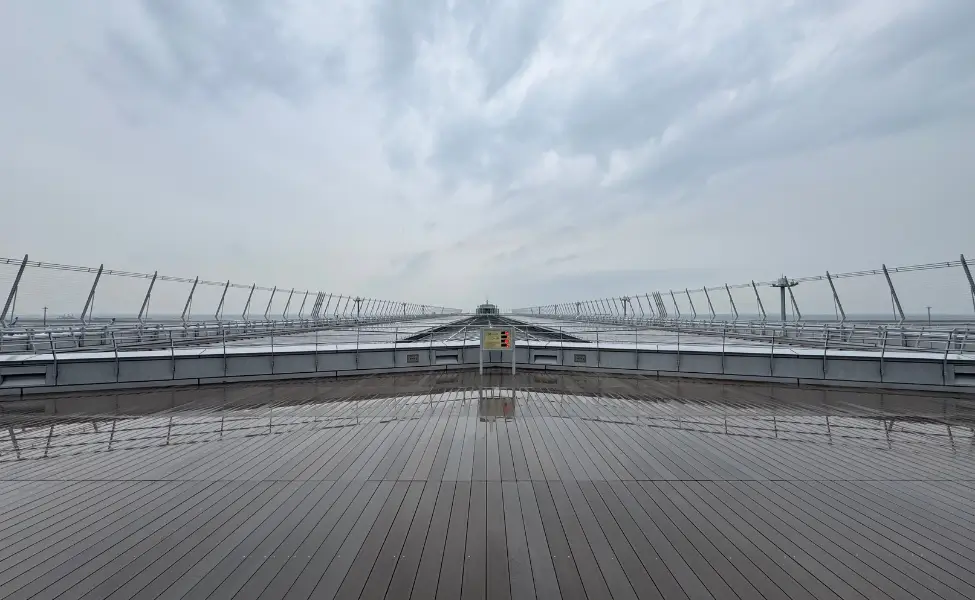
The acoustics are designed to let you hear the full sound of jet engines during takeoffs and landings, which aviation enthusiasts appreciate.
Access is free and the deck opens during daylight hours, weather permitting.
Arrival Process
International arrivals move through immigration on the second floor.
Immigration typically processes faster than at Narita or Haneda, particularly outside peak travel periods.

Baggage carousels sit very close to the immigration exit, so you collect your luggage within a few minutes of clearing passport control.
Customs is usually quick and straightforward.
After customs, you exit directly into the arrivals hall.
The train station sits on your left side.
Bus stops and taxi ranks are clearly marked to your right.
The whole process from plane to ground transport typically takes 30 to 45 minutes for international arrivals.
Domestic arrivals are even simpler.
You collect baggage on the second floor and exit straight into the same arrivals area, with immediate access to all ground transport options.
Connecting to Wider Japan
Centrair does not have a JR ticket office or Japan Rail Pass exchange counter.
If you need to purchase Shinkansen tickets, activate a JR Pass, or handle other JR related matters, you must do this at Nagoya Station after arriving in the city.

The Meitetsu line that serves the airport is a private railway, so the Japan Rail Pass is not valid for travel to or from the airport.
Beyond trains and the main limousine bus service, Centrair offers ferry connections to Tsu and Matsusaka in Mie Prefecture.
These high speed ferries take approximately 45 minutes and provide access to the Ise Shima area.
The ferry terminal connects directly to the Access Plaza.
Regional bus services extend to destinations throughout Aichi Prefecture and neighbouring regions.
Routes serve Gifu, Toyama, Kanazawa, and various onsen towns.
Timetables and ticket information are available at the bus ticket counter on the first floor of the Access Plaza.
For those continuing to other parts of Japan, Nagoya Station provides connections to the Tokaido Shinkansen, which links Tokyo, Kyoto, and Osaka.
The Meitetsu line also connects to Gifu, Inuyama, and other regional destinations.
Why Centrair Works Well
The airport handles around 10 to 12 million passengers annually, which means it stays busy without becoming overwhelming.
Security lines move efficiently.
The facilities are clean and well maintained.
Staff are helpful and visible throughout the terminal.

Everything about the design prioritises passenger convenience.
You can move from train to check in to gate in under 15 minutes if you travel light.
The compact layout means you never walk excessive distances.
Signage appears in both Japanese and English at every decision point.
The airport stays open 24 hours, though most shops and restaurants close overnight.
Convenience stores remain open around the clock.
If you have an early morning departure or late night arrival, the airport provides a safe and comfortable place to wait.
Final Thoughts
For travellers wanting a smooth start or finish to their Japan trip, Nagoya Airport delivers consistent quality.
It may not have the fame of Tokyo or Osaka, but it more than holds its own in comfort, convenience, and overall passenger experience.
The combination of efficient transport links, practical facilities, unique amenities like the onsen, and genuinely helpful design makes this airport work better than many larger hubs.
If you are planning a Japan trip, Centrair deserves consideration as your arrival point or your base for exploring central Japan.
Read more about Nagoya:
