
Tsuruma Park has been many things to Nagoya.
A zoo with elephants and bears.
An Allied military base.
A cherry blossom viewing spot that draws thousands at dawn.
Today, morning joggers circle its three-kilometre path while students study on library lawns.
The space keeps transforming, but its role as the city’s breathing room never changes.
Essential Information
| Detail | Information |
|---|---|
| Hours | 24 hours (Greenery Center closed Mondays) |
| Cost | Free entry |
| Cherry Blossoms | Late March to early April |
| Access | Tsurumai Station (JR or subway) |
| Parking | 200 yen per 30 minutes |
The Fountain and Gardens
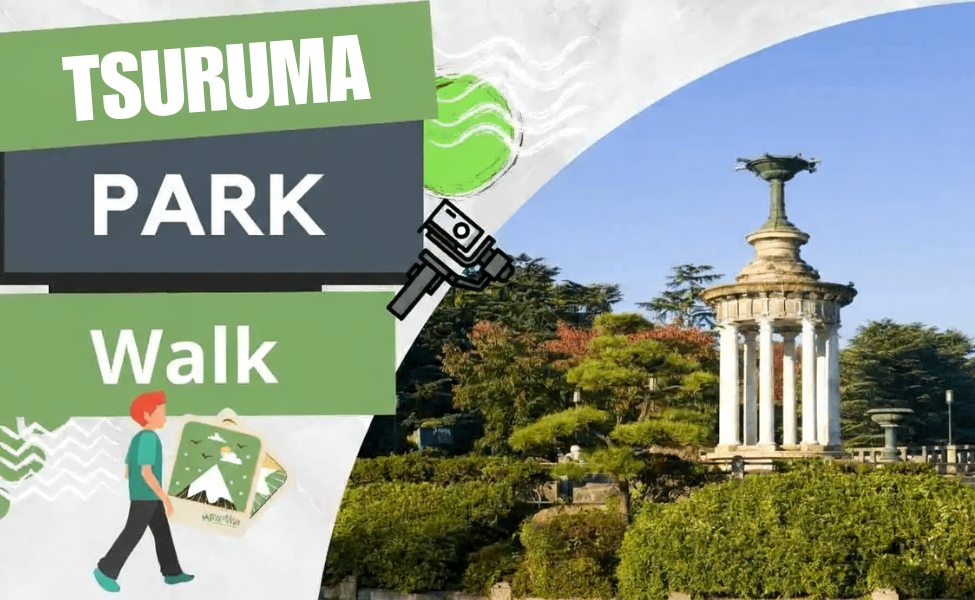
The Fountain Tower welcomes you at the western entrance, its Roman marble columns rising beside Japanese stonework.
Built in 1909 for an international exposition, this blend of Eastern and Western design became the park’s symbol and earned designation as a Municipal Cultural Property in 1986.
Walk east along the avenue of Himalayan cedars and the atmosphere shifts.
Two ponds appear, their surfaces catching reflections of 750 Somei Yoshino cherry trees.
This is where Nagoya comes for hanami.
Cherry Blossom Chaos
Late March through early April transforms Tsuruma Park into one of Japan’s Top 100 Cherry Blossom Viewing Places.
Arrive at dawn on a weekend and you’ll find the best spots already claimed, blue tarps spread beneath the trees by company employees who drew the short straw.
By afternoon, the lawns disappear under a sea of picnicking groups, laughter mixing with the occasional karaoke microphone.
Evening illuminations bring a different crowd.
Food trucks circle the fountain, beer gardens spill onto the grass, and the lit cherry trees glow pink against the dark sky.
Flowers Beyond Spring
The blooms don’t stop when cherry petals fall.
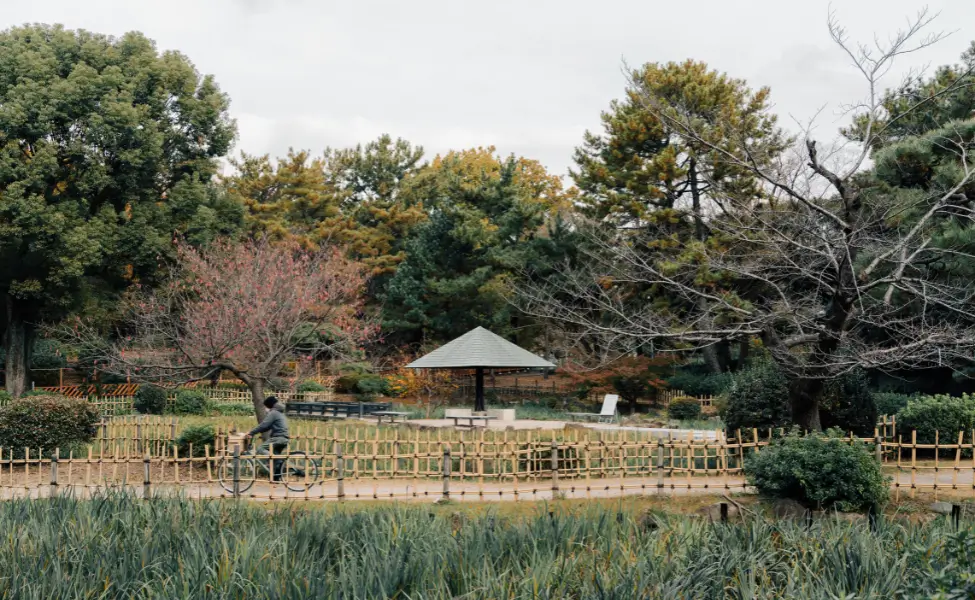
Late April brings azaleas, then 20,000 Japanese irises fill the pond edges through May and June, their purple reflections doubling on the water’s surface.
Summer belongs to the Suifuyo flowers in the Greenery Center, botanical oddities that wake up white, blush pink by lunch, and turn crimson before sunset.
They peak from August through October.
Autumn shifts the palette to red maples and golden ginkgo.
Winter camellias close the year.
The park never really sleeps.
Layers of History
The grand building north of the fountain is the Okaya Nagoya Hall, opened in 1930.
During World War Two, Allied forces commandeered it as their local headquarters and turned the entire park into a military base.
The occupation lasted until 1956, long enough that older Nagoya residents still remember the park being off limits.
Before the war, children’s voices dominated these paths.
Nagoya’s first zoo operated here from 1918 to 1937, housing elephants, bears, and crocodiles on reclaimed marshland.
When the collection moved to Higashiyama, only stone gate pillars remained.
Some of today’s ponds started as animal enclosures.
At the southeastern corner sits something far older.
Mt. Hachiman Burial Mound stretches 82 metres across, an ancient tumulus that predates the park by centuries.
It’s Aichi’s largest circular burial mound.
During the war, soldiers cleared its trees and mounted anti-aircraft guns on top.
Near the fountain, the Universal Suffrage Memorial Platform commemorates the 1925 General Election Law.
Bronze inscriptions once covered its walls until wartime metal collection stripped them away.
The replacements, installed in 1972, still mark this spot where democracy took root.
What You’ll Find Today
Morning joggers circle the three-kilometre perimeter path while early risers feed pond koi.
Tennis courts occupy the northwest corner where players start before the heat builds.
A baseball field serves nearby schools, their practice shouts carrying across the grass.

The playground draws families, though parents quickly learn the sand-based equipment means dusty clothes on windy days.
Bring a change of outfit if you’re heading to shops afterward.
Tsuruma Central Library anchors the southern edge, rebuilt after 1945 air raids destroyed the original 1923 building.
It’s still Nagoya’s largest public library.
On weekday afternoons, students spread across the lawn outside, textbooks propped against backpacks.
Getting There and Around
From Nagoya Station, the JR Chuo Line reaches Tsurumai in seven minutes.
Or take the Higashiyama subway to Fushimi, transfer to the Tsurumai Line, and you’re there.
Use Exit 4 from the subway or the Park Entrance from JR.
Both deposit you at the western gates where the original 1909 park sign still hangs, calligraphy by Prime Minister Taro Katsura.
Parking exists but fills fast during cherry season. Take the train instead unless you’re arriving before 7am.
Timing Your Visit
Spring brings crowds but also the spectacle.
Summer offers shade, though midday temperatures can feel punishing near the exposed sports fields.
The October Autumn Festival showcases fall colours with breathing room.
Winter stays quiet except for camellia enthusiasts and dedicated joggers.
Early morning suits photographers chasing calm pond reflections before the city wakes.
Evening illuminations during cherry season create entirely different energy, all beer and lights and celebration.
If you’re planning a hanami party during peak season, arrive before 6am on weekends with your tarp.
The competition for prime spots is real.
Before You Leave
The Osu Shopping Street sits a few subway stops away on the same Tsurumai Line.
An AEON mall stands five minutes on foot for meals and supplies.
The Flower Festival runs March through June with food trucks and evening events worth timing your visit around.
Whether you come for thousand-year-old burial mounds, cherry blossoms or for morning runs, Tsuruma Park remains what it’s been for over a century.
Nagoya’s favourite escape from itself.
