

Finding the best temples in Kyoto shouldn’t mean fighting through crowds of tourists at the same five spots.
With over 2,000 temples and shrines scattered across the city, most travelers waste time and money hitting only the packed locations everyone talks about.
The secret?
Knowing when to visit, which hidden gems rival the famous sites, and how a simple weekday morning visit cuts crowds by 60%.
This guide shows you exactly how to experience the best temples in Kyoto the way they were meant to be seen.
Understanding the Basics: Temples vs Shrines
Temples and shrines are completely different and recognising them matters for your visit.
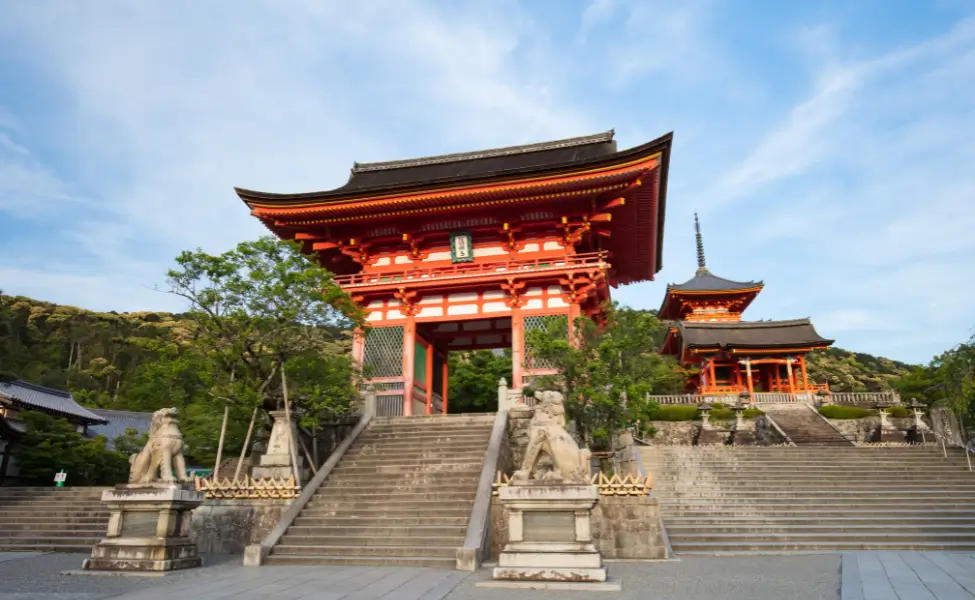
Buddhist temples feature large incense burners, Buddha statues, and names ending in “ji” (like Kinkaku-ji).
The entrance typically has a sanmon gate that looks like a traditional building.
You’ll bow but never clap when praying at temples.
Most temples charge admission fees and only offer garden or exterior viewing, not access to interior halls.
Shinto shrines have distinctive red torii gates at the entrance and names ending in “jingu” or “taisha” (like Fushimi Inari-taisha).
You’ll see fox statues or guardian dogs instead of Buddhas.
At shrines, you bow, clap twice, bow again.
Most shrines charge no entrance fee while temples typically cost 400-600 yen.
Quick Reference: Best Temples in Kyoto at a Glance
| Site | Fee | Opens | Nearest Station | Best For |
|---|---|---|---|---|
| Kinkaku-ji | 500¥ | 9:00am | Bus 101/205 | Photography |
| Kiyomizu-dera | 500¥ | 6:00am | Bus 206 | City views |
| Nanzen-ji | 500¥ | 8:40am | Subway Keage | Zen gardens |
| Ryoan-ji | 600¥ | 8:00am | Bus 59 | Rock garden |
| Honen-in | Free | 6:00am | Bus 5 | Peace & quiet |
Note: Opening times vary seasonally at some locations.
Check current schedules before your visit.
Money-Saving Facts About Temple Visits
Most guidebooks skip the budget details.
Here’s what actually matters for your wallet.
Buddhist temples typically charge 400-600 yen admission per person.
Visiting 10 temples means spending 4,000-6,000 yen just on entrance fees.
Shinto shrines are almost always free to enter, making them perfect for budget travellers.
Some large temple complexes like Nanzen-ji and Daitoku-ji let you walk the outer grounds for free.
You only pay when entering specific buildings or gardens.
Arrive before opening hours to explore these free areas without crowds.
If you’re visiting four or more temples in a day, buy the Subway & Bus One-Day Pass for 1,100 yen.
This covers unlimited rides on both subway and bus lines.
Individual bus rides cost 230 yen each, so the pass pays for itself after five rides.
Kyoto city discontinued the old bus-only pass in 2023 to reduce overcrowding on popular routes.
The Crowd Problem Nobody Warns You About
Spring cherry blossom season (late March to mid-April) brings suffocating crowds to popular temples.
The scent of cherry blossoms mixes with the press of thousands of visitors, turning peaceful temple grounds into theme parks.
We’re talking 90-minute waits just to enter Kiyomizu-dera.

Hotel prices triple. Buses run packed to capacity.
Autumn foliage season (November) runs a close second for crowds, though it’s slightly more manageable than spring.
Summer (June to August) sees far fewer tourists but brings oppressive heat and humidity plus daily rain.
Winter (December to February) offers the emptiest temples but freezing temperatures and occasional snow.
The smart traveller’s timing strategy:
Visit in early May (after Golden Week) or late September for decent weather and reasonable crowds.
Or embrace winter for peaceful, nearly empty temples if you can handle the cold.
Best Times of Day to Avoid Tour Groups
Most tour buses arrive between 10am and 2pm.
Beat them by visiting popular temples at opening time (usually 8am to 9am) or in the final hour before closing (typically 4pm to 5pm).
Early morning light creates photos impossible to capture at midday.
Some temples like Nanzen-ji have grounds that remain accessible outside building opening hours.

Visit at dawn or dusk for magical light and zero crowds.
Shrines almost never close, so early morning visits guarantee solitude.
Weekday visits reduce crowds by 40% to 60% compared to weekends.
Monday mornings are typically the quietest time all week (though some museums close Mondays).
Essential Temple Etiquette You Must Know
Walking into a temple without knowing basic etiquette marks you as disrespectful.
Follow these rules to show proper respect.
At the purification fountain: Use the ladle to pour water over your left hand, then your right hand.
Pour water into your cupped hand to rinse your mouth (don’t spit back into the fountain).

Tilt the ladle vertically to clean the handle with remaining water.
Entering temple grounds: Step over (never on) the raised threshold at temple gates.
Walk on the sides of paths, not the centre.
The centre is reserved for deities. Bow slightly when passing through major gates.
Taking photos: Photograph freely in outdoor areas unless signs prohibit it.
Never photograph inside temple buildings or altars.
Never use flash.
Don’t photograph people praying without explicit permission.
Inside temple buildings: Remove shoes and leave them at the entrance (wear clean socks).
Remove hats. Keep voices to a whisper.
Don’t touch Buddha statues, altars, or architectural elements.
Making offerings: Toss a coin gently into the offering box (5 yen coins are considered lucky).
At temples, bow and pray silently.
No clapping.
At shrines, follow the two bows, two claps, one bow pattern.
Top 5 Must-Visit Temples for First-Timers
Kinkaku-ji (Golden Pavilion) delivers Instagram-worthy views of a gold-leaf covered pavilion reflected in a pond.

The morning sun hits the gold differently than afternoon light, making the structure glow.
Arrive right at opening (9am) before wind disturbs the water.
Entrance costs 500 yen. You can only view the exterior and gardens.
No interior access.
Located in northern Kyoto, easily reached by bus 101 or 205.
Kiyomizu-dera sits on a hillside with panoramic city views from its famous wooden terrace.
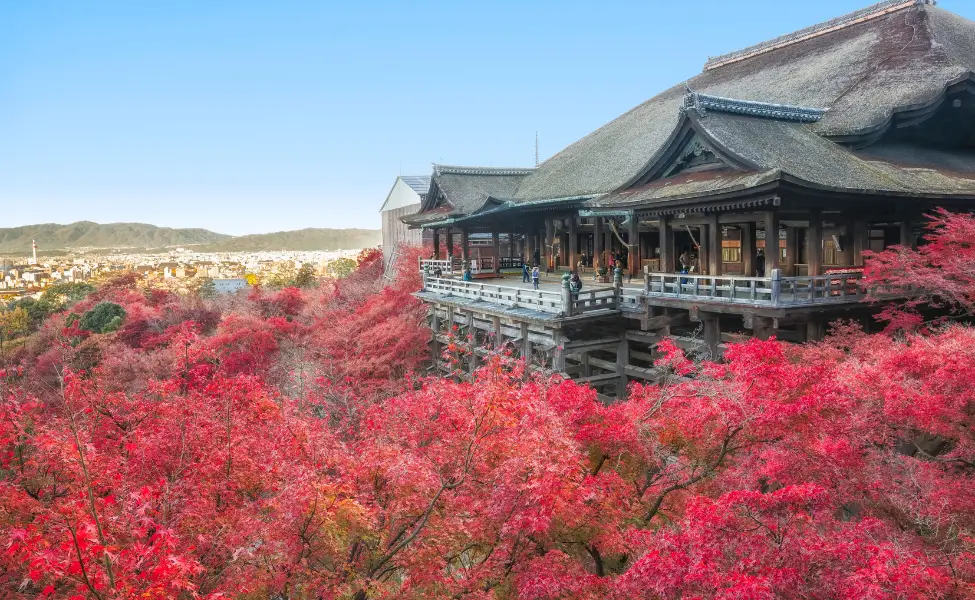
The name means “pure water” after the sacred Otowa Waterfall on the grounds.
Entrance 500 yen.
Opens at 6am. Arrive then to beat the masses.
Located in eastern Higashiyama district, reachable by bus 206.
Nanzen-ji offers a sprawling Zen temple complex with multiple gardens and a surprising red brick aqueduct.

The outer grounds are accessible outside building opening hours.
Individual gardens and buildings charge 500 yen each.
You can view beautiful architecture and rock gardens but cannot enter the interior halls except during special seasonal openings.
Located in northern Higashiyama with easy subway access to Keage station.
Ryoan-ji contains Japan’s most famous Zen rock garden.

Fifteen carefully placed stones float in raked gravel.
The minimalist design invites contemplation. Entrance 600 yen.
Garden viewing only, no building interiors.
Arrive at opening (8am) before crowds block the viewing platform.
Located in northwestern Kyoto.
Honen-in remains off most tourist radar despite being one of Kyoto’s most beautiful spots.

Moss covers the entrance gate like a green velvet carpet.
This intimate temple features peaceful grounds and free art exhibitions.
Admission is free.
Opens at 6am.
Located in northern Higashiyama, walkable from Ginkaku-ji.
Best Shrine: Fushimi Inari-taisha
Fushimi Inari-taisha features thousands of vermillion torii gates creating tunnels up the mountain.
This Shinto shrine is completely free and open 24/7.

Go at sunrise (6am) to experience the gates without crowds and watch morning light filter through the orange gates.
The full hike takes 2 to 3 hours round trip. Located in southern Kyoto near JR Inari station.
Hidden Gems When Popular Spots Are Packed
When famous temples overflow with tourists, these alternatives deliver equally stunning experiences with a fraction of the crowds.
These give you the same sense of atmosphere without the noise and queues.
Tofuku-ji showcases spectacular rock gardens and some of Japan’s oldest Zen architecture.
The grounds are free but special garden access costs 400 yen.
Avoid late November when autumn foliage brings crowds.
Located in southeastern Kyoto.
Daitoku-ji contains an entire world of sub-temples, each with unique gardens.

Most visitors stick to one or two temples, leaving the rest blissfully quiet.
Sub-temples charge 400 to 600 yen individually.
Located in northern Kyoto.
Shoren-in sits just minutes from crowded Chion-in yet tourists completely bypass it.

Beautiful gardens, peaceful atmosphere, and interesting architecture.
Entrance 500 yen. Located in Higashiyama district.
Manshu-in requires a 30-minute bus ride north but rewards you with exquisite gardens and zero crowds.
It’s one of Kyoto’s best-kept secrets.
Entrance 600 yen.
Located in far northern Kyoto.
Best Gardens for Nature Lovers
Japanese gardens represent different philosophical approaches to nature, and Kyoto showcases the finest examples.
Each garden carries the scent of different seasons.
Pine in winter, plum blossoms in early spring, moss after summer rain.
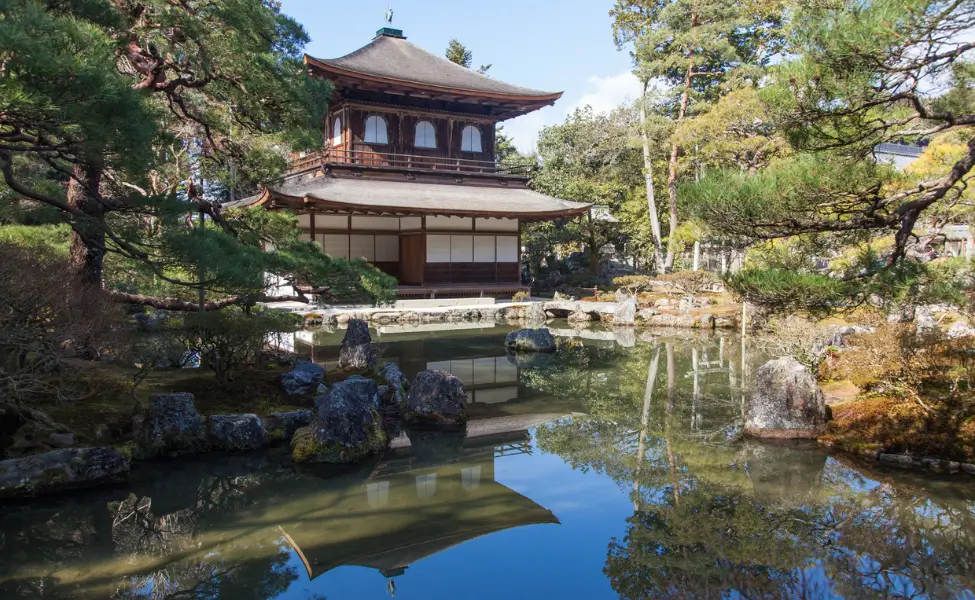
Ginkaku-ji (Silver Pavilion) features both a Zen garden and lush moss gardens up the hillside.

The sand cone and main patterns in the courtyard receive fresh raking daily.
Entrance 500 yen. Located in northeastern Higashiyama.
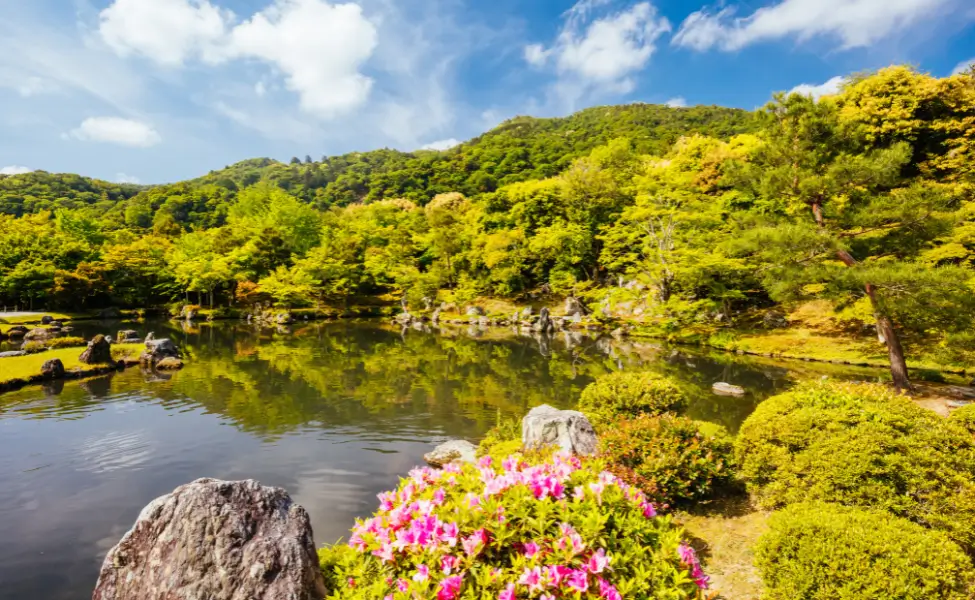
Tenryu-ji in Arashiyama offers pond gardens with mountain backdrops.
The autumn colours here rival anywhere in Kyoto.
Temple buildings charge 500 yen while gardens cost an additional 300 yen. Located in Arashiyama district.
Creating Your Temple Route
Don’t temple-hop randomly across Kyoto.
Group nearby temples into half-day or full-day routes to maximise your time.
Remember that at larger complexes, outer grounds stay free while specific buildings and gardens require paid entry.
Northern Higashiyama route (half-day):
Start at Nanzen-ji at 8am, walk to Eikan-do, continue to Honen-in, finish at Ginkaku-ji.
All walkable, total 3 to 4 hours including temple visits.
The path winds through quiet residential streets lined with traditional houses.
Southern Higashiyama route (half-day):
Begin at Kiyomizu-dera at 6am, walk downhill through Ninenzaka and Sannenzaka streets, stop at Kodai-ji, end at Yasaka Shrine.
Takes 3 to 4 hours.
The downhill walk means easy strolling between stops.
Arashiyama route (half-day):
Visit Tenryu-ji first, walk through bamboo grove where towering stalks creak in the breeze, continue to Okochi-sanso villa, hike to Gio-ji temple.

Allow 4 to 5 hours total.
Northern Kyoto temples (full-day):
Start at Kinkaku-ji at opening, take bus to Ryoan-ji, continue to Ninna-ji, finish at Daitoku-ji exploring multiple sub-temples.
Takes 6 to 7 hours.
Transportation Between Temples
Kyoto’s bus system connects all major temples.
The subway only reaches a few locations, making buses essential for temple-hopping.
Buy an IC card (Suica or ICOCA) at Kyoto Station for easy bus payments.
Just tap when boarding and exiting.
Each ride costs 230 yen within central Kyoto.
As mentioned earlier, the Subway & Bus One-Day Pass at 1,100 yen makes sense if visiting multiple temples.
Download the Google Maps app for real-time bus directions.
Bus stops display route numbers clearly in English.
Bus 5 and 101 connect many northern temples while 206 serves eastern Higashiyama temples.
The city also runs express sightseeing buses (EX100 and EX101) that stop only at major tourist spots.
Many temple clusters sit within walking distance.
The northern Higashiyama area (Nanzen-ji to Ginkaku-ji) works perfectly as a walking route.
The southern Higashiyama area (Kiyomizu-dera to Yasaka Shrine) flows naturally downhill on foot.
Taxis make sense when travelling between distant areas like Arashiyama and central Kyoto.
Expect to pay 2,000 to 3,000 yen for longer trips.
What to Bring for Temple Visits
Pack smart to handle multiple temple visits comfortably.
Slip-on shoes save massive time since you’ll remove shoes dozens of times at temple buildings.
Trainers with laces become frustrating by your third temple.
Wear or bring clean socks.
You’ll be padding around in sock feet inside temples.
Small bills and coins for entrance fees and offerings.
Many temples don’t break large bills.
Carry at least 3,000 yen in small denominations plus a handful of 5 yen coins for offerings (they’re considered lucky).
Weather protection varies by season.
Summer requires a hat, sunscreen, and water bottle. You’ll be walking extensively.
Winter demands layers and hand warmers.
Spring and autumn need a light jacket for cool mornings.
Common Mistakes That Ruin Temple Visits
First-time visitors make these errors repeatedly. Avoid them for a much better experience.
Mistake 1: Trying to see too many temples.
Quality beats quantity.
Three or four temples fully experienced beats rushing through ten temples for quick photos.
Spend 45 to 60 minutes at each location.
Mistake 2: Visiting only the famous spots.
Kinkaku-ji attracts a million visitors but nearby Ryoan-ji offers more impressive gardens with half the crowds.
Mix famous temples with hidden gems.
Mistake 3: Skipping the early morning.
The hour after opening provides completely different temple experiences.
Soft light, empty paths, monks performing morning rituals.
You’ll miss this magic if you arrive at 11am.
Mistake 4: Ignoring shrines to focus only on temples.
Fushimi Inari and Yasaka Shrine rank among Kyoto’s best sacred sites.

Plus shrines cost nothing to enter while temples drain your budget quickly.
Mistake 5: Visiting during cherry blossom season without understanding the tradeoffs.
Yes, the temples look stunning framed by pink blossoms.
But the crowds, prices, and stress might ruin the experience entirely.
Consider late spring or autumn instead.
How to Get Started
Begin with these action steps to plan your temple visits effectively.
Step 1: Choose your season based on priorities.
Want the best photos?
Spring or autumn.
Want peace and quiet?
Winter.

Want lowest costs and decent weather?
Late September or early May.
Step 2: Select 3 to 5 temples as your must-sees, then add 2 to 3 backup options for when places are crowded or closed.
Don’t try to see everything.
Step 3: Group temples by location into half-day routes.
This prevents wasting time and money crisscrossing the city on buses.
Step 4: Book your accommodation in central Kyoto near Shijo-Kawaramachi or Kyoto Station for easy access to all temple areas.
Book months in advance if visiting during spring or autumn.
Step 5: Download Google Maps and add your chosen temples as saved places.
This makes navigation effortless when you’re actually in Kyoto.
Final Thoughts
Kyoto’s temples and shrines offer something no other city can match.
A concentrated glimpse into centuries of Japanese spiritual and artistic achievement.
You don’t need weeks to appreciate them.
Focus on quality over quantity.
Visit early and late to avoid crowds.
Mix famous sites with hidden gems.
Respect the etiquette.
And remember that these are active places of worship, not just museums.
The temples that move you most will likely be the quiet ones you discovered by accident, not necessarily the famous spots from guidebooks.
Stay open to wandering down side streets and following paths that look interesting.
That’s where Kyoto reveals its real magic.