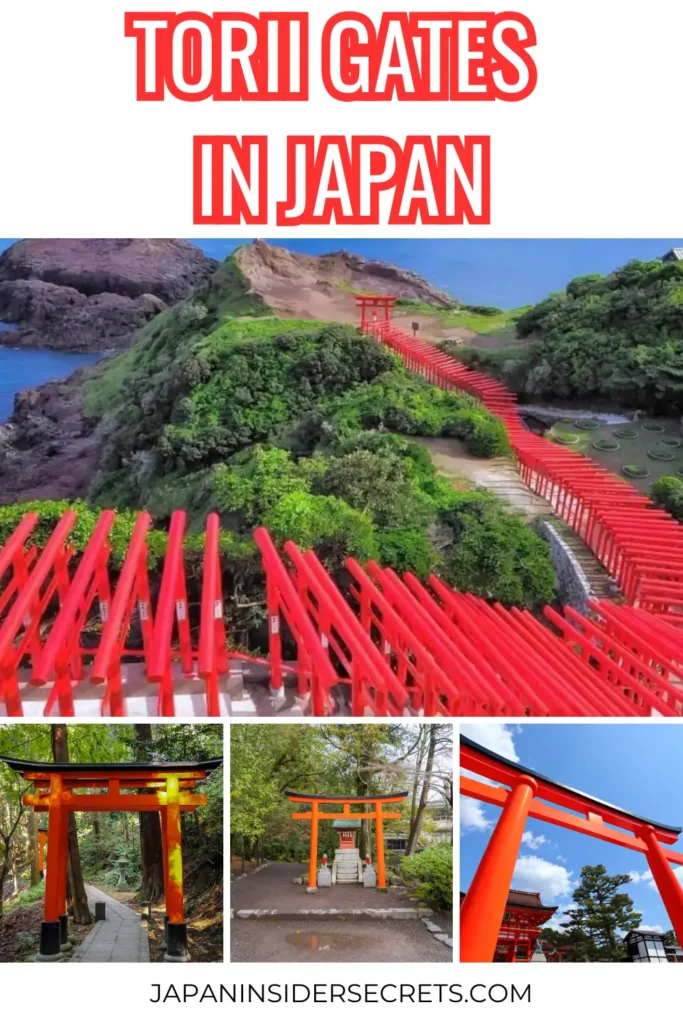

Torii gates in Japan are more than bright red arches at shrine entrances.
They symbolize the passage from the everyday world into sacred space.
From Kyoto’s Fushimi Inari with its thousand gates to Miyajima’s floating torii, these structures stand as some of the most powerful symbols of Shinto and Japanese culture.
What Are Torii Gates?
Torii gates mark sacred entrances at Shinto shrines throughout Japan.

They serve as symbolic thresholds between the ordinary world and divine spaces.
These traditional structures use various materials and colors.
Each one holds deep spiritual meaning in Shinto beliefs.
Even if you don’t follow the religion, you can’t really miss the sense of importance they bring to a place.
The History and Cultural Role of Torii Gates
The first torii gates appeared in Japan during the mid-Heian period, around 922 AD.
The oldest existing stone torii stands from the 12th century at a Hachiman shrine in Yamagata Prefecture.

The oldest wooden torii still stands at Kubō Hachiman Shrine in Yamanashi Prefecture, dating back to 1535.
These gates were first used in Buddhist temples and Shinto shrines before the two religions split.
You can easily spot Shinto shrines by looking for torii gates at their entrances.
Japanese road maps and Google Maps use small torii symbols to mark shrine locations.
Multiple torii often line the path to shrines.
The first gate is called ichi no torii, then ni no torii and san no torii as you get closer to the main shrine building.
Materials, Colours, and Designs of Torii
Traditional torii gates were built from wood or stone.
Modern versions sometimes use reinforced concrete or stainless steel.

You’ll most commonly see unpainted wooden gates or vermilion red gates with black upper beams.
The vermilion ones really pop, especially at Inari shrines.
Successful business people often give these red gates to honor Inari, the deity of fertility and industry.
They do this to show gratitude for their good fortune.
The Fushimi Inari Taisha in Kyoto has thousands of these gates, each one bearing the donor’s name.
Torii Gate Families:
| Shinmei Family | Myōjin Family |
|---|---|
| Straight parts only | Curved and straight parts |
| Simple design | More ornate features |
| Unpainted wood typical | Often painted vermilion |
Symbolism in Shinto Beliefs
Torii gates symbolically separate the mundane world from sacred space where kami (Shinto deities) dwell.
When you pass through a torii, you enter a realm where divine spirits are welcomed and travel freely.
The gates act as thresholds where the earthly meets the divine.
This boundary concept is fundamental to Shinto beliefs about sacred and ordinary spaces.
Spiritual Functions:
- Mark entrances to sacred areas
- Welcome kami spirits
- Create spiritual boundaries
- Purify visitors entering shrine grounds
You should bow respectfully before passing through torii gates.
Step to one side instead of walking straight down the center.
The middle path is for the kami.
Torii gates mark Shinto shrines, setting them apart from Buddhist temples.
That visual marker helps you grasp the spiritual meaning of the space you’re entering.
Fushimi Inari Taisha: The Shrine of a Thousand Torii Gates
Fushimi Inari Taisha stands as Kyoto’s most photographed shrine.
Thousands of vermilion torii gates create tunnels of red leading up Mount Inari.

This sacred site blends stunning architecture with deep spiritual traditions.
You’ll get both visual splendor and a real sense of cultural depth.
Main Shrine and Deities
The main shrine complex sits at the base of Mount Inari in southern Kyoto.

You’ll find the worship hall and outer worship hall where visitors pay respects to Inari, the Shinto deity of rice and prosperity.
Fox statues called kitsune guard the shrine grounds as Inari’s messengers.
These stone foxes often hold keys or scrolls in their mouths, and you can spot them all over the place, each with its own personality.
The main hall dates back over 1,300 years.
More than 30,000 smaller Inari shrines across Japan trace their origins to this site.
People often leave offerings of sake, rice, and origami cranes at the altar.
The red and white color scheme stands for good fortune and protection from evil spirits.
Paths and Landmarks on Mount Inari
The mountain trails start right behind the main shrine buildings.
Senbon Torii marks the entrance.
Two parallel rows of densely packed gates creating the famous tunnel effect.
Mount Inari rises 233 meters above Kyoto.
The full hike to the summit takes 2-3 hours, but you can turn back anytime.
Most visitors stop at Yotsutsuji intersection about halfway up. Along the way, you’ll find:
- Senbon Torii – The dense gate tunnels
- Yotsutsuji intersection – Panoramic city views
- Summit shrines – Smaller worship sites
- Rest stations – Food and drink stops
The path splits into circular routes at various points.
Stone markers show distances and directions in Japanese.
Each section gives you different views of Kyoto’s skyline.
Experiencing the Thousand Torii Gates
The vermilion torii gates create an otherworldly experience as you walk through them.
Each gate shows the donor’s name and donation date in black ink on the back.
Smaller gates cost around 400,000 yen while larger ones can go over a million.
Companies and individuals donate gates to bring good fortune to their businesses or families.
The gate density thins out as you climb higher.
Early morning visits give you the best photography opportunities with fewer crowds and softer light.
Mini torii gates appear at smaller shrines along the path.
People with smaller budgets donate these wooden versions, and they pile up into impressive displays.
Visitor Etiquette and Traditions
Bow before entering the main torii gate at the shrine entrance.
Walk slightly to the left or right of the path’s center, as the middle is reserved for deities.
For purification at the water basin:
- Rinse your left hand, then right hand
- Rinse your mouth (don’t drink)
- Clean the ladle handle
Make offerings by tossing coins into the collection box.
Bow twice, clap twice, make your prayer, then bow once more.
Photography is allowed in most areas.
Just avoid using flash inside buildings or disturbing other worshippers.
The shrine stays open 24 hours, but daylight hours show off the gate colors best.
Peak times include New Year and weekends, so plan accordingly.
Visiting Torii Gates in Kyoto: Tips and Access
The iconic torii gates at Fushimi Inari Taisha are easy to reach from central Kyoto and Osaka.
Early mornings are best for photography and beating the crowds.
How to Get to Fushimi Inari Taisha
From Kyoto Station, take the JR Nara Line directly to Inari Station.
The ride takes about 5 minutes and costs around ¥140.

The station sits right at the shrine’s entrance.
You can also use the Keihan Main Line to Fushimi-Inari Station, about 7 minutes from central Kyoto areas like Gion.
From Osaka, take the JR Nara Line from Osaka Station or Tennoji Station.
The trip takes 45-60 minutes, and your JR Pass covers this route if you have one.
Both train options drop you within a 3-minute walk of the main shrine entrance.
English signs clearly mark the way from either station.
There’s no car parking for visitors, so trains are your best bet.
Best Time to Explore and Photography Tips
Early morning visits between 6:00 and 8:00 AM offer the best experience.
Fewer crowds and soft lighting make photos much easier.
The shrine stays open 24 hours, so late afternoon around 4:00-6:00 PM also gives good light.
For photography, the Senbon Torii section has the most dramatic shots with over 1,000 densely packed gates.
Avoid weekends and Japanese holidays if you can.
The trails get really crowded and it’s tough to get a clear photo.
The full mountain trail takes 2-3 hours.

Most visitors turn back after the main gate area, so if you keep going, you’ll find quieter spots.
Bring water and comfortable shoes.
The mountain paths have steep sections and uneven stone steps, so it’s not just a casual stroll.
Integrating Torii Gates into Your Kyoto Itinerary
Fushimi Inari works well as a morning activity before exploring other Kyoto attractions.
Its location in southern Kyoto makes it convenient for multi-stop days.
Popular combinations include visiting Kiyomizu-dera Temple in eastern Kyoto after Fushimi Inari.

Just take the JR Nara Line back to Kyoto Station, then transfer to buses for the Higashiyama district.
Plan 2-4 hours for Fushimi Inari, depending on how far up the mountain you hike.
Remember to factor in travel time when building your Kyoto itinerary.
The shrine fits well into both 1-day and 3-day Kyoto trips as a must-see attraction.
Other Famous Torii Gates Across Japan
Japan has over 80,000 shrines, each with unique torii gates that tell different stories.
You’ll find stunning gates outside Kyoto’s famous places.
Look for them by the coast, in mountain temples, and at historic sites across the country.
Iconic Torii Gates Beyond Kyoto
Itsukushima Shrine in Miyajima is probably Japan’s most photographed torii gate.
This vermilion gate looks like it’s floating on water during high tide.

You can get there by taking a 25-minute train from Hiroshima Station to Miyajimaguchi, then a quick ferry ride.
It’s definitely worth the trip.
Hakone Shrine offers another beautiful water-based torii experience.
The gate sits on Lake Ashi’s shore, with Mount Fuji in the background if you’re lucky with the weather.
The shrine dates back to 757 and sits among tall cedar trees.
It’s especially atmospheric on misty days.

In Yamaguchi Prefecture, Motonosumi Shrine has 123 bright red torii gates leading to clifftop ocean views.
Built in 1955 after a fisherman dreamed of a white fox, this shrine also has Japan’s trickiest offering b.
It’s 5 meters high on the main gate.

Arakura Sengen Shrine in Yamanashi gives you one of Japan’s most iconic photo spots.
You get panoramic views of Mount Fuji with the shrine’s torii gate and a sea of cherry trees in the foreground.
Legends, Traditions, and Symbolism of Torii Gates
Many famous torii gates connect to Japan’s most powerful historical figures.
Toyotomi Hideyoshi, for example, shaped several shrine developments during his rule in the late 16th century.
His support helped establish many of the architectural standards you see today.
It’s pretty wild how much influence one person can have on a country’s look and feel.
Kinpusenji Temple in Nara shows the blend of Buddhism and Shintoism.
This World Heritage site has a large torii gate at the entrance of a Buddhist temple.
This was common before the Meiji government separated Buddhism and Shinto in the 1800s.
The Wedded Rocks at Futami Okitama Shrine represent Izanagi and Izanami, the creator gods of Japan’s islands.

These rope-connected rocks have a tiny torii gate on top, symbolizing the gateway between earthly and sacred worlds.
Tips for Discovering Hidden Gems
Visit shrines on weekday mornings to avoid crowds and get better photos.
Famous gates can look completely different depending on the light and time of day.
Use local train passes like the JR Pass to explore multiple prefectures efficiently.
Regional buses often reach more remote shrine locations that trains don’t serve directly.
Check seasonal timing for your visits.
Cherry blossom season changes shrine grounds beautifully.
Autumn colors offer new photo spots near torii gates.

Look for shrine festivals throughout the year.
These events highlight traditional ceremonies.
They also provide deeper cultural context for the torii gates you see.
Frequently Asked Questions
Torii gates spark lots of questions about their red color, different designs, and where to find the most famous ones.
You might also wonder about the specific numbers at shrines and what these sacred structures really mean in Japanese culture.
What’s the significance behind the colour of torii gates?
The bright red you see on most torii gates isn’t just for show.
In Japanese, this colour is called “shu-iro,” and people believe it protects against evil spirits.
Red has always meant a lot in Japan.
It stands for life, energy, and good luck.
This colour forms a kind of spiritual boundary between the everyday world and sacred ground.
It’s almost like a warning or a welcome, depending on how you look at it.
But not every torii gate is red.
Some shrines leave their gates as natural wood, while others paint them white or even black.
The red paint also helps shield the wood from rain and sun.
That practical side goes hand in hand with the spiritual meaning.
Can you tell me about some torii gate designs?
Myojin torii are everywhere.
These have curved top beams and straight posts, giving them a graceful look.
You’ll usually find them marking the entrance to big, well-known shrines.
Shime torii are a different story.
They’re made from thick, twisted straw ropes.
People set up these temporary gates during festivals or special events.
Kasuga torii stand out with their round pillars and bright vermillion paint.
You’ll see rows of them at Kasuga Taisha Shrine in Nara.
Ise torii keep things simple.
They use plain cypress wood, no paint or fancy touches.
Shrines rebuild these gates every twenty years, keeping an old tradition alive.
Stone torii gates are built to last.
These often mark ancient shrines and can stick around for centuries.
Where can I find some of the most famous torii gates in Japan?
Fushimi Inari Shrine in Kyoto is probably the most famous.
Thousands of red gates form winding tunnels up Mount Inari.
This shrine honors the fox deity and pops up in countless travel photos.
On Miyajima Island, Itsukushima Shrine has its floating torii gate.
When the tide’s in, it looks like the gate rises straight out of the sea.

Mount Fuji has a few shrines with impressive gates.
They frame the mountain perfectly, especially when the cherry blossoms are out.
Nezu Shrine in Tokyo hides a tunnel of red gates among peaceful gardens.
It’s a quiet spot, not far from the chaos of the city.
Hakone Shrine sits by Lake Ashi.
Its torii gate stands in the water, with misty mornings and mountain reflections making for pretty magical photos.
How many torii gates are there at the Fushimi Inari Shrine?
Fushimi Inari Shrine has more than 10,000 torii gates scattered across the area.
The number changes as new gates go up and old ones come down.
The main trail up Mount Inari has about 5,000 gates forming those famous tunnels.
The path stretches for nearly four kilometers all the way to the top.
Each gate is a donation, usually from a person or a business.
The donor’s name and the date appear on the back in Japanese.
People add new gates all the time.
Companies often donate for business luck, while families might hope for good health or fortune.
Gate size depends on the donation.
Smaller ones cost around 400,000 yen, while the biggest can go for over a million.
Which torii gates in Tokyo are a must-see?
Meiji Shrine has the largest wooden torii gate in Japan.
It’s made from 1,500-year-old cypress and stands 12 meters tall.
Nezu Shrine offers a beautiful tunnel of red gates winding through azalea gardens.
Spring is the best time, when the flowers burst into color.
Hie Shrine has a long staircase lined with red torii gates.
It’s near the Imperial Palace and known for its monkey statues.
Hanazono Shrine sits right in the middle of Shinjuku, surrounded by neon lights.
The bright red gates feel both old and new at once.
Yasukuni Shrine has a huge steel torii gate, one of the tallest in Tokyo.
This shrine honors Japan’s war dead and draws plenty of visitors.
What does the torii gate symbolise in Japanese culture?
Torii gates mark the boundary between the physical world and the spiritual realm.
When you walk through one, you step into a sacred space where kami (spirits) live.
These gates stand for purification and renewal.
Passing through them is supposed to cleanse you of impurities and get your mind ready for worship or meditation.

Torii also show respect for nature in Shinto beliefs.
You’ll often see them in forests, mountains, or near water, highlighting the harmony between people and natural spirits.
The gates mean protection and blessings too.
Lots of folks bow before walking through, just to show respect to the kami inside.
In modern Japan, torii have turned into symbols of the country itself.
They pop up on tourist materials and represent Japanese culture to people all over the world.