

Japan’s digital nomad visa, launched on March 31, 2024, allows remote workers to live in the country for up to six months while working for overseas employers or clients.
This guide covers everything you need to know about eligibility, application requirements, and the critical limitations most articles ignore.
The program targets highly skilled professionals from 49 countries with tax treaties or visa-free agreements with Japan.
The visa provides legal certainty for remote work in a fascinating country.
However, it has major restrictions that impact banking, housing, and daily life.
Digital Nomad Visa Japan: Who Can Apply
Eligible Countries
Only citizens from countries with established tax treaties or visa-free short-term travel agreements with Japan qualify.
This includes the United States, Canada, all European Union countries, United Kingdom, Australia, New Zealand, Singapore, South Korea, Hong Kong, and others.
The complete list of 49 eligible countries is available on the Ministry of Foreign Affairs website.
Income Requirement
You must demonstrate annual income of at least 10 million Japanese Yen, approximately $67,000 to $68,000 USD at current exchange rates.

This is one of the highest income thresholds among global digital nomad programs.
Acceptable proof includes:
- Tax returns from your home country.
- Employment contracts that show salary and duration.
- Client contracts for freelancers, showing total annual income.
- Bank statements with consistent income deposits.
Your income must come from sources outside Japan.
Insight Spotlight: Currency fluctuations between your earning currency and Japanese Yen can push you below the threshold if your income is borderline, particularly when the Yen strengthens.
Health Insurance Requirement
You need private medical insurance that covers at least 10 million JPY (about $67,000 USD) for injury, illness, and death during your six-month stay.
Some premium credit cards offer travel insurance that might meet this requirement.
So, check the coverage limits and duration with your card issuer and the Japanese embassy.
Each dependent needs their own separate insurance policy meeting the same coverage minimums.
Your policy does not automatically extend to cover spouses or children.
Required Documents
For All Applicants
You need to provide a completed visa application form.
Also, include a recent passport photo and a valid passport with at least six months of validity left.
Make sure your passport has two blank visa pages.
Lastly, you must show proof of health insurance that meets the minimum coverage requirements.
If Applying Without a Certificate of Eligibility
You also need a document describing your planned activities and intended stay duration, plus proof of income demonstrating the minimum annual earnings requirement.
For Family Members
Spouses and dependent children must have valid passports.
They also need proof of relationship, like marriage or birth certificates.
Each person should have their own health insurance policy that meets the minimum coverage requirements.
Insight Spotlight: Gathering comprehensive income documentation takes longer than most applicants expect, particularly for freelancers compiling contracts from multiple clients.
Start this process two to three months before your intended travel date.
Certificate of Eligibility: Do You Need It?
The Certificate of Eligibility is an advance approval document from Japan’s Immigration Services Agency.
While not mandatory, understanding whether to pursue one affects your timeline significantly.
To apply with a COE, start by submitting documents to the Immigration Bureau in Japan. Wait around three months for processing.
After that, take the COE to your local embassy for visa issuance, which takes about five business days.
This route adds steps and requires coordination with someone in Japan or complex submissions from abroad.
Applying without a COE means submitting all documents directly to your local Japanese embassy, where processing takes one to six weeks as your application goes to Japan for review.
This simpler process eliminates the need for a sponsor or proxy in Japan.
For most applicants, skipping the COE and applying directly through your embassy proves more straightforward and often faster overall despite longer embassy processing times.
Insight Spotlight: Many embassies have processed very few digital nomad visas since the program launched in 2024.
Call ahead to verify current procedures and processing times, as staff may be unfamiliar with specific requirements.
How to Apply Step by Step
Before You Start
Contact your local Japanese embassy or consulate two to three months before your intended travel date.
Check the current processing times.
Also, clarify any location-specific requirements.
Finally, ask about the address and phone number fields on the application form, as they often confuse people.
Gather Your Documents
Download visa application forms from the Immigration Services Agency website or obtain them from your embassy.
Compile income proof such as tax returns, employment contracts, or client agreements.
Obtain health insurance meeting coverage requirements.
Prepare your description of planned activities document. Get passport photos taken to specifications.
Complete and Submit Your Application
Fill out the form using pen or type it, with no pencil allowed.
Sign by hand rather than electronically.
For fields not applicable, write “N/A” or “None”.
Contact your embassy for guidance on the Japan address and phone number fields, as requirements vary by location.
Submit your application in person at the embassy or via their specified method.
Bring exact cash for the visa fee, as cards and checks are typically not accepted.
If someone else submits on your behalf, include proper authorization forms.
Wait for Processing
With a COE, expect approximately five business days at the embassy.
Without a COE, allow one to six weeks depending on the embassy and review process.
The embassy will contact you if additional documentation is needed.
Receive Your Visa
Once approved, collect your passport with the visa sticker or document.
Verify all information is correct.
Prepare to show your visa, insurance documents, and potentially proof of income at Japanese immigration upon arrival.
Critical Limitations You Must Understand
The digital nomad visa comes with restrictions that affect daily life more than most guides acknowledge.
Understanding these limitations is essential for realistic planning.
No Residence Card
You will not receive a Residence Card, the government-issued ID for legal residents in Japan.
Without this card, you cannot open bank accounts at traditional Japanese banks, sign long-term rental agreements, register for phone numbers from major carriers, or access many services requiring residency proof.
Banking Restrictions
You must use international financial solutions like multi-currency fintech accounts such as Wise or Revolut for holding and converting Japanese Yen.
International wire transfers to your home country bank remain an option.
Convenience stores like 7-Eleven and Lawson have ATMs that take international cards 24/7.

However, withdrawal fees usually range from 110 to 220 JPY per transaction, plus your bank’s foreign exchange fee.
Accommodation Challenges
Standard rental contracts typically require two-year commitments and a residence card.
You are limited to short-term options like Airbnb, serviced apartments, guesthouses, or monthly furnished rentals.
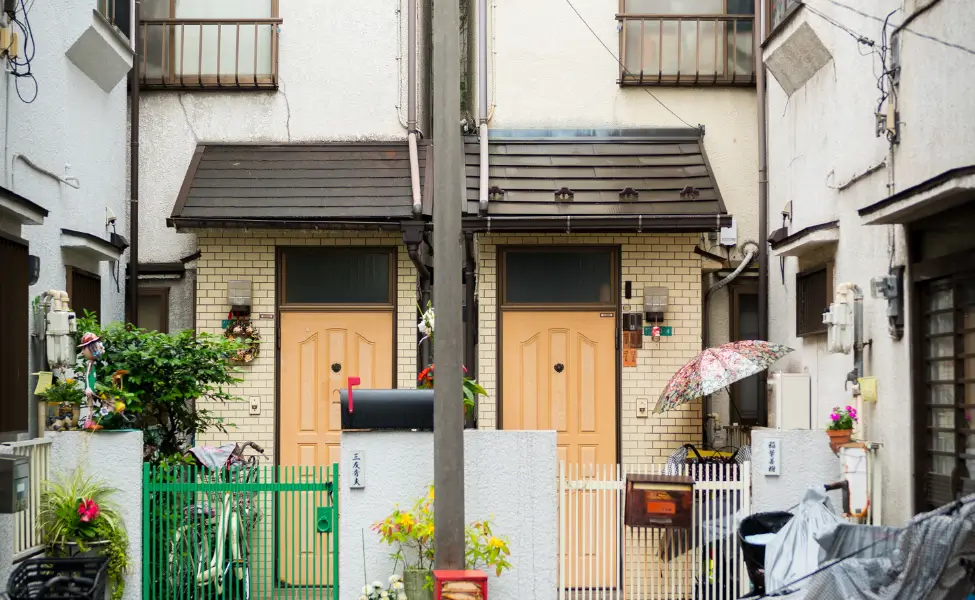
These cost significantly more than long-term rentals, particularly during peak tourism seasons.
Budget 50 to 100 percent more for accommodation in countries with digital nomad visas.
These visas may not allow access to regular rental markets.
In Tokyo, basic short-term accommodation runs 140,000 to 200,000 JPY monthly, while mid-range options cost 200,000 to 300,000 JPY.
Regional cities like Fukuoka or Osaka offer lower rates, typically 90,000 to 240,000 JPY depending on quality and location.

Insight Spotlight: Many successful digital nomads split their six months between expensive major cities for cultural experiences and more affordable regional areas to manage costs effectively.
Work Restrictions
You can’t take a job with Japanese companies, offer services to clients in Japan, or earn money from Japanese sources, even if paid from elsewhere.
Your work must be performed exclusively for overseas employers or clients.
Tax Implications
Most digital nomads under this visa are not considered Japanese tax residents and owe no Japanese income tax on foreign earnings.
Japanese tax residency requires either having a domicile in Japan or maintaining a residence continuously for one year or more.

Since the visa lasts only six months and requires a six-month absence before reapplying, you stay below the one-year threshold.
Most eligible countries have tax treaties with Japan providing additional protection against double taxation for short-term visitors.
Your foreign-sourced income typically remains taxable only in your home country.
You will pay Japan’s consumption tax, currently 10 percent on most goods and services, which applies to everyone regardless of residency status.
You must continue meeting all tax obligations in your home country while working from Japan.
Insight Spotlight: Track your days in Japan carefully and maintain documentation showing your income comes from overseas sources in case tax authorities request verification.
Cost of Living Reality
Beyond accommodation, budget for food (40,000 to 90,000 JPY monthly depending on lifestyle), local transportation (8,000 to 15,000 JPY monthly), mobile data through tourist SIMs or eSIMs (3,000 to 8,000 JPY monthly), and coworking space memberships if needed (10,000 to 35,000 JPY monthly in major cities).
A budget-conscious digital nomad can manage on 250,000 to 320,000 JPY per month (approximately $1,700 to $2,200 USD).
A moderate lifestyle in major cities requires 320,000 to 450,000 JPY monthly (approximately $2,200 to $3,100 USD).

Comfortable living in Tokyo or Kyoto typically costs 450,000 to 650,000 JPY monthly (approximately $3,100 to $4,500 USD).
Reapplication and Timing
The visa cannot be renewed or extended.
However, you can reapply after spending six consecutive months outside Japan.
The waiting period begins the day you depart and must be completed before submitting a new application.
To return right after your waiting period, start the application two to three months before the six-month mark.
This allows time for gathering documents and embassy processing.
Some digital nomads plan their waiting period while travelling to other Asian countries.
These countries offer digital nomad visas, making for an efficient regional rotation.
Alternative Options
If the digital nomad visa isn’t right for you, consider the Working Holiday Visa.
It’s for ages 18 to 30 and allows you to stay in Japan for up to a year.
You can also work for Japanese companies, and it has lower income requirements.
The Business Manager Visa suits entrepreneurs willing to invest 5 million JPY in establishing a business.
The Highly Skilled Professional Visa uses a points-based system for professionals with specialized qualifications and offers a pathway to permanent residency.
Frequently Asked Questions
No. You must apply from outside Japan at a Japanese embassy or consulate. You cannot change to digital nomad status while in Japan on another visa.
Yes. They need their own passports, health insurance policies meeting coverage minimums, and documentation proving your relationship.
No. Traditional banks require a residence card. You must use international fintech solutions like Wise or Revolut.
No. Standard leases require a residence card. You are limited to short-term accommodation options.
The income requirement applies at application time. You must meet it again when reapplying, but drops during your current stay don’t invalidate your visa.
Most digital nomads on this visa are not Japanese tax residents and owe no Japanese income tax on foreign earnings, though you pay consumption tax on purchases. Consult a tax advisor for your specific situation.
No. The visa prohibits working for Japanese companies regardless of payment structure.
No. This visa provides no pathway to permanent residence, and time spent on it doesn’t count toward residency requirements.
Official Resources
The Ministry of Foreign Affairs maintains the official digital nomad visa page at their website under Designated Activities visas.
Japan’s Immigration Services Agency provides detailed guidance and downloadable forms.
Find your nearest Japanese embassy through the Ministry of Foreign Affairs embassy locator, as each maintains location-specific application procedures and processing times.
Always verify information with official government sources rather than relying solely on third-party websites, as immigration policies and procedures can change without notice.
Final Thoughts
Japan’s digital nomad visa opens opportunities for remote workers earning above $68,000 annually to experience the country legally for six months.
The program provides access to exceptional infrastructure, safety, rich culture, and unique experiences beyond typical tourism.
The limitations are significant.
Six months is shorter than competing programs.
The lack of a residence card creates banking and accommodation restrictions.
The high income requirement excludes many remote workers.
No pathway to permanent residency exists.
For those who meet requirements and understand constraints, the visa delivers legal certainty for an extended stay in one of the world’s most fascinating countries.
Gather income documents two to three months before you apply.
Budget much more for accommodation than usual digital nomad spots.
Also, reach out to your local embassy early to check the latest procedures.
The program remains relatively new since its March 2024 launch.
Procedures continue evolving as embassies gain experience.
Stay updated from official sources.
Plan realistically based on real limits, not just ideal expectations.
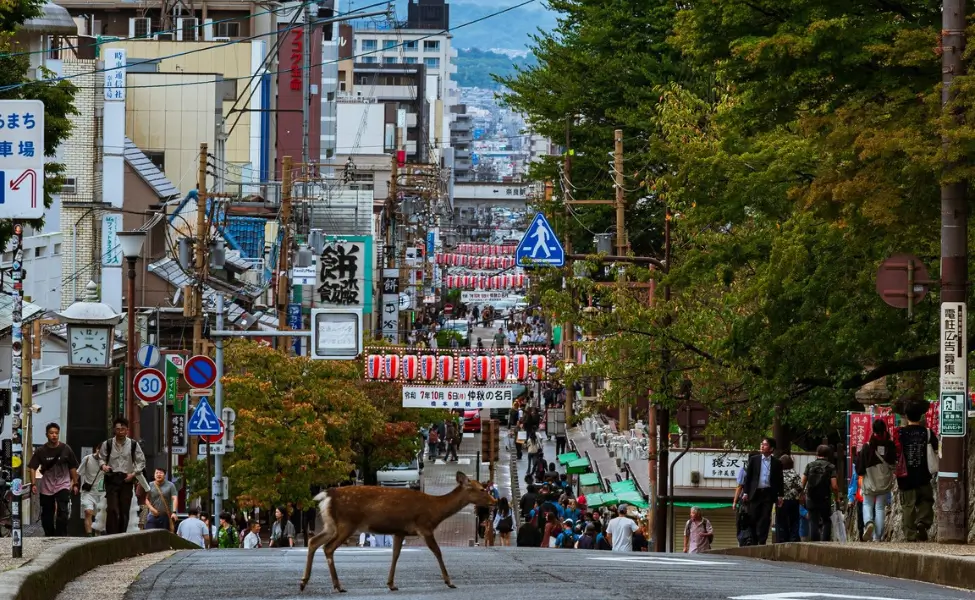
Six months in Japan lets you build routines, explore different regions, and dive deep into Japanese culture in ways that short visits can’t.
