

The most walkable cities in Japan share a pattern.
Clean pavements, logical street layouts, and clusters of attractions within 2 to 3 kilometres.
Takayama’s entire historic district covers 1 kilometre end to end.
Nara Park stretches 2 kilometres with temples at each end.
Kurashiki’s canal quarter takes 30 minutes to walk completely.
These walkable Japanese cities built their character around foot traffic.
Kyoto: Walkable Districts Worth Exploring
Kyoto works for walking district by district, not end to end.
Distances between major areas require buses or trains, but once you arrive, individual neighbourhoods offer excellent foot exploration.
The Higashiyama area deserves a full day.
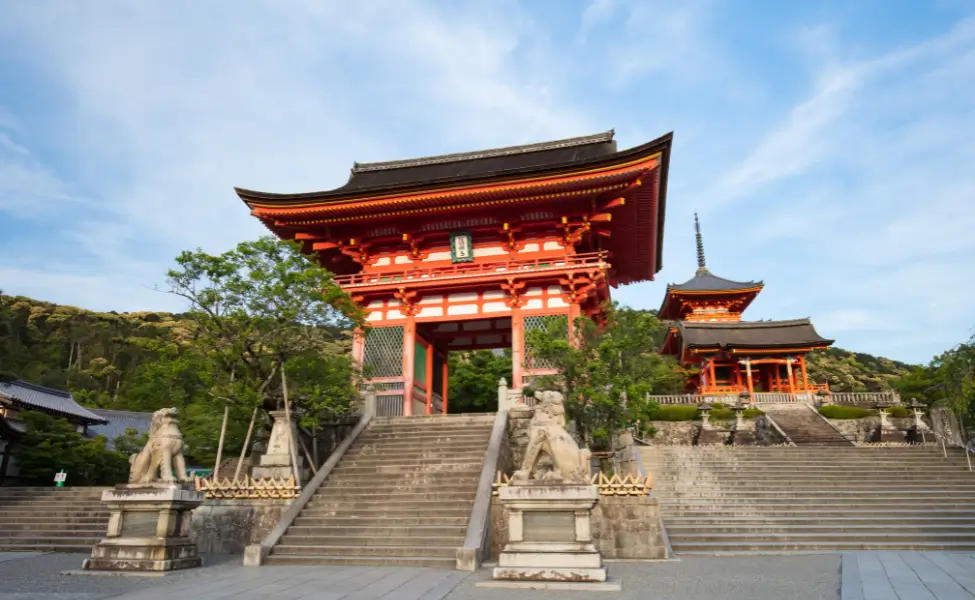
Start south near Kiyomizudera Temple, then walk north through Ninenzaka and Sannenzaka’s sloping streets.
These preserved lanes feature traditional shops, teahouses, and restaurants.
The stone-paved paths continue to Yasaka Shrine, roughly a 2-kilometre route.
Pontocho Alley runs along the Kamogawa River between Shijo and Sanjo streets.
This narrow lane stretches barely 2 metres wide in places, lined with traditional restaurants that spill wooden verandas over the river in summer.
Walk it in early evening as lanterns light and kitchen staff prepare for dinner service.
The backstreets west of Nishiki Market hide residential Kyoto.
Small neighbourhood shrines appear between houses, older shopkeepers sweep their storefronts, and you’ll see how locals actually live.
These unglamorous blocks between Shijo and Oike streets repay aimless wandering.
Fushimi district in southern Kyoto gets fewer tourists despite its sake breweries and traditional streetscapes.
The district sits about 5 kilometres from central Kyoto, but once there, everything clusters within walking distance.

Kyoto’s grid layout in the city centre makes navigation straightforward.
Main streets run north to south or east to west, numbered in sequence.
Kyoto makes more sense as separate walkable areas than one city you can cross on foot.
Buses or trains get you between districts, then you explore each one properly.
Nara: Ancient Capital in Miniature
Nara packs extraordinary history into a compact area.
Most visitors cover the main sites in four to five hours of relaxed walking.
The city served as Japan’s capital from 710 to 784 CE.
The Historic Monuments of Ancient Nara, a UNESCO site, includes eight temples and shrines from that period.
Nara Park forms the heart of exploration.
Todaiji Temple sits at one end, Kasuga Taisha Shrine at the other, with Kofukuji Temple in between.
The entire park stretches roughly 2 kilometres end to end.
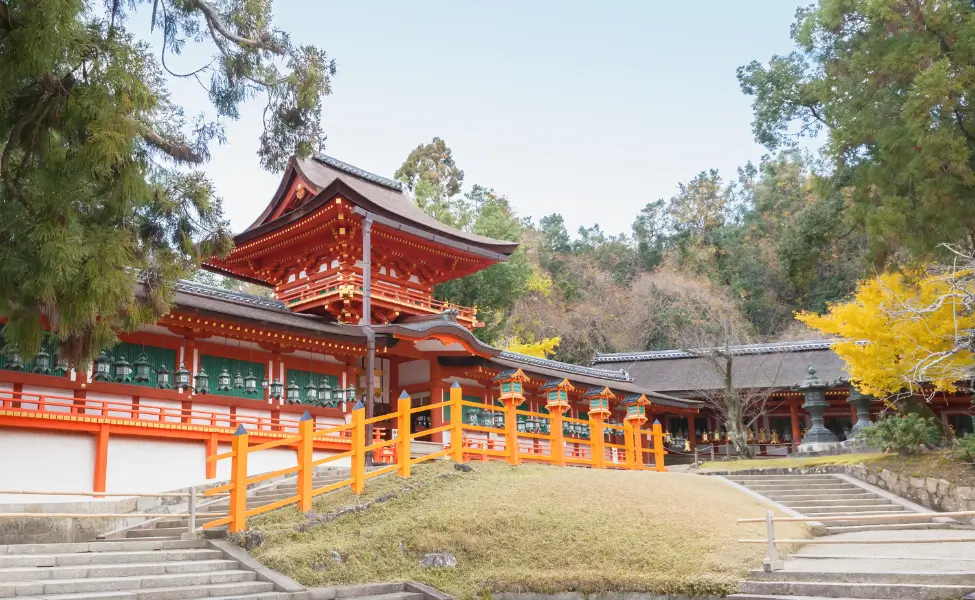
Over 1,000 semi-wild deer roam freely here, considered sacred messengers of the Shinto gods.
They’ll approach for deer crackers (shika senbei) sold at park stalls.
Mind your snacks though, they’re persistent.
Todaiji’s Daibutsuden Hall houses a 15-metre bronze Buddha statue.
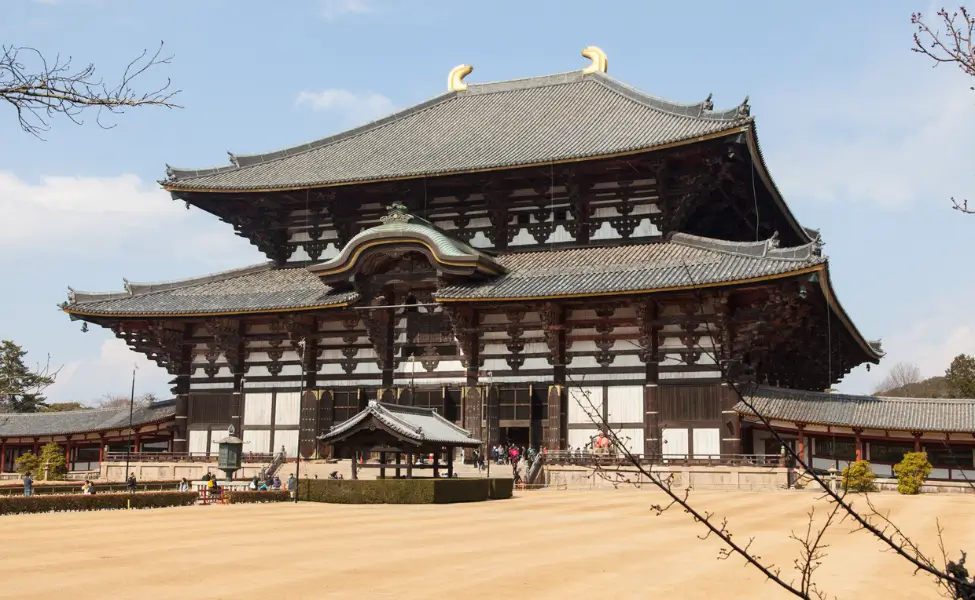
The hall itself ranks as the world’s largest wooden structure, though the current 1709 reconstruction stands smaller than the original eighth-century building.
Walking from Nara Station to Todaiji takes about 20 minutes through increasingly green surroundings.
You can also reach Kyoto in 35 to 45 minutes by limited express train, making both cities easy to combine.
Takayama: Mountain Town Frozen in Time
Takayama in the Japanese Alps stays compact and walkable.
The old town preserves merchant houses and sake breweries along streets that have barely changed since the Edo period.
The entire historic district covers about 1 kilometre end to end.
You can explore thoroughly in two to three hours, yet most visitors linger longer.
Sake breweries open their doors for tastings, craft shops sell locally made goods, and the unhurried pace encourages browsing.
Morning markets line the Miyagawa River from early until noon.
Vendors sell local vegetables, pickles, and mountain crafts.

The riverside setting and traditional stalls create a genuinely local experience rather than a tourist show.
Takayama sits higher and cooler than lowland cities.
Summer walking stays comfortable while winter brings snow that transforms preserved streets into postcard scenes.
The surrounding peaks provide dramatic backdrops whichever season you visit.
Several temples and shrines occupy the hillsides east of town, reached by pleasant walking paths through residential neighbourhoods.

The elevation adds a bit of effort, but you get views over traditional rooftops toward the Alps
Unlike larger cities where you’ll cover ground quickly then move to the next district, Takayama encourages taking your time.
Kanazawa: Edo Period Perfectly Preserved
Kanazawa escaped World War Two bombing, leaving its historic districts remarkably intact.
It feels like the Edo period with modern conveniences.
The Maeda clan ruled Kanazawa domain from 1583 through the Edo period, fostering traditional arts and crafts.
That patronage built the city’s reputation for gold leaf work and lacquerware.
Three main geisha districts preserve traditional architecture: Higashi Chaya, Nishi Chaya, and Kazuemachi.

Higashi Chaya proves most popular, with wooden ochaya (teahouses) lining straight streets.
You can visit some buildings that now serve as museums or cafés.
The district stretches about 300 metres, easily covered in 30 minutes plus time for stops.
Nagamachi samurai district lies southwest of the city centre.
Earthen walls, narrow lanes, and restored samurai residences create an atmospheric walk.
The Nomura Samurai House opens to visitors, showing how wealthy warriors lived.
Kenrokuen Garden ranks among Japan’s three finest landscape gardens. It covers 11.4 hectares and takes one to two hours to walk fully.

The garden sits next to Kanazawa Castle, and both attractions occupy the city’s heart.
Most major sites cluster within a 2-kilometre area.
Clear English signage appears throughout central Kanazawa, making navigation straightforward.
Walking shows Kanazawa better than the loop bus does.
Craft shops tucked into side streets, small galleries, and local cafés that tour buses never reach.
The loop bus helps when your feet tire, but you’ll miss details if you rely on it too much.
Kamakura: Coastal History Within Reach
Kamakura packs temples and shrines densely together.
Over 65 religious sites fill this seaside town, most within a 3-kilometre radius of the station.
The Kamakura shogunate ruled Japan from 1185 to 1333, establishing this small settlement as the country’s political centre.
That period left Kamakura with numerous Zen temples and religious buildings.
The Great Buddha (Daibutsu) at Kotokuin Temple stands 11.4 metres tall and has sat outdoors since a tsunami destroyed its hall in the late 1490s.
It’s a 20-minute walk from Kamakura Station, or you can take the Enoden local line one stop.

Hasedera Temple sits on the same route. Its grounds cascade down a hillside with views over Sagami Bay.
The walk between Hasedera and the Great Buddha takes about 10 minutes.
Hokokuji Temple offers a different experience. Its bamboo grove creates a serene atmosphere, with a teahouse where you can sit and drink matcha surrounded by towering stalks.
This temple sits about 2 kilometres east of the station, making it a separate walking cluster from the western temple route.
Komachi-dori, the shopping street leading from the station, provides frequent breaks for snacks and drinks.
Local specialities include shirasu (whitebait) and Kamakura craft beer.
Some temples connect via hiking trails through forested hills.
These paths add adventure to temple-hopping, though they require moderate fitness and proper footwear.
Kamakura works best when you treat it as several walkable zones rather than one continuous route.

The beaches become pleasant in summer months, adding coastal walks to your options.
The town sits about 50 minutes from Tokyo by train, making it an easy day trip or relaxed overnight stay.
Kurashiki: Edo-Era Merchant Town
Kurashiki’s Bikan Historical Quarter preserves an Edo-period canal district where merchant wealth built elegantly understated townhouses.
White-walled storehouses line narrow waterways crossed by stone bridges.
Willow trees drape over the water, and the entire area glows under lantern light after dark.

The historical quarter covers roughly 500 metres end to end.
You can walk the main routes in 30 minutes, but the district works better with several hours of exploration.
Museums occupy former merchant houses, craft shops sell local textiles and ceramics, and traditional sweets shops offer samples.
The Ohara Museum of Art brings unexpected culture to this merchant town.
Japan’s first museum of Western art displays works by El Greco, Monet, and Gauguin in a Greek Revival building.
European masterworks in Edo-period buildings make for an odd combination.
Ivy Square, a former spinning factory converted into a hotel and shopping complex, sits just outside the historical quarter.
Its red brick buildings and ivy-covered walls offer a different aesthetic from the white storehouses.
Kurashiki Station sits about 15 minutes’ walk from the Bikan Quarter.

The path takes you through modern shopping streets before you suddenly emerge into the Edo period.
That transition makes the historical area feel even more removed from contemporary Japan.
The compact size and flat terrain make Kurashiki accessible for all fitness levels.
Unlike sprawling castle towns, everything worth seeing clusters within easy walking distance.
Matsumoto: Castle Town in the Alps
Matsumoto has one of Japan’s best original castles at its centre.
The five-storey black keep, completed in 1615, dominates the city’s heart.

Unlike reconstructions elsewhere, Matsumoto Castle survived intact, and you can climb its steep wooden stairs to upper floors with views toward the Northern Alps.
The castle grounds take an hour to explore properly.
From there, the old merchant district of Nakamachi lies a 10-minute walk south.
These streets preserve kura storehouses with distinctive black and white striped plaster walls.
Many now house craft shops, cafés, and small museums.
Nawate Street runs parallel to the Metoba River, lined with shops selling antiques, folk crafts, and local snacks.
The street adopts a frog theme based on the old name for the area, with frog statues and decorations appearing throughout.
It feels touristy but maintains a playful local character.
Matsumoto measures roughly 2 kilometres across its central area.
You can walk from the castle to Nawate Street, through Nakamachi, and back to the station in a leisurely circuit taking two to three hours including stops.
The city sits at 590 metres elevation in the Matsumoto Basin.
The Northern Alps provide dramatic backdrops, and the cooler mountain climate makes summer walking comfortable.
Winter brings occasional snow, though less than higher alpine towns.

Matsumoto works well as a base for exploring the surrounding region, with easy train connections to Kamikochi and other alpine destinations.
But the city itself deserves a full day of walking before you head into the mountains.
Onomichi: Hillside Lanes and Literary Atmosphere
Onomichi climbs steep hills above the Inland Sea, its narrow lanes and stone steps threading between 25 temples.
This port town built its character through centuries of maritime trade.
The narrow lanes and hillside steps mean walking is the only option.
The Temple Walk route winds roughly 2.5 kilometres through residential hillsides.
Stone steps connect temples that sit at different elevations, giving climbers views over the strait and islands beyond.
The route takes two to three hours at a relaxed pace, longer if you stop at temples or cafés along the way.

Senkoji Temple sits at the highest point, reachable by ropeway or a 15-minute climb through forested paths.
The temple grounds offer panoramic views, and the descent takes you through different lanes than the ascent, extending your exploration.
Cats populate Onomichi’s lanes in remarkable numbers.
They sun themselves on temple steps, patrol alleyways, and generally act as unofficial neighbourhood watch.
The town embraces this feline presence with cat-themed shops, a cat museum, and considerable local affection.
The main shopping arcade near the station provides flat terrain for when hillside walking tires you out. Traditional shops mix with modern cafés, and the covered streets offer shelter during rain.

Onomichi sits on the Sanyo Line between Okayama and Hiroshima, making it an easy stop between major cities.
Most visitors arrive for a day trip, but staying overnight shows the town’s evening atmosphere when day-trippers depart and lanes grow quieter.
The hillside terrain requires reasonable fitness.
The atmosphere makes the climbing worthwhile.
Nagoya: Best Explored Within Specific Neighbourhoods
Nagoya sprawls as Japan’s fourth-largest city, but a few districts work well for walking if you’re in the area.
The Osu district centres on Osu Kannon Temple, originally founded in 1333 and moved to its current location in 1612.
The surrounding shopping arcades stretch across multiple covered streets with over 1,200 shops.
Electronics stores, vintage clothing, international foods, and traditional goods all cluster within a compact area.
You can spend hours wandering without retracing steps, and the covered streets provide shelter during weather extremes.
Endoji shotengai preserves an Edo-period merchant street that most tourists miss entirely.
This 400-metre lane recently saw revitalisation with independent cafés, craft shops, and small galleries moving into traditional shophouses.
The narrow street maintains a residential feel despite increased visitor interest, and walking here shows local life alongside preserved architecture.
Sakae forms Nagoya’s commercial heart, with department stores, underground shopping malls, and the iconic Nagoya TV Tower.

The streets follow a clear grid pattern, making navigation straightforward. Hisaya Odori Park runs north to south through the district, offering green space and seasonal events.
The Noritake Garden area combines industrial heritage with parkland.
The former ceramics factory site now holds museums, galleries, and cafés set among brick buildings and landscaped grounds.
It sits about 15 minutes’ walk north of Nagoya Station.

These districts don’t connect naturally on foot.
Distances between Osu, Endoji, and Sakae require subway rides of a few minutes each.
But within each neighbourhood, walking becomes the best way to explore.
Nagoya lacks the cohesive historic districts found in Kanazawa or Takayama.
Instead, it offers pockets of walkability embedded in urban sprawl.
If you’re passing through or staying in the city, these areas work well for walking despite the city’s overall car-focused layout.

