
Nara makes an ideal day trip from Osaka or Kyoto.
Or even Nagoya which is where I live,
This ancient city served as Japan’s first permanent capital from 710 CE, and today around 1,465 sacred deer roam freely through its parks and streets.
You can feed these deer special biscuits, watch them bow politely for treats, and explore some of Japan’s oldest temples and shrines.
The sight of deer wandering past centuries-old pagodas creates an atmosphere you won’t find anywhere else.
Starting early and following a logical walking route lets you see Nara’s main highlights in one day.
The city’s major attractions cluster around Nara Park, so you can cover everything on foot without rushing between distant sites.
This covers everything you need to plan your one day in Nara from start to finish.

Getting There: Station Choice and Train Connections
Nara sits in the Kansai region with excellent train connections from both Osaka and Kyoto.
The city has two main stations served by different railway lines, and choosing the right one saves you walking time at the end of a long day.
JR Nara Station connects via the JR Nara Line from Kyoto (about 45 minutes) and links to the Osaka Loop Line from Osaka (around 50 minutes).
Your Japan Rail Pass covers these routes.
The station houses a Tourist Information Centre with free maps and English-speaking staff, plus luggage storage facilities.

Kintetsu-Nara Station sits 10 minutes closer to the deer park and temples.
From Osaka, the Kintetsu Nara Line takes roughly 40 minutes.
From Kyoto, the Kintetsu Kyoto Line runs for about 35 minutes.
The Kansai Railway Pass covers Kintetsu lines if you don’t have a JR Pass.
Choose Kintetsu-Nara Station if you can.
In addition, it takes 90 minutes from Nagoya

Take the Shinkansen from Nagoya to Kyoto about 35 minutes on Nozomi, then change to the JR Nara Line to Nara about 45 minutes.
What Catches First-Time Visitors by Surprise
Walking distances feel longer than they look on maps.
Those “short walks” between temples add up quickly, especially in summer heat.
Budget an extra 30 minutes beyond what Google Maps suggests.
Todai-ji gets mobbed between 11:00 and 14:00.
Tour groups descend during this window, and the difference in crowd levels is dramatic.
If you can only visit one major site early, make it Todai-ji.
First-time visitors often spend 45 minutes at Kofuku-ji (which you can appreciate in 20 minutes) then rush through Todai-ji in 30 minutes.
This is backwards. Todai-ji deserves your time and attention.
Read our other articles about Nara:
- 10 Nara Bucket List Places: Must-See Spots for Your Perfect Japan Trip
- Discover Nara Prefecture Beyond the Crowds
- Things to do in Nara: Top Attractions in Japan’s Ancient Capital
The Walking Route That Makes Sense
Start from either station and head towards Sanjo Dori Street.
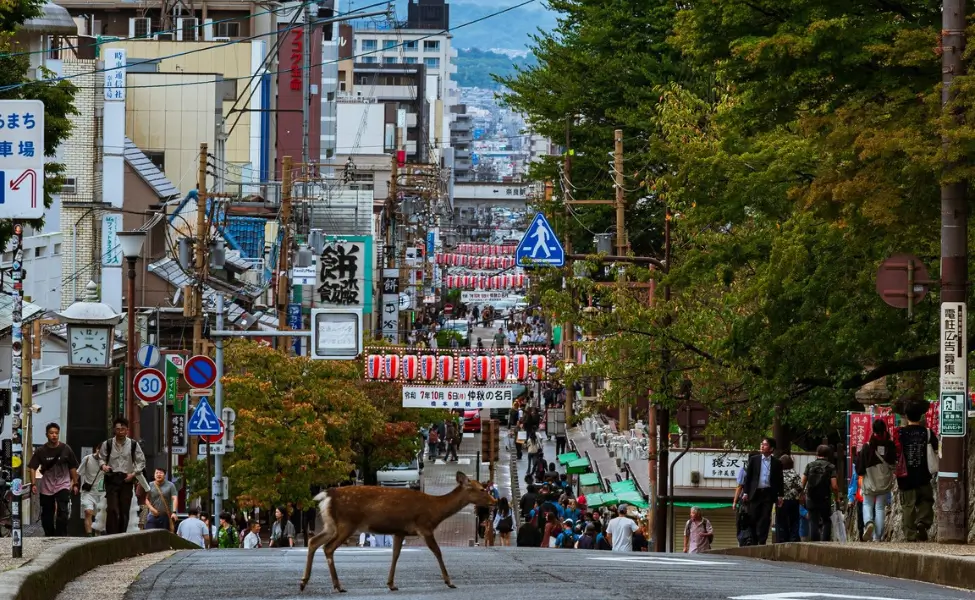
This shopping street connects both stations to the park area and offers breakfast spots, convenience stores, and souvenir shops.
Here’s a route that avoids backtracking:
Kofuku-ji Temple (20-30 minutes) Walk through the temple grounds and photograph the pagoda. Skip the interior halls unless you’re deeply into Buddhist art.
Nara Deer Park (15-20 minutes walking through) You’ll encounter deer throughout this walk, not just in one designated area. More on deer feeding in the next section.
Todai-ji Temple (60-75 minutes) Don’t rush this. The Great Buddha justifies the entire trip.
Kasuga Taisha Shrine (45-60 minutes) The forest approach lined with stone lanterns creates the memorable part of this experience.
Yoshikien or Isuien Garden (30-45 minutes, optional) Skip if you’re tired or short on time.
This walking route covers about 4-5 kilometres total and flows naturally from one site to the next.
Budget 6-7 hours for the full route including a lunch break.
This gives you time to catch an afternoon or early evening train back to Kyoto or Osaka.
The area around Todai-ji has several restaurants serving Nara specialities like kakinoha-zushi (persimmon leaf sushi).
Alternatively, pack a lunch and find a quiet spot in the park.
Eating takes longer than you think when you’re managing deer trying to investigate your food.
Meeting and Feeding Nara’s Sacred Deer
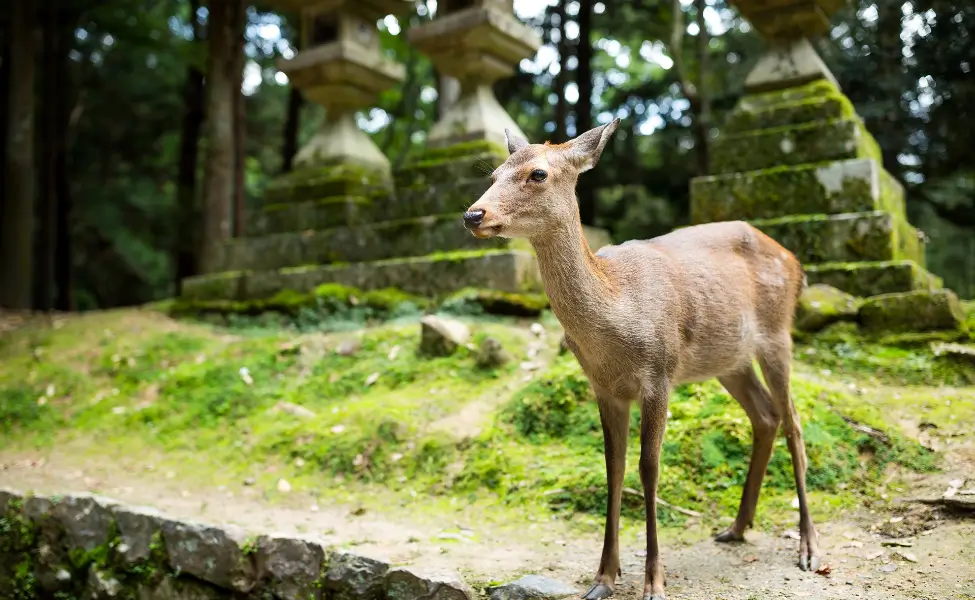
Around 1,465 sika deer roam Nara Park, making them the city’s most photographed residents.
These sacred deer have lived here for centuries, descended from animals that were never hunted due to their religious significance.

You can buy shika senbei (deer crackers) from vendors throughout the park for ¥200 per pack.
The deer have learned to bow when requesting treats, dipping their heads before taking crackers from your hand.
Watching this polite behaviour never gets old.
What actually happens:
You buy crackers. Within seconds, 5-10 deer surround you.
They bow, then immediately become impatient. S
ome will nibble your clothes, bags, or hands.
Children often get nervous and hold crackers up high, which makes deer more aggressive.
The whole experience feels chaotic and hilarious in equal measure.
How to manage it successfully:
Buy crackers, immediately break them into pieces, and feed quickly.
Once you start, keep moving and feeding until crackers are gone.
Put bags and phones away before buying crackers.
If you have small children, you feed the deer whilst they watch from a safe distance.
Never feed the deer human food from restaurants or convenience stores.
Only use the official deer crackers.
Timing and safety notes:
During autumn mating season and spring birthing season, some deer become pushy or territorial.
Young children holding crackers can get swarmed, though this is manageable with the tactics above.
The deer gather in large numbers near Kofuku-ji and along the path to Todai-ji.
Plan your one day in Nara with these amazing experiences:
Nara’s Historic Sites Worth Your Time
Kofuku-ji Temple and Its Towering Pagoda
Kofuku-ji Temple’s five-storied pagoda rises over the city and makes an excellent first photo opportunity.

This temple complex dates back over 1,300 years. Founded in 669 CE and moved to its current location in 710 CE, it once served as the family temple of the powerful Fujiwara clan.
At the height of their power, the complex contained over 150 buildings.
The five-storied pagoda stands 50 metres tall, making it Japan’s second tallest wooden pagoda after Toji Temple in Kyoto.
You can wander the temple grounds free at any time, but stepping inside the halls requires an entrance fee.
The practical reality: Most visitors appreciate Kofuku-ji in 20-30 minutes. The pagoda exterior and temple grounds offer the memorable part.
The interior halls, whilst historically significant, appeal mainly to Buddhist art enthusiasts.
The Central Golden Hall costs ¥500 to enter.
The Eastern Golden Hall charges ¥300, or you can buy a combined ticket with the National Treasure Museum for ¥800.
The National Treasure Museum displays the famous six-armed Ashura statue.
If you do enter one building here, make it this museum.
Todai-ji Temple and the Great Buddha
Todai-ji Temple houses the Daibutsu, one of the largest bronze Buddha statues in the world.
This UNESCO World Heritage site ranks as Nara’s absolute must-see attraction.

You’ll first pass through the massive Nandaimon Gate, guarded by two fierce wooden guardian kings.
The gate itself impresses with its scale and hints at what awaits inside.
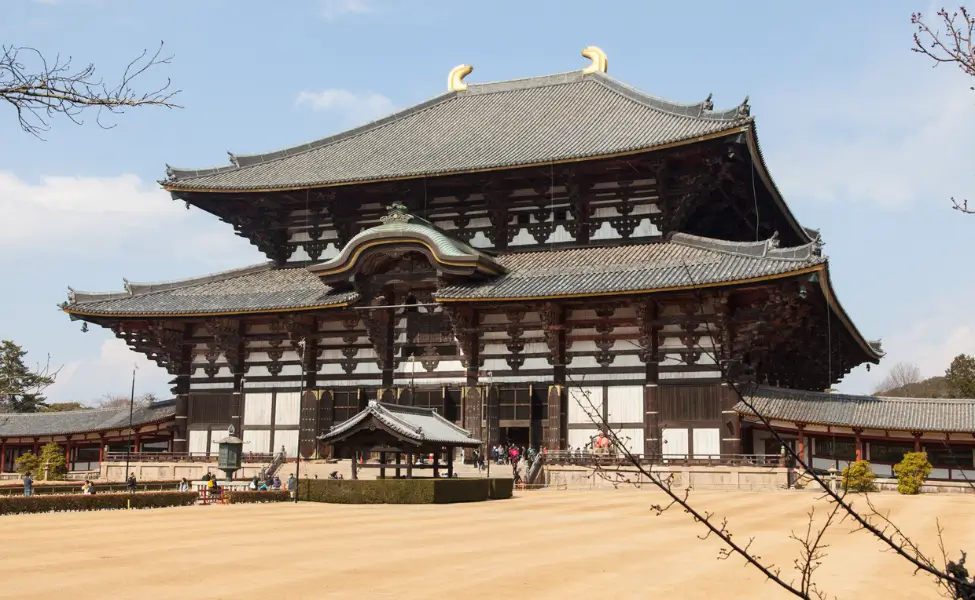
The Great Buddha Hall (Daibutsuden) is one of the world’s largest wooden buildings, though the current structure from 1709 stands at only two-thirds the size of the original.
Step inside and you’ll face the enormous 15-metre-tall bronze Buddha, which weighs about 500 tonnes and dates to 752 CE.
This is where you want to spend time.
The scale genuinely overwhelms you.
Photos cannot capture the feeling of standing before this colossal statue.
People often rush through in 20-30 minutes, then later wish they’d stayed longer.
Give yourself at least an hour here.
Practical information:
Entry fee: ¥600 for adults
Opening hours: November to March 8:00-17:00, April to October 7:30-17:30
Best visiting time: Before 10:30 or after 15:00 to avoid tour groups
Behind the Great Buddha, you’ll spot a wooden pillar with a hole at its base.
Local legend says squeezing through brings good luck and enlightenment.
The hole matches the size of the Buddha’s nostril, making it a tight squeeze for most adults but manageable for children.
Expect queues during busy periods and remember this is entirely skippable.
The temple grounds extend beyond the main hall.
The Nigatsudo Hall on the hillside east of the main hall offers excellent views over Nara and feels peaceful even when Todai-ji’s main hall is packed with visitors.
Worth the 15-minute detour if you enjoy views.
Kasuga Taisha Shrine and Its Thousands of Lanterns
Kasuga Taisha stands as one of Japan’s most important Shinto shrines.
Founded in 768 CE by the Fujiwara clan, it served as their family shrine and protector of the ancient capital.

The approach to the shrine leads through a forest path lined with hundreds of moss-covered stone lanterns.
The atmosphere grows more mystical with each step as you move deeper into the sacred forest.
The walk matters as much as the destination here.
That forest approach creates the memorable part of this experience.
The shrine buildings themselves, whilst beautiful, follow similar patterns to other major shrines.
The lanterns and forest atmosphere make this distinctive.
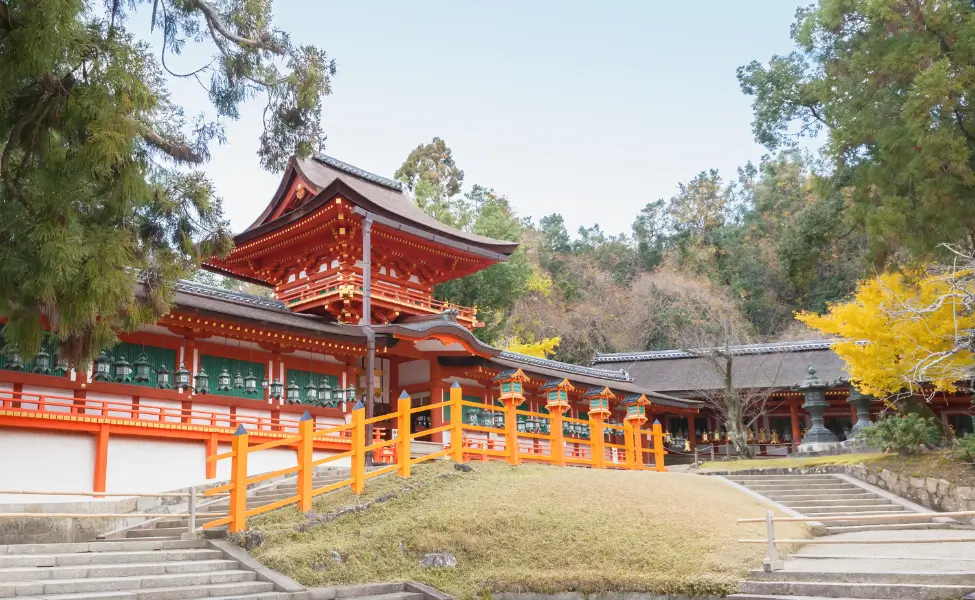
The shrine’s main buildings feature distinctive vermillion columns, white walls, and roofs of cypress bark.
Over 3,000 lanterns decorate the shrine, including 2,000 stone lanterns along the paths and 1,000 bronze lanterns hanging in the corridors.
Twice yearly during the Mantoro festivals in February and mid-August, all these lanterns are lit simultaneously, creating a magical scene.
The shrine enshrines four main deities, including Takemikazuchi-no-mikoto, who according to legend travelled from Ibaraki Prefecture riding a white deer.
This legend explains why Nara’s deer are considered sacred messengers of the shrine’s gods.
Admission: The outer areas are free to explore.
The inner shrine costs ¥500 to enter for closer views of the main buildings and bronze lanterns.
Worth paying if you want the lantern room experience and closer architectural details.
The shrine sits about 30 minutes’ walk from Kintetsu-Nara Station through Todai-ji’s grounds, or you can take a bus to the Kasuga Taisha Honden stop.
The walk makes a pleasant approach if you’ve got energy.
Take the bus back if you’re flagging.
Optional Additions If You Have Energy Left
Naramachi (Old Merchant Quarter)
Naramachi, Nara’s old merchant quarter, preserves the atmosphere of traditional Japan.

Its narrow streets and wooden buildings house cosy cafes, craft shops, and small museums displaying local history.
This works well if you want a quiet break from temple crowds, enjoy traditional architecture, or need a proper sit-down coffee break.
You’ll see similar preserved districts in Kyoto if that’s on your itinerary.
Isuien Garden and Yoshikien Garden
Both gardens sit next to each other near Todai-ji and offer carefully arranged landscapes with ponds, tea houses, and views incorporating surrounding temples.

Isuien Garden charges ¥900 for entry and demonstrates the shakkei technique of borrowing scenery from the landscape beyond the garden walls.
Yoshikien Garden offers free admission to foreign visitors who show their passport.
These are beautiful, peaceful spots that offer a completely different pace after temple hopping.
However, if you’re not specifically interested in Japanese gardens, you can skip them without missing Nara’s essential experiences.
By this point in the day (usually around 15:00-16:00), most visitors feel ready to head back rather than add another stop.
Sarusawa Pond
Sarusawa Pond creates one of Nara’s most photographed scenes.
When Kofuku-ji’s five-storied pagoda reflects in the water, particularly during cherry blossom season or autumn colours, the view becomes almost painterly.
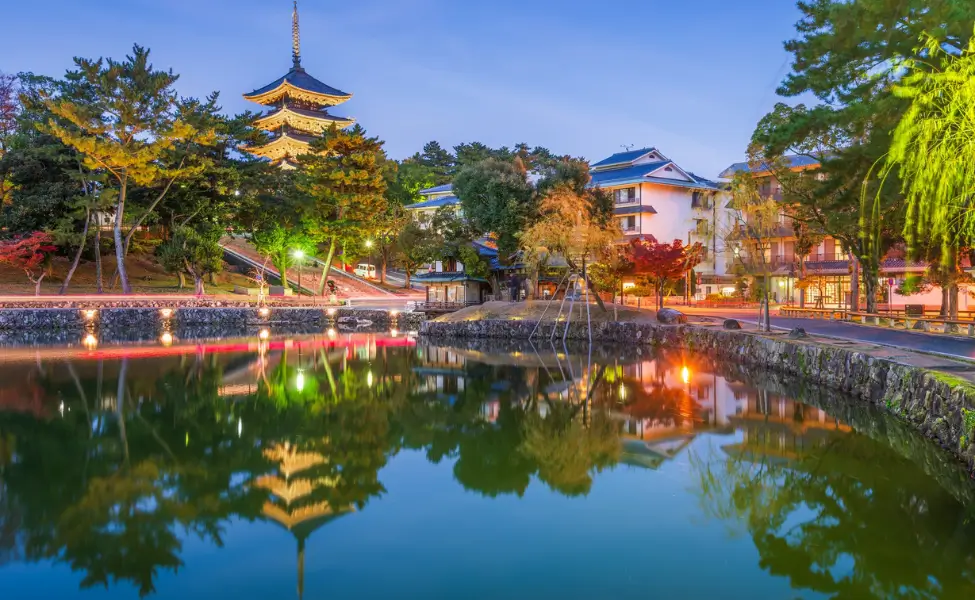
The Ukimido Gazebo sits on the pond’s edge, framing the reflection perfectly.
Early morning or late afternoon light works best for photography.
This takes 5-10 minutes and sits right on your route back to the station.
Planning Your Day: Time and Priority
Timing matters: Aim to arrive before 10:00 to beat the tour groups and experience the temples in relative quiet.
The main sites all sit within walking distance of each other, so you won’t need buses or taxis once you arrive.
What to bring: Most temples charge small entrance fees, typically ¥500-800.
Bring cash, since many smaller shops and food stalls don’t accept cards.
Pack comfortable walking shoes because you’ll cover several kilometres, and some gentle slopes lead up to Kasuga Taisha Shrine.
Best days to visit: Weekdays see fewer visitors than weekends, particularly outside Japanese school holidays.
If You Have Different Amounts of Time
8 hours (relaxed full day): Follow the complete route above.
Take your time at Todai-ji. Consider the gardens if you enjoy that style of attraction.
6 hours (realistic day trip): Kofuku-ji exterior only → Todai-ji (full visit) → Kasuga Taisha → Back to station.
Skip gardens and Naramachi.
This captures Nara’s essential experiences.
4 hours (tight schedule): Todai-ji only, with deer feeding on the approach.
You’ll miss Kasuga Taisha’s atmosphere, but you’ll see Japan’s most impressive Buddha statue and meet the deer.
Better to do one thing properly than rush through everything.
If you can only choose one temple: Todai-ji. Absolutely Todai-ji.
The Great Buddha offers a scale and impact that justifies the entire trip.
If You’re Travelling With Specific Needs
Young children: Build extra time for deer encounters.
Kids get absorbed by this.
Consider skipping Kasuga Taisha’s forest walk (long uphill) unless they’re good walkers. Todai-ji and deer feeding will be plenty.
Not particularly interested in temples: Nara’s appeal centres heavily on ancient religious architecture.
The deer are entertaining but won’t sustain a full day on their own.
Consider spending less time in Nara (3-4 hours) and combining it with something else.