
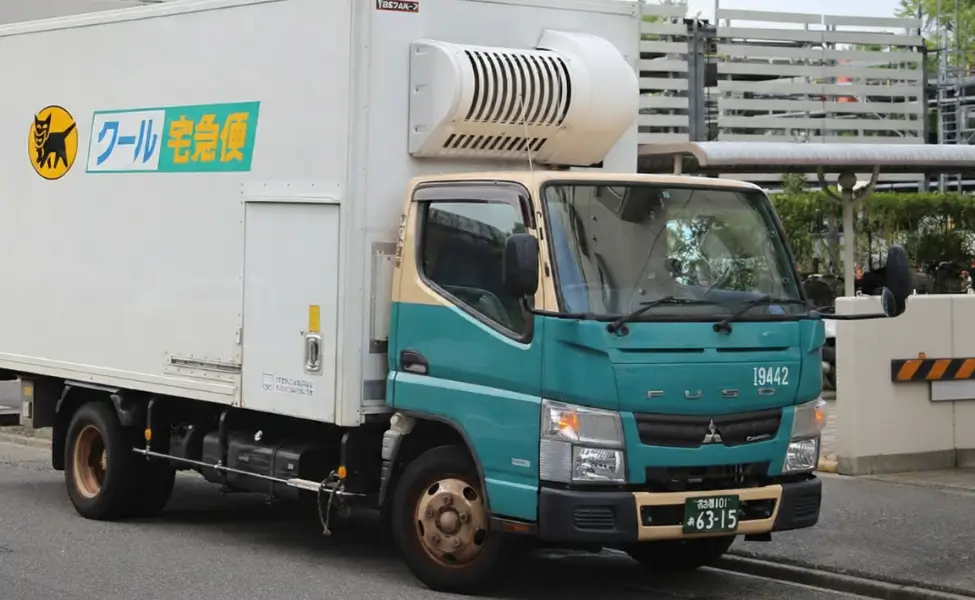
Your Japan trip can change from a sweaty luggage-wrestling ordeal into a relaxed, hands-free adventure.
Imagine gliding through Tokyo Station with a light backpack while others struggle with bulky suitcases on the escalators.
The luggage delivery service in Japan costs around ¥2,000 per bag but transforms how you experience the country’s incredible trains, temples, and cities.
You will wonder how anyone travels Japan any other way once you discover this game-changing system.
How Takkyubin Works
The luggage delivery service in Japan system is simple.
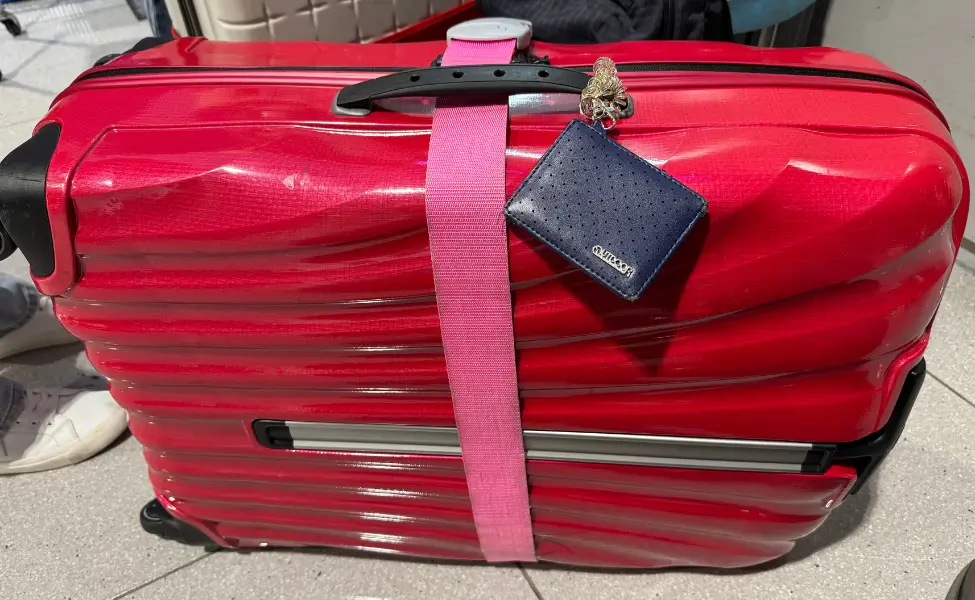
Drop your luggage at a counter, pick your delivery options, and pay a set fee based on size and distance.
The service handles all booking and tracking while you explore Japan bag-free.
Booking Process
Where to book:
- Convenience stores (7-Eleven, FamilyMart) open 24/7 in most areas
- Hotel front desks
- Airport counters (Narita and Haneda have desks in arrivals)
- Major train stations
- Department stores and tourist centres
What you need:
- Your name and phone number
- Destination address (include hotel name)
- Delivery date and time slot you prefer
- Brief description of what’s inside
Forms are usually in Japanese.
Staff at busy tourist spots often give basic English help.
Many hotels will fill out forms for guests.
Delivery Options and Timing
Standard delivery times:
- Same city/region: Often same day if sent in the morning
- Major routes (Tokyo to Kyoto): 24 hours
- Long distance (Tokyo to Osaka): 24 to 48 hours
- Remote areas (Okinawa, northern Hokkaido): 2 to 3 days
Time slots:
- Morning: 8:00 to 12:00
- Afternoon: 14:00 to 16:00
- Evening: 16:00 to 18:00
You get a tracking number when you book.
Tracking websites are mostly in Japanese, but hotel staff can help check your bag’s status.
Pricing and Restrictions
Cost Structure
Prices depend on size (length + width + height added together) and distance:
Yamato Transport rates:
- Small bags (up to 80cm total): ¥1,200 to ¥2,000
- Medium bags (up to 120cm total): ¥1,500 to ¥2,500
- Large bags (up to 160cm total): ¥2,000 to ¥3,200
Weight limit: 30kg per bag
Payment: Cash only at most places (some airports and hotels take cards)
Insurance: Up to ¥300,000 included. Special handling costs extra for fragile items.
What You Cannot Send
Banned items:
- Valuable items (cash, jewellery, precious metals)
- Food that spoils quickly
- Dangerous materials (batteries, aerosols, chemicals)
- Living creatures
- Items needing refrigeration
- Fragile electronics without proper packaging
Restricted items:
- Alcohol (needs special handling and extra fees. Example: duty-free bottles over 1 litre require documentation)
- Liquids over 100ml in carry-on sized containers
- Sharp objects (kitchen knives, scissors must be wrapped safely)
Always list contents correctly.
Customs rules apply for international visitors, though domestic forwarding within Japan has fewer limits.
Major Service Providers
Yamato Transport (Kuroneko/Black Cat)
The market leader with the biggest network.
Their partnership with 7-Eleven and FamilyMart convenience stores gives the best access.
Best choice for standard deliveries with good English support at major spots.
Good points: Biggest network, decent English support, reliable tracking
Best for: First-time users, standard suitcases
Sagawa Express
Yamato’s main competitor with similar prices and timing.
Fewer convenience store partnerships but great at handling big luggage.
Good points: Better for heavy/large items, competitive prices
Best for: Ski equipment, golf clubs, oversized bags
Japan Post
Works through the post office network.
Usually the cheapest option but may take an extra day.
Good points: Lowest cost, good rural coverage
Best for: Budget travellers, non-urgent deliveries
Alternatives to Consider
Short-Term Storage Options
Coin lockers: Found at major stations (¥300 to ¥800 per day depending on size).
Great for day trips but not multi-day storage.
Station luggage services: Staffed services at major stations like Tokyo and Shinjuku offer secure storage (¥400 to ¥700 per day) with longer hours than standard lockers.
Hotel luggage storage: Most hotels store bags before check-in or after checkout for free, though time limits vary.
When Alternatives Make Sense
- Same-day return: Coin lockers cost less than takkyubin
- Central location stays: If not changing hotels, station storage might be enough
- Budget priority: For stays under 3 days, daily storage fees may be lower than forwarding costs
Practical Tips
Choosing the right service:
- Use Yamato for convenience and reliability
- Choose Sagawa for heavy or sports equipment
- Pick Japan Post for budget deliveries to rural areas
Making it work better:
- Pack essentials separately for overnight bags
- Get hotel addresses in both English and Japanese
- Take photos of completed forms as backup
- Book morning delivery slots when possible
What happens if you miss delivery:
- Most companies try redelivery the next day
- Hotels usually accept packages for guests
- Packages stay at local depot for 7 days before return
Language help:
- Download Google Translate with camera function for forms
- Ask hotel staff to write destination addresses in Japanese
- Keep business cards from hotels to show courier services
Takkyubin changes how you experience Japan.
It removes the stress of carrying heavy bags on packed trains and up countless station steps.
Plan well and choose the right service, so you can enjoy Japan’s amazing experiences without worrying about your luggage.
Frequently Asked Questions: Luggage Delivery Services in Japan
Q: What if my hotel doesn’t offer luggage forwarding services?
A: You can use convenience stores (konbini) to send luggage through Yamato Transport.
The process is straightforward, but you’ll need to collect your bags from a Yamato branch location rather than another convenience store.
Major cities like Tokyo have Yamato branches near popular areas like Asakusa Station.
Q: How far in advance do I need to send luggage to airports?
A: Yamato Transport requires luggage to be sent 2 days before your flight.
For example, if you have a Sunday evening flight, you’d need to send bags by 6PM on Friday.
For shorter notice, Sagawa Express offers same-day delivery if you send by 11AM and collect after 4PM at the airport.
Q: Is Sagawa Express more expensive than Yamato Transport?
A: Sagawa Express costs slightly more than Yamato, typically less than ¥1,000 extra per bag.
However, they offer more flexible timing for airport deliveries, making them worth considering when Yamato’s 2-day requirement doesn’t fit your schedule.
Q: Are there any extra fees when using same-day airport delivery?
A: Yes, if you send luggage one day in advance with some services, you may pay around ¥800 per bag as a deposit fee when collecting at the airport.
This fee still makes the service convenient, especially if you’re doing last-minute shopping.
Q: Can I send luggage between convenience stores?
A: No, you cannot receive luggage at convenience stores anymore.
You can send from a konbini, but you must collect from a dedicated Yamato branch or your accommodation if they accept deliveries on your behalf.
