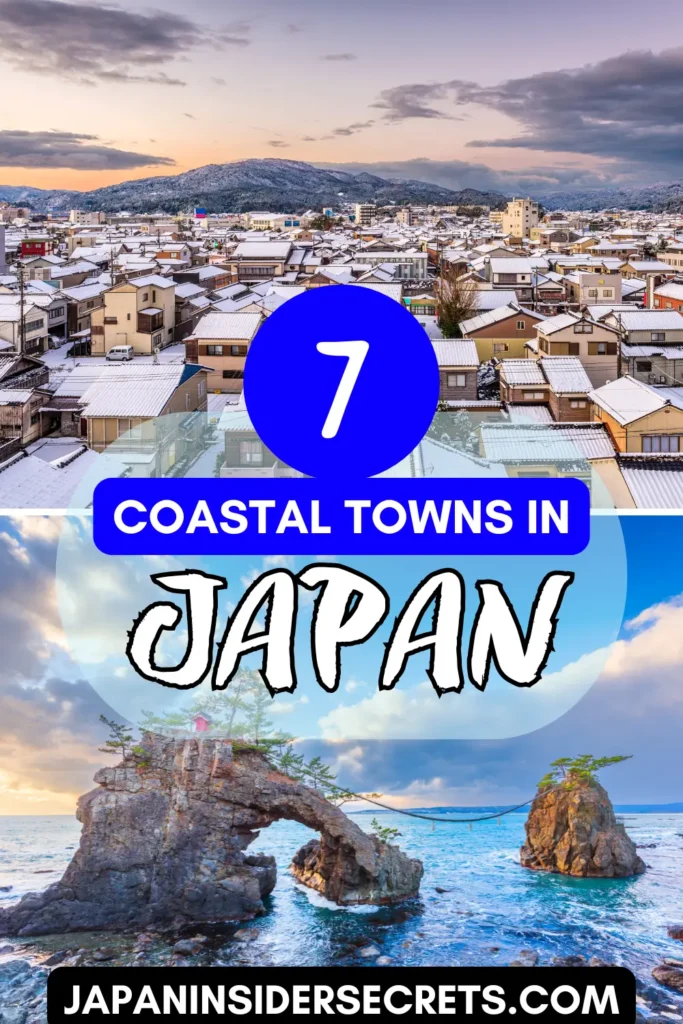
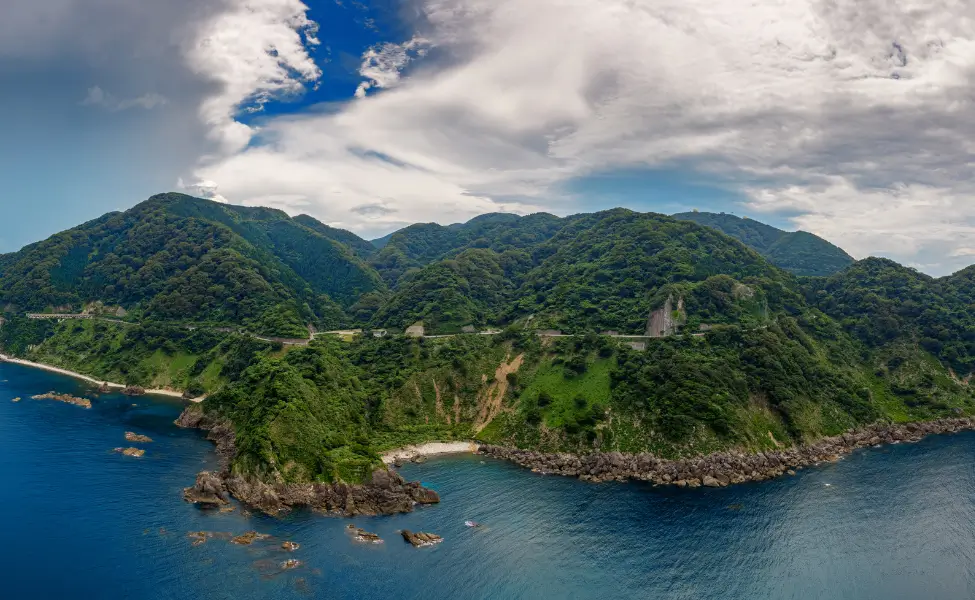
If your last Japan trip felt polished but somehow too familiar, you already know the problem.
The Golden Route delivers on every promise it makes.
Tokyo thrills, Kyoto impresses and Hiroshima moves.
But somewhere between the temples you start wondering whether you are actually experiencing Japan or just moving through its most famous photographs.
The Sea of Japan coast answers that question before you have finished asking it.
This coastline faces Korea and Russia rather than the Pacific, and the difference in character runs far deeper than geography.
Architecture here is heavier and older, and both the food and hospitality answer to habits formed over centuries rather than to recent arrivals.
Roads are quieter and most days you will be the only foreigner about.
The Golden Route is impeccable.
That is also, eventually, what is wrong with it.
Everything has been smoothed down, translated, optimised, and delivered with impressive efficiency.
The Sea of Japan coast has not been through the same process.
The Noto Peninsula
The Noto Peninsula juts roughly 100 kilometres into the Sea of Japan from Ishikawa Prefecture, and its character shifts noticeably as you travel north.
Southern stretches are accessible and comfortable, while the northern tip repays the extra effort with a quietness Japan’s more visited regions cannot match.
Back in 2001 I drove all around the coast for 3 days and while it’s changed since then, that first experience was magical.
Between the two sits the most concentrated stretch of distinctive Sea of Japan experience within a few hours of Tokyo.
Wakura Onsen
Wakura Onsen sits at the base of the peninsula on Nanao Bay, and its most important distinction is geological.

Hot springs here source directly from the sea floor, making Wakura the only seaside onsen in the Hokuriku region.
Salt-rich water warms you on contact and the effect lasts for hours after you climb out. Outdoor baths look straight across the bay toward Notojima Island.
Wakura has been a resort town for 1,200 years, which puts it older than most things travellers cross the world to see in Europe.
We first visited this lovely place in 2001.
The January 2024 earthquake caused significant damage to Wakura’s largest ryokans, including the celebrated Kagaya, which will not reopen.
Recovery is ongoing, and checking current accommodation availability before planning a stay is essential.
Notoraku has reopened and the public bathhouse Soyu operates as normal.
The free foot baths at Yuttari Park along the bay welcome anyone who walks into town.
On New Year’s Day 2024, over 2,000 guests were staying in Wakura when the earthquake struck.
The ryokan staff got every one of them out safely.
Those same staff are still here.
From Kanazawa, the JR Nanao Line reaches Wakura Onsen Station in about an hour.
Hakui and the Chirihama Driveway
Hakui sits on the western edge of the Noto Peninsula and holds one of Japan’s genuinely unusual experiences.
Chirihama Nagisa Driveway is an 8-kilometre beach where the sand is so densely packed with seawater that it carries the weight of cars without complaint.

It is the only beach in Japan where you can legally drive a vehicle along the shoreline.
Family cars ease down to the waterline with music playing while people swim and collect shells a few metres away.
Nobody is managing the experience or explaining it to you.
It is simply how things are done here.
Myojoji Temple in Hakui was founded in 1294 and serves as the Nichiren sect’s head temple for the Hokuriku region.
Built under Maeda clan patronage in the 17th century, the main complex includes a five-storey pagoda nearly 35 metres tall.
It appears between the trees as you approach on foot, and the grounds stay calm, extensively wooded, and entirely without the coach-party atmosphere you find at temples closer to Kanazawa.
Hakui sits roughly 40 minutes from Kanazawa on the JR Nanao Line, and Chirihama Beach is a 10-minute taxi ride from the station.
Wajima
Wajima sits at the northwest tip of the Noto Peninsula and carries its recent history visibly.

A 7.6-magnitude earthquake struck on New Year’s Day 2024, followed by a major fire and then catastrophic flooding in September.
Fire consumed Asaichi-dori, where the morning market had operated for a thousand years, and the original site remains an empty lot while the community works through reconstruction plans.
That market has not disappeared. Around 30 vendors now operate from a temporary location at Wai Plaza, roughly a kilometre from the old site.
The stall holders sell with the particular directness of people who have decided the alternative is worse.
A lacquerware workshop complex known as Wajima Kobo Nagaya resumed its tours and hands-on making experiences in June 2024.
Lacquer here represents one of Japan’s three great traditions, and watching a craftsman apply the kinkin gold-leaf technique is not something that scales or gets optimised for tourism volume.
There are not many of them and they are still here.
Express buses from Kanazawa run several times daily and take about two hours.
Toyama and Its Remarkable Bay
Toyama sits at the head of Toyama Bay, the Tateyama mountains rising directly from the sea behind the city.
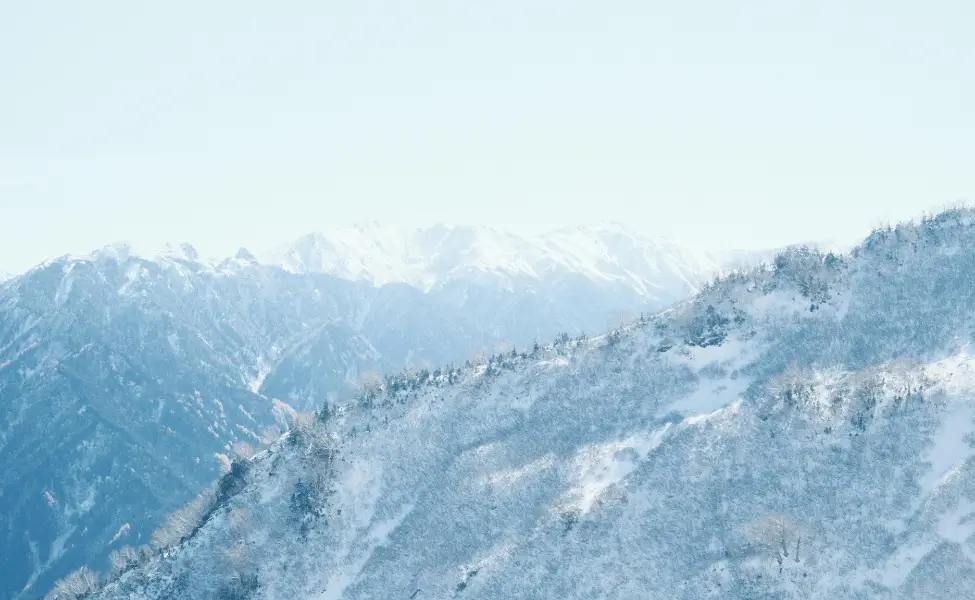
The Hokuriku Shinkansen reaches Toyama from Tokyo in approximately two hours and from Kanazawa in around 20 minutes.
You can be standing in front of a fish market unlike anything on the Golden Route before lunch on the day you leave.
The Bay and Its Seafood
What distinguishes Toyama for the food-focused traveller is the bay itself.
The seafloor drops sharply close to shore, drawing cold, nutrient-rich water upward and producing seafood of unusual quality.
White shrimp (shiro-ebi) season runs from spring through early summer, and they are delicate and sweet in a way that versions from elsewhere are simply not.
You cannot eat them like this anywhere that is not Toyama because they do not survive the journey.

Firefly squid (hotaru-ika) arrive in late winter and early spring, glowing faintly blue in the dark water.
They reach the fish market in a freshness that justifies the trip on their own.
The Tateyama Kurobe Alpine Route
Toyama is also the western gateway to the Tateyama Kurobe Alpine Route.

The route crosses the Northern Alps by tunnel, cable car and trolleybus, running from mid-April to late November.
Snow walls at Murodo reach up to 20 metres in April and May.
The corridors of packed white stop even experienced Japan travellers in their tracks.
The table below maps the seasonal food highlights across the region by ingredient, location, and timing.
| Destination | Signature ingredient | Peak season |
|---|---|---|
| Toyama | White shrimp (shiro-ebi) | April to June |
| Toyama | Firefly squid (hotaru-ika) | March to May |
| Kanazawa | Nodoguro (blackthroat seaperch) | Year-round |
| Kanazawa and Fukui | Snow crab | November to March |
| Fukui | Echizen crab | November to March |
Fukui’s Sea: Mikuni, Tojimbo and the Echizen Coast
Fukui Prefecture sits on the Sea of Japan south of Ishikawa, and most travellers pass straight through on the way between Kanazawa and Kyoto.
The Hokuriku Shinkansen now stops at Fukui, making the region that most people skip one of the easiest on the coast to reach.
Mikuni
Mikuni is a small port town at the mouth of the Kuzuryu River.
Every year on 11 August it hosts a fireworks display over Sunset Beach drawing people from across the Hokuriku region.

I have been more than once.
The feature that keeps drawing me back is the water-level display, where pyrotechnicians throw lit fireworks from boats into the sea.
Explosions bloom in semicircles at the waterline and reflect off the surface in a way no aerial display can reproduce.
Watching from the hill above town avoids the densest crowds and keeps the sea and sky in full view.
Mikuni sits about 30 minutes from Fukui city by Echizen Railway.
Tojinbo
About 30 minutes north of Mikuni, Tojinbo presents a coastline carved by the Sea of Japan over millions of years.
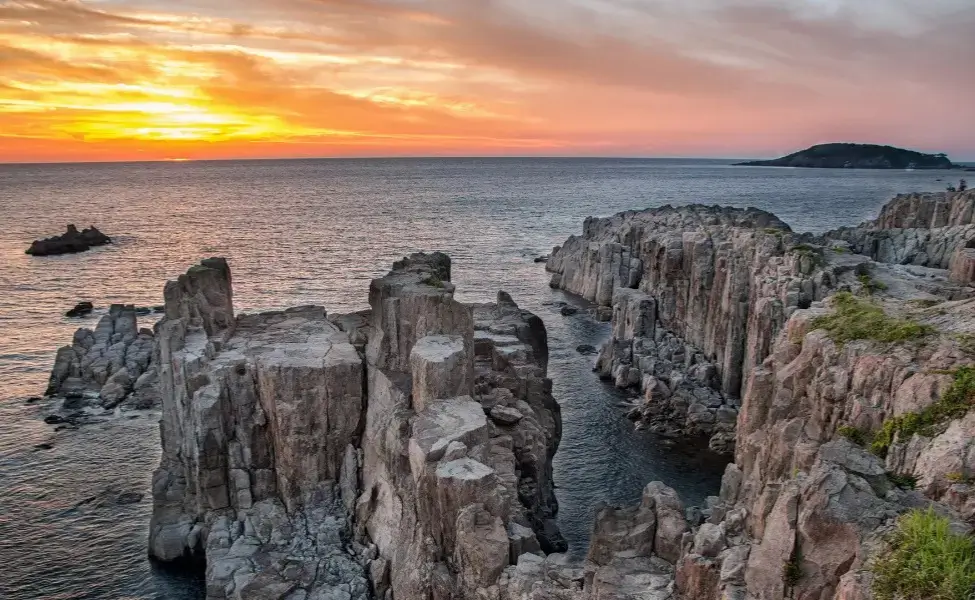
Basalt columns stand up to 25 metres above the water, arranged in hexagonal patterns for roughly a kilometre of coastline.
The viewpoint above the main cliff face is freely accessible, and the geology earned national monument status decades ago for good reason.
The Echizen Coast
The Echizen coast running south from Fukui city offers a slower and rockier character still.
Washi paper production here goes back over 1,500 years, and the Echizen Washi no Sato complex allows you to make a sheet by hand.
Traditional stoneware pottery follows a parallel tradition from the 12th century, fired in hill kilns, its grey-brown character unchanged after nine centuries.
Neither experience requires a car, and neither operates on a schedule designed around visitor arrivals.
Amanohashidate and Ine no Funaya
Northern Kyoto Prefecture borders the Sea of Japan.
Most travellers miss this entirely, their idea of Kyoto fixed on Kinkakuji and the Philosopher’s Path.
The Sea of Japan edge of Kyoto Prefecture is a thoroughly different place.
Amanohashidate
Amanohashidate is a 3.6-kilometre sandbar covered with around 8,000 pine trees, stretching across the mouth of Miyazu Bay.
Japan officially ranks it among its three most celebrated scenic views, alongside Matsushima and Miyajima.

Hilltop viewpoints on either side of the bay have drawn visitors for centuries.
The traditional way to see the sandbar is to turn your back to it, bend at the waist, and look through your legs.
Viewed this way, the strip of pines floats above the horizon like a bridge suspended between earth and sky.
Walking or cycling the full length takes about 45 minutes, and patience brings quieter light and the sound of the sea on both sides throughout.
From Kyoto, the Kyoto Tango Railway reaches Amanohashidate in roughly two hours.
Ine no Funaya
From the northern end of the sandbar, a 30-minute bus ride brings you to Ine, a fishing village with almost no English-language coverage.

Ine is defined by its funaya, wooden structures built over the water with a boat dock below and living quarters above.
Around 230 funaya line the shores of Ine Bay for about five kilometres, their arrangement essentially unchanged for centuries.
Bay cruises run roughly every 30 minutes and take about 25 minutes, giving you the water-level view of the village.
A walk along the narrow lanes between the funaya and the hillside takes considerably longer.
The small restaurants serve what came in that morning without ceremony.
The boats were out before you arrived and will be out again tomorrow.
Nothing about the village has been reconfigured to make it easier to understand.
Further Along the Coast
Fukui and Kyoto are not where the Sea of Japan coastline ends. If you have more time, the coast keeps going in both directions.
North into Niigata, Yamagata, and Akita
Niigata Prefecture’s slender stretch of coastline earned the nickname “Snow Country” from Nobel Prize-winning novelist Yasunari Kawabata.
Echigo-Yuzawa is the easiest access point, reachable directly by Shinkansen from Tokyo, and it draws snow enthusiasts through winter. Further north, Yamagata and Akita prefectures hold a quieter, far less visited stretch of coast with traditional fishing towns and hot spring villages that see very few foreign visitors.
West and south into the San’in region
Tottori and Shimane prefectures make up what’s known as San’in, Japan’s other Sea of Japan coast, this one facing southwest. Tottori is home to Japan’s largest sand dune system, the Tottori Sand Dunes, an unexpected desert-like landscape running along the coast. Shimane holds Izumo Taisha, one of Japan’s oldest and most important Shinto shrines.

Hokkaido’s west coast
Hokkaido also has a Sea of Japan side. The Shakotan Peninsula is known for three dramatic capes (Shakotan, Kamui, and Ogon) and water clear enough to see the seabed in summer.
These regions sit outside the scope of this guide, but they’re worth knowing about if the Hokuriku coast leaves you wanting more.
Getting There and Around
Travelling the Sea of Japan coast without a car is entirely possible, but the Noto Peninsula deserves careful planning.
Public transport connects every destination on this itinerary, and Kanazawa and Toyama both make excellent bases from which to operate.
Hokuriku Shinkansen services connect Tokyo to Kanazawa in approximately 2.5 hours and to Toyama in approximately 2 hours.
From Kanazawa, the JR Nanao Line reaches Wakura Onsen in about an hour.
Hakui is roughly 40 minutes from Kanazawa on the same line, and Chirihama Beach is a 10-minute taxi ride from Hakui Station.
Amanohashidate is roughly two hours from Kyoto by the Kyoto Tango Railway.
Buses to Ine from the northern end of the sandbar take about 30 minutes.
The one caveat is Wajima.
Noto Railway discontinued service there in 2001, and express buses from Kanazawa take approximately two hours, running several times daily.
Post-earthquake road conditions in the northern peninsula make checking current bus schedules before you travel sensible rather than optional.
| Destination | Access from Kanazawa | Approx. journey |
|---|---|---|
| Wakura Onsen | JR Nanao Line | 60 minutes |
| Hakui and Chirihama | JR Nanao Line plus short taxi | 45 minutes |
| Wajima | Express bus | 2 hours |
| Toyama | Hokuriku Shinkansen | 20 minutes |
| Amanohashidate | Kyoto Tango Railway from Kyoto | 2 hours |
| Ine no Funaya | Bus from north end of Amanohashidate sandbar | 30 minutes |
| Mikuni | Echizen Railway from Fukui | 30 minutes plus short walk |
Practical Notes
- Morning markets and outdoor stalls run on cash. Most towns have ATMs that accept international cards, but carrying yen in advance avoids inconvenience at stalls and smaller restaurants.
- Onsen etiquette is consistent across the region, meaning you wash thoroughly before entering any shared bath. Most public baths post instructions at the entrance and many have English signage.
- Bus services in rural parts of the Noto Peninsula run once or twice an hour at best, and less frequently in the evening. Checking the schedule and building buffer time into connections removes the only real source of stress on this itinerary.
- Ryokan rates on this coast typically include dinner and breakfast. Mid-range options in the Wakura area often cost less per night than a Tokyo business hotel once both meals are factored in.