

The best outdoor activities in Japan aren’t always in guidebooks.
They’re on mountain trails where you won’t see another person for hours.
Forests where the only sounds are cicadas and rushing water.
And underwater, swimming alongside sea turtles in crystal clear ocean.
I live in Nagoya, and what surprised me most is how accessible Japan’s outdoors are.
Just 30 minutes to Mikawa Bay’s beaches and an hour to mountains like Mount Sanage.
I’ve camped in Gifu forests, snorkelled with sea turtles off Miyakojima, and hiked trails in the Ena Valley where I didn’t see another soul for hours.
Japan is over 70% mountainous terrain stretching from subarctic Hokkaido to subtropical Okinawa.
That means world class powder skiing, tropical diving, and alpine hiking, often accessible by train.
After years of exploring this country’s outdoors, I reckon it’s one of the most underrated adventure destinations on the planet.
When to Visit for the Best Outdoor Activities in Japan
| Season | Temperature | Best For | Example Destinations |
|---|---|---|---|
| Spring | 5–20°C | Hiking, cherry blossoms | Kyoto, Kamikochi |
| Summer | 20–35°C | Climbing, diving | Mt Fuji, Okinawa |
| Autumn | 15–25°C | Foliage treks | Nikko, Nagano |
| Winter | -5–10°C | Skiing, snow festivals | Hokkaido, Nagano |
Spring arrives between March and May with pleasant temperatures hovering between 5–20°C.
This is cherry blossom season, brilliant for hiking and park visits.
The countryside explodes with colour and the weather’s generally cooperative.
Autumn spans September to November, offering mild 15–25°C conditions with spectacular foliage.

This is arguably the best time for mountain trekking and outdoor activities in Japan.
The autumn colours rival anything you’ll see in New England.
Summer gets very humid but opens up the climbing season for Mount Fuji and the Japanese Alps.
It’s also perfect for water sports, though you’ll need to embrace the heat.
Note that 2025 saw higher spring and summer temperatures, causing earlier snowmelt in the Alps, so always check current conditions before heading out.
Winter transforms Nagano and Hokkaido into powder paradise for skiing and snowboarding.

The snow quality in Hokkaido particularly is some of the finest I’ve experienced anywhere.
Spring and autumn remain the best seasons for outdoor activities in Japan thanks to mild weather and beautiful scenery.
Essential Planning Information
Getting Around Japan
The Japan Rail Pass remains your best option for extensive travel across outdoor destinations.
Current 2025 prices are ¥50,000 for 7 days, ¥80,000 for 14 days, and ¥100,000 for 21 days.
Make sure to buy before you get to Japan.
Also, note that exchange orders are valid until 31 December 2025.
So, take care of this early.

The pass works for most trains, including many shinkansen bullet trains.
However, you’ll need an extra ticket for the fastest Nozomi and Mizuho services, costing about ¥4,000 to ¥6,000.
Regional passes are also available if you’re staying in one area.
JR East–South Hokkaido and other regional passes had price increases in April 2025, so check the official JR Pass website for current details.
Since 2024, Japan’s IC cards, like Suica, Pasmo, and ICOCA now work in nearly all regions thanks to the unification updates.
Buy one card and use it nationwide for trains, buses, and even convenience stores.
This has made local transport much easier.
Money and Communication
Cash is essential in rural Japan.
I learned this the hard way trying to pay at a mountain hut in Gifu that only accepted yen.
Not all mountain huts accept cards, and small restaurants and shops often require cash.
Keep at least ¥20,000 in cash when heading into nature.
ATMs at convenience stores accept international cards if you need to withdraw more.

English is limited outside major cities, so download Google Translate before you arrive.
Many rural areas have minimal English signage.
I once misread a trail sign in Gifu and ended up two hours off route, which would have been avoided if I’d had better translation tools ready.
Carry a phrasebook for basic phrases like asking for directions or ordering food.
WiFi is widely available in urban areas, but rural mountains have spotty coverage at best.
Rent a pocket WiFi device at the airport or consider an eSIM for longer stays.
Download offline maps before heading into nature because you absolutely cannot rely on mobile data in the mountains.
Mountain Activities and Hiking in Japan
Climbing Mount Fuji (But Should You?)
The 2025 climbing season ran from 1st July to 10th September.

New rules this year include a ¥4,000 climbing fee for all trails.
There’s also a daily limit of 4,000 climbers on the popular Yoshida Trail.
You must register in advance or book a mountain hut.
The gates close from 2 p.m. to 3 a.m. for those without hut reservations, which is designed to prevent dangerous night climbing attempts.
The pre-registration system opened in May 2025 on the official Mount Fuji website.
Right, controversial opinion time: skip it.
I know, I know.
It’s iconic.
It’s Japan’s highest peak at 3,776 metres.
Everyone says you must climb it.
Here’s the truth from someone who’s experienced it.

It’s overcrowded in climbing season and filled with vending machines and souvenir shops.
There’s literally a post office at the top.
The Japanese have a saying: “A wise person climbs Fuji once, but a fool climbs it twice.”
Personally, I think admiring it from afar is the wiser choice.
Take a day trip to see it from afar instead.
The view of Fuji from Lake Kawaguchi or the Chureito Pagoda is far more impressive than the view from Fuji’s summit.

Save your energy and yen for better mountains.
The Japan Alps Where You Should Actually Go
The Japan Alps offer everything Mount Fuji promises but delivers it properly.
Honshu has several mountain ranges in its centre.
You can find trails that vary from easy valley walks to tough alpine climbs.
Best of all, these spots are free from crowds and commercialisation.
Kamikochi in Nagano Prefecture is arguably the most naturally beautiful place in Japan.
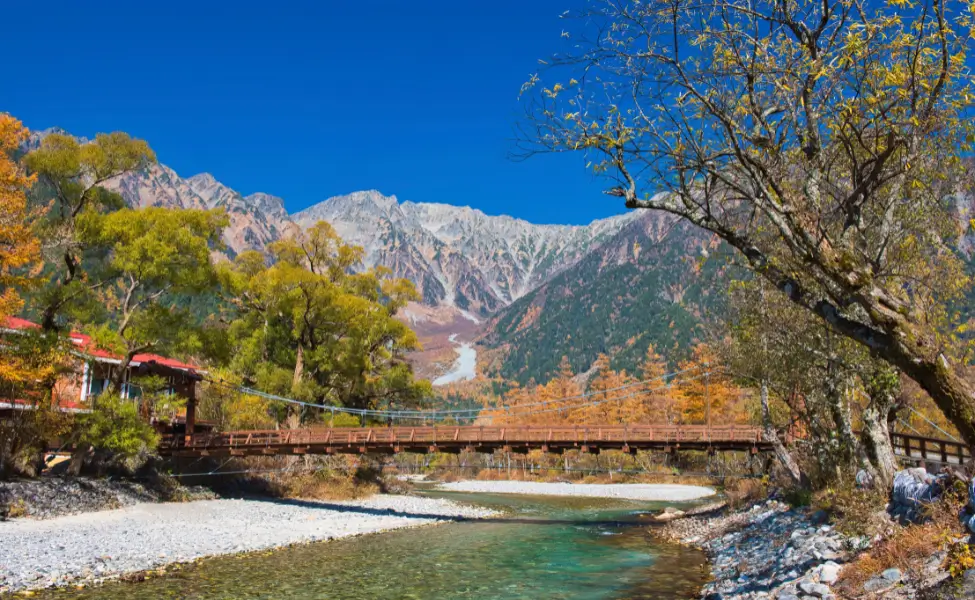
Crystal clear rivers, pristine forests, and mountain peaks that’ll make you forget Tokyo exists.
The Azusa River valley, with its turquoise water and the Northern Alps behind it, is a sight you must see to believe.
Mount Tateyama offers spectacular alpine scenery accessible via the Tateyama Kurobe Alpine Route.

The contrast between the walking path and snow walls can be surreal when they’re still standing in late spring.
You’re walking at ground level whilst walls of compacted snow from the winter loom above you on both sides.
The route typically opens in mid-April.
The trails cater to all fitness levels.
You can enjoy easy day hikes that are great for families.
Or, if you have the right experience and gear, you can take on tough multi-day treks.
The infrastructure is great.
There are well-kept paths and clear signs, mostly in Japanese. Mountain huts provide food and places to stay.
Kumano Kodo Pilgrimage Routes
The Kumano Kodo consists of ancient pilgrimage routes through the Kii Mountains in Wakayama Prefecture.

Unlike a simple mountain walk, these paths let you follow routes used by emperors and pilgrims for over a thousand years.
The spiritual vibe is strong, especially when you walk alone in ancient cedar forests.
The trails vary significantly in difficulty and length, giving you options whether you want a gentle day hike or a proper multi-day trek.
The Nakahechi route is the most popular and well-maintained, suitable for moderately fit hikers.
Spiritual sites and shrines wait at various points along the journey, including the three grand shrines of Kumano Sanzan.
Hidden Mountain Gems Worth Exploring
Japan has 34 national parks scattered across the country.
Many receive far fewer visitors than the famous spots but offer equally impressive landscapes.
Tottori Prefecture’s rugged sand dunes and coastal terrain are worth exploring.
Hokkaido’s thick forests in Daisetsuzan National Park offer real wilderness experiences.

Here, you truly feel far from civilisation.
Climbing regulations vary by park, but generally you’re free to hike during daylight hours.
Some areas require permits for overnight camping or have seasonal closures to protect wildlife.
Always check current regulations on the Japan National Tourism Organization website before planning your trip.
Water Sports and Coastal Adventures in Japan
Surfing the Japanese Coast
The Sea of Japan offers solid surf for both beginners and experienced riders.

The Pacific coast, particularly around Chiba and Shizuoka, provides consistent waves year round.
I’ve watched surfers at Shonan Beach near Kamakura catching decent waves even in winter, though you’ll need a proper wetsuit for cold water.
Check local surf reports before heading out because conditions change rapidly.
Many beaches have surf schools if you’re just starting.
Japan’s surf culture is friendly.
Still, popular spots can be competitive on weekends, especially near Tokyo.
Diving and Snorkelling in Okinawa
Right, this is where Japan gets truly tropical and reveals a side most people never expect.

Okinawa Prefecture is diving paradise with water visibility that rivals anywhere in Southeast Asia.
I’ve snorkelled in the Blue Cave near Onna and around Miyakojima.
Miyakojima particularly stands out.
Swimming with sea turtles in clear water, where healthy coral reefs shine below, is one of my favourite outdoor experiences in Japan.

The marine life is abundant, the coral vibrant, and critically, the crowds are minimal compared to more famous diving destinations.
You can enjoy it without dodging crowds.
The area around Miyakojima is celebrated for its diversity and exceptional visibility.
The water stays warm enough for comfortable diving year round, though visibility peaks between April and November.
Local dive guides know the best spots and current conditions.
I’d recommend booking with established operators who prioritise safety and environmental protection.
The guides I dove with in Miyakojima spoke decent English and genuinely cared about protecting the reefs.
Okinawa remains Japan’s top region for tropical outdoor activities, especially diving and snorkelling.
Kayaking and Canoeing Experiences
Japan has a wide range of paddling experiences.
You can enjoy calm lakes or tackle rushing river rapids in different regions.
The Ogasawara Islands offer great spots for kayaking and canoeing.

However, reaching them takes a 24-hour ferry ride from Tokyo.
Sea kayaking along the Tottori coast lets you explore jagged rock formations and ancient sea caves carved by centuries of wave action.
Guided tours are a great way to explore unfamiliar waters safely.
This is especially true in coastal areas with strong currents.
River kayaking in Gunma and Gifu prefectures offers whitewater experiences ranging from gentle
Class II rapids suitable for beginners to challenging Class IV sections for experienced paddlers.
Spring snowmelt creates the best conditions, typically from late April through June.
Winter Sports in Japan
Skiing and Snowboarding in Hokkaido
Hokkaido is legendary among powder enthusiasts for good reason.
The snow quality here rivals anywhere in the world: light, dry, and deep.
Resorts like Niseko and Furano draw in international skiers.

They’ve heard about the great conditions, and they’re not let down.
On a good powder day, you’re skiing through light, dry powder snow that sprays up around you with each turn.
The resort also caters well to international visitors with English signs and staff.
After a long day on the slopes, you can soak in natural hot springs called onsen to soothe tired muscles.
Many ski resorts have onsen facilities either on-site or nearby.
Sitting in hot water while snow falls around you is brilliant.

Mountains rise in the background, adding to the magic.
Snowboarding in Nagano and Gifu
I’ve skied the Venus Route in Nagano multiple times, and it remains one of my favourite winter destinations in Japan.

The Japanese Alps provide varied terrain suitable for all levels, from gentle beginner slopes to challenging Olympic level runs.
Hakuba Valley hosted events during the 1998 Winter Olympics and still maintains those high standards.
The resort area includes several connected ski resorts. This gives you plenty of options to explore various terrains during your visit.
The snow parks are well-designed with features for different skill levels.
Nagano’s resorts are easily accessible from Tokyo, making them popular for weekend trips.
The infrastructure is great.
It has modern lifts, good facilities, and many accommodation choices.
You can find everything from traditional ryokan to modern hotels.

English support has improved significantly in recent years as international visitors have increased.
Japan’s ski resorts rival those in Europe and North America for snow quality and convenience.
Camping in Japan (The Secret Nobody Tells Tourists)
Here’s the game changer that makes camping easier: you don’t need to bring any gear.
Most people assume camping in Japan means lugging tents and sleeping bags through the countryside.
Wrong.
Many campsites, particularly in Gifu, Toyama, and Nagano prefectures, offer cabins you can book.

Cabins with roofs, walls, and basic amenities like bedding and electricity.
I’ve stayed in these multiple times around Tsukuetchi Cho in Gifu.
They’re affordable at around ¥5,000 to ¥10,000 per night, clean, and mean you can experience nature without hauling equipment across the country.
Spring and autumn are lovely seasons to enjoy the outdoors.
The weather is mild, and insects are not as aggressive as in summer.
This makes camping accessible for tourists who want the nature experience without the hassle of transporting gear.
Book through sites like Nap Camp Japan or directly through prefectural tourism websites.
Reservations are essential during peak seasons like Golden Week in early May and autumn foliage season.
One of my favourite parts of camping are visiting Michi no eki roadside stations.

Cycling Adventures Across Japan
The Shimanami Kaido Route
This 70-kilometre cycling route links Honshu and Shikoku.
It crosses six small islands with stunning bridges over the Seto Inland Sea.

It’s consistently rated as one of the best cycling routes in Japan.
Bicycle rentals are available right at the start in Onomichi or Imabari, so you don’t need to transport your own bike.
The route is well signposted with clear blue lines painted on the road showing the cycling path.
Navigation is straightforward even if you can’t read Japanese.
Views of the deep blue sea, lush island landscapes, and impressive bridge engineering make this a memorable ride.

The route is mostly flat with some gentle climbs over the bridges, suitable for casual cyclists.
You can complete it in a day if you’re fit, or take your time over two days with an overnight stay on one of the islands.
Off Road Mountain Biking
Tochigi and Gunma prefectures offer rugged mountain landscapes ideal for off-road cycling.
Riders looking for adrenaline will find forest trails, stream crossings, and tough terrain, not just scenic coastal routes.
In Tochigi, the trails around Nikko provide thrilling mountain biking through cedar forests and past waterfalls.

Gunma’s routes lead you up mountains and through valleys.
You’ll face technical descents that will challenge your bike handling skills.
For an extended adventure, consider a multi-day trip to Yakushima island.
This UNESCO World Heritage site features ancient cedar forests, striking granite peaks, and stunning landscapes perfect for cycling fans.
The island’s perimeter road presents a tough 100-kilometre loop.
Cultural Outdoor Experiences in Japan
Cherry Blossom Viewing
Late March through early April brings peak cherry blossom season across most of Japan, though timing varies by region and year.

Kyoto’s Philosopher’s Path becomes a pink tunnel where cherry trees arch over the canal creating a natural roof of blossoms.
Outside Kyoto, other cities also shine during cherry blossom season.
Osaka Castle Park offers dazzling displays with the castle as a dramatic backdrop.
Thousands of cherry trees fill the grounds, and locals gather for picnics beneath the blooms.
The combination of historical architecture and natural beauty creates scenes that justify all the hype around sakura season.
The blossoms last only about a week at peak bloom, so timing your visit requires some flexibility.
Check forecast websites like Japan Meteorological Corporation for predictions, though weather can shift the schedule.
Hanami Festivals
Join locals beneath cherry blossoms for hanami, the tradition of enjoying the flowers’ fleeting beauty.

These festivals combine nature appreciation with picnics, socialising, and celebration of spring’s arrival.
The concept extends beyond simple flower viewing into a deeper cultural appreciation of impermanence and beauty.
Families spread blue tarps under trees, share food and drinks, and spend entire days enjoying the blooms.
Some companies even send junior employees to reserve good spots early in the morning.
Evening hanami, called yozakura, involves viewing illuminated cherry trees after dark.

The blossoms take on an ethereal quality under artificial lighting, creating a completely different atmosphere from daytime viewing.
Cherry blossom viewing is one of Japan’s most loved outdoor traditions, blending culture and nature.
Regional Highlights Worth Exploring
Ibaraki Prefecture
Ibaraki is often missed by international tourists.
It has a range of outdoor attractions and fewer crowds than more popular spots.
Hitachi Seaside Park showcases seasonal flowers including the famous blue nemophilas in spring and red kochia in autumn.

The park is great for cycling.
You can rent bikes, and the rolling hills offer amazing views of the gardens and the Pacific Ocean.
Mount Tsukuba provides accessible hiking with trails leading to summits offering views of the Kanto plain and Tokyo on clear days.
The mountain holds spiritual significance with shrines at both peaks.
Cable cars and ropeways are available if you prefer not to hike the entire route.
Fukuroda Falls ranks among Japan’s three most beautiful waterfalls, dropping 120 metres in four stages.

The falls are enjoyable throughout all seasons, with each offering different character.
Winter freezing creates dramatic ice formations, whilst summer brings full water flow.
Gifu’s Hidden Castle Ruins
Naegi and Iwamura in Gifu Prefecture provide castle ruin walks.

These walks showcase Japan’s feudal history, free from the tourist traps found elsewhere.
These are genuine historical sites where you can explore freely, surrounded by forested hills and remnants of stone walls.
The castle ruins sit atop hills providing views over surrounding countryside.
Stone foundations and walls remain, giving you a sense of the original structures whilst your imagination fills in the rest.
Here is my walk around Iwamura castle ruins.
Autumn colours make these walks special.
The maple trees around the ruins turn bright red and gold.
Practical Tips Checklist
Weather and Gear Weather changes rapidly in Japanese mountains.
Pack layers regardless of the forecast.
Bring proper rain gear, not just a light jacket.

Altitude Considerations Altitude sickness affects many climbers, especially those ascending too quickly.
Take a 30-minute rest at lower stations to let your body adjust before starting serious climbs.
Small bottles of oxygen are available at mountain huts if needed.
Accommodation Planning Mountain huts along major trails offer simple lodging and basic meals.
Prices typically range between ¥10,000 and ¥15,000 per person for one night with two meals included.
Book ahead during peak seasons.
Spaces fill quickly, especially during autumn foliage and summer climbing seasons.
Environmental Responsibility Japan’s national parks are protected areas.

Removing rocks or plants is prohibited and can result in fines.
Wildlife Awareness Wildlife exists throughout Japan’s mountains and forests.
Dangerous encounters are rare but possible.
Make noise when hiking to avoid startling animals.
This is especially important in Hokkaido, where brown bears live in some areas.
Carry a bear bell in known bear territory.
Food and Water Bring sufficient water and snacks for your planned activities.
Mountain huts sell food and drinks but at premium prices.
I always carry at least two litres of water plus energy bars for day hikes.
Always check local tourism websites before travelling for updated trail and weather information.
Japan’s outdoors blend accessibility, variety, and genuine quiet spots you won’t find in any guidebook.

