
Most people plan their Japan trip around daytime hanami.
They pack a picnic, find a spot under the trees, and enjoy the blossoms in the sunshine.
But here in Japan, we know a secret.
The cherry blossoms at night are something else entirely.
Yozakura literally means “night sakura.”
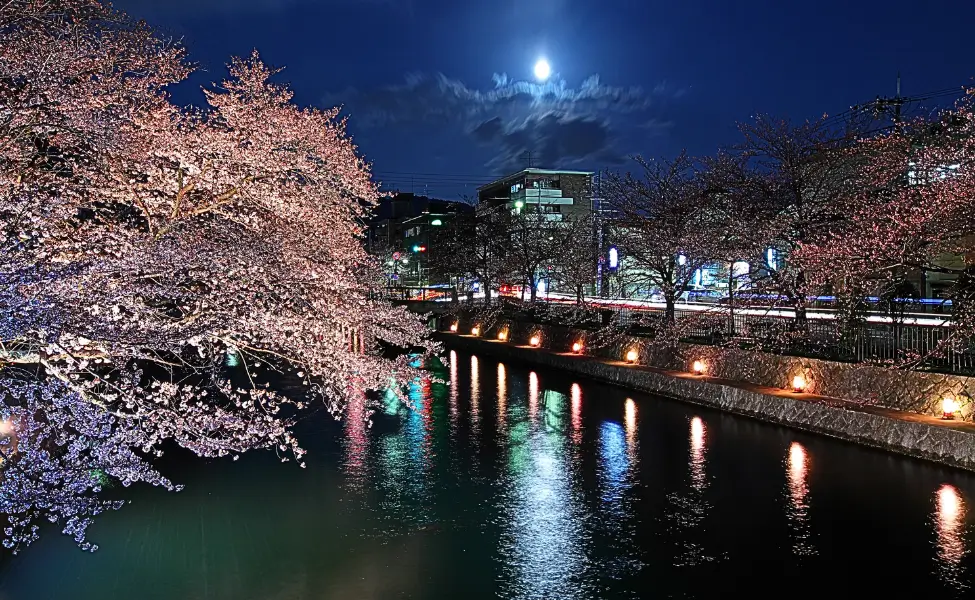
When the sun goes down and the lights come on, those same pink blossoms transform into something that feels almost unreal.
I have been watching yozakura for nearly three decades.
It still stops me every single time.
If you are planning a Japan vacation in spring, build at least one night viewing session into your itinerary.
Here is what you need to know before you go.
Before You Go: Read This First
Night cherry blossom viewing is not the same as a normal park visit.
A few things to know upfront.
Some locations are casual walk-up spots open through the night.
Others are ticketed events that only run for a few weeks, require separate night entry tickets, and sell out.
Prices and hours change every year.
Before you visit any spot on this list, check the official event page for the current season.
Aim to arrive at dusk.
You get the day-to-night transition, you secure your spot before the crowds, and you avoid arriving in pitch darkness with nowhere to sit.
On weekends during peak bloom, expect queues.
Plan your last train before you leave the hotel, not when you are already standing under the blossoms at 9pm.
What Makes Yozakura Different
During the day, cherry blossom spots in Japan are busy, colourful, and full of energy.
Families spread picnic mats, food stalls do steady business, and the atmosphere feels like a street party.
At night the whole thing changes.
Parks and riverbanks that feel social during the day become quieter and more intimate after dark.
The contrast between glowing petals and black sky creates a drama that no daytime visit can match.
Many spots set up dedicated illumination systems for yozakura.
Paper lanterns, bonbori lanterns strung along the water, LED lighting, and even projection mapping all feature at different locations.

Not every hanami spot is set up for night viewing, which is exactly why it pays to know which ones are worth the trip after dark.
Best Yozakura Spots in Tokyo
Meguro River
The most famous yozakura spot in Tokyo.
Around 800 Yoshino cherry trees line a 3.8 kilometre stretch of river through the Nakameguro neighbourhood.
Bonbori lanterns hang the full length of the canal.
Petals drift across the water as you walk.
Food stalls line both banks during the annual Cherry Blossom Festival.
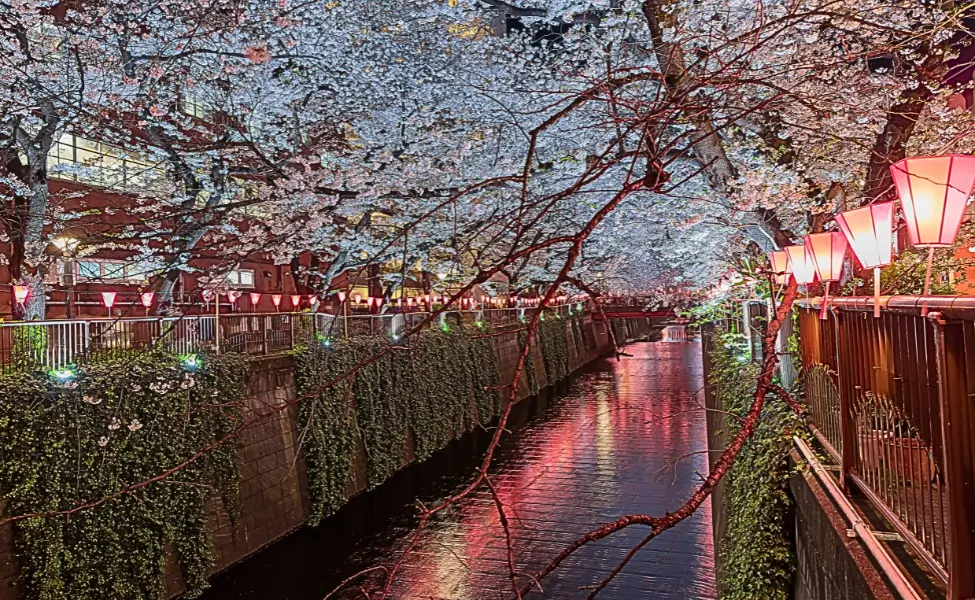
This is a casual walk-up spot with no ticket required.
Walk upstream from Nakameguro Station toward Ikejiri-Ohashi Station for fewer people.
The trees extend the whole way.
Station: Nakameguro (Hibiya Line) | Entry: Free
Chidorigafuchi
A 700 metre lit pathway along the Imperial Palace moat, with cherry trees forming a tunnel overhead and blossoms reflecting in the water below.
You can rent rowboats and paddle directly under the trees at night, which is one of the more underrated experiences on any Japan trip.

Boat rentals operate on time slots and the moat is increasingly managed during peak season. Lighting hours vary by year.
Check the Chidorigafuchi Green Way official event page before you go.
Station: Kudanshita (Tozai, Shinjuku, Hanzomon Lines) | Entry: Free (boat rental extra)
Ueno Park
Over 1,000 cherry trees lit by orange lanterns throughout the grounds.
This is Tokyo’s biggest and loudest yozakura event.

Food stalls, performances, and thousands of people celebrating together.
If you want yozakura at its most festive, come here.
If you want something quieter, go to Meguro River or Rikugien instead.
Station: Ueno (JR Yamanote Line) | Entry: Free
Rikugien
Rikugien is an Edo period garden built in 1702.
During the spring night illumination event, a 70-year-old weeping cherry tree at its centre becomes the focus.
Under the lights, it cascades downward like a waterfall of pale pink.
The atmosphere here feels genuinely traditional rather than touristy.
Important: the spring night illumination at Rikugien is a separate ticketed event, not standard daytime entry, and the price reflects that.
Check the Tokyo Metropolitan Park Association website for current tickets, hours, and booking before you go.
Station: Komagome (JR Yamanote Line, Namboku Line) | Entry: Ticketed night event, check official site
Best Yozakura Spots in Kyoto
Kyoto adds a different dimension to yozakura.
Ancient temples and traditional architecture alongside lit-up cherry blossoms create something that feels genuinely removed from the modern world.
Maruyama Park
The oldest public garden in Kyoto, located in the Higashiyama district next to Yasaka Shrine.
A large weeping cherry tree at its centre is the star of the night illuminations.

The park stays open late and entry is free, making it one of the most accessible yozakura spots in Kyoto.
Entry: Free
Nijo Castle
Nijo Castle runs a ticketed night illumination event during cherry blossom season featuring projection mapping on the castle walls alongside the lit trees.
This is not standard entry.
It is a separate event with its own pricing, typically higher than daytime entry. Book in advance.
Event type: Separate ticketed night event | Check: nijo-jocastle.city.kyoto.lg.jp for current pricing and hours
Best Yozakura in Osaka
Osaka Castle Park
The illuminated castle tower as a backdrop to 300 lit cherry trees in the Nishinomaru Garden area is one of the most striking yozakura scenes in Japan.
The white castle glowing against the dark sky behind pink blossoms is a combination that photographs beautifully and looks even better in person.

Night viewing in the garden area runs until 9pm during peak season and requires a small entry fee.
Station: Tanimachiyonchome or Osakajo-koen | Entry: Around 350 yen | Until: 9pm
Beyond Tokyo, Kyoto and Osaka
Most yozakura content stops at the big three cities.
That is a missed opportunity, because some of the best night cherry blossom viewing in Japan happens elsewhere.
If your Japan vacation takes you further afield, or if you simply want something away from the tour groups, these spots are worth knowing about.
Hirosaki Castle Park, Aomori
Hirosaki is consistently listed as one of the three best night cherry blossom viewing spots in all of Japan.
The park holds around 2,600 cherry trees in over 50 varieties, some of them over 300 years old.
The trees here produce more blossoms per branch than almost anywhere else in Japan, thanks to a pruning technique borrowed from apple farming, which is what Aomori is famous for.
The night illuminations run from around 6:30pm to 10pm during the festival.

The most famous view is from Shunyo Bridge on the west side of the park, looking toward the lit castle reflected in the moat.
You can also rent rowboats on the moat during the day, and when petals start falling, the water turns pink.
Because Hirosaki is in northern Japan, the bloom season here runs later than central Japan.
Expect peak bloom in late April to early May 2026, which means you can catch yozakura here after the big city crowds have gone home.
The free areas of the park are open 24 hours.
The inner sections require a ticket and have extended evening hours during the festival.
Check sakura.hirosakipark.jp for current event details.
Station: Hirosaki (JR Ou Line from Shin-Aomori, or Shinkansen to Shin-Aomori then transfer) | Peak bloom: Late April to early May | Illuminations: From approximately 6:30pm to 10pm
Mishima Taisha, Shizuoka
Mishima Taisha is one of the most important shrines in eastern Japan and, in spring, one of the most beautiful places to be at night in the country.
About 200 trees across 15 varieties bloom on the grounds, with the two standout visuals being the weeping cherry trees reflected in the shrine pond and the sakura tunnel lining the approach to the main hall.
The illumination runs free from 18:00 to 21:00 during peak bloom.

Before you leave, check the sacred deer enclosure on the grounds.
Deer and lit-up cherry trees in the same frame is not something you find in many places.
For anyone taking the Shinkansen between Tokyo and Kyoto, Mishima is a natural stop and this shrine is worth building a few hours around.
Station: JR Mishima (Tokaido Shinkansen), 15 min walk | Entry: Free (illumination)
Maizuru Park, Fukuoka
If your Japan trip starts in Kyushu, Maizuru Park in central Fukuoka sits on the former grounds of Fukuoka Castle.

Around 1,000 cherry trees bloom here in spring among the remaining castle stone walls and moats. Night illuminations run during peak season.
Because Kyushu is warmer, the bloom comes earlier here than in central Japan, typically late March.
It is a genuinely local spot.
Far fewer international tourists, much more neighbourhood atmosphere.
Station: Akasaka or Ohori-Koen (Fukuoka City Subway) | Entry: Free
Practical Tips
Even outside the big cities, a few realities still apply.
Tickets for night events sell out.
Rikugien and Nijo Castle in particular.
Check and book early if those are on your list.
Dress warmly. Late March evenings in Japan are still cold.
A warm layer matters more than people expect.
Weeknights are dramatically better. Tuesday, Wednesday, or Thursday.
Weekend crowds at peak spots are serious.

Last trains. Check your last train before you leave for the evening, not when you are already out.
Station platforms at Nakameguro and Ueno during peak bloom on a weekend night are extremely crowded.
Your phone camera will struggle. Low light and blossoms moving in the breeze are genuinely difficult to photograph.
Bring something with manual settings if you care about the shots.
When to Go
In 2026, central Japan peaks around late March to early April, with Hirosaki and Niigata following in late April.
These are forecast dates and can shift, so check the latest update before you book.
One Last Thing
But if you visit Japan in spring and only see the cherry blossoms in daylight, you are missing half the story.
Build one evening into your Japan trip for yozakura.
Walk along a lit river, sit beneath glowing blossoms, and let Japan show you what it does best.
You will not forget it.
