
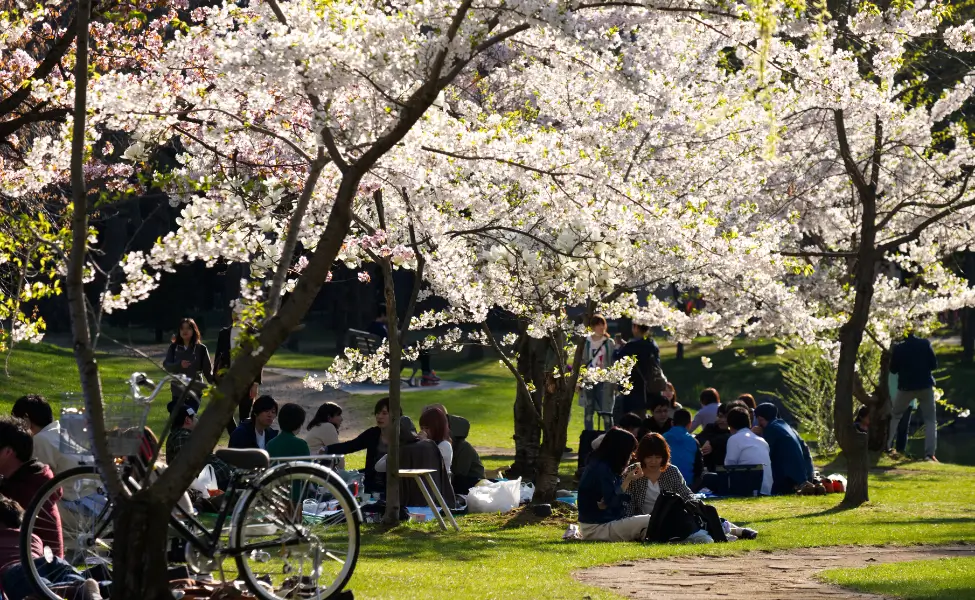
If you are visiting Japan during cherry blossom season, you will see groups of people sitting under the trees with food, drinks, and a blue tarp.
That is hanami, and it is one of the most enjoyable things you can do in Japan in spring.
This article covers everything practical.
Where to sit, what to bring, what to eat, and how to avoid the mistakes that make your first hanami harder than it needs to be.
What Hanami Actually Is
Hanami means “flower viewing.”
Hana (花) means “flower” and mi (見) means “to see” or “to view”.
In practice, it means finding a spot under the cherry trees, spreading out a mat, and spending a few hours eating and drinking with people you like.
There is no ceremony.
Some groups bring elaborate food spreads.
Others bring a convenience store bag and some beers.
Both are fine, and nobody is paying attention to what you brought.
Parks fill up fast during peak bloom, especially on weekends.
Groups tend to stick to their own space, but nobody minds if you set up nearby.
When to Go
From first bloom to heavy petal fall usually spans 7 to 14 days, with peak bloom lasting roughly one week.
Wind and rain can shorten that dramatically, which is why timing your trip matters more for hanami than for almost any other activity in Japan.

According to the latest Japan Meteorological Corporation forecast update, Tokyo and Nagoya are expected to hit full bloom around late March 2026, with Kyoto and Osaka following a few days later.
Check the most recent forecast before you book, because dates can shift by a week or more depending on the winter.
Weekday afternoons are significantly less crowded than weekends.
If your schedule is flexible, a Tuesday or Wednesday at a popular park will feel very different from a Saturday.
Once you notice petals starting to fall, the best days are usually already behind you.
A lot of first-time visitors wait one day too many.
How to Pick a Spot
Most parks and riverbanks with cherry trees work for hanami.
The question is what kind of experience you want.
Popular city parks like Ueno in Tokyo or Maruyama in Kyoto are festive and full of food stalls, often loud by midday.
Good if you want to be in the middle of things.
Riverside spots like Meguro River in Tokyo are less suited to spreading out a mat and more suited to walking and photography.
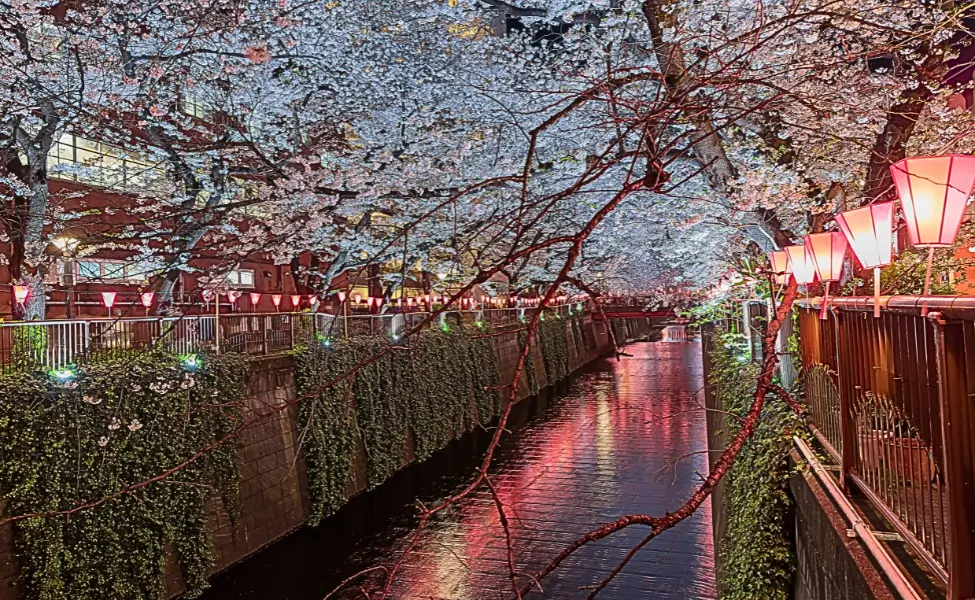
The canopy over the water is the main draw there.
Smaller neighbourhood spots are worth finding if you ask locals or do some research.
Fewer tourists, easier to get space, and the trees are often just as good.
Castle parks like Hirosaki in Aomori or Himeji combine the architecture with the sakura.
Harder to reach, but a different experience entirely from an urban park.
One practical point is to check in advance whether your chosen park allows alcohol and ground sheets.

A small number restrict both but most don’t.
What to Bring
A waterproof ground sheet or picnic mat.
The most important item.
Park ground can be cold and damp even on sunny days, and the roots under older cherry trees make the grass uneven in places.
A dedicated picnic mat is sold at every 100-yen shop and most convenience stores in spring.
If you forgot one, a large plastic bag split open works.
Food and drinks. Convenience stores are the easiest option.
Onigiri, sandwiches, karaage, and canned drinks are all standard hanami fare.
Parks with festivals usually have food stalls inside, but prices are higher and queues get long.
A bin bag. Most parks in Japan have no rubbish bins.
You are expected to take your rubbish with you when you leave, so bring something to collect it in.
Warm layers. Late March can feel like spring in the afternoon and noticeably cold once the sun drops.
An extra layer matters if you plan to stay past sunset.
Cash. Food stalls and some park facilities are cash only.
One thing worth knowing.
Crows are a real presence at popular hanami parks and will move quickly on unattended food so keep snacks covered or within reach.
How to Claim a Spot
At popular parks, people arrive early to stake out space before the crowds build.
You will sometimes see mats laid out with no one sitting on them.
This is normal.
Someone from the group arrived earlier to hold the spot.
If you are visiting a busy park on a weekend, aim to arrive at least an hour before you plan to eat.
Lay your mat down, leave something on it to mark the space, and come back.
A bag works, but leave something you are not worried about, not a wallet or passport.
There is usually enough room if you look around the edges of the main gathering areas rather than trying to fit into the centre.
What to Eat and Drink
There is no strict hanami menu, but a few things appear at almost every gathering.
Onigiri and packaged snacks from the convenience store.

- Karaage
- Edamame
- Tamagoyaki
- Spring-specific sweets like sakura mochi and hanami dango
For drinks, beer is the most common choice.
Canned chu-hi, a fruit-flavoured sparkling alcohol, is popular at younger gatherings.
Non-alcoholic options are equally normal.
Etiquette
This is all really common sense only.
Keep music low or use earphones.
Portable speakers carrying across multiple groups is considered inconsiderate.
Background music within your own group is fine.
Do not shake or hit the trees. It occasionally happens. It is not appreciated.
Take your rubbish with you. Leave the space cleaner than you found it.
Smoking is restricted or prohibited in most public parks. Check the rules at your specific location.
Be aware of space. If the park is filling up, avoid spreading across more ground than your group actually needs.
The atmosphere at hanami is almost always easygoing.
Following the basics means you will fit in without thinking about it.
A Short Note on Yozakura
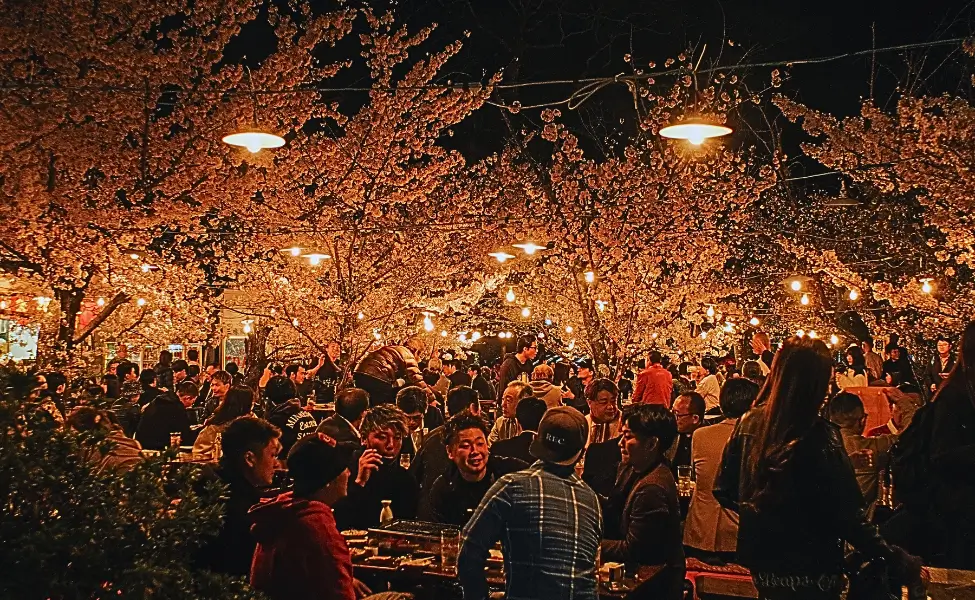
Yozakura, viewing illuminated cherry blossoms after dark, is a completely different experience from daytime hanami.
Many popular parks light up their trees from sunset until 9 or 10pm during peak bloom.

If you have a free evening during sakura season, it is worth planning around separately.
A Few Practical Notes
Toilets at popular parks get very busy.
Use a convenience store toilet nearby before you arrive.
In most places, drinking in parks is legal in Japan, but some cities impose temporary restrictions during peak sakura season.
Check local notices for wherever you are going, particularly in central Tokyo.
If the forecast shows rain on your planned day, waiting one day is usually worth it if your schedule allows.
Wet hanami is still enjoyable, but the crowds drop and some stalls close.
Cherry blossom season is short and the window for hanami is shorter than most people expect.
Conditions change quickly, forecasts shift, and it is easy to plan around a date that turns out to be just past peak.
Once you are in Japan during bloom season, go sooner rather than later.
The trees do not wait.

