
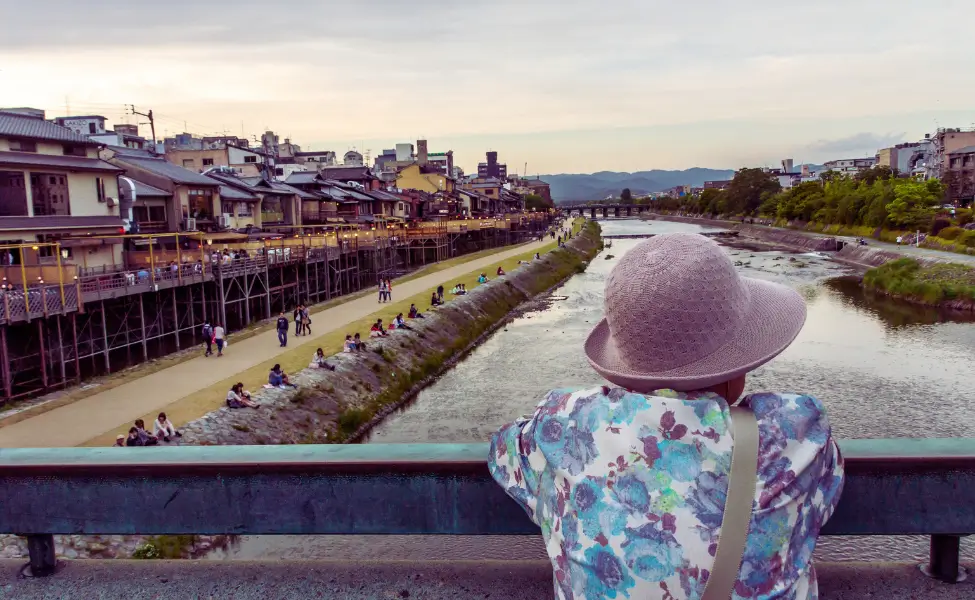
Historical Japanese cities preserve the past in ways few countries can match.
Kyoto served as the imperial capital for 1,074 years from 794 until 1868.
Himeji Castle still stands with six storeys of original construction completed in 1609.
Nikko contains 103 religious buildings across shrine and temple complexes.
These aren’t isolated landmarks.
They’re living places where centuries of tradition still shape daily life, and I recommend you experience them firsthand.
Some links on this page may be affiliate links. If you use them, it helps support the site at no extra cost to you.
1) Kyoto: Imperial Capital Through 1,000 Years of Change
Kyoto served as Japan’s imperial capital for 1,074 years, from 794 until 1868.
That extraordinary continuity created layers of history visible throughout the modern city.
Approximately 1,600 Buddhist temples and 400 Shinto shrines occupy neighbourhoods where imperial processions once passed and samurai enforced shogunate authority.
Where history feels most alive
The early morning hours at Fushimi Inari Taisha transform the experience entirely.

Arrive by 7:00 AM and you’ll climb through thousands of vermillion torii gates with only occasional worshippers around you.
The pathway ascends Mount Inari for several kilometres.
At dawn, mist often fills the lower sections whilst sunlight filters through the gates above.
This is when the shrine’s 1,300-year history as a sacred mountain becomes palpable rather than conceptual.
Kinkaku-ji opens at 9:00 AM when tour groups immediately flood the viewing platform.
Visit at opening or after 4:00 PM for clearer views of the Golden Pavilion’s reflection.

The structure combines Zen temple architecture with aristocratic villa design, demonstrating how the shogunate appropriated imperial aesthetics.
Beyond the obvious landmarks
The Philosopher’s Path connects several lesser-visited temples including Honen-in, where moss-covered grounds and thatched gates show temple life unchanged for centuries.
Ninna-ji Temple’s five-storey pagoda and palace buildings receive a fraction of Kinkaku-ji’s crowds whilst offering equally significant Heian period architecture.
Planning your time
History enthusiasts need minimum two full days in Kyoto.
Dedicate one day to imperial Kyoto (Nijo Castle, Imperial Palace area, Kiyomizu-dera), and another to Zen temple culture (Ryoan-ji, Kinkaku-ji, Ginkaku-ji).

Nijo Castle opens at 8:45 AM.
The castle’s painted sliding doors by Kano school artists show how the Tokugawa shogunate displayed power through art.
Allow 90 minutes for a thorough visit.
Best times
Spring cherry blossoms (late March to early April) and autumn colours (mid-November) make Kyoto spectacular but overwhelmingly crowded.
February and June offer comfortable weather with manageable visitor numbers.
Most temple grounds open 9:00 AM to 5:00 PM, with longer hours during peak seasons.
2) Himeji: Experiencing Japan’s Greatest Castle Architecture
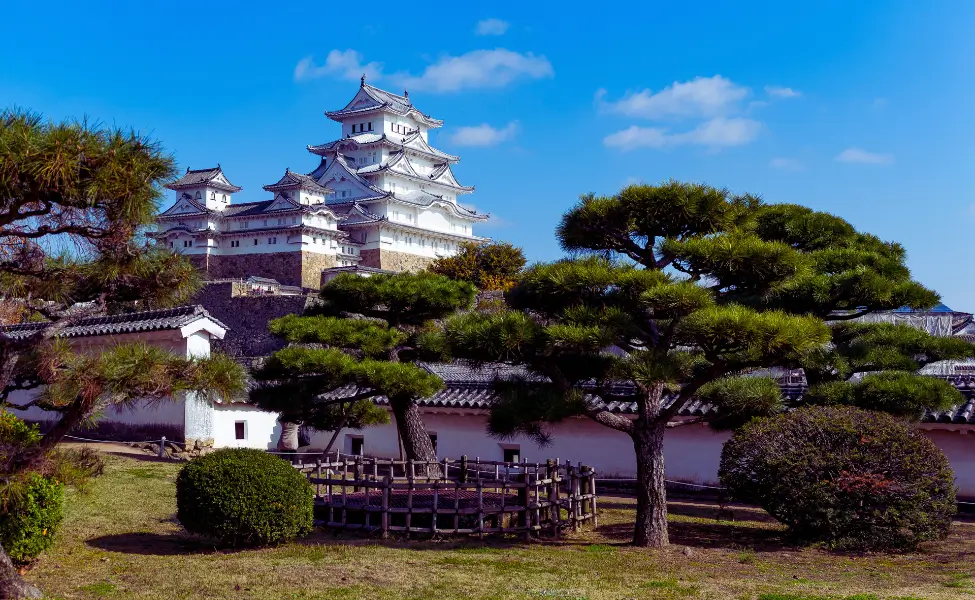
Himeji revolves around its namesake castle, completed in 1609 as the Tokugawa shogunate consolidated power.
The White Heron Castle earned its nickname from brilliant white exterior walls and elegant rooflines that suggest a bird taking flight.

The defensive maze between outer gates and main keep demonstrates medieval castle warfare.
Unlike modern visitors following marked paths, attacking armies would have confronted deliberate confusion.
Gates angle unexpectedly.
Paths double back. Narrow passages force single-file movement under defensive positions above.
Walk slowly through the bailey and notice how defenders could observe attackers from hidden positions.
The maze takes 20 to 30 minutes to navigate whilst appreciating these tactical details.
The main keep’s interior preserves six storeys of original construction.
Climb the steep wooden stairs (nearly ladders in places) to experience how defenders lived and fought.
The top floor offers panoramic views across Himeji whilst showing how the keep commanded the surrounding plain.
Planning your visit
Arrive when the castle opens at 9:00 AM during peak seasons (April, May, November).
Queue times for the main keep regularly reach 60 to 90 minutes between 10:00 AM and 2:00 PM.
Early visitors complete the entire grounds in 90 minutes before crowds arrive.
Late afternoon after 3:30 PM provides another window of lighter traffic.
Purchase tickets at the entrance (1,000 yen for adults, combined ticket with Kokoen Garden available).
The castle grounds close at 5:00 PM with last entry at 4:00 PM.
Beyond the main keep
Kokoen Garden sits adjacent to the castle entrance but receives little attention.
This reconstructed Edo period garden complex contains nine separate gardens representing different samurai residence styles.
The teahouse overlooks a pond where you can rest after climbing the castle.
Entry costs 300 yen separately or 1,050 yen combined with castle admission.
Spring brings hundreds of cherry trees into bloom throughout the castle grounds.
The contrast between pink blossoms and white walls creates Japan’s most photographed castle scene, but expect shoulder-to-shoulder crowds during the two-week bloom period.

Time needed
Allow three hours total including Kokoen Garden.
History enthusiasts benefit from renting the audio guide (200 yen) which explains architectural features and historical context throughout the grounds.
3) Kanazawa: Walking Through Samurai and Merchant Districts
Kanazawa escaped bombing during World War II, preserving Edo period urban planning that vanished from most Japanese cities.
The result is an unusually complete collection of samurai residences, merchant quarters and artisan workshops.
The Nagamachi Samurai District works best explored in early morning before 9:00 AM.
Earthen walls line narrow lanes that twist and turn according to defensive rather than efficient planning.

The Nomura Samurai House opens at 8:30 AM and showcases how upper-ranking warriors lived.
The interior garden, considered one of Japan’s finest private gardens, demonstrates how samurai combined military readiness with aesthetic cultivation.
Notice the weapon storage areas, formal reception rooms, and private family quarters.
The contrast between public and private spaces reveals samurai social structure.
Walk the district’s back streets where modern houses occupy plots that retain original property lines.
Stone-lined water channels flow along many lanes, originally providing fire protection and water supply.
The district feels most atmospheric during light rain when earthen walls darken and stone paths glisten.
Merchant and artisan culture
The Higashi Chaya District showcases teahouse architecture from the 1820s.

Wooden buildings with distinctive latticed facades now house working teahouses, restaurants and gold-leaf workshops.
Arrive before 10:00 AM to photograph the street before day-trippers fill the lanes.
Shima Teahouse preserves original interior layout including performance spaces where geisha entertained wealthy merchants.
Entry costs 500 yen and provides rare access to authentic teahouse architecture.
Kanazawa sustained traditional crafts through centuries of patronage by the ruling Maeda clan.
Gold-leaf production continues in workshops throughout Higashi Chaya.
Several offer demonstrations showing how craftsmen beat gold into impossibly thin sheets applied to lacquerware, ceramics and even food.
Kenrokuen Garden
One of Japan’s three great landscape gardens, Kenrokuen demonstrates principles refined during the Edo period.

The garden’s design creates different views through every season using water features, stone lanterns, carefully shaped pine trees and tea houses.
Early morning visits (opening varies by season, as early as 7:00 AM) provide quiet contemplation before tour groups arrive.
Winter brings yukitsuri, rope supports protecting trees from heavy snow, creating distinctive conical shapes throughout the garden.
Planning your time
History enthusiasts need two full days in Kanazawa.
Day one covers Kenrokuen Garden (two hours), the adjacent 21st Century Museum of Contemporary Art (contrast), and Nagamachi Samurai District (90 minutes).
Day two explores Higashi Chaya District (morning), Omicho Market (lunch), and the castle park area.
Most historical sites cluster within walking distance.
Kanazawa’s compact geography makes it manageable without extensive transportation planning.
4) Nikko: Religious Authority in Sacred Mountains
Nikko achieved UNESCO World Heritage status for its concentration of religious architecture spanning centuries.
The site encompasses 103 buildings across shrine and temple complexes that demonstrate how Buddhism and Shinto coexisted and competed for influence.

Toshogu Shrine opens at 8:00 AM from April to October, 9:00 AM November to March.
This timing matters enormously.
The shrine receives over two million visitors annually, with crushing crowds between 10:00 AM and 3:00 PM during peak seasons.
Arrive at opening and you’ll experience the grounds with manageable numbers whilst morning light illuminates the Yomeimon Gate’s elaborate carvings.
Built in 1617 and expanded in 1636 as the mausoleum of Tokugawa Ieyasu, Toshogu demonstrates how the shogunate used religious architecture to display political authority.

The Yomeimon Gate alone contains over 500 carved figures including animals, flowers and mythological creatures.
Every surface carries decoration.
This overwhelming ornamentation represented cutting-edge Edo period craftsmanship and the shogunate’s unlimited resources.
Walk slowly through the complex noticing how decoration intensifies as you approach Ieyasu’s burial site.
The famous “Three Wise Monkeys” carving appears on the sacred stable, showing how Confucian philosophy influenced Tokugawa ideology.
The sleeping cat carving, tiny and easy to miss, supposedly symbolises peace after centuries of warfare.
Beyond Toshogu
Most visitors skip Rinnoji Temple and Futarasan Shrine, both predating Toshogu by centuries.
Rinnoji’s Sanbutsudo Hall houses three massive gilt Buddha statues representing Nikko’s three sacred mountains.
The hall underwent major restoration recently, with renovations completed in 2019.
Futarasan Shrine maintains simpler architectural style showing pre-Tokugawa religious aesthetics.
The Shinkyo Bridge, an elegant vermillion structure spanning the Daiya River, marks Nikko’s entrance.
Originally restricted to shogun and imperial messengers, it now accepts pedestrian traffic (300 yen).

The bridge’s reflection in the river provides classic photo opportunities, best captured in early morning.
Planning logistics
Entry to Toshogu costs 1,300 yen (shrine grounds and museum).
Purchase combination tickets including Rinnoji and Futarasan for better value.
Allow four to five hours covering all major sites at a pace that permits appreciation rather than rushing.
Time of year
Autumn colours typically peak mid to late October when maple trees throughout the grounds turn brilliant red.

This brings Nikko’s heaviest crowds.
Winter offers dramatic contrast with shrine buildings against snow, though mountain roads may close.
Spring and early summer provide comfortable weather without overwhelming visitor numbers.
5) Kamakura: The Samurai Government’s Capital
Kamakura lies approximately 50 kilometres southwest of Tokyo along Sagami Bay.
During the Kamakura period (1185 to 1333), samurai government displaced imperial authority, making this coastal town Japan’s de facto capital and military headquarters.
The Great Buddha at Kotoku-in Temple receives constant crowds, but the experience still resonates.

This bronze statue, cast in 1252, originally sat within a massive hall until tsunamis destroyed the building in the 1400s.
The Buddha has sat exposed to weather ever since, developing the distinctive green patina visible today.
The figure measures over 11 metres tall and weighs approximately 121 tonnes.
Arrive at Kotoku-in when it opens at 8:00 AM for brief quiet before buses arrive.
The surrounding grounds remain simple rather than elaborate, showing how medieval Buddhism emphasised the Buddha’s teaching over decorative architecture.
Lesser-known historical depth
Engaku-ji Temple, founded in 1282, ranks among Kamakura’s most historically significant sites despite receiving fewer visitors than the Great Buddha.

The main gate and Buddha hall demonstrate Zen architectural principles imported from Song Dynasty China.
The temple complex spreads across a hillside where monks still train in traditional practices.
Shariden (relic hall) contains what’s claimed as Buddha’s tooth, though it opens only briefly during the year.
The temple grounds include the Ogane bell, cast in 1301 and recognised as a National Treasure.
Kenchoji Temple, Japan’s oldest Zen training monastery, operates much as it did when founded in 1253.
Walking through the compound, you’ll pass meditation halls, bathing facilities and administrative buildings that show how Zen monasticism shaped samurai culture.
Trail hiking
Behind major temples, ancient paths wind through forested hills connecting remote shrines and meditation caves.
The Daibutsu hiking trail links several historical sites whilst providing views across Kamakura and the bay.
These trails feel far removed from the crowded temple entrances below.
Planning your visit
Kamakura works perfectly as a day trip from Tokyo (55 minutes on JR Yokosuka Line from Tokyo Station).
History enthusiasts benefit from two days: one covering Engaku-ji, Kenchoji and Kencho-ji, another exploring Kotoku-in, Hasedera Temple and coastal areas.

Major temples cluster near stations along the Enoden Line, but walking between sites reveals traditional residential areas and small shrines missed by most visitors.
Crowd management
Weekends bring massive Tokyo crowds.
Visit Tuesday through Thursday when possible.
Morning arrival (before 10:00 AM) makes essential temples manageable even during busy periods.
6) Hiroshima: Modern History’s Heaviest Weight
Hiroshima confronts visitors with one of the twentieth century’s defining moments.

The atomic bombing of 6th August 1945 killed an estimated 140,000 people by year’s end.
The city rebuilt itself into a symbol of peace and nuclear disarmament, creating a destination where modern history carries profound emotional weight.
The Hiroshima Peace Memorial Museum demands careful pacing.
Opened in 1955, the museum documents the bombing through personal belongings, photographs and survivor testimonies.
Exhibits explain nuclear weapons development, the decision to use them, and their immediate and long-term effects on human bodies and the city itself.
The museum deliberately avoids political judgement whilst emphasising humanitarian consequences.
Personal items prove devastating: a child’s tricycle, a watch stopped at 8:15 AM, clothing burned onto skin, shadows permanently etched into concrete where people stood when intense heat struck.
Allow three hours minimum.
Many visitors need breaks to process emotional impact.
The museum provides benches throughout and quiet spaces where visitors can sit.
The renovated main building reopened in 2019 with improved displays using survivor testimony videos and detailed historical context.
Audio guides (available in multiple languages for 400 yen) provide essential information that written panels sometimes compress too heavily.
The Memorial Park
The Atomic Bomb Dome stands near the museum, one of few structures surviving because the bomb exploded almost directly above it.
The ruined former exhibition hall remains exactly as it appeared after the blast, protected as a UNESCO World Heritage Site.
Morning visits provide better light for seeing structural details.

Walk through the memorial cenotaph aligned so visitors face the Atomic Bomb Dome through the arch.
The design intentionally connects past destruction with present remembrance.
The Peace Memorial Flame has burned continuously since 1964 and will remain lit until all nuclear weapons are abolished.
Balancing the experience
The museum and memorial park create emotionally exhausting visits.
Many travellers find combining Hiroshima with Miyajima Island (30 minutes away) helps balance heavy historical confrontation with natural beauty and traditional shrines.
The contrast shows how Japanese cities maintain multiple identities and histories simultaneously.

Planning logistics
The museum opens at 8:30 AM (to 6:00 PM March through July, extended hours August and November).
Morning visits provide quieter museum experience before tour groups arrive midday.
Entry costs 200 yen. The memorial park surrounding the museum has no admission fee.
Time needed
Plan a full day in Hiroshima.
Museum visit requires three hours.
Walking the memorial park adds another 90 minutes.
The city’s tram system connects major sites efficiently.

Most visitors underestimate the emotional weight; schedule lighter activities afterward rather than packing the day tightly.
7) Takayama: Merchant Wealth in Mountain Isolation
Takayama occupies Japan’s mountainous interior in Gifu Prefecture.
Unlike castle towns built around samurai military power, Takayama reveals merchant class prosperity and cultural sophistication.

The Sanmachi Suji district’s three parallel streets contain wooden merchant houses dating from the seventeenth and eighteenth centuries.
Arrive before 9:00 AM and you’ll walk past dark wooden facades whilst shop owners sweep entrances and prepare for the day.
Many buildings continue operating as sake breweries, craft shops and restaurants under the same families for generations.
Water channels flow along many streets, originally providing fire protection and daily water supply.
The district functions as living heritage where historical buildings serve contemporary purposes rather than operating as museums.
Sake brewing heritage
Several breweries in Sanmachi Suji offer tasting sessions where staff explain traditional brewing methods unchanged for centuries.
Takayama’s cold mountain water and winter climate create ideal sake-making conditions.
Small cups of multiple varieties cost 500 to 800 yen.
Notice how some shops sell sake equipment as working tools, not tourist souvenirs, indicating how traditional industry continues supporting local economy.
Takayama Jinya
This preserved Edo period government building served as the shogunate’s regional administrative headquarters.
Officials managed the surrounding area from this complex, collecting taxes and settling disputes.
Original buildings include offices, conference rooms, storage facilities, rice warehouses and residential quarters.
The well-preserved interiors demonstrate feudal governance structure and official daily routines.
Entry costs 440 yen.
Allow 45 minutes for thorough exploration.
Festival culture
Spring (14 to 15 April) and autumn (9 to 10 October) festivals showcase elaborate parade floats decorated with carvings, metalwork and textiles.

Some floats date to the 1600s, displaying craftsmanship funded by wealthy merchants.
The festivals attract massive crowds but reveal cultural continuity spanning centuries.
Book accommodation months ahead if visiting during festival periods.
Planning your time
History enthusiasts should spend one full day and night in Takayama.
Morning covers Sanmachi Suji district and sake tastings.
Afternoon visits Takayama Jinya and the Higashiyama walking course connecting several temples.
Evening allows sampling Hida beef, a regional speciality.
The town’s compact geography makes walking the primary transportation method.
8) Nara: Where Buddhism Shaped a Nation
Nara served as Japan’s capital from 710 to 784, an era when Buddhism flourished under imperial patronage and fundamentally influenced Japanese culture.
The compact city preserves eighth-century temple architecture and urban planning visible alongside sacred deer that have roamed these grounds for over 1,000 years.
Todaiji Temple opens at 7:30 AM (November through March: 8:00 AM).
Arriving at opening provides brief quiet before school groups and tour buses transform the grounds.
Completed in 752, Todaiji represented Buddhism’s peak influence when the religion commanded enormous resources and political power.
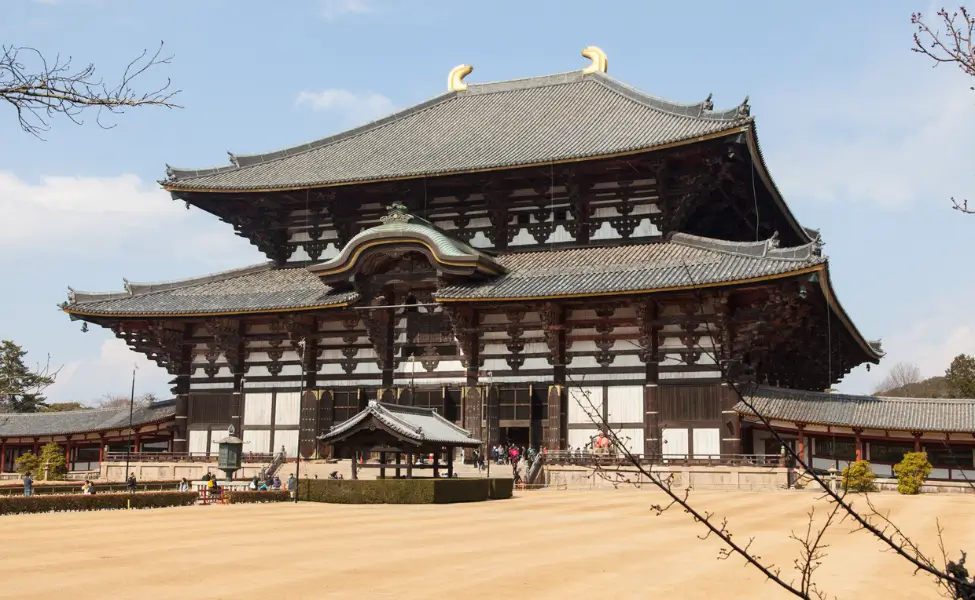
The Great Buddha Hall houses a bronze statue approximately 15 metres tall, weighing around 500 tonnes.
Walking through the hall’s massive doors, the statue’s scale becomes overwhelming.
The building qualifies as one of the world’s largest wooden structures, though reconstructed smaller than the original after fire damage.
Original construction required so many resources that it strained the national economy.
Look for the pillar with a hole carved through its base.
According to tradition, successfully crawling through ensures enlightenment in the next life.
The hole’s dimensions match the Buddha statue’s nostril.

Managing deer interactions
Nara Park’s approximately 1,200 sacred deer roam freely throughout temple grounds and gardens.
Vendors sell special crackers (shika senbei) for 200 yen per bundle.
The deer often bow before accepting food, behaviour learned through centuries of interaction with visitors.
Beyond Todaiji: Kasuga Taisha shrine sits along forested paths where stone and bronze lanterns line the approach.
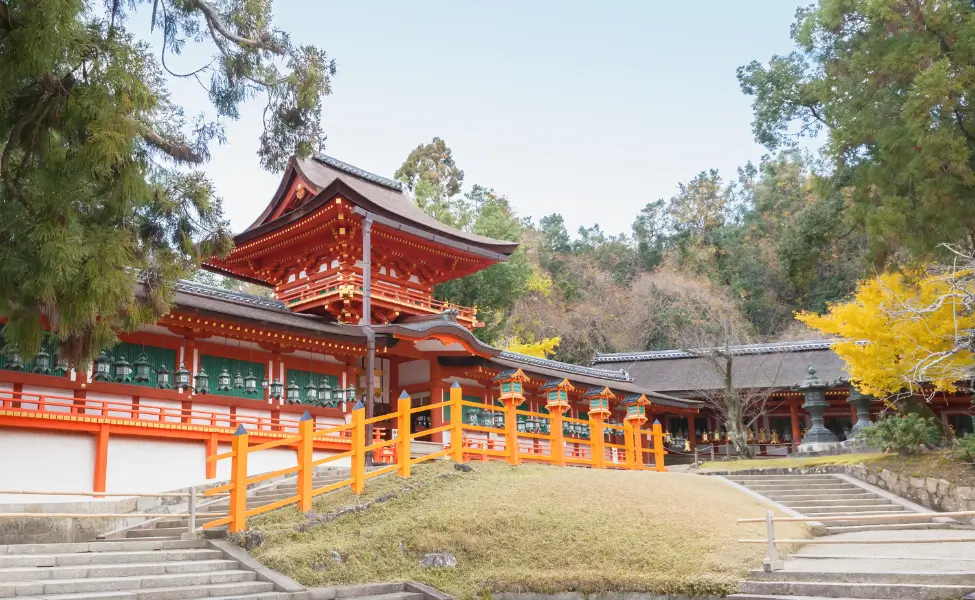
The shrine complex contains approximately 3,000 lanterns donated over centuries.
Twice yearly (February and August), the shrine lights all lanterns simultaneously during special ceremonies.
The effect in the semi-dark forest creates otherworldly atmosphere where Shinto traditions feel immediate rather than historical.
The lantern-lined path to Kasuga Taisha passes through primeval forest protected for over 1,000 years.
Naramachi District
Most visitors concentrate around Todaiji and miss Naramachi, the former merchant quarter preserving traditional machiya townhouses.
Narrow streets wind between wooden buildings where shops sell crafts, serve tea and display historical interiors.

Several restored machiya open as museums showing Edo and Meiji period domestic architecture.
The district feels authentically lived-in rather than preserved for tourism.
Planning your visit
Nara works perfectly as a day trip from Kyoto (45 minutes on JR or Kintetsu lines) or Osaka (35 to 50 minutes).
History enthusiasts benefit from arriving at 7:30 AM for Todaiji, walking through Nara Park to Kasuga Taisha, having lunch near Sarusawa Pond, and exploring Naramachi afternoon.
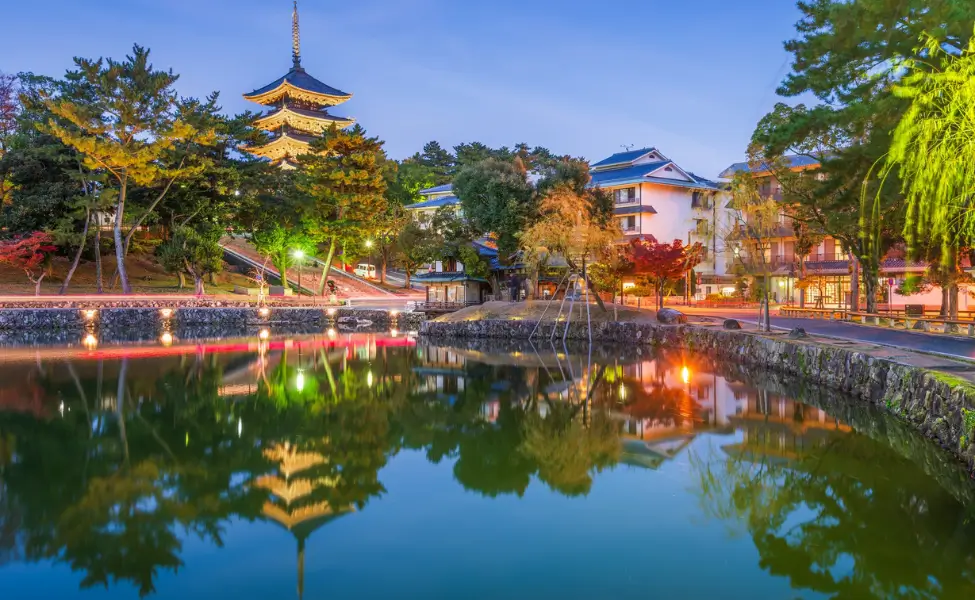
Major temple areas become extremely crowded between 10:00 AM and 3:00 PM, especially weekends and during cherry blossom or autumn colour seasons.
Weekday mornings provide the most manageable experience for meaningful historical engagement.

