
If you are searching for underrated places in Japan, you are probably trying to avoid queues, tour buses, and the same five photos everyone else posts.
That usually means going beyond Kyoto and Tokyo.
It means choosing towns that are not optimised for visitors.
Places where dinner finishes early, the bus runs three times a day, and you are not competing with fifty other people for the same viewpoint.
These nine underrated places in Japan are not hidden gems waiting for discovery.
They are functioning towns that simply never made it onto the standard itinerary.
Some are dealing with shrinking populations.
Some are reinventing themselves through art, pilgrimage routes, or niche traditions.
All of them require a bit more effort.
If you are willing to trade convenience for space, quiet, and honesty, you will see a side of Japan that most travellers skip entirely.
Gifu Prefecture: Mountain Towns and Quiet Traditions
Gifu has a problem with fame.
Everyone who writes about “hidden Japan” mentions Shirakawa-go, and that village stopped being hidden around 2015 when tour buses discovered it.

The prefecture deserves better than being reduced to one overcrowded destination and a city that’s basically a gateway to somewhere else.
Skip Shirakawa-go.
Gifu has genuinely quiet towns that deliver on what that famous village used to offer.
Gujo Hachiman and the dance nobody knows about
This castle town sits along the Nagara River with waterways running through the streets like a miniature version of what Kyoto used to be before it became a theme park.

Spring water flows through stone-lined canals that branch off the main river into narrow channels running alongside the streets.
The water is clean enough that carp swim in it, and you’ll see locals washing vegetables in communal water stations that have served the same purpose for centuries.
The riverside walkways give you the town’s best views.
Willows hang over the water, traditional wooden buildings line both banks, and in summer you can watch ayu sweetfish swimming upstream.
Some restaurants along the river serve the fish grilled with salt, caught the same morning.
Gujo Hachiman produces most of Japan’s realistic food samples, those plastic models you see in restaurant windows across the country.

Several shops let you make your own food replicas in workshops that cost ¥1,500-2,500.
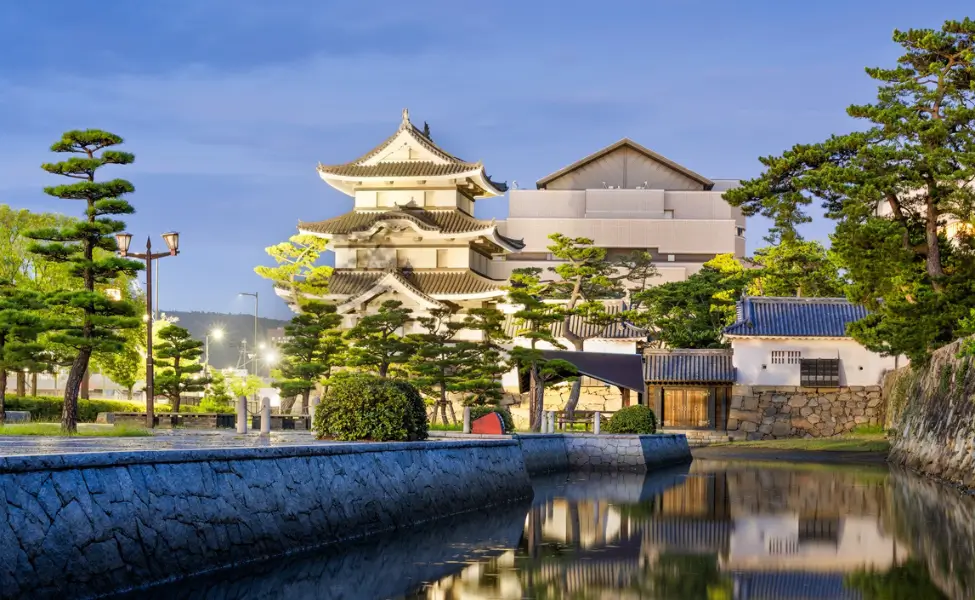
The reconstructed castle from 1933 perches on the mountain above town.
It’s Japan’s oldest wooden castle reconstruction, which sounds impressive until you remember it’s still a reconstruction.
The view from the top shows you the whole town layout and on misty mornings clouds settle in the valley below, earning it the “Castle in the Sky” nickname.
The Gujo Odori dance festival runs 31 nights from July through September, and during the four nights of Obon in mid-August, dancing continues until dawn.
The town preserves Edo-period merchant houses along streets where actual residents still live.

This works best if you’re visiting during late summer for the dance festival or autumn when maple trees around the castle turn.
The mosaic tile museum in Tajimi
Tajimi produces most of Japan’s mosaic tiles and someone decided this deserved a museum.
The building itself justifies the visit.
Architect Fujimori Terunobu designed it to look like a clay quarry partially buried in the ground, with the exterior covered in various tiles and the interior feeling like you’re descending into a mine shaft before emerging into bright exhibition spaces.

The museum displays over 10,000 tiles collected by local volunteers who salvaged them from buildings scheduled for demolition.
You’ll see bathroom tiles from the Showa era, elaborate pictorial tiles that decorated public bathhouses, and the evolution of tile-making techniques from hand-crafted to machine-produced.
This is niche.
If you find industrial design and craft heritage interesting, you’ll spend two hours here fascinated by how something as mundane as bathroom tiles reflects changing aesthetics and manufacturing technology.
If you don’t care about tiles, you’ll wonder why you came.
Entry costs ¥310 and you can take a hands-on workshop to make your own tile craft for ¥500.

The museum sits in Kasahara district where tile factories still operate, and you can see the industrial heritage that supports the museum’s existence.
Ena Gorge and the rural reality
Ena Gorge formed when a dam created a lake along the Kiso River.
The cliffs and rock formations are the draw, especially during cherry blossom season in spring or autumn foliage.
Thirty-minute sightseeing boats cruise the gorge for around ¥1,400, departing from the pier near Ena Wonderland amusement park.

Here’s what the tourism materials don’t emphasize: Ena doesn’t draw international tourists.
One review states plainly “Ena doesn’t stick out as a must visit location in Japan among all of the famous cities.”
The town exists as a base for exploring the Nakasendo trail historic route between Kyoto and Tokyo.
The Akechi Railway connects Ena to Iwamura, a former castle town with sake breweries and preserved merchant houses that sees maybe a few dozen foreign visitors per year.
This is rural Gifu showing you what happens when a place doesn’t make it onto the standard tourist circuit. Scenic boat rides without crowds, yes.
Ease of access for non-Japanese speakers, no. Lots of activities competing for your time, absolutely not.
How to actually get there
For Gujo Hachiman, buses run from Gifu City in about an hour (¥1,500) or you can drive in 45 minutes. The town is walkable once you arrive.
Tajimi sits on the JR Chuo Line between Nagoya and Ena.
Twenty-five minutes from Nagoya (¥510). From Tajimi Station, take the Totetsu Bus Kasahara Line to the Mosaic Tile Museum stop (17 minutes, around ¥300).
Nagoya to Ena takes about an hour on the JR Chuo Line (¥1,340).
Gifu City sits 40 minutes from Ena by the same line.
Ena Gorge lies about 15 minutes by bus from Ena Station, or you can walk in 30 minutes.
Renting a car makes sense if you’re visiting multiple Gifu destinations.
Costs run ¥5,000-8,000 per day, and winter requires confidence driving in mountain snow with proper snow tires.
Best timing and budget
Spring from April to May and autumn from October to November offer comfortable weather.
The Gujo Odori peaks during Obon in mid-August but runs all summer.
Winter is an option for Gujo Hachiman’s snow scenery if you can handle temperatures below zero

Skip Golden Week in late April to early May and Obon weekend (mid-August) when domestic tourism fills accommodation and prices triple.
Budget: Business hotels in these towns cost ¥6,000-10,000.
Traditional guesthouses run ¥8,000-15,000 per person with meals.
Museums and castle entries cost ¥300-680. Ena Gorge boat rides cost ¥1,400.
Time needed: Two days covers Gujo Hachiman properly.
Add one day for Tajimi museum and one for Ena Gorge if you’re doing comprehensive Gifu exploration.
Mie Prefecture: Ninja Heritage Without the Crowds
Less than 1% of international tourists visit Mie despite it sitting just 90 minutes from both Nagoya and Osaka.
Most guides mention Ise Jingu shrine and Matsusaka beef, both of which attract crowds or cost significant money.

Mie has better options that actually deliver on the “underrated” promise.
Iga and the birthplace of real ninjutsu
Iga-Ueno was home to one of feudal Japan’s two leading ninja schools.
The Iga-ryu school trained shinobi who worked as spies and assassins for samurai warlords across the country.
Unlike Kyoto where ninja culture became performance art for tourists, Iga preserves the actual history and techniques.
The Iga-ryu Ninja Museum in Ueno Park houses over 400 ninja tools and weapons used by real ninja.
The collection includes shuriken throwing stars, hidden blades, portable bridges, water-walking devices, and ancient ninjutsu manuscripts.
The museum’s ninja house looks like a simple farmhouse but demonstrates the ingenuity ninja used for survival.
Hidden doors, trap floors, secret weapon compartments, escape routes through walls, and revolving panels that could hide a person in seconds.
You can rent ninja costumes for ¥1,500 at the nearby Danjiri Museum and walk through the historic town dressed accordingly if that appeals to you.
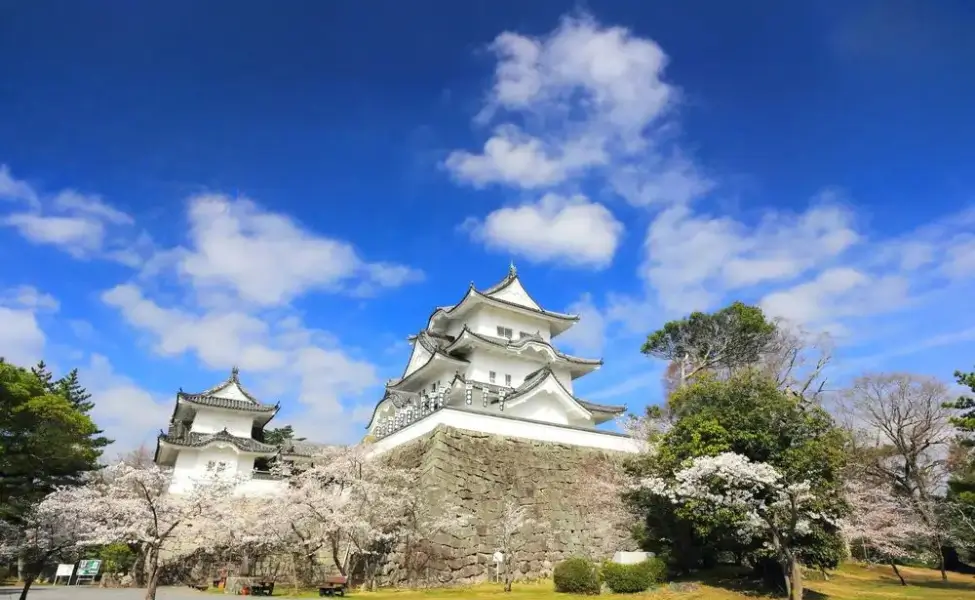
Iga Ueno Castle sits next to the museum.
The current structure is a 1935 reconstruction but the stone walls are original and the view from the top shows the town layout that ninja would have known.
Beyond the ninja sites, Iga is where haiku poet Matsuo Basho was born.
His birthplace, memorial museum, and former hermitage exist as quiet spots that see almost no foreign visitors.
The whole area shows Japan’s rural reality.
The population peaked in 1985 and has dropped steadily since.
This is why it still functions as an authentic experience.
You’re seeing a place that preserved ninja heritage because it’s genuinely important to local history, not because someone built a tourist attraction.
The ama divers and coastal Mie
The ama divers tradition survives in the Ise-Shima coastal region.
These female divers harvest seafood without breathing equipment, some still diving in their 70s and 80s because that’s what they’ve done their whole lives.
You can visit ama huts where divers grill fresh seafood (abalone, turban shells, lobster) over charcoal and talk about their work.
This costs ¥4,000-8,000 per person and requires reservations through tourism offices or hotels.
It’s real, though the performance aspect creeps in as more travelers discover it.
Getting there and budget
From Osaka, the Kintetsu Line runs to Iga-Kambe or Iga-Ueno Station in 90 minutes to 2 hours (around ¥1,500-2,000).
From Nagoya it’s similar time and cost.
Local buses connect the station to Ueno Park every 15-20 minutes (around ¥200).
Budget: Iga-ryu Ninja Museum costs ¥800, ninja shows add ¥600, combination tickets with the castle cost ¥1,750.
Business hotels near the station cost ¥6,000-10,000.
Traditional inns run ¥8,000-15,000 per person with meals.
Ama hut experiences cost ¥4,000-8,000 and require advance booking.
Time needed: One full day covers the ninja museum, castle, and town exploration.
Two days if you want the waterfalls or coastal ama experiences.
Shimane Prefecture: Where Japan’s Aging Shows
Shimane has Japan’s fastest aging population and one of the highest rates of depopulation.
You’ll see it in ways that demographic statistics don’t capture.

Closed storefronts at 2pm on Tuesday because the 78-year-old owner got tired.
Elementary schools converted to community centers that host maybe one event per month.
Bus schedules that run three times daily because ridership dropped below the point where more frequent service makes economic sense.
This is walking down a main street at noon and realizing you’re the only person under 50 visible anywhere, and half the shops have “closed” signs that look like they’ve been there for months.
Izumo Taisha and what it tells you
This ranks among Japan’s oldest and most important Shinto shrines, possibly predating even Ise Jingu though the historical record gets murky that far back.

According to mythology, all the gods of Japan gather here once a year.
The shrine complex is massive, and the main hall uses a unique architectural style called taisha-zukuri that predates the styles used at other major shrines.
The giant shimenawa (sacred rope) at the worship hall weighs 5 tons and gets replaced every few years.
Unlike Ise where you can’t see much, here you can actually photograph the buildings and appreciate the construction details up close.
The atmosphere feels reverent in a way that major temples in Kyoto don’t anymore.
The surrounding town shows the prefecture’s challenges in ways you can’t ignore.
Izumo City’s main street has empty storefronts, restaurants that close by 7pm, and a population that peaked in 1985 and has dropped 15% since then.
Matsue Castle and slow urban decline
Matsue Castle is one of Japan’s twelve original castles that survived from the feudal era without being destroyed and rebuilt.
It’s smaller and less famous than Himeji, which means you can actually walk through the interior without queuing for an hour.

The castle town preserves some samurai residences and a merchant district that tries hard to attract tourists.
But walk two blocks from the tourist area and you’ll see the reality.
Aging apartment buildings, shuttered shops, streets empty even on Saturday afternoon, and a general sense that everything is running on momentum from better times.
Matsue has better infrastructure than most of Shimane because it’s the prefectural capital, but the population is shrinking here too.
The city attracts some tourists and young people, but several initiatives have failed while a few succeed.
The San’in coast hardly anyone visits
The northern coastline has dramatic cliffs, small fishing villages, and beaches that see almost no foreign tourists.

The Oki Islands (ferry from Sakaiminato, 2-3 hours) offer volcanic landscapes and genuine isolation.
Public transportation along the coast is sparse.
Buses run 2-3 times daily between villages, trains serve only major towns, and you can drive for an hour seeing maybe five other cars.
This isolation is both the appeal and the problem for these coastal villages.
Natural scenery, yes, but several villages have more closed businesses than operating ones.
You’re not just visiting quiet towns, you’re visiting towns that are actively questioning whether they have a future.
Getting there and budget
From Osaka, the Limited Express Yakumo runs to Matsue in about 3 hours 30 minutes (¥6,500).
From Hiroshima it’s 2 hours 30 minutes (¥5,000).
These trains run every 1-2 hours.
Within Shimane, trains run every 1-2 hours between major towns.
Buses to smaller destinations run 2-4 times daily.
I once arrived at a bus stop at 2:15pm to discover the last bus back left at 2:10pm and the next one was tomorrow morning.
Budget: Matsue accommodation runs ¥5,000-10,000 for business hotels, ¥10,000-20,000 per person at ryokan with meals.
Izumo Taisha is free, Matsue Castle costs ¥680. Food costs ¥1,000-2,000 per meal at regular restaurants.
The prices are lower than tourist areas because there aren’t many tourists to create pricing pressure.
Time needed: Three days minimum for Izumo Taisha, Matsue, and some coastal exploration.
Four to five days if you want the Oki Islands or extensive coastal driving.
Yamagata Prefecture: Sacred Mountains and Real Commitment
Yamagata offers spectacular winter scenery and mountain spirituality, but it’s also the most logistically difficult prefecture on this list.
Everything that creates the beauty (mountains, snow, isolation) also creates the challenges reaching it and navigating it.
The snow monsters reality
Mount Zao’s “juhyo” (ice-covered trees) look striking in person.

The ski resort runs from December to early April.
Here’s what you need to understand.
You ride a ropeway (gondola) to the viewing area, which costs ¥3,200 round trip, and the experience is literally standing on a platform looking at frozen trees for 20-30 minutes.
That’s it.
Some nights feature colored illuminations.
If you love unique natural phenomena and you’re combining this with skiing, the snow monsters serve as part of a winter sports trip.
If you’re traveling across Japan specifically to see frozen trees and you’re not skiing, you might feel disappointed.
Yamadera justifies the climb
The temple complex requires climbing 1,015 stone steps up a mountainside.

The temple dates to 860 AD, and the views from the top look across forested valleys and distant mountains.
This is worth doing.
The climb takes 30-40 minutes at a moderate pace with regular breaks, entry costs ¥300, and the steps have railings so it’s not dangerous, just tiring.
Go early morning or late afternoon to avoid midday tour groups.
The logistical challenge
Buses to Dewa Sanzan run infrequently. Zao Onsen has better service (40 minutes from Yamagata Station, ¥1,000) with buses roughly every hour during winter.
Renting a car helps enormously but winter driving requires real snow experience.
Without a car and without flexibility around bus schedules, Yamagata becomes frustrating.
Getting there and budget
From Tokyo, the Yamagata Shinkansen runs to Yamagata City in 2 hours 30 minutes (¥11,000).
From Sendai it’s 1 hour (¥1,170) with better bus connections.
Budget: Mount Haguro temple lodging costs ¥10,000-15,000 per person with meals.
Nearby towns offer budget options from ¥6,000. Yamadera entry costs ¥300, Zao ropeway costs ¥3,200. Gassan purification costs ¥500.
Time needed: Three days minimum if adding Yamadera and winter activities.
Skip Yamagata entirely if you won’t rent a car, you’re traveling in off-season when buses barely run, or you expect easy logistics.
Go to Yamagata if you have winter sports interests, you don’t mind complex transportation, or you’re specifically drawn to mountain spirituality and pilgrimage.
Wakayama Prefecture: Pilgrimage Routes Through Emptying Towns
Wakayama has one of Japan’s most famous pilgrimage routes called Kumano Kodo and some of its fastest depopulating towns.

Walk UNESCO World Heritage trails through villages where half the houses are abandoned.
The contrast is sharp and uncomfortable.
World-class historical preservation exists ten minutes from towns that might not exist in twenty years.
Kumano Kodo requires real commitment
The Kumano Kodo pilgrimage routes connect three grand shrines through the Kii Mountains.
Pilgrims have walked these paths for over 1,000 years.
The routes became UNESCO World Heritage in 2004.
This is not easy tourism.
The trails require multiple days of mountain hiking with significant elevation changes.
Many routes involve 6-8 hours of walking per day through terrain that ranges from well-maintained paths to steep mountain tracks with loose rocks.
You need proper hiking gear, good boots, and reasonable fitness.
The most popular route called Nakahechi takes 3-4 days from Takijiri to Kumano Hongu Taisha.
Villages along the way offer minshuku (guesthouses) for ¥8,000-12,000 per person with meals.
Book months ahead, especially in autumn.
These villages have maybe 2-3 guesthouses each.
Some sections can be done as day hikes from larger towns.
The Daimon-zaka approach to Nachi Taisha through a cedar forest takes 90 minutes and showcases the atmosphere without multi-day commitment.
The depopulation you’ll witness
Villages along the Kii Peninsula are losing population faster than almost anywhere in Japan.

Schools closed in the 1990s and 2000s, young people left for cities where jobs exist, and the average age in many villages now exceeds 65.
Walk through towns where every third house is abandoned.
Windows boarded up, gardens overgrown with bamboo, no one maintaining the property because there’s no one left.
Orchards sit unharvested because there’s no one left to pick the fruit.
Former rice paddies revert to bamboo forest because maintaining them requires labor that doesn’t exist anymore.
The guesthouses that do operate often have owners in their 70s.
When they retire there’s genuine question about who takes over because their children left decades ago and aren’t coming back.
I’ve stayed in minshuku where the owner apologized that dinner might be simpler than usual because her back hurts and she can’t prepare elaborate meals anymore.
She’s 76 and still operating the guesthouse because shutting it down means admitting the village has no future.
The pilgrimage routes survive because of UNESCO designation and government subsidies.
The towns around them survive in question marks.
This isn’t romanticized rural Japan.
This is rural Japan facing demographic math that doesn’t work and hasn’t worked for twenty years.
Koyasan monastery town
Mount Koya (Koyasan) sits at 900 meters elevation and exists entirely to support the religious complex.

The town gets over 1 million pilgrims yearly, which means more infrastructure than most of Wakayama.
You can stay overnight in temple lodging called shukubo for ¥10,000-15,000 per person including vegetarian meals.
Monks conduct morning prayers starting at 6 AM.
You can participate or sit quietly and observe.
Okunoin cemetery contains over 200,000 graves along a 2km path through cedar forest.
The founder of Shingon Buddhism, Kobo Daishi, is said to rest in eternal meditation here rather than being dead.
The atmosphere, especially at dawn or dusk when tourist groups are gone, feels powerful in ways that major temples in Kyoto don’t anymore.
The honest assessment
Wakayama offers some of Japan’s most significant spiritual sites and mountain and coastal landscapes.
It also shows you what happens when population and economy drain away over decades.
You can’t separate these things without losing the truth of what you’re seeing.
The trails survive because UNESCO cares and the government pays to maintain them.
The villages might not survive beyond the current generation of residents, and everyone knows it.
Go to Wakayama if you’re interested in pilgrimage culture, you’re capable of multi-day mountain hiking, you want to stay in temple lodging, or you’re prepared to see rural decline alongside cultural preservation.
Skip Wakayama if you want easy logistics, you need everything to run smoothly, you’re uncomfortable with visible depopulation, or you’re not physically up for mountain hiking.
Getting there and budget
From Osaka, the JR Kinokuni Line runs to Kii-Tanabe in 2 hours 15 minutes (¥3,500).
Buses from Tanabe connect to trailheads.
For Koyasan, take the Nankai Line from Osaka Namba to Gokurakubashi (90 minutes, ¥1,260), then cable car up the mountain (¥500).
The Kii Peninsula Rail Pass costs ¥5,500 for 3 days and covers these routes if you’re doing multiple destinations.
Budget: Kumano Kodo minshuku cost ¥8,000-12,000 per person with meals.
Koyasan temple lodging runs ¥10,000-15,000 per person. Trail walking is free, individual shrine entries cost ¥300-500.
Time needed: Minimum three days for Koyasan overnight plus one pilgrimage section.
Five to seven days for the full Nakahechi route. Add two days for coastal exploration with a car.
Niigata Prefecture: Art in Rice Fields and Serious Snow
Niigata makes the best rice in Japan according to Japanese rice connoisseurs, which means it makes the best sake.

The prefecture stretches along the west coast getting hammered by winter snow from Siberian winds, and some areas receive over 10 meters annually.
Echigo-Tsumari Art Field
The Echigo-Tsumari Art Triennale started in 2000 as an attempt to revitalize depopulating rural areas through contemporary art.

That’s important context.
This isn’t art for art’s sake.
This is art as economic survival strategy for villages losing young people faster than almost anywhere in Japan.
Over 200 permanent installations now dot villages and rice fields across a massive region.
The reality: You need a car.
Installations spread across roughly 760 square kilometers with minimal public transportation.
Tour buses run during Triennale years but see only 10-12 highlights in a rushed day.
The art exists in abandoned schools, rice paddies that farmers still plant around the installations, mountain tunnels, and village centers where residents walk past contemporary art on their way to buy groceries.
If you love contemporary art and site-specific installations, this is legitimately special.
If you find contemporary art pretentious, you won’t rent a car, or you’re not visiting during Triennale season when everything is open, skip this entirely.
Contemporary art interests paired with Triennale year visits (2028, 2031) plus transportation flexibility and 2-3 days to explore make this worthwhile.
Gala Yuzawa Snow Resort
You can literally step off the Shinkansen directly into the ski resort building.
The resort operates December to May, and it functions perfectly for a day trip from Tokyo (80 minutes, ¥6,500).
Lift passes cost ¥5,000, equipment rental adds ¥5,000-7,000.
This isn’t a destination resort, but it’s incredibly convenient if you’re in the area.
Getting there and budget
From Tokyo, the Joetsu Shinkansen runs to Echigo-Yuzawa in 1 hour 20 minutes (¥6,500) or Niigata City in 2 hours (¥10,000).
The Triennale art field requires a rental car at ¥5,000-8,000 per day.
Art installations are mostly free outdoors. Some indoor museums charge ¥500-1,500.
Triennale passports cost around ¥4,000.
Ski resorts offer packages from ¥8,000-20,000 per person including lift tickets and meals.
Budget: Niigata City business hotels cost ¥5,000-10,000.
Time needed: Two days for skiing or three days for art field exploration.
Skip Niigata if you don’t ski, you don’t care about contemporary art, or you’re visiting in off-years when Triennale isn’t running.
Kagawa Prefecture: Art Islands Beyond the Famous One
Kagawa is Japan’s smallest prefecture.
Nobody travels here for the Sanuki udon despite how good it is.
They come for the art islands scattered across the Seto Inland Sea.
If contemporary art doesn’t interest you, there is literally no reason to visit.
The most famous island (Naoshima) gets crowded now.
Lines form at popular installations, and the experience becomes about seeing famous art rather than discovering quiet islands where art integrates with daily life.
Skip Naoshima.
Teshima and Ogijima as alternatives
The art islands exist partly because these were dying fishing communities.
The Setouchi International Art Festival launched in 2010 as an attempt to bring economic life back to islands losing population for decades.

Some islands had populations of 300-400 in the 1950s.
Now they have 50-80 residents, mostly over 65.
The art installations use abandoned houses, closed schools, and empty village centers.
The strategy is similar to Niigata: can culture create value where fishing and agriculture no longer support communities?
Results vary by island.
Teshima’s Art Museum is a single artwork inside a concrete shell building.
Water drops move across the floor in response to wind, temperature, and viewer presence.
It’s meditative and strange, and you can sit there for an hour watching water behave in ways that seem almost alive.
The island has maybe 100 residents, a few cafes, and about a dozen art installations.
You can bicycle around the entire island in 2-3 hours.
Ogijima is smaller and steeper.
Art installations integrate into the village itself, appearing in abandoned houses and along walking paths.
It feels like a village that happens to have art rather than an art destination.
Deciding if Kagawa is for you
If you genuinely enjoy contemporary art and site-specific installations, you have 2-3 days to explore multiple islands properly, and you’re comfortable with ferry schedules and bicycle logistics, Kagawa is for you.
Getting there and budget
From Okayama, the Marine Liner train runs to Takamatsu in 50 minutes (¥1,570).
Ferries to islands leave from Uno Port or Takamatsu Port.
Ferries run throughout the day to various islands, last ferries back to the mainland leave by 5-6pm.
Rent bicycles on islands for ¥500-1,000 per day, or electric bikes for ¥1,500.

The islands have hills.
Budget: Takamatsu accommodation runs ¥5,000-15,000 for hotels.
Islands have hostels (¥3,000), guesthouses (¥6,000-10,000).
Art museum entries cost ¥1,000-2,100 each. Food is incredibly cheap with udon costing ¥300-800.
Time needed: Two days minimum for multiple islands.
Three days if you want to visit three islands without rushing.
Miyazaki Prefecture: Subtropical Kyushu (Cars Required)
Miyazaki sits on Kyushu’s southeastern coast with a subtropical climate.
The prefecture has dramatic gorges and coastal scenery, but it also has limited public transportation that makes it nearly useless without a rental car.
Takachiho Gorge
Eighty-meter volcanic cliffs line a narrow gorge carved by the Gokase River.
You can rent rowboats for ¥4,100 per boat (holds 2-3 people) to float beneath waterfalls for 30 minutes.

Weekends create wait times of 2-3 hours for boats.
Go on weekdays or arrive when they open at 8:30am.
The walking path along the gorge is free and shows similar views without the boat wait.
This area functions as a long day trip from Miyazaki City (2 hours by car each way) or requires staying overnight in Takachiho village, which has limited accommodation.
The Moai statues are exactly as random as they sound
Sun Messe Nichinan displays seven full-size Easter Island Moai replicas overlooking the Pacific Ocean.
They’re the only officially approved replicas in the world because Japan helped restore the original statues.
It’s gloriously bizarre.

If you find that kind of random cultural collision amusing, stop by. If you don’t care about weird roadside attractions, skip it.
Why car dependency defines Miyazaki
Public transportation to these sights barely exists, and that’s not an accident or infrastructure failure.
It’s demographic reality.
Population density dropped below the threshold where bus routes make economic sense.
The coastal highway connects towns that used to have 10,000 residents and now have 3,000.
Running hourly buses for twelve riders per day doesn’t work financially, so the buses stopped running.
Now if you don’t drive, you don’t participate in the local economy at all.
Some routes that existed ten years ago have been cut entirely.
Others run twice daily at times designed for commuting school children, not tourists.
Getting there and budget
Miyazaki Airport connects to Tokyo (1 hour 45 minutes, around ¥30,000) and Osaka (1 hour 10 minutes, around ¥25,000).
Budget: Miyazaki City hotels cost ¥5,000-12,000.
Car rental is essential at ¥5,000-8,000 per day, plus ¥2,000-3,000 for gas and tolls.
Time needed: Two days with a car covers main sights.
Three days if adding beach time.
Tokushima Prefecture: Mountain Isolation and Natural Forces
Tokushima sits on Shikoku’s eastern edge, home to one of Japan’s three most remote valleys and natural phenomena that draw Japanese tourists but remain largely unknown internationally.
The prefecture shows you mountain isolation in its most extreme form.
Iya Valley vine bridges
The Iya Valley carved deep gorges into the mountains, and historically people crossed them on suspension bridges woven from mountain vines.

Only three vine bridges survive today.
The main Kazurabashi bridge near Nishi-Iyayama spans 45 meters across the gorge, suspended 14 meters above the Iya River.
The bridge is rebuilt every three years using actinidia arguta vines weighing about 5.5 tons total.
Steel cables reinforce it for safety, then vines cover the cables to preserve the traditional appearance.
Walking across feels genuinely precarious.
The wooden planks are spaced apart so you can see the river below through gaps.
The whole structure sways with each step.
Entry costs ¥550.
The bridge sees decent Japanese tourism but almost no international visitors because getting here requires commitment.
From Oboke Station, buses run infrequently (check schedules carefully), or you can drive in about an hour on narrow mountain roads.
Deeper into the valley, the Oku-Iya Double Vine Bridges (male and female bridges) see even fewer visitors.
These close in winter (December through March) due to snow and ice.
The entire valley represents one of Japan’s three hidden regions.
Naruto Whirlpools
Between Tokushima and Awaji Island, the Naruto Strait creates some of the world’s largest whirlpools.
Water rushing between the Seto Inland Sea and the Pacific Ocean creates tidal currents that reach speeds of 20 kilometers per hour.

During spring tides, whirlpools can reach 20 meters in diameter.
The whirlpools appear every six hours with tide changes.
You typically see them once in the morning and once in the afternoon for an hour or two.
Timing matters critically.
The whirlpools are largest during spring tides in spring and autumn.
On calm days or wrong times, there’s not much to see.
Check tide schedules before visiting.
You can view the whirlpools from the Uzu-no-Michi walkway that extends under the Onaruto Bridge, suspended 45 meters above the water.
Glass panels in the floor let you look directly down at the whirlpools. Entry costs ¥510.
Sightseeing boats get much closer.
The Wonder Naruto holds up to 400 passengers and costs ¥1,800 (¥2,800 for upper deck with better views).
The Aqua Eddy is smaller with an underwater viewing room, costs ¥2,400.
Boats depart roughly every 30 minutes during operating hours.
Getting there and budget
From Osaka or Kobe, highway buses run to Tokushima in 2-4 hours (¥3,000-4,500).
From Takamatsu, the JR Uzushio Limited Express runs to Tokushima in 1 hour (around ¥1,500).
For Iya Valley, take a train to Oboke Station (about 1 hour from Tokushima), then buses to the vine bridges (30-40 minutes, infrequent service).
A rental car makes this significantly easier.
For Naruto Whirlpools, buses run from Tokushima Station to Naruto Park in 20 minutes (¥390).
Budget: Tokushima City hotels cost ¥5,000-10,000.
Iya Valley guesthouses cost ¥8,000-15,000 per person with meals. Kazurabashi vine bridge entry costs ¥550.
Naruto walkway costs ¥510, boat tours cost ¥1,800-2,400. Car rental costs ¥5,000-8,000 per day.
Time needed: Two days covers Iya Valley and vine bridges if you’re efficient.
Add one day for Naruto Whirlpools.
Three days gives you comfortable pacing without rush.
Making Choices Based on Your Constraints
You have 5-7 days total: Pick one prefecture.
Gifu or Mie connects best to the Golden Route without major detours.
You have 10-14 days: Two prefectures maximum.
Good combinations are Gifu plus Mie (they’re adjacent), or Shimane plus Wakayama if you have a car and want to see demographic transition.
You have three weeks: Now you can add multiple prefectures, but still pick based on interests rather than trying to check every box.
You won’t drive: This eliminates several options.
Gifu and Mie function on trains and buses with patience.
Miyazaki becomes impossible. Shimane, Wakayama, and Niigata become frustrating.
You need English everywhere: Reconsider rural Japan entirely.
These places offer authenticity partly because they haven’t adapted for foreign tourists, and that authenticity comes with communication barriers.
You’re on a tight budget: Stay in business hotels (¥6,000-12,000) instead of ryokan.
Focus on free attractions like shrines, temples, and hiking.
You hate contemporary art: Skip Kagawa and Niigata entirely.
There’s no reason to visit these prefectures if art doesn’t interest you.
Now let’s continue with the remaining prefectures.
Making the Final Choice
You can’t see everything.
Pick based on your actual constraints.
You have one week in Japan: Stay on the Golden Route.
These rural prefectures need more time than one week allows.
You have two weeks: Pick two prefectures maximum.
Gifu plus Mie connects well geographically, or Shimane plus Wakayama if you have a car and want to see demographic transition.
You have three weeks: Now you can add multiple prefectures, but still pick based on interests.
Skip the ones that don’t match what you care about.
The real Japan exists in all these places, but “real Japan” doesn’t automatically mean “perfect for your trip.”
These prefectures demand adaptation, require patience with transportation, and expect you to function without English.
Pick what actually fits your time, your budget, and what you can handle.
Leave the rest for next time.

