

Miyazaki Prefecture sits on the southeastern coast of Kyushu, facing the Pacific Ocean, and it rarely appears on Western visitors’ radar.
That is not because it lacks things to do.
The prefecture has a warm subtropical coastline and volcanic mountain scenery.
It also has a mythology tied closely to this land.
Its beef has beaten Kobe at Japan’s national Wagyu competition three times in a row.
What Miyazaki lacks is the attention Kyoto and Tokyo get.
It also lacks enough English travel writing to help people decide if it fits into a two week Japan trip.
This article aims to explains what is easy to do and what needs more planning than you might expect.
Is Miyazaki Worth the Detour?
The honest answer is that it depends on what you want from a regional Japan stop.
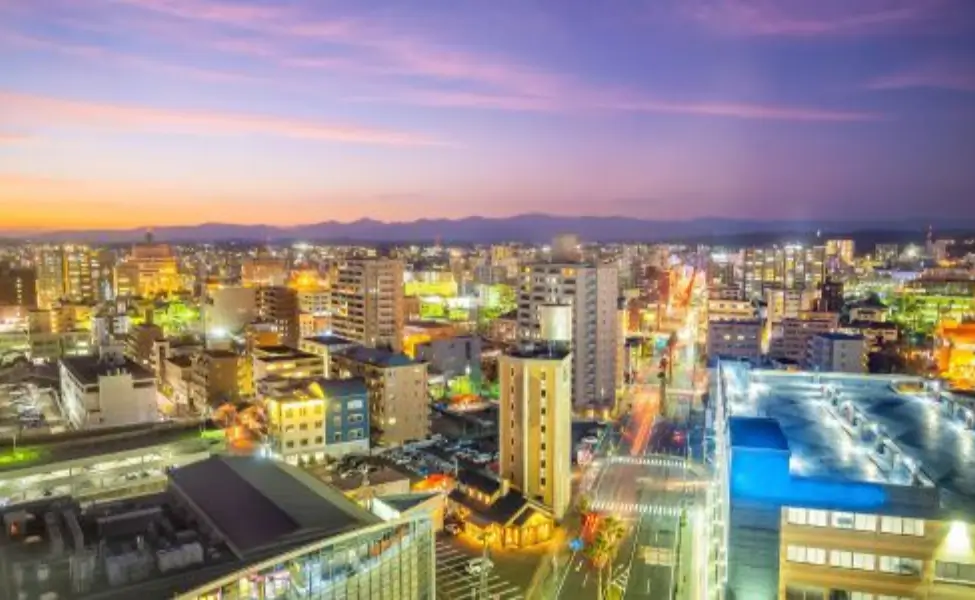
If you are drawn to natural scenery, mythology, and good food in a setting that feels comfortable rather than remote, it works well.
If you want nightlife, dense cultural programming, or the ease of a major city’s transport hub, it works less well.
The practical case for Miyazaki is stronger than most people expect.
The prefecture has built its tourism infrastructure around Japanese domestic visitors who come for four or five days at a stretch, which means resort hotels, restaurants, and local transport all function reliably.
Three days in the prefecture lets you move between Miyazaki City, the Nichinan Coast, and Takachiho at a reasonable pace.
Two days is possible but leaves little room for anything going slowly.
Takachiho, which is one of the main reasons to visit, sits far enough from Miyazaki City that many visitors choose to spend a night there rather than attempt it as a day trip.
More on that in the logistics section below.
The Mythology That Sets Miyazaki Apart
Most regional destinations in Japan offer shrines.
Miyazaki offers something different, a specific mythology tied to the geography in a way you can stand inside and feel.
The Kojiki and Nihon Shoki, the two oldest texts recording Japanese history and legend, place the gods’ descent to earth specifically in Kyushu.
Takachiho, in the northern mountains of Miyazaki Prefecture, is where Ninigi no Mikoto, grandson of the sun goddess Amaterasu, is said to have descended from the heavens to found what would become the Japanese nation.
His great-grandson became Emperor Jimmu, Japan’s legendary first emperor, said to have been born in what is now Miyazaki Prefecture before marching north to establish the imperial line in Nara.
Miyazaki Jingu Shrine in Miyazaki City is dedicated entirely to Emperor Jimmu.
Its buildings, constructed in 1907, sit in the middle of a forest dense and quiet enough that the city around it disappears.
Walking the approach through tall cedar trees, framed by vermilion torii gates, produces a feeling of genuine sacred weight rather than packaged heritage tourism.
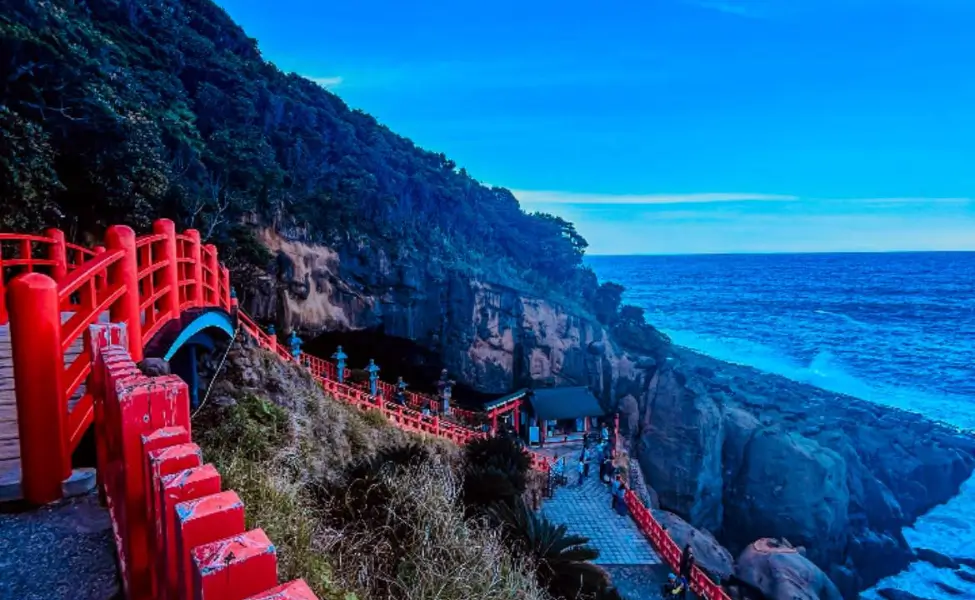
Udo Jingu Shrine on the Nichinan Coast is one of the most unusual shrine settings in Japan.
Built inside a sea cave cut into coastal cliffs above the Pacific Ocean, it requires descending stone steps with the sound of the surf growing louder as you go.
This cave was the mythical birthplace of Ugayafukiaezu, father of Emperor Jimmu.
The combination of the cave, the crashing sea below, and the red lacquered buildings inside the rock is genuinely unlike anything on the standard tourist circuit.
The Natural Attractions Worth Your Time
Takachiho Gorge
The Gokase River carved this gorge through ancient volcanic lava flows from Mount Aso, producing basalt cliffs that rise 80 to 100 metres on both sides of a narrow stretch of green water.
At its most photographed point, Manai Falls drops 17 metres from the cliff wall directly into the river.
Seeing it from a rowing boat on the water below is a different experience from the viewing platform above, and for most visitors the boat is the point.

Rowing boats are available at the gorge floor on a first-come basis, with a 30-minute rental costing around 2,000 yen.
Capacity is limited.
On peak-season weekends the queue forms well before 8 am, and boats can sell out entirely by mid-morning.
Arriving at 7 am on busy days, or visiting on a weekday in spring or autumn, are the two reliable strategies.
A one-kilometre walking path runs along the gorge rim above the water and connects directly to Takachiho Shrine.
This gives you a natural circuit of 60 to 90 minutes at a comfortable pace if you arrive without a boat.
Aoshima Island
Aoshima Island sits just off the Miyazaki City coastline about 16 kilometres south of the city centre, connected to the mainland by a 300-metre pedestrian bridge.
The island covers only 860 metres in circumference and takes around 30 minutes to walk.
The Devil’s Washboard, or Oni no Sentakuita, surrounds the island on all sides.
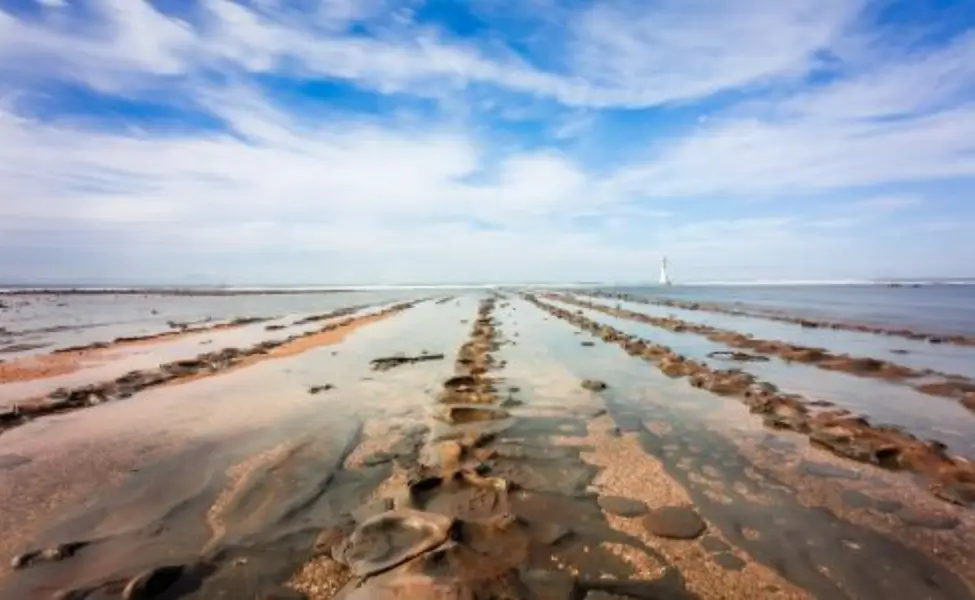
It is a striking rock formation created over a very long time.
Tectonic uplift pushed layers of sandstone and mudstone up from the sea floor.
Over millions of years, waves wore away the softer mudstone.
That left the harder sandstone behind in long, parallel ridges that stretch out from the island like the teeth of a comb.
At low tide the full pattern is exposed and you can walk out onto the rocks.
Checking the local tide chart before you go is worth the effort.
Inside the island, a grove of subtropical palms and cycads surrounds Aoshima Shrine.
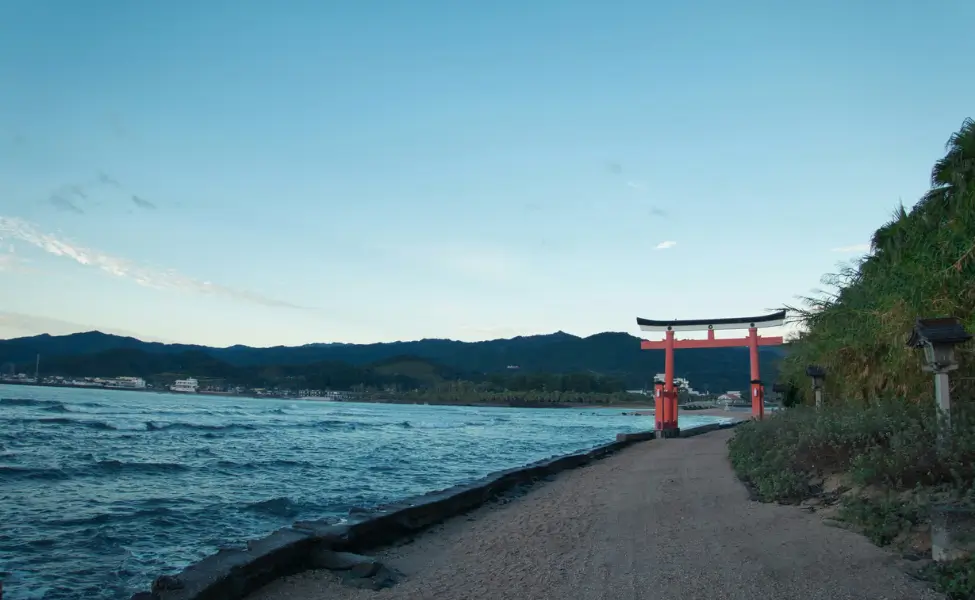
More than 200 subtropical plant species grow here, and 27 hold designation as a natural monument of Japan.
Authorities kept the island closed to the public until the Edo period because of its sacred status, which explains why the vegetation is unusually dense.
The Nichinan Coast
The roughly 100-kilometre stretch of coastline running south from Aoshima is one of the more scenic drives in Kyushu, with rugged cliffs, fishing villages, and subtropical vegetation.
Two stops along this coast deserve time.
Obi is a small town within Nichinan City and one of the better-preserved castle towns in Kyushu.
The stone walls, samurai residences, and merchant quarter have been maintained to a standard that makes a morning walking the streets feel genuinely removed from modern Japan.
Few mainstream itineraries mention it.
Sun Messe Nichinan opened in 1996 on a hillside above the coast, and its main attraction comes with an unusual backstory.
A Japanese crane company called Tadano helped restore the badly damaged Moai statues on Easter Island in the early 1990s.

And Easter Island authorities authorised Japan to build the world’s only officially sanctioned Moai replicas as a gesture of gratitude.
Seven figures stand 5.5 metres tall on a clifftop overlooking the Pacific Ocean, each representing a specific blessing.
The view of them against the open water is memorable in a way that earns the stop.
Getting to Miyazaki and Moving Around
No shinkansen serves Miyazaki directly.
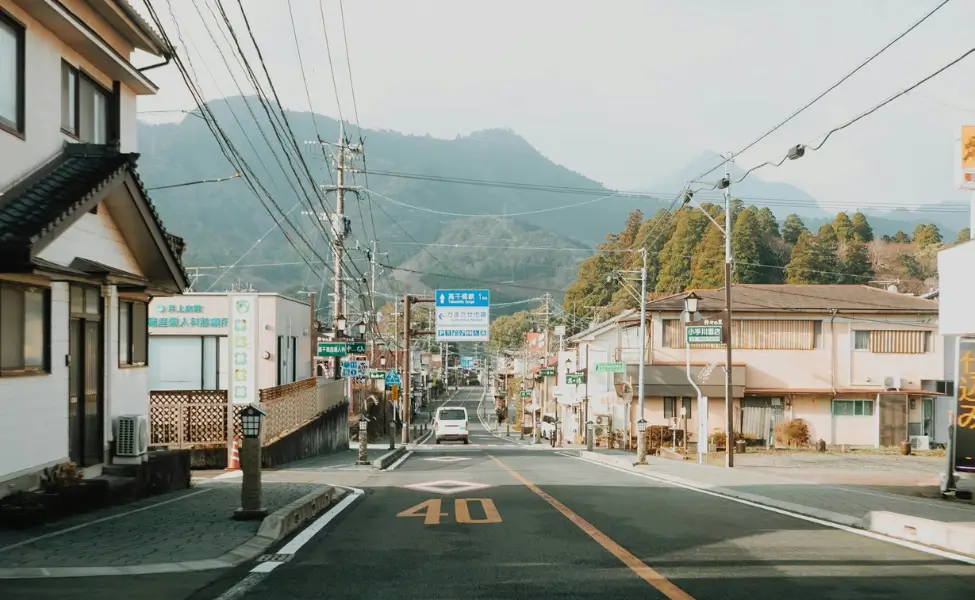
This is the main practical hurdle, and it is worth confronting clearly rather than glossing over.
Flying is the practical choice for most visitors coming from Tokyo or Osaka.
| Route | Method | Journey time | Approximate cost |
|---|---|---|---|
| Tokyo to Miyazaki | Fly from Haneda | Under 2 hours | 9,000 to 42,000 yen (book discount fares early) |
| Tokyo to Miyazaki | Shinkansen to Kagoshima + limited express | Around 9.5 hours | Around 34,000 yen (JR Pass covers most) |
| Osaka to Miyazaki | Fly from Itami or Kansai | Around 70 minutes | 10,000 to 27,000 yen |
| Osaka to Miyazaki | Shinkansen to Kagoshima + limited express | Around 6.5 hours | Around 26,000 yen (JR Pass covers most) |
| Fukuoka to Miyazaki | Limited express Nichirin | Around 2.5 hours | Around 5,000 yen (JR Pass covered) |
Within the prefecture, local trains and buses cover the city and main coastal sites reasonably well for a regional destination.
The JR Nichinan Line runs from Miyazaki Station to Aoshima in around 30 minutes.
A weekend and holiday day pass for local buses costs 700 yen.
Takachiho deserves a specific warning.
There is no direct train to the town.
The standard route is a limited express from Miyazaki Station to Nobeoka, taking about an hour, followed by a bus from Nobeoka that runs for around 90 minutes to two hours and operates infrequently.
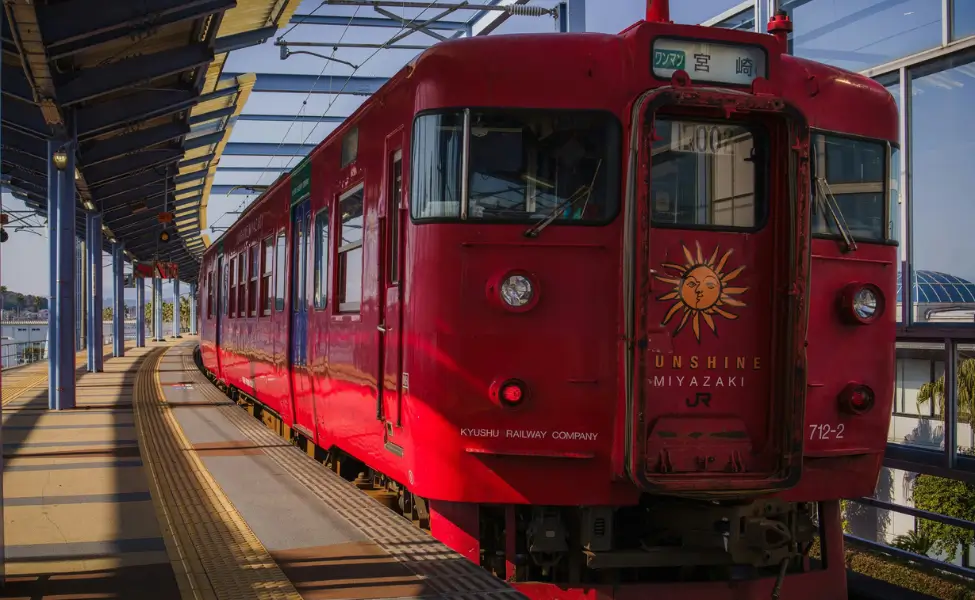
You need to check the bus timetable before committing to a same-day return trip from Miyazaki City, because arriving to find the last afternoon bus already gone is a real possibility.
Many visitors find it cleaner to stay one night in Takachiho rather than attempting the round trip in a single day.
The Food Worth Seeking Out
- Miyazaki beef (Miyazakigyu). Wagyu beef raised and processed entirely within Miyazaki Prefecture must grade at A4 BMS 7 or above to carry the Miyazakigyu name. It won the Prime Minister’s Award at Japan’s national Wagyu competition, known as the Wagyu Olympics and held every five years, in 2007, 2012, and 2017, outperforming Kobe beef on each occasion. Eating Miyazakigyu at a local restaurant is a different experience from eating it in an international hotel.
- Chicken nanban. This dish originated in Nobeoka City in northern Miyazaki Prefecture in the late 1950s, invented at two competing restaurants in the same city. Chicken breast or thigh is coated in flour and egg, deep-fried, soaked in a sweet-and-sour vinegar marinade, and topped with a thick tartar sauce. Nobeoka City designated July 8 as official Chicken Nanban Day in 2009. The version you eat in Miyazaki differs from the mass-produced convenience-store version most of Japan now knows, in texture particularly, and tracking down a restaurant that takes the dish seriously is worth the small effort.
- Miyazaki Jidori chicken (Jitokko). Miyazaki breeds a local free-range chicken whose flavour is firmer and more pronounced than standard chicken. Small restaurants called Jitokko-ya grill it over charcoal at the table. It is a genuinely regional eating experience and easy to find in Miyazaki City.

How Long to Stay
Two days in Miyazaki is possible but tight.
Three days allows you to cover the city, the Nichinan Coast, and a day trip to Takachiho, though that third day will be long if you try to include the gorge, the boat tour, and the evening Kagura before moving on.
Four days, or three days plus an overnight in Takachiho, gives you the breathing room to actually eat properly and spend time somewhere without watching the clock.
A loose structure that works for three days based in Miyazaki City is this:
- First day for Miyazaki Jingu Shrine and Aoshima Island,
- second day along the Nichinan Coast by hire car or a combination of bus and taxi for Udo Shrine, Obi Castle Town, and Sun Messe Nichinan,
- and third day as an early start to Takachiho via Nobeoka to get a rowing boat on the gorge and catch the evening Kagura before returning or overnighting.
Adding a fourth day as an overnight in Takachiho is the version of this itinerary that is less likely to leave you feeling rushed.
When to go
April through May and September through November are the most comfortable visiting months.
Spring brings mild temperatures and fresh greenery.
Autumn offers clear skies and reduced visitor numbers.
Summer falls within typhoon season, which runs from July through October.
Typhoons in this part of Kyushu are a genuine disruption risk rather than a theoretical one.
So, building buffer days into any Miyazaki segment during those months is sensible rather than overcautious.
Winter along the coast stays mild at around 12°C in January, and the prefecture is accessible throughout the year.
English signage is less common in Miyazaki than in Kyoto or Tokyo, but the airport, the main station, and the key attractions all carry adequate English information.
The difficulty is not language.
The difficulty, particularly for Takachiho, is the infrequent public transport requiring more advance planning than most visitors account for.
