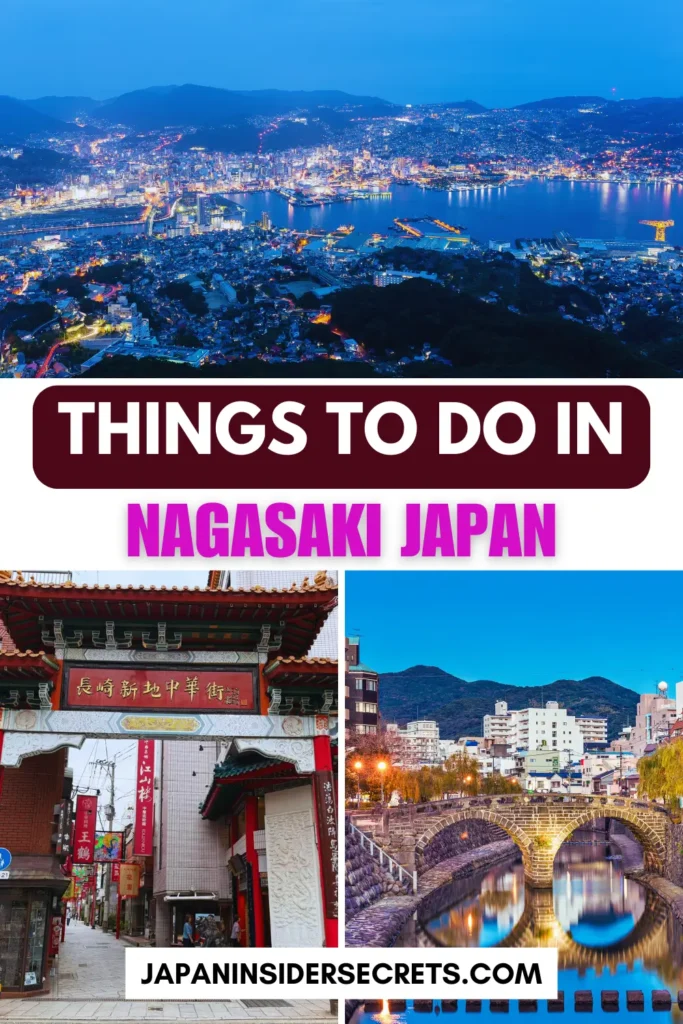

Stand on Mount Inasa at dusk and you’ll understand why Nagasaki feels different.
The city spills across steep hillsides towards a harbour that once welcomed Portuguese galleons, Dutch merchants, and Chinese traders when the rest of Japan sealed itself shut.
That centuries-old fusion of cultures hasn’t faded.
Walk through Chinatown, pass a Gothic church, then round a corner to find a Shinto shrine.
This layering of influences makes Nagasaki unlike anywhere else in Japan.
The atomic bombing of August 9, 1945 marked the city’s darkest moment.
Today, Nagasaki stands as a testament to resilience and peace, dedicating itself to nuclear disarmament whilst honouring its complex past.
The peace monuments are powerful, yes, but they’re only part of the story.
The prefecture has a rich history and offers beautiful coastal views.
You can explore offshore islands by ferry.
There are also Dutch-themed attractions that feel surreal.
Plus, the cuisine reflects centuries of international trade.
I’ve found Nagasaki rewards the curious traveller who digs beneath the surface.
Key Facts About Nagasaki
Nagasaki city is home to approximately 397,000 people.

The prefecture has about 1.25 million residents.
They live on mainland peninsulas and offshore islands, like Tsushima and Iki.
During the Edo period (1603-1867), when Japan closed its borders, Nagasaki served as the nation’s sole legal trading port.
Portuguese Jesuits came in the 16th century.
Then, Dutch traders stayed on the artificial island of Dejima during two centuries of isolation.
That unique position as Japan’s window to the world still shapes the city’s character today.
Getting there: Nagasaki Station connects to major cities via the Nishi-Kyushu Shinkansen and limited express trains.
Nagasaki Airport offers domestic flights and limited international connections.
From Fukuoka, the journey takes roughly two hours by train.
Landmarks and Historical Sites
Peace Park and Atomic Bomb Museum
Unlike Hiroshima’s vast Peace Memorial Park, Nagasaki’s feels more compact and personal.
The Peace Park memorialises victims of the atomic bombing on a hillside north of the city centre.

At its heart stands the Peace Statue, a nine-metre bronze figure designed by sculptor Seibo Kitamura.
One arm points skyward towards the nuclear threat, whilst the other extends horizontally, symbolising peace.
On a quiet morning, you can hear the Fountain of Peace nearby.
It trickles gently, remembering those who died searching for water after the blast.
Every August 9th, the park hosts a memorial ceremony.
The silence when the bell tolls at 11:02 is absolute.
The Atomic Bomb Museum sits adjacent to the park.
Walking through it is difficult but important.
Haunting artefacts include a clock frozen at 11:02, the exact moment of detonation, and fragments of everyday objects melted by the heat.
Personal accounts from survivors provide context that statistics cannot.
The museum doesn’t shy away from the human cost, and that honesty makes it essential viewing.
Entry to the park is free.
Museum admission costs 200 yen.
Mount Inasa
This 333-metre peak offers what many consider Japan’s finest city view.

I’ve visited at both sunset and full dark, and each delivers something different.
The observation deck offers 360-degree views of Nagasaki Bay and the nearby mountains.
On clear days, you can also see Mount Unzen and the Goto Islands sparkling in the distance.
After dark, the scene transforms into what locals call a “10 million dollar night view.”
City lights spread across the hills like constellations reflected in water.
The night view from Mount Inasa is one of Japan’s best, along with Mount Hakodate in Hokkaido and Mount Rokko near Kobe.

In 2012, the Night View Summit named it one of the top three urban night views in the world, alongside Hong Kong and Monaco.
Access: Take the Nagasaki Ropeway from the base station (round trip 1,250 yen).
The five-minute ride departs every 15-20 minutes, and the glass gondolas themselves offer excellent views.
Buses run from Nagasaki Station to the base station (160 yen). Driving takes about 15 minutes from the station.
Bring a jacket. Even on warm evenings, the summit breeze cuts through light clothing.
The observation deck has a restaurant and souvenir shop, though the prices reflect the captive audience.
Gunkanjima (Battleship Island)
Hashima Island earned its nickname from its silhouette, which resembles a warship when viewed from the sea.
Approaching by boat, you understand why.

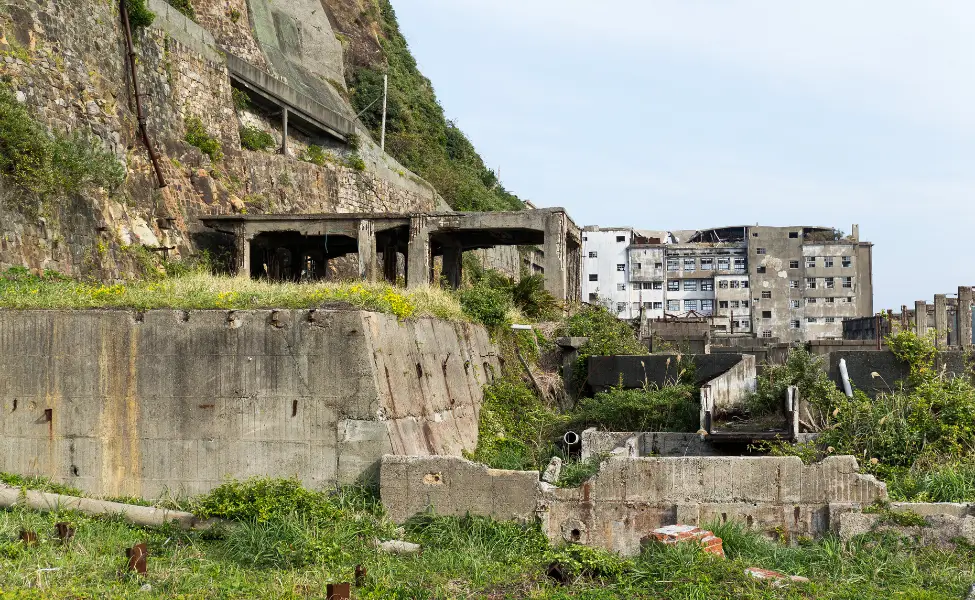
Concrete apartment blocks rise from the water like a fortress, seawalls creating a hard edge against the waves.
This small island, measuring just 480 metres long and 150 metres wide, once housed over 5,000 coal miners and their families.
At its peak in 1959, it recorded the world’s highest population density at approximately 83,500 people per square kilometre.
Imagine Manhattan compressed into an area smaller than a football pitch.
Mining operations began in 1887 under Mitsubishi and continued until the mine closed in 1974. Residents left the island in just months.
They abandoned tall concrete apartments, schools, a hospital, and infrastructure that is now slowly crumbling into the sea.
In 2015, Gunkanjima gained UNESCO World Heritage status as part of the “Sites of Japan’s Meiji Industrial Revolution.”
The island carries a darker history that tour guides acknowledge with varying degrees of detail.
During World War II, thousands of Korean and Chinese labourers worked under brutal conditions.
Many did not survive.
This aspect sparked controversy during the UNESCO designation process and remains a source of international tension.
The experience feels haunting partly because of what you can see, partly because of what’s left unsaid.
Visiting: Access requires joining an organised tour.
Several companies operate harbour cruises from Nagasaki Port.
The journey takes about an hour each way, and the boat ride itself offers excellent harbour views.
Tours may cancel in poor weather, particularly during winter, rainy season, and typhoon season.
Landing on the island is restricted to designated safe areas only.
You’ll walk on concrete paths whilst guides explain what the crumbling buildings once contained.
Photography is allowed and encouraged.
Glover Garden
This hillside park preserves Western-style residences from the late 19th century.
Thomas Glover, a Scottish merchant who aided Japan’s modernisation, lived in the oldest wooden Western building in Japan, constructed here in 1863.

The house feels surprisingly intimate given Glover’s influence on shipbuilding and industry.
Walking through the rooms, you see how foreign merchants balanced European comforts with Japanese practicalities.
The garden itself cascades down the hillside with excellent harbour views.
On clear days, you can see ships entering the bay.
The Glover Skywalk, a pedestrian bridge, connects the garden to the city centre and provides another vantage point over the harbour and surrounding mountains.
Dejima
This fan-shaped artificial island served as the Dutch East India Company’s trading post from 1641 to 1859.
During Japan’s period of isolation, Dejima was the nation’s sole point of direct contact with Europe.

The Dutch traders lived here under strict supervision, their movements restricted, their goods carefully controlled.
It sounds claustrophobic, and visiting the reconstructed buildings confirms it.
The narrow streets and compact warehouses show how limited the Dutch presence actually was.
Museums display goods traded (lacquerware and porcelain going out, clocks and glassware coming in), living quarters, and artefacts documenting this unique chapter.
The contrast between Dejima’s tiny footprint and its enormous historical influence is striking.
Christianity in Nagasaki
Oura Church
Built in 1864, Oura Church is Japan’s oldest surviving Catholic church.
French priests Louis Furet and Bernard Petitjean designed this Gothic structure to commemorate the 26 Martyrs executed in 1597.
The white stucco exterior pops against the green hillside.

Inside, the atmosphere stays serious, just as the architects planned.
A remarkable event occurred shortly after the church opened. In March 1865, a group of Japanese approached Father Petitjean inside the building.
One woman whispered, “We are of one heart with you. Where is the statue of Santa Maria?”
These were Kakure Kirishitan, hidden Christians who had practised their faith in secret for over two centuries despite persecution, torture, and death.
Their emergence here marked a turning point in Japanese Catholic history.
A bronze relief in the courtyard depicts this moment of discovery.
The church survived the atomic bombing with damage but remained standing.
Stained glass windows imported from France still filter coloured light across the pews.
The church became the first Western-style building in Japan designated as a National Treasure in 1933.
Admission: 1,000 yen, including access to the adjacent Christian Museum.
Photography inside is prohibited, which initially frustrated me until I realised it encourages actual looking rather than shooting and scrolling.

The 26 Martyrs Monument
On February 5, 1597, ruler Toyotomi Hideyoshi ordered the crucifixion of twenty-six Catholics on Nishizaka Hill.
The group included foreign missionaries and Japanese converts, among them three boys aged 12, 13, and 14.
Their martyrdom began two centuries of Christian persecution in Japan.
The monument, designed by architect Kenji Imai, features bronze statues of the martyrs suspended against a stone wall, their mouths open as if singing.
The youngest, 12-year-old Louis Ibaraki, asked “Which cross is mine?” and ran to embrace it.
That detail hits harder when you’re standing where it happened.
Next door, a museum explores Christianity’s rocky past in the area.
It features fumie (踏絵), images that Christians had to step on to show they had given up their faith.
Festivals
Nagasaki Lantern Festival
This spectacular Lunar New Year celebration typically runs for 15 days from late January to mid-February.
In 2025, it took place from January 29 to February 12.

Approximately 15,000 colourful lanterns illuminate Nagasaki’s city centre, drawing around one million visitors annually.
I visited on a frigid February evening and found the warmth came not just from the lanterns but from the crowds moving through Chinatown, buying steamed buns, pointing at displays.
The festival originated as a Chinese New Year celebration among Nagasaki’s Chinatown residents.
It has grown into one of Japan’s biggest winter events.
It covers eight places, including Shinchi Chinatown, Minato Park, Chuo Park, and Megane Bridge.
Highlights include the Emperor Parade.
It features 150 participants in traditional Chinese costumes who carry royal palanquins.
The Dragon Dance started as a rain ritual.

Performers skillfully move a 20-metre dragon through the streets, showing great coordination.
The Mazu Procession celebrates the goddess of safe navigation.
It honours Chinese sailors who arrived in Nagasaki during the Edo period.
Street food stalls sell Chinese specialties.
Try the pork buns fresh from their bamboo steamers, sesame balls filled with sweet red bean paste, and kakuni manju (braised pork belly buns that somehow stay piping hot despite the winter air).
Lantern lighting: 17:00-22:00 daily.
Entry is free, though some special events may charge fees.
Dress warmly.
February in Nagasaki isn’t brutal, but standing still watching parades will chill you quickly.
Local Cuisine
Nagasaki’s food reflects centuries of international trade, and you taste that history in every dish.
Champon: This hearty noodle soup originated in Nagasaki.
Thick noodles swim in a milky broth with seafood, vegetables, and pork.

The dish was created at a Chinese restaurant to provide affordable, filling meals for Chinese students.
Now every restaurant claims the best version. Truthfully, most are excellent.
The broth should be rich without being heavy, the vegetables still crisp, the seafood fresh.
Castella: Portuguese traders introduced this sponge cake in the 16th century.
The soft, fluffy texture and subtle sweetness make it a popular souvenir.
Don’t just see it as tourist food.

Real castella from well-known places like Fukusaya is truly tasty.
Green tea and honey variations are common, though purists prefer the original.
Shippoku: This multi-course meal blends Japanese, Chinese, and European influences, served on distinctive vermillion lacquerware.
It reflects Nagasaki’s role as a melting pot.
Expect dishes ranging from sashimi to braised pork to clear soups, each course revealing a different cultural influence.
It’s pricey, usually 5,000-10,000 yen per person, but it really highlights Nagasaki’s unique food culture.
Attractions Beyond the City
Huis Ten Bosch
This Dutch-themed resort in Sasebo recreates 17th-century Netherlands architecture across 152 hectares, making it Japan’s largest single-site theme park.
Describing it feels absurd: windmills, canals, cobblestones, and tulips, all transplanted to Kyushu. Yet somehow it works.
Canals wind through the park, windmills dot the landscape, and seasonal flower displays transform the scenery throughout the year.
Walking through feels like being inside a particularly elaborate film set.
The attention to architectural detail is impressive, even if the attractions inside those buildings range from excellent to baffling.
The park hosts year-round events, including a tulip festival in spring when over a million flowers bloom.
Its “Kingdom of Light” illuminations have won awards as among Japan’s finest, with 13 million LED lights creating displays that shift with the seasons.

Getting there: Take the JR Seaside Liner from Nagasaki Station (75 minutes, 1,730 yen, covered by Japan Rail Pass).
The park has its own train station right at the entrance.
Admission: Varies by season and package, typically starting around 7,000 yen for adults.
Various ticket types exist (one-day passport, after-five passport, etc.), so check the official website before buying.
Is it worth it?
That depends on your tolerance for theme parks.
If the idea of eating Dutch pancakes in a recreated Amsterdam whilst actually being in Japan sounds delightful rather than strange, you’ll enjoy it.
If that sounds forced and artificial, skip it.
Sasebo
Nagasaki Prefecture’s second-largest city, Sasebo has approximately 231,000 residents.
Originally a naval port, it’s now known for its harbour views and the Kujukushima Islands (literally “99 islands,” though actually 208).
The scattered islands form small hills rising from calm water.
They look especially beautiful from the observation points around the city.
The city also boasts Sasebo burgers, oversized American-style burgers created to cater to US Navy personnel stationed at the nearby base.
Thick beef patties, fresh vegetables, bacon, egg, and various toppings piled high on soft buns.
Several shops near the station claim to be the original, and each has fierce local supporters.
Getting Around Nagasaki
Trams: The Nagasaki Electric Tramway operates five lines through the city.
Flat-rate fares make it economical (typically 130-140 yen per ride).
IC cards are accepted.
The trams themselves are a mix of vintage cars and modern vehicles, rattling through narrow streets at a pace that feels pleasantly unhurried.
Board at the rear, pay when you exit at the front.
Buses: Nagasaki Bus operates routes throughout the city and prefecture.
JR Kyushu runs train services to other parts of Kyushu.
Google Maps handles route planning reliably here.
Ropeway and Slope Car: These specialised transports reach Mount Inasa. The ropeway costs 730 yen one way, 1,250 yen return.
The Slope Car connects parking areas to the summit (300 yen one way, 500 yen return).
Both offer excellent views during the ascent.
Walking: The city centre is compact enough to walk, though be prepared for hills.
Where to Stay
Central Nagasaki: Hotels near Nagasaki Station provide easy access to trams and buses.
The area isn’t particularly atmospheric but offers convenience and competitive prices.
Chinatown area: Properties here put you within walking distance of excellent restaurants.
The neighbourhood buzzes at night with lanterns and restaurant signs.

This adds a vibe that the station area misses.
Glover Garden area: Properties here offer harbour views and proximity to major attractions, though you’ll climb hills to reach them.
Worth it if your knees cooperate and you value location over convenience.
Sasebo: If visiting Huis Ten Bosch, consider staying at one of the park’s official hotels (Hotel Europe, Hotel Amsterdam) to maximise your time.
They’re expensive but eliminate transport logistics.
You can also stay in central Sasebo and commute to the park.
When to Visit
Spring (March-May): Cherry blossoms peak in late March to early April.
Temperatures are comfortable (15-20°C), though occasionally rainy.
This is peak season, so book accommodation early.
Summer (June-August): Hot and humid, with a rainy season in June and July.
Typhoons can occur from August to October.
Unless you have a specific reason to visit in summer, other seasons are more pleasant.
Autumn (September-November): My favourite time to visit.
Temperatures drop to comfortable levels (18-25°C in September, cooler by November), skies clear, and crowds thin compared to spring.
Winter (December-February): Mild compared to much of Japan, though you’ll want layers for evening visits to Mount Inasa.
The Lantern Festival in late January or early February offers a unique experience.
Hotel prices drop significantly outside festival dates.
Final Thoughts
Nagasaki rewards time.
You could hit the major sites in a rushed day trip from Fukuoka, but you’d miss what makes the city special.
The appeal lies not only in the individual attractions but also in their connections.
Centuries of international influence shaped something uniquely Nagasaki.
I’ve returned three times now, and each visit reveals something I’d missed.
A small Christian statue hidden in a rock garden.
The way afternoon light hits the harbour from Glover Garden.
The sound of church bells echoing across the bay at sunset.
These aren’t the kind of things that make it into travel guides, but they’re what I remember.
Explore historical sites, enjoy international cuisine, or watch ships from a café on the hill.
This corner of Kyushu offers rich experiences below the surface. Give it the time it deserves.