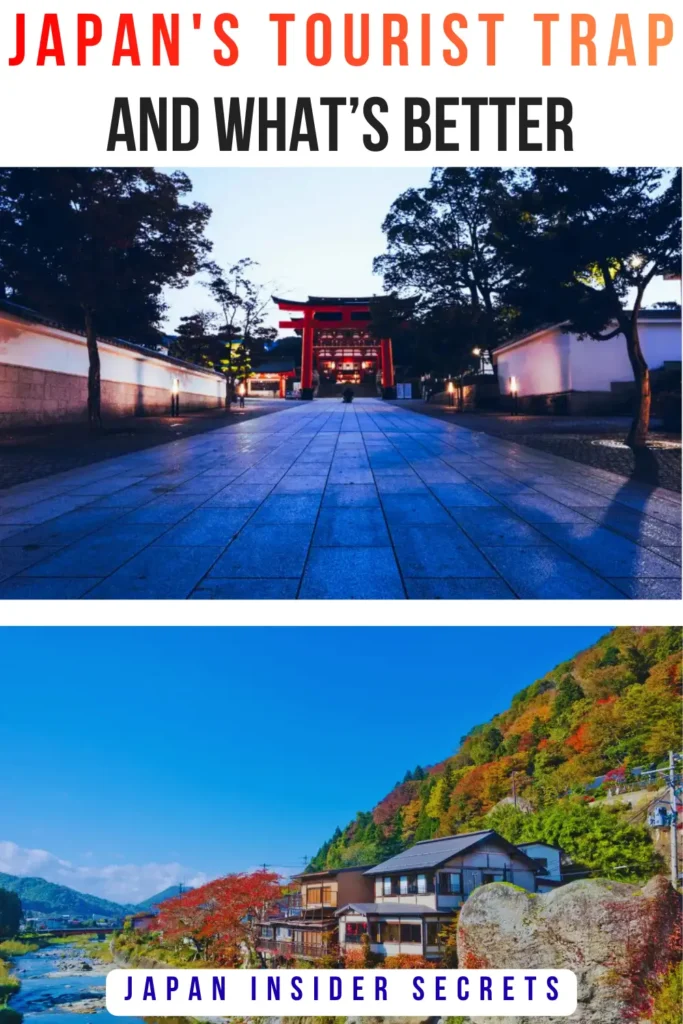
I remember standing in front of Fushimi Inari on a Tuesday morning, thinking I’d beaten the crowds by arriving early.
I hadn’t.
There were already hundreds of people there, selfie sticks raised, shuffling through the torii gates in a slow-moving queue.
Somewhere behind me, a tour guide was explaining the significance of the shrine to a group who were barely listening.
I turned around, walked back to the station, and made a decision I’ve stuck to ever since.
After three decades of living in Japan, visiting all 47 prefectures, and watching this country’s tourism landscape shift from something manageable into something else entirely, I’ve stopped chasing the list.
Here’s why.
The Problem with the “Must-See” Circuit
Most travel content about Japan tourist destinations is written by people who have visited once, maybe twice, and spent the majority of their time on the Tokyo-Kyoto-Osaka corridor.

There’s nothing wrong with that as a first trip, but the problem is that it shapes the entire conversation.
Those writers go home, publish their articles, and the algorithm rewards them.
A year later, someone else arrives in Japan, reads the same recommendations, has the same experience, and writes the same article.
The “must-see” list isn’t really a list of Japan’s best experiences.
It’s a list of Japan’s most photographed places, and those two things stopped being the same a long time ago.
What gets lost in that loop is the actual country.
Japan is vast, deeply regional, and almost impossible to reduce to a highlights reel.
But that’s exactly what most travel content tries to do.
The Destinations I’ve Quietly Abandoned
I’m not going to pretend these Japan tourist destinations aren’t worth seeing.
Many of them are genuinely remarkable, and there’s a reason they became popular in the first place.
But what they offer now is a very different experience from what they once did.
Fushimi Inari used to be a place where you could walk the full trail in relative quiet, pass small shrines tucked into the hillside, and feel the weight of the place.
Now the lower section is essentially a theme park.
If you’re set on going, visit after dark or start from the upper trail and work down, then spend the following morning in Fushimi away from the shrine, or in the backstreets around Nishiki.
Shirakawa-go, the thatched village in Gifu, is stunning from a distance, but the experience now runs to a timetable.

The coaches arrive, the cameras come out, and by mid-afternoon the village has processed another few thousand visitors and reset for the next morning.
If the architecture is what draws you, Gokayama just up the road offers the same scenery with a fraction of the footfall.
Dotonbori in Osaka has become an exercise in sensory overload that has very little to do with how Osaka people actually live or eat.

Treat it as a ten-minute walk, take your photo, then move two streets back in any direction and eat somewhere that doesn’t have an English menu outside.
What Overtourism Actually Does to a Place
The visible effects are obvious enough.
The crowds, the queues, the prices.
But the deeper changes are more interesting and more damaging.
When a location becomes dependent on tourism, it begins to reshape itself around visitor expectations rather than local life.

Restaurants near major sites stop serving food that locals would actually eat and start serving food that looks good in photographs.
Shops that once sold everyday goods pivot to selling the same set of souvenirs you’ll find at every other tourist spot in the country.
Locals start avoiding their own neighbourhoods at certain times of day.
What you’re left with is a version of Japan that’s been produced for consumption.
It looks right.
It photographs beautifully.
But it’s a surface, and if you’ve spent enough time here, you can feel the difference immediately.
A lot of the spending gets captured by chain shops, tour operators, and convenience souvenirs rather than the people who actually live nearby.
The infrastructure gets strained, and the character that made the place worth visiting in the first place quietly disappears.
Finding a Better Way to Travel Japan
The shift for me was less about finding new places and more about changing how I moved through them.
Depth over breadth is the obvious starting point.
Spending five days in one region will give you more than five days split across five different stops on the standard route.
You start to notice things.
You find the places that don’t have English menus because they’ve never needed them.
I remember sitting in a tiny soba shop in rural Nagano, the only foreigner the owner had seen in weeks.

It cost about 800 yen and was one of the best things I ate that year.
Timing matters more than most guides acknowledge, and not just avoiding Golden Week or peak autumn foliage season.
Understanding local rhythms, school holidays, regional festivals, agricultural cycles, these things shape what Japan actually looks and feels like when you arrive.
Japan in February or June is a completely different country from Japan in October, and not always in the ways you’d expect.
And the research has to go beyond the first page of search results.
If every travel blog is recommending the same things, that’s a signal, not a guide.
Local knowledge, regional tourism sites in Japanese, recommendations from people who actually live in an area, these will take you somewhere different.
The Japan That Doesn’t Show Up on Anybody’s List
Most “off the beaten track” recommendations are really just the next tier of the same loop.

Kanazawa, Nikko, Hakone, Nara, these are presented as hidden alternatives when they’re firmly on the tourist map.
Even the more adventurous suggestions tend to cluster around the same familiar regions.
If you want places that still feel like places, start here.
Far west Honshu.

History, coastline, and towns like Hagi that still feel entirely local, with almost no foreign visitors passing through.
Noto Peninsula. Unhurried and coastal in a way that exists entirely on its own terms.
Some areas are still recovering from the 2024 earthquake, so check local conditions and travel respectfully before you go.
Kiso Valley, Nagano. Away from the famous post towns, the valley itself is quiet and genuinely rural in a way that the Instagram version of Japan rarely is.
Naegi Castle, Gifu. A clifftop ruin above Nakatsugawa that feels wild and cinematic, with almost no foreign visitors.

Mikuni, Fukui. A small port town on the Sea of Japan coast with a salt-weathered character and seafood that puts the tourist trail to shame.
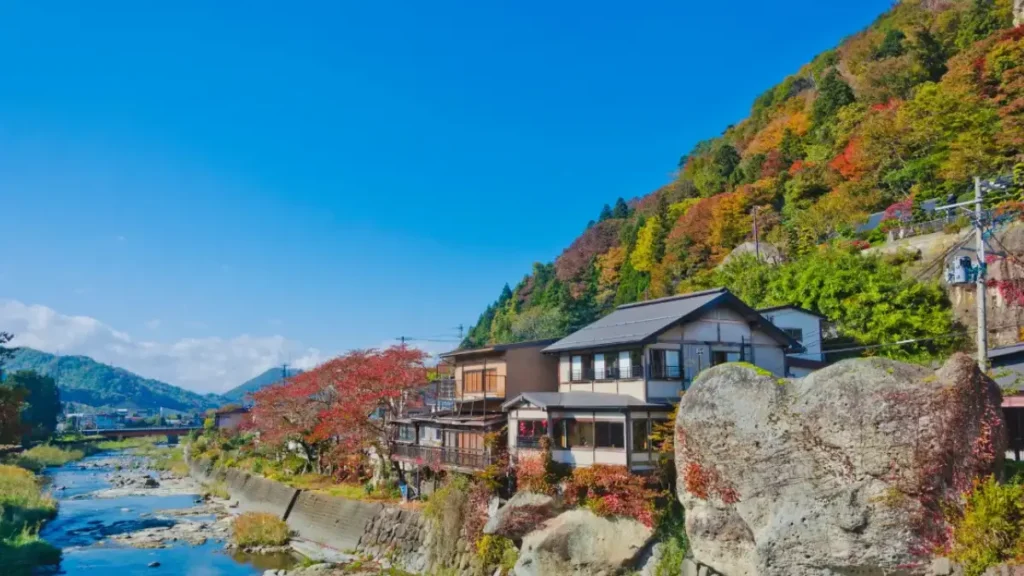
Hitoyoshi, Kumamoto. Deep in the Kuma Valley, traditional in a way that doesn’t feel staged because nobody is staging it for you.
Mie beyond Ise Jingu. The Kii Peninsula’s quieter corners is great for those who like slow travel in a way that most itineraries never allow for.

These aren’t places that have been optimised for visitors.
They’re places where life simply continues, which is precisely the point.
Further reading if interested on lesser known Japan tourist destinations:
The Point of Going Further
None of this is about dismissing the places that everyone else visits.
It’s about getting an honest return on what is, for most people, a significant journey.
The slower you move through Japan, the more it gives back.
But it only gives those rewards to the people willing to look past the obvious.
If you’ve come this far to get here, it’s worth going a little further to find something that is still running on local time, not tourist time.