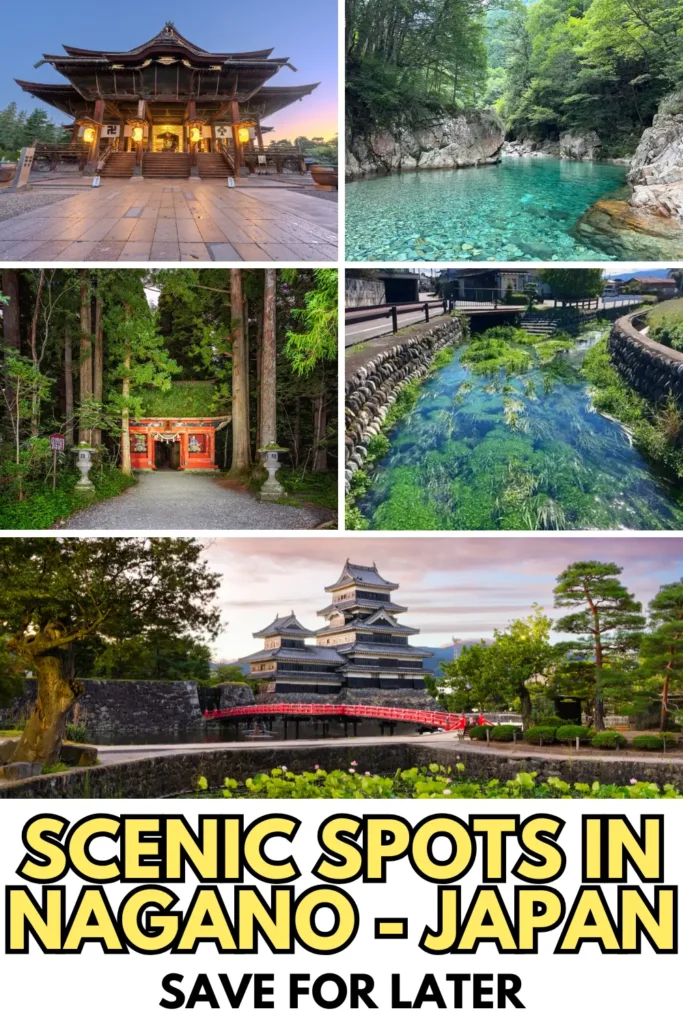

Have you ever wondered where to find Japan beyond the standard Tokyo-Kyoto route?
Nagano Prefecture sits in the central highlands, where 3,000-metre peaks tower over ancient temples and therapeutic hot springs.
This region has alpine valleys you can reach only by shuttle bus. It also features hot spring villages with 1,300 years of history.
You’ll find experiences here that are far from the usual tourist spots.
You can reach Nagano from Tokyo in under two hours by bullet train.
Quick Reference: Top Scenic Spots in Nagano
| Location | Best For | Season | Elevation |
|---|---|---|---|
| Kamikochi Valley | Alpine hiking | April to November | 1,400–1,600 m |
| Matsumoto Castle | Historic architecture | Year-round | Plains |
| Zenko-ji Temple | Buddhist pilgrimage | Year-round | City centre |
| Shibu Onsen | Traditional bathhouses | Year-round | Mountain valley |
| Shiga Kogen | Winter skiing | November to May | Up to 2,307 m |
🏞️ Would you love to visit some scenic spots in Nagano? Then check out these amazing tours.
1. Kamikochi Valley – Japan’s Mountain Paradise
Kamikochi Valley brings your dream to life.
Picture walking by a crystal-blue river with 3,000-metre peaks all around you.
Located at 1,400 to 1,600 metres in the Northern Japan Alps, this hidden gem is well worth checking out.
The valley runs about 18 kilometres alongside the Azusa River.

Its water shines a magical blue due to minerals.
Private cars aren’t allowed, so you’ll need to take a shuttle bus or taxi from Hirayu or Sawando parking areas.
These rules, in place since the mid-1990s, keep the valley unspoiled.
The journey from Matsumoto Station takes approximately 1 hour 50 minutes by rail and shuttle bus.
You can walk gentle riverside trails suitable for families or tackle challenging multi-day climbs.
Taisho Pond, formed when Mount Yake erupted in 1915, provides stunning reflections of surrounding peaks.
Decayed tree trunks still stand in the water, creating haunting compositions.
The historic Kappa Bridge serves as the central landmark.
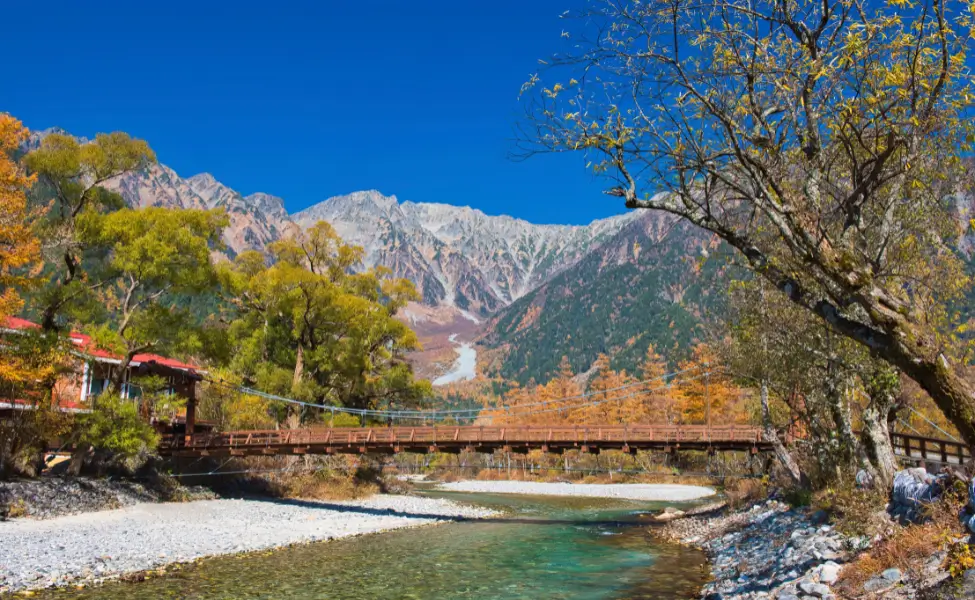
Most trails begin from this suspension bridge, where the sound of rushing water mingles with birdsong.
The valley remains open only from mid-April through mid-November.
Heavy snowfall makes winter access impossible.
Peak colours arrive in mid-October, while alpine flowers bloom from mid-May through July.
Summer brings comfortable temperatures around 20°C, offering relief from lowland heat.
Early morning visits before shuttle buses flood the area guarantee relative solitude.
2. Matsumoto Castle – The Black Fortress
Matsumoto Castle stands as one of five castles designated National Treasures of Japan.
The main keep was built in 1593 by Lord Ishikawa Yasunaga.

It is the oldest surviving wooden castle tower in Japan, with five tiers and six storeys.
Despite appearing as five floors externally, a hidden sixth floor sits halfway up the structure, designed to confuse invaders and conceal supplies.
The striking black exterior earned it the nickname “Crow Castle.”
This imposing colour scheme distinguishes it from most Japanese castles, which typically feature white walls.
The fortress sits on flatland rather than a hilltop, surrounded by a wide moat that mirrors the tower’s silhouette.
Visitors must remove shoes before entering to protect the original wooden floors.

Inside, steep stairs connect floors at angles between 55 and 61 degrees.
Watch your head on low beams.
The second floor houses a gun museum displaying matchlocks and armour from the castle’s military past.
Narrow windows, once used by archers and gunners, now frame views of the Japan Alps and Matsumoto city.
The castle faced demolition in 1872 when sold at auction during the Meiji era.
Cherry blossoms transform the castle grounds in mid-April each year.
Hundreds of Somei Yoshino cherry trees line the outer moat, creating spectacular viewing opportunities.
The castle sits 15 minutes on foot from JR Matsumoto Station.
During Golden Week and mid-August holidays, wait times can reach 2 hours.
3. Zenko-ji Temple – Gateway to Enlightenment
Founded in 642, Zenko-ji Temple has functioned as a spiritual beacon for over 1,400 years.
Inside the main hall lies an extraordinary experience: the Okaidan passage.
You descend into pitch darkness and navigate by touch alone, searching for the “key to paradise” hanging beneath the main altar.
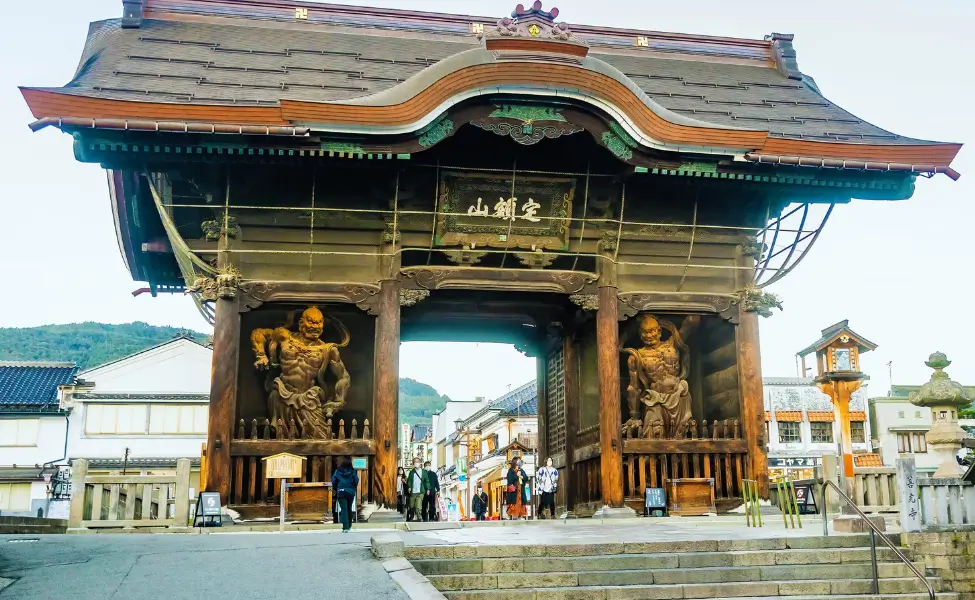
This meditative journey symbolises the path to enlightenment.
When you finally emerge into daylight, the contrast feels profound.
The temple houses what believers consider the first Buddha statue brought to Japan, arriving via Korea in 552.
This sacred image, called the Ikko Sanzon, remains completely hidden.
Not even the temple’s chief priests have seen it.
Every six to seven years during the Gokaicho ceremony, a replica goes on display for several weeks.
The next viewing opportunity arrives in 2027.
The current main hall, rebuilt in 1707, spans 24 metres wide and 54 metres long.
This massive wooden structure received National Treasure status in 1953.

Its unique architecture accommodates the historical practice of okomori, where pilgrims spent entire nights in prayer.
Nakamise-dori, the lively avenue leading to the temple, buzzes with shops, cafes, and traditional lodgings.
This monzen-machi (temple town) character shaped Nagano’s development.
The city grew from a settlement built around Zenko-ji, eventually becoming the prefectural capital.
Morning services occur daily, timing varying with sunrise from 5:30 to 7:00.
Arrive early to participate.
The temple sits 10 minutes by bus from JR Nagano Station or 30 minutes on foot.
4. Togakushi Shrine – Forest of Ancient Cedars
If you’ve ever dreamed of walking through a forest of ancient cedar trees, Togakushi Shrine delivers that experience.
This sacred complex has five unique sanctuaries.
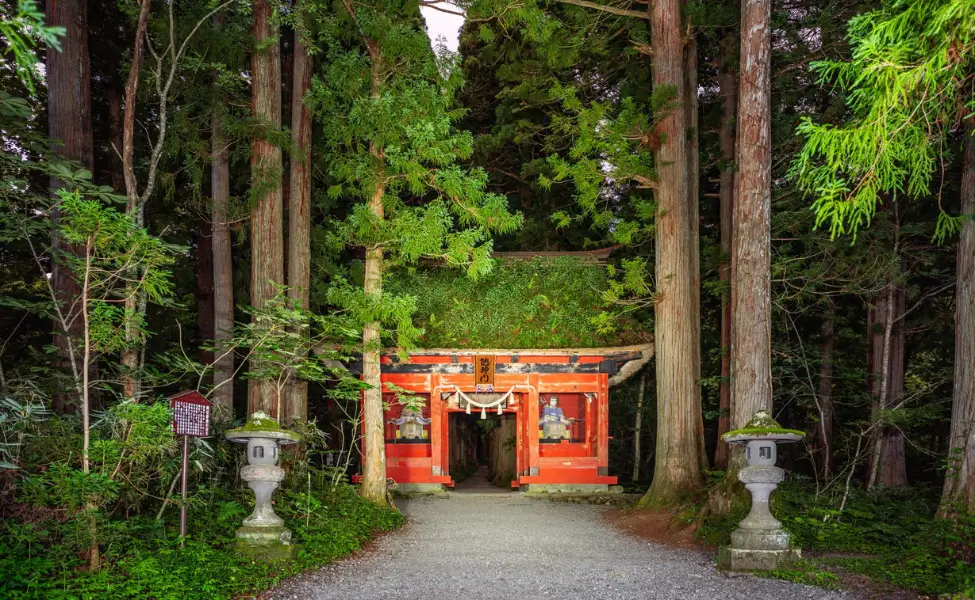
They are located in forested mountains, about 20 kilometres northwest of Nagano City.
The main hiking trail links the lower shrine (Togakushi Hokosha) to the upper shrine (Togakushi Okusha).
It is about 5.5 kilometres long and takes 2.5 to 3 hours to complete.
Most visitors start at Hokosha, where a long stone stairway climbs to the prayer hall.
The middle shrine, Chusha, offers a charming stop along the way.
As you progress, the trail winds through towering cedar forests and passes small shops selling soba noodles and local crafts.
The region is famous for its buckwheat cultivation.
The approach to Okusha features an awe-inspiring avenue lined with massive cedar trees, some over 400 years old.
These giants create a cathedral-like atmosphere.
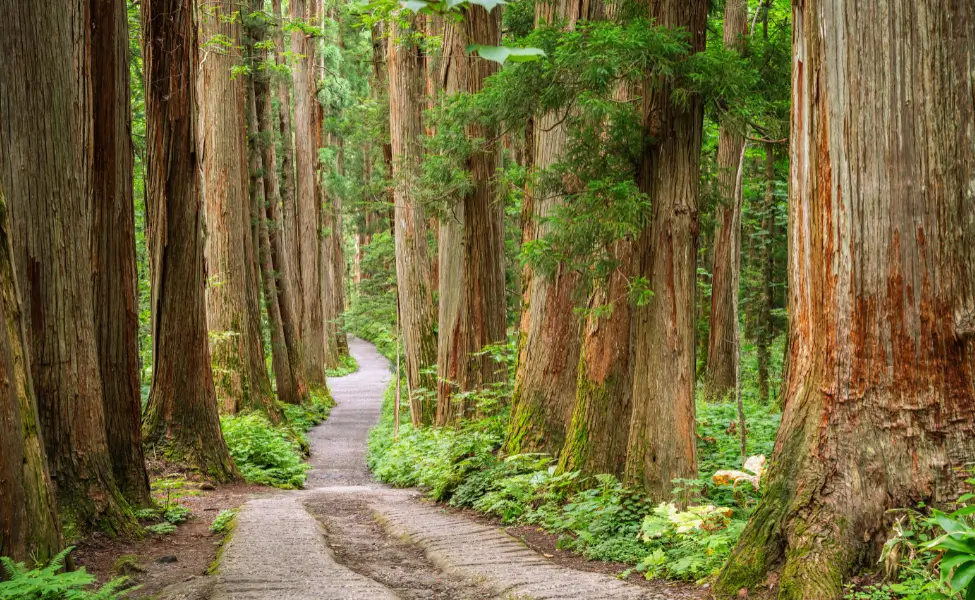
The upper shrine sits at the mountain’s heart, surrounded by cliffs that feature prominently in Japanese mythology.
Wear sturdy footwear suitable for mountain terrain.
The trail includes uneven surfaces, roots, and occasional steep sections.
Bring water and snacks, though shops dot the route.
The shrines remain accessible year-round, but winter brings heavy snow requiring proper gear.
Autumn foliage peaks in mid-October, transforming the forest into a blaze of colour.
5. Shibu Onsen – Time-Travel Hot Spring Village
Steam drifts through narrow alleys in Shibu Onsen, carrying the faint scent of minerals and cedar.
This traditional hot spring village traces its history back 1,300 years.
A Buddhist priest named Gyoki found the thermal waters.
Cobblestone streets wind between traditional wooden inns, many over 400 years old.
Steam rises from pipes and vents throughout the town, creating an atmospheric haze.

Shibu’s defining feature is its nine public bathhouses, each fed by different mineral springs.
Local tradition claims each bath addresses specific ailments.
Only guests staying at local ryokan can access eight of the nine bathhouses.
Upon check-in, you receive a master key opening all nine.
This bath-hopping journey, known as Kyu to Meguri, lets you visit each bathhouse.
You wear yukata robes and geta sandals for the experience.
Purchase a special tenugui towel at your inn and collect stamps outside each bathhouse.
Completing all nine supposedly grants good health and long life.
Day visitors can use only the largest bathhouse, O-yu, for 500 yen.
Pay at the tourist information office or parking area.

The bath operates from 10:00 to 16:00 for non-guests.
From Nagano Station, take the Nagano Electric Railway to Yudanaka Station.
This takes 45 to 60 minutes. Then, you can ride a local bus for 5 minutes or walk for 30 minutes to get to the village.
The famous Jigokudani Monkey Park is just 10 minutes away by bus.

You can also reach it in about 25 to 30 minutes on the Kanbayashi walking trail.
This makes Shibu Onsen a great spot to see snow monkeys bathing in natural hot springs.
6. Karuizawa – Mountain Resort with Cultural Flair
From rustic hot-spring towns to cosmopolitan mountain resorts, Nagano shifts gears again at Karuizawa.
Perched at Mount Asama’s foot, Karuizawa functions as an elegant retreat easily reached from Tokyo by bullet train in about 1 hour 10 minutes.
The town blends natural beauty with cultural attractions, appealing to diverse interests.
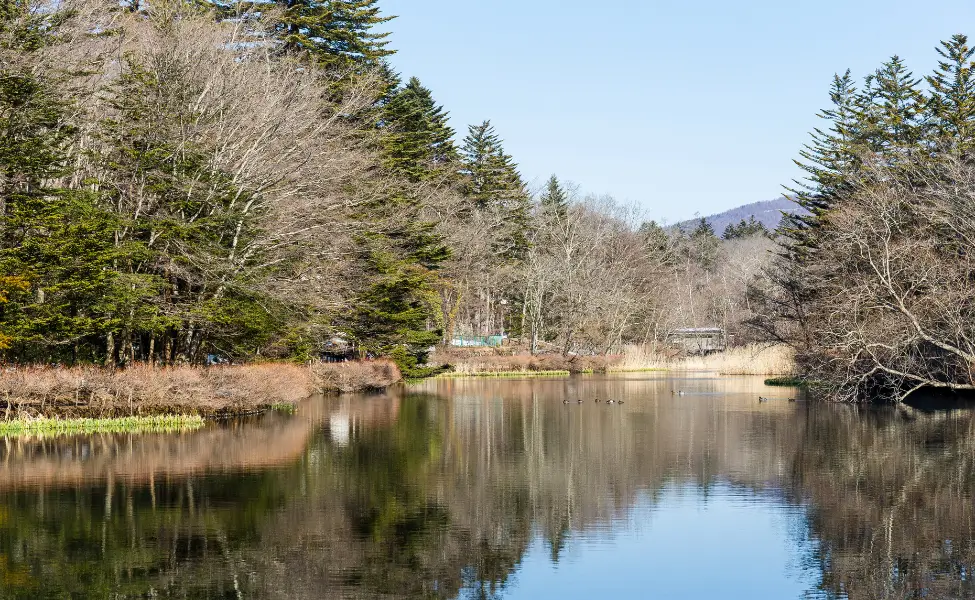
Hikers explore trails leading to scenic waterfalls.
Senga Falls plunges 20 metres down a rocky cliff, creating misty spray visible from viewing platforms.
Multiple lakes dot the surrounding forest, offering peaceful spots for contemplation.
Mount Asama, an active volcano, provides an imposing backdrop.
The Karuizawa Museum of Contemporary Art showcases modern works in a distinctive building.
Historic churches around town show how it developed as a summer retreat for foreign missionaries and diplomats in the Meiji era.
The Mampei Hotel, famous as John Lennon and Yoko Ono’s favourite Japanese getaway, maintains its retro charm.

Shopping lovers explore Karuizawa Prince Shopping Plaza, a large outlet mall.
They can also stroll through Harunire Terrace, where shops and cafes sit among the trees.
The area’s elevation creates cooler summer temperatures than Tokyo, making it popular during July and August.
One thing we noted on our last visit is many of the lovely cafes do not permit children to enter, sadly.
7. Shirakaba Lake – White Birch Reflections
This artificial lake takes its name from the shirakaba (white birch) trees lining its shores.
A walking path circles the entire lake, perfect for gentle exercise while absorbing mountain views.

An amusement park occupies one lakeside area, offering family-friendly rides and activities.
Boat rentals include traditional rowboats, whimsical swan-shaped pedal boats, and kayaks.
Paddling across the calm water while gazing at mountain reflections provides a meditative experience.
The nearby Ike-no-taira hotel boasts Nagano’s largest outdoor onsen bath.
After a day exploring the lake, you can soak in these therapeutic waters while watching sunset colours spread across the sky.
The location works well for families, combining outdoor recreation with comfortable lodging.
8. Takase Valley – Hidden Autumn Paradise
Takase Valley remains relatively undiscovered compared to Nagano’s famous destinations.
This hidden gem reveals its finest colours during autumn when maple and oak leaves ignite in crimson and gold.
The transformation typically peaks in mid to late October.

Several dams punctuate the valley, with Takase Dam being the largest. These structures create reservoirs that mirror surrounding peaks.
The Takase River flows through forested gorges, accessible via narrow roads hugging cliffsides.
Wildlife thrives in these remote mountains.
Japanese macaque troops roam the forests, and alert visitors might spot serow, a goat-like antelope native to Japan.
The relative lack of tourists means nature behaves more naturally here.
The drive through Takase Valley takes patience, as roads twist through mountain terrain.
9. Shiga Kogen – Japan’s Highest Ski Paradise
Shiga Kogen is Japan’s biggest and highest interconnected ski resort.
It boasts runs that reach 2,307 metres at the summit of Yokoteyama Shibutoge.

The complex comprises 18 distinct areas linked by lifts and shuttle buses, covered by a single all-mountain pass.
Exploring the entire resort properly requires multiple days.
Over 80 kilometres of groomed trails cater to all skill levels, from gentle beginner runs to steep Olympic-grade courses.
The resort hosted several events during the 1998 Winter Olympics, including alpine skiing competitions.
Yakebitaiyama, the largest individual ski area, features 20 trails including a 2,430-metre run.
Shiga Kogen’s high elevation and protected mountain geography lead to lots of dry powder snow.
The season typically runs from late November through late April, occasionally extending into May.
From Nagano City, Shiga Kogen sits approximately 45 kilometres away, reached by bus or car in roughly 90 minutes.
10. Norikura Plateau – Year-Round Highland Retreat
The Northern Alps surround Norikura Plateau, creating panoramic mountain views in every direction.
Natural hot springs bubble up throughout the region.
The Azumi-Norikura hot spring, or “Amine-no-yu,” has outdoor baths with mountain views.
You can soak in steaming water as snow falls and peaks rise around you.

Hiking trails crisscross the plateau, ranging from gentle walks to challenging climbs.
Several waterfalls cascade down rocky cliffs, their roar audible from trail approaches.
In spring and summer, alpine flowers carpet meadows, including rare species found only at high altitudes.
The plateau provides access to Mount Norikura, which peaks at 3,026 metres.
This mountain’s summit ranks among Japan’s hundred famous mountains.
Practical Tips for Visiting Nagano
Before you pack your bags, here are a few tips to help you make the most of your Nagano adventure.

Transportation: Nagano City connects to Tokyo via the Hokuriku Shinkansen (1 hour 20 minutes to 1 hour 40 minutes).
From Osaka or Kyoto, take the Tokaido Shinkansen to Tokyo, then transfer.
Local trains and buses connect most places in the prefecture.
However, some remote areas need careful planning for schedules.
Seasonal Considerations: Winter (December-March) brings heavy snow, essential for skiing but challenging for temple visits. Spring (April-May) offers mild weather and alpine flowers.
Summer (June-August) provides comfortable mountain temperatures while cities swelter.
Autumn (September-November) delivers vivid foliage, especially mid-October.
Accommodation Styles: Choose between Western hotels, traditional ryokan with tatami rooms and futons, or temple lodgings at places like Zenko-ji.
Booking accommodation early is crucial during busy times like Golden Week (late April to early May), summer holidays, and autumn foliage.
Respect Cultural Sites: Remove shoes before entering temples and castles.
Photography restrictions apply in some sacred areas.
Maintain quiet in religious spaces.
When visiting onsen, wash thoroughly before entering communal baths.
Tattoos remain prohibited at many traditional bathhouses.
Whether you stay for a weekend or a week, Nagano delivers authentic Japan.
Mountains, temples, and hot springs, far from the tourist rush.