
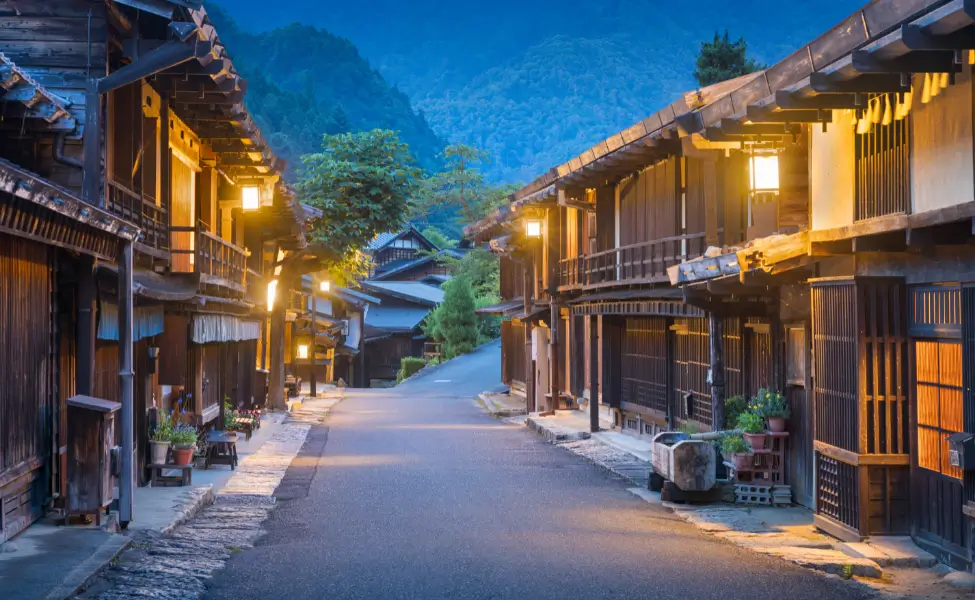
Japan’s major cities buzz with energy, but they can overwhelm.
If you want something different, slow travel offers a refreshing alternative.
This approach means spending more time in fewer places whilst connecting with local culture.
You enjoy a slower pace and really absorb your surroundings.
Rather than rushing between famous landmarks, you can wander quiet streets and chat with locals.
Hidden spots, traditional crafts, regional food and peaceful temples await those who look beyond the standard itinerary.
Japan has numerous smaller cities that suit this travel style perfectly.
These places offer preserved historic districts, natural beauty and authentic cultural experiences.

From mountain towns to coastal areas, each destination has its own character.
Here are eight cities where you can truly slow down.
1. Kanazawa – Japan’s Craft Capital with Living Samurai Heritage
Kanazawa escaped bombing during World War II.
Its Edo-period districts survived intact, creating one of Japan’s best-preserved craft cities.
The Nagamachi Samurai District still functions as a residential area.

You can walk through earthen-walled lanes where descendants of samurai families live today.
The Nomura family residence opens its rooms and garden to visitors, showing how the warrior class actually lived.
Kanazawa’s craft tradition runs deeper than most Japanese cities.
The Maeda lords who ruled here for nearly 300 years cultivated artisans as a political strategy.
Today, you can watch gold leaf being applied at workshops in Higashi Chaya, see Kutani pottery being hand-painted, or visit lacquerware studios where techniques haven’t changed in centuries.
Kenrokuen Garden, one of Japan’s Three Great Gardens alongside Kairakuen and Korakuen, deserves at least two hours of unhurried wandering.
Early morning visits in any season let you watch groundskeepers tending the landscape using traditional methods.
The Omicho Market operates daily with over 170 stalls.
Vendors arrange seafood pulled from the Sea of Japan hours earlier.
Many stalls have small counters where you can eat what you’ve just purchased.
Stay in the area between Kanazawa Station and Kenrokuen.

This puts you within 20 minutes’ walk of the main districts whilst keeping you in quieter residential streets at night.
Best for:
- Hands-on craft workshops (gold leaf, pottery, lacquerware)
- Cultural depth with fewer crowds than Kyoto
- Regional cuisine focus (Kaga vegetables, nodoguro fish)
- Minimum stay: 2 full days
2. Takayama – Mountain Rhythm and Morning Market Culture
The altitude and mountain isolation of Takayama created a distinct food culture and architectural style.
The morning markets start at 7am along the Miyagawa River.

Local farmers bring mountain vegetables, pickles and handmade crafts.
The rhythm here matters more than what you buy.
Vendors expect conversation, not quick transactions.
Watch how the market changes as morning progresses.
The Sanmachi Suji district preserves Edo-period merchant houses, many still operating as sake breweries.
Multiple breweries offer tastings.
Visit Harada Sake Brewery or Funasaka Sake Brewery in late morning after touring, when your palate is fresh. The brewers often work whilst you taste.
Takayama’s festivals in spring and autumn feature elaborate floats, but the town’s real character appears on ordinary days.

Walk the Higashiyama Walking Course, a temple circuit on the eastern hills that takes about two hours.
The town’s food goes beyond Hida beef.
Try hoba miso (mountain vegetables grilled on magnolia leaves), mitarashi dango from street stalls, and the local ramen which uses mountain spring water.
Stay near the old town but not in it.
Guesthouses along the river give you quick access whilst letting you escape tourist concentration in the evening.
Best for:
- Early risers who enjoy market culture
- Sake enthusiasts (multiple breweries in walking distance)
- Mountain landscapes without strenuous hiking
- Minimum stay: 2 nights
3. Kurashiki – Canal Views and Edo-Period Preservation
Kurashiki’s Bikan Quarter lines tranquil canals with white-walled storehouses and black-tiled roofs.
The preserved merchant district measures about 400 by 300 metres.

You can walk it in 20 minutes, but the point is to linger.
Find a bench along the canal in late afternoon and watch how the light changes on the walls and water.
The Ohara Museum of Art opened in 1930 as Japan’s first Western art museum.
The collection includes El Greco, Monet and Gauguin, housed in buildings that blend Greek revival architecture with traditional Japanese design.
Spend at least 90 minutes here, particularly in the Asian Art Gallery which shows how Japanese artists absorbed and transformed Western techniques.
The canal boat tours operate from 9.30am, with the first departure offering the calmest water and best photographs.

For quieter exploration, visit on weekday mornings before 10am or after 4pm.
Best for:
- Photography (architectural details and canal reflections)
- Art lovers wanting intimate museum settings
- Those preferring aesthetic experiences over activity
- Minimum stay: 1 full day
4. Kiso Valley – Walking the Nakasendo Between Magome and Tsumago
The Nakasendo connected Kyoto and Tokyo during the Edo period.
Most of it disappeared under modern development, but the Kiso Valley section survives because trains and highways took different routes.
The walk between Magome and Tsumago takes two and a half to three hours.

Walk from Magome to Tsumago rather than the reverse.
You climb for the first hour, then descend gently for the remaining distance.
The trail passes through working farmland and forest.
You’ll see farmers tending fields using methods that predate mechanisation, not as performance but as practical necessity in steep terrain.
Halfway along, the Ichikokutochi Tateba tea house offers free tea and rest.
A local volunteer runs it, funded by donations.
The volunteer can explain the trail’s history and current challenges in maintaining it.
Both Magome and Tsumago ban cars from their main streets during daylight hours.

Stay overnight in Tsumago to experience the town after day visitors leave.
Several minshuku offer dinner and breakfast.
Book directly rather than through platforms for better rates.
The luggage forwarding service between towns costs 1,000 yen per bag.
Drop bags at either tourist information office between 8.30am and 11.30am, collect after 1pm.
Visit in late May or early November for the best combination of weather and lower visitor numbers.
Avoid weekends in October when autumn colour draws crowds.
Best for:
- Easy introduction to multi-day hiking in Japan
- Those wanting historical walking routes
- Rural Japanese life beyond tourist zones
- Minimum stay: Overnight in either town
5. Kamakura – Temple Concentration with Coastal Access
Over 100 temples sit within Kamakura’s compact area.
The shogunate moved centuries ago, but the Buddhist culture remained.

The concentration of temples means you can visit multiple sites without feeling rushed.
Spend a full morning in Kita Kamakura visiting Engaku-ji, Kencho-ji and Tokeiji temples.
Each has distinct garden styles and architectural periods.
Midweek visits feel calmer and more reflective.
The Great Buddha at Kotoku-in sits outdoors because a tsunami destroyed the hall in 1498.
The statue has weathered six centuries of exposure, developing a patina that modern restoration deliberately preserves.
Kamakura’s beaches developed a surf culture in the 1960s that continues today.
Yuigahama and Zaimokuza beaches attract local surfers year-round. Walk the coastline in late afternoon to see how the beach crowd mixes with temple visitors.
Komachi Street runs from the station to Tsurugaoka Hachimangu Shrine.

Explore the side streets branching off Komachi where local shops sell kamaboko, sembei and Kamakura-bori lacquerware.
The Daibutsu hiking trail connects several temples on the hills west of the city.
The trail takes about three hours, passing through forest and residential areas.
Best for:
- Temple enthusiasts wanting variety in one location
- Day trips from Tokyo with completely different atmosphere
- Mixing temples with beach activities
- Minimum stay: 2 full days
6. Otaru – Glass, Music Boxes and Evening Atmosphere
Otaru built its wealth as Hokkaido’s main port before Sapporo grew larger.
The city’s boom period left behind stone warehouses and merchant buildings now repurposed for tourism.
The canal district works best in the two hours around sunset.
Gas lamps light at dusk, creating the atmosphere Otaru markets heavily.
Arrive around 4pm, watch the light change, then stay for early evening when the lamps glow against darkening sky.

Otaru’s glasswork developed from the fishing industry’s need for oil lamp chimneys and net floats. Kitaichi Glass on Sakaimachi Street operates in an 1891 warehouse.
The main hall uses oil lamps for illumination, showing how glass interacts with flame light.
The Otaru Music Box Museum houses thousands of music boxes in a 1912 brick building.
The second floor sells mechanical music boxes using cylinder and disc systems.
Sakaimachi Street runs six blocks through the old merchant district.
The street’s character changes significantly between day and evening hours.
For food, visit the Sankaku Fish Market near the canal.

Several stalls serve kaisendon (rice bowls topped with fresh seafood) before 8am whilst fishing boats are still unloading.
Best for:
- Craft traditions (glass and music boxes)
- Evening atmosphere over all-day sightseeing
- Fresh seafood (morning market)
- Minimum stay: 1 full day (overnight recommended)
7. Matsue – Water, Tea Culture and Castle Town Atmosphere
Matsue sits between Lake Shinji and Nakaumi lagoon.
Canals built in the Edo period still function, creating a city where water shapes daily movement.
Matsue Castle is one of 12 original castles remaining in Japan, designated as a National Treasure in 2015.

The interior shows construction techniques using bundled timbers rather than single massive pillars.
Climb to the top floor early morning for views across Lake Shinji before crowds arrive.
The moat cruises operate small boats through the canal system.
The 50-minute route passes under bridges so low you must duck.
Go on a weekday morning for the quietest experience.
Shiomi Nawate, the samurai district, preserves several residences open to visitors.
Buke Yashiki shows how middle-ranking samurai lived, with rooms arranged around a central garden.

Matsue has strong connections to tea culture.
Meimei-an tea house sits on a hill north of the castle, offering ceremonies that follow the traditional Fumai-ryu school.
Reserve in advance.
Lake Shinji’s sunsets draw photographers year-round.
The best viewing point is Shimane Art Museum on the eastern shore, which stays open until sunset specifically for this purpose.
Best for:
- Authentic castle architecture (not reconstruction)
- Water-based city perspectives
- Tea ceremony interest
- Minimum stay: 2 full days
8. Gujo Hachiman – Spring Water Culture and All-Night Dancing
Gujo Hachiman sits in a mountain valley where spring water flows abundantly.

The town built its identity around this water, creating a culture where public and private water use overlaps.
The spring water channels run throughout the town. Locals still use them for cooling food and washing vegetables.
Walk the back streets early morning to see how residents interact with these channels as part of daily routine.
Gujo Hachiman Castle sits on a mountain above town. The view from its grounds shows how the town fits into the valley and how water flows through it.

The town’s main identity comes from Gujo Odori, a dance held for over 30 nights each summer from mid-July to early September. During the four-night Obon period in mid-August, dancing continues from dusk until dawn.
Anyone can join, and the same 10 songs play repeatedly until you know the steps.
Outside summer, Gujo Hachiman operates at a much quieter pace.
Visit the food sample workshops where artisans create the realistic plastic food displays seen in restaurant windows.
Several workshops let you make your own samples.
Walk the Yanaka Water Path, where spring water runs through residential streets.
The path takes about 30 minutes and shows you how the town’s water system integrates with daily life.
Best for:
- Water culture and traditional town planning
- All-night festival dancing during Obon
- Japanese food culture (plastic samples, sake, miso)
- Minimum stay: 1 full day (2-3 nights during Gujo Odori)
Before You go
These eight cities offer different approaches to slow travel in Japan.
Some work best as overnight stays where you experience the rhythm of local life.
Others suit day trips where you can explore deeply without rushing.
The key to slow travel is choosing places that match your interests and giving yourself enough time to wander without an agenda.
Pick two or three cities from this list, stay longer than you think you need, and let the experience unfold naturally.
Want more information on these slow travel cities?
- Kanazawa Itinerary: 2 Days in the City of Samurai and Gold
- 2 Day Takayama Itinerary: Your Perfect Weekend in Japan’s Historic Mountain Town
- Unusual Facts About Okayama Prefecture: Discover the Quirky Side
- 7 Scenic Spots Along the Nakasendo Trail: Explore Japan’s Historic Path
- Best Sites in Kamakura: Top Spots for Every Traveller
- 7-Day Hokkaido Itinerary: Hot Springs, Seafood, and Scenic Escapes
- Discovering Shimane Prefecture: Historic Shrines, Silver Mines, and Coastal Beauty
- Gujo Hachiman: The Peaceful Water Town Japan Forgot to Tell You About
