

Shimane Prefecture sits quietly along Japan’s western coast in the Chugoku region, offering travellers an escape from crowded tourist routes.
Shimane is the second-least populous prefecture in Japan, with about 665,000 residents.
It invites visitors to explore ancient shrines, UNESCO-listed mining heritage, and stunning coastlines along the Sea of Japan at a relaxed pace.
This is where Japanese mythology comes alive.
Izumo Taisha, one of Japan’s oldest shrines, draws worshippers seeking blessings for relationships.
The silver mines of Iwami Ginzan, once producing a third of the world’s silver, now stand silent among forested mountains. Lake Shinji’s calm waters reflect the changing seasons.
Nearby, castle towns keep architectural traditions that span centuries.
Who Shimane Is Perfect For:
- Mythology and shrine enthusiasts seeking Japan’s spiritual heartland
- History lovers interested in samurai castles and silver mining heritage
- Nature travellers wanting coastal cliffs, islands, and mountain landscapes
- Slow-travel visitors avoiding tourist crowds
- Anyone seeking authentic, non-touristy Japan
Exploring Shimane’s Culture and History
Matsue Castle
Matsue’s original castle stands as one of only 12 such structures remaining in Japan.
Built from 1607 to 1611 by feudal lord Horio Yoshiharu, the five-storey keep survived fires, earthquakes, and the Meiji period’s efforts to tear down many Japanese castles.

Designated a National Treasure in 2015, the castle has a dark wooden exterior.
This earned it the nickname “Plover Castle” due to the bird-wing shape of its upturned eaves.
Inside, worn wooden stairs lead past displays of samurai armour and weaponry.
The top floor offers panoramic views across Matsue city, Lake Shinji, and the mountains beyond.
Moat cruises on traditional boats circle the castle walls, passing beneath low bridges that require passengers to duck as wooden roofs lower.
Entry: 680 yen adults, 290 yen children. Located 15 minutes’ walk from Matsue Station or 10 minutes from Matsue-Shinjiko-Onsen Station. Allow 1 to 2 hours.
Izumo Taisha Shrine
No records show when Izumo Taisha was founded.
However, Japan’s oldest texts from the eighth century confirm the shrine existed by the early 700s.
The main hall, rebuilt in 1744, is 24 metres tall.
It uses taisha-zukuri architecture, Japan’s oldest style for building shrines, which came before Buddhism arrived.

The shrine honours Okuninushi, deity of nation-building and relationships.
Massive sacred ropes hang from the worship hall, weighing five tonnes and measuring 13.5 metres long.
Visitors clap four times when praying, twice for themselves and twice for their partner or desired relationships.
Every autumn during the Kamiari Festival, Shinto deities from across Japan traditionally gather here from the 10th to 17th day of the tenth lunar month (usually November).
This period is called kamiarizuki in Shimane, meaning “month with gods”, whilst the rest of Japan calls it kannazuki, “month without gods”.
Entry: Free. Located 25 minutes by bus from Izumo Station or accessible via Ichibata Railway to Izumo-Taisha-Mae Station. Allow 1 to 2 hours.
Iwami Ginzan Silver Mine
Hidden in forested mountains near Oda city, Iwami Ginzan produced silver for nearly 400 years from 1526 to 1923.
At its peak in the early 1600s, the mines played a big role in the global silver trade.
Japanese production made up about one-third of the world’s silver supply.
UNESCO listed the site as a World Heritage property in 2007, recognising the mines, transport routes, and port towns as an intact cultural landscape.

The Ryugenji tunnel, one of over 1,000 mining shafts carved into the mountainside, remains open to visitors.
Inside, chisel marks show where miners worked by hand in narrow passages.
The nearby town of Omori maintains wooden buildings from the mining era, including merchant houses and magistrate offices.
Unlike most mining operations, Iwami Ginzan developed with controlled logging practices that prevented widespread deforestation.
Ryugenji tunnel entry: 410 yen adults, 200 yen children. From Odashi Station, take a bus 25 minutes to the World Heritage Centre. Allow 3 to 4 hours to explore the tunnel and Omori town.
Tsuwano Town
Beyond Shimane’s mining history, the mountain-encircled town of Tsuwano offers a different glimpse into the past.
Narrow canals lined with carp wind through historic streets.
Red-tiled roofs and white-walled storehouses recall the town’s Edo period prosperity.
The nickname “Little Kyoto” fits this setting where samurai residences, shrines, and temples cluster along traditional lanes.

The town also celebrates its secular heritage through sake breweries and local cuisine showcasing mountain vegetables.
Located in southwestern Shimane, accessible via JR Yamaguchi Line.
Allow half a day to full day.
Other Historic Sites
At Yumachi-Kama, potters have maintained Fujina-yaki ceramic traditions since the kiln’s founding in 1922.
Visitors can watch craftspeople shape and glaze pottery using techniques passed down through generations.
Natural Beauty in Shimane
Oki Islands
Four main islands and dozens of smaller islets make up the Oki archipelago, about 50 kilometres offshore in the Sea of Japan.

The islands host unique wildlife, including endangered species found nowhere else.
Hiking trails traverse coastal headlands and forested interiors.
Diving and snorkelling show off underwater rocks and sea life that thrive in the islands’ rich currents.
Accessible by ferry from Sakaiminato (2.5 hours) or high-speed boat from Shichirui Port near Matsue (1 hour). Services reduce in winter. Plan for overnight stays.
Lake Shinji
Japan’s seventh-largest lake lies between Matsue and Izumo.
Its brackish waters create a special ecosystem where freshwater and seawater mix.
The lake provides seven types of seafood loved in local dishes.
This includes shijimi clams, which are caught using traditional boats.

Cycling paths circle portions of the shoreline, passing through wetlands where migratory birds rest during seasonal journeys.
Free access. Bicycle rentals available near Matsue Station and along the shore.
Coastline
The northern coast of the Shimane Peninsula meets the Sea of Japan.
It features striking geological formations.
Waves have carved arches and caves into volcanic rock, whilst sandy beaches nestle between headlands.
The ria coastline creates protected coves contrasting with exposed cliffs battered by winter storms.
Surfing spots dot the coast where swells provide consistent waves.
Seaside villages maintain fishing traditions, with squid and crab forming staples of the coastal economy.
Sunset Spots
Following the coast westward brings you to one of Shimane’s most photogenic landmarks.
Hinomisaki Lighthouse marks the peninsula’s western tip, where sunset paints the seascape in vivid colours.

Japan’s tallest stone lighthouse, standing 43.65 metres tall and completed in 1903, offers observation deck views extending to the Oki Islands on clear days.
Climb 163 spiral steps to watch the sun descend into the Sea of Japan, with clouds turning shades of red and gold.
Entry: 300 yen. Located 45 minutes by bus from Izumo Station or 20 minutes from Izumo Taisha. Allow 1 hour.
Museums and Art Collections
Adachi Museum of Art
Six gardens surrounding the Adachi Museum have earned consistent ranking as some of Japan’s most beautiful.
Garden scenes appear through the building’s picture-frame windows like living paintings.
The museum’s collection highlights modern Japanese painting.
It features over 120 works by Yokoyama Taikan in the permanent collection.
Entry: 2,300 yen adults, 1,000 yen university students, 500 yen children. Located in Yasugi, 20 minutes by free shuttle bus from Yasugi Station. Allow 2 to 3 hours.
Shimane Art Museum
Perched beside Lake Shinji, the museum’s location provides natural backdrops through floor-to-ceiling windows.
Collections include Japanese paintings and Western-style works.
They particularly highlight artists from Shimane, like Hirayama Ikuo and ceramicist Hamada Shoji.
Entry: Varies by exhibition, typically 300 to 1,000 yen. Located 10 minutes by bus from Matsue Station. Allow 1 to 2 hours.
Japanese Legends and Folklore
Shimane features prominently in Japan’s foundational myths.
The Kojiki and Nihon Shoki are eighth-century texts that record divine and imperial history.
They include many creation stories from the Izumo region.
Okuninushi’s adventures, including his rescue of the white rabbit of Inaba, occurred here according to tradition.
Lafcadio Hearn Memorial Museum
The museum honours the Greek-born, Irish-raised writer who brought Japanese folklore to Western audiences.
Lafcadio Hearn arrived in Matsue in 1890 as an English teacher and married into a local samurai family.
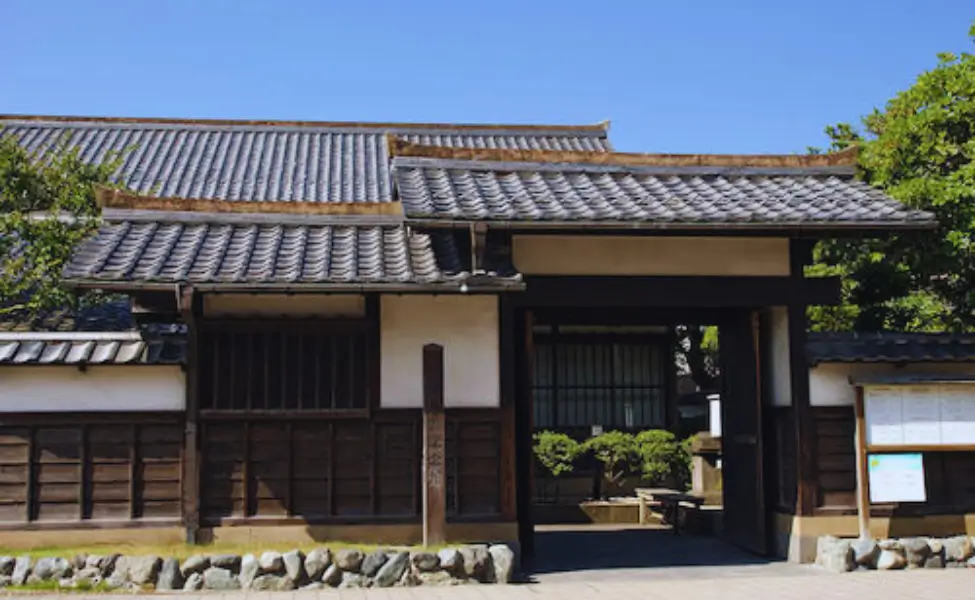
His books, including “Glimpses of Unfamiliar Japan” and “Kwaidan: Stories and Studies of Strange Things”, revealed Japan’s supernatural traditions and ghost stories to readers worldwide.
Combined ticket for museum and residence: 410 yen adults, 200 yen children. Located in Matsue, 15 minutes’ walk from the castle. Allow 1 hour.
The Birthplace of Sake
Locals call Shimane the birthplace of sake, a belief rooted in ancient mythology and shrine traditions.
The Kojiki describes sake brewing among Shimane’s mythological narratives.
Several shrines maintain sake production for ceremonial purposes using methods descending from traditional practices.
Sightseeing and Landmarks
Yushien Garden
Traditional garden design principles shape Yushien’s landscapes across Daikonshima Island in Lake Nakanoumi.
Winding paths reveal changing perspectives of ponds, bridges, and seasonal plantings.

Spring brings famous peony displays in April, with thousands of flowers creating carpets of colour.
The island also cultivates ginseng, demonstrating agricultural heritage alongside ornamental gardens.
Tea ceremonies in the garden’s pavilion provide cultural immersion.
Stone lanterns and carefully pruned pines frame views of the surrounding lake and mountains throughout the year.
Entry: 1,000 yen adults, 500 yen children (varies by season). Accessible by bus from Matsue or Sakaiminato. Allow 1.5 to 2 hours.
Matsue Vogel Park
Tropical plants and free-flying birds create an immersive environment under large greenhouse domes.
Visitors walk amongst flamingos, owls, and penguins, with scheduled shows demonstrating birds’ natural behaviours.
Seasonal flower displays add to the permanent tropical plants.
This keeps the park lovely all year, no matter the weather.
Entry: 1,550 yen adults, 780 yen children. Located 15 minutes by bus from Matsue Station. Allow 2 to 3 hours.
Culinary Delights of Shimane
Izumo Soba
Buckwheat noodles gain distinctive character in Shimane through the use of whole grain flour, creating darker colour and more pronounced flavour than typical soba.
The regional speciality, warigo soba, presents noodles in three to five stacked circular wooden or lacquerware boxes, a serving method unique to the area.
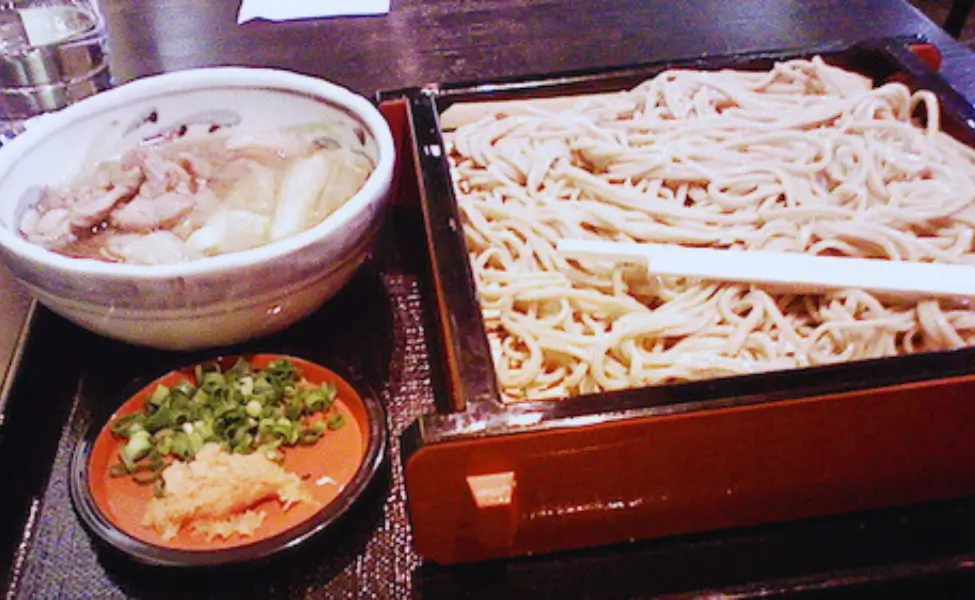
Each layer receives different toppings.
Grated daikon radish, spring onions, bonito flakes, and nori seaweed provide textural variety.
Diners pour dipping sauce enriched by local ingredients over the first layer, finishing it before proceeding to the next.
Relaxing in Hot Springs
Tamatsukuri Onsen
The hot spring resort has welcomed bathers for over 1,300 years.
Mineral-rich waters, particularly high in sulphate content, have earned reputation for skin-softening properties.
The phrase “once you bathe here, you become beautiful” captures local beliefs about the waters’ cosmetic effects.
Traditional ryokan inns line the Tamayu River, offering indoor and outdoor baths.
Public footbaths along the riverside allow casual visitors to sample the waters.
Day-visit bathing available at various ryokan, typically 800 to 1,500 yen. Located 10 minutes by bus from Tamatsukuri-Onsen Station.
Seasonal Attractions
Cherry Blossoms in Shimane
Matsue Castle Park hosts approximately 200 sakura trees, creating pink canopies over the moat and grounds from early to mid-April.
Evening light extends the time we can see.
Lanterns glow on flowers that float on the water.
Summer Festivals
The Matsue Suigosai takes place in early August.
It features fireworks over Lake Shinji, with boats on the water launching the displays.
Light bounces across the lake’s surface whilst crowds gather along the shoreline viewing areas.
Winter Illumination Events
The Adachi Museum enhances its already impressive gardens with subtle lighting during winter months.
Carefully placed illumination reveals garden scenes after dark, offering perspectives unavailable during daylight hours whilst respecting the landscape’s natural character.
Navigating Shimane
Travel Tips and Transportation
Izumo Enmusubi Airport connects Shimane to Tokyo (90 minutes) and Osaka (70 minutes) with daily flights.
The airport sits 30 minutes by bus from central Matsue.
JR’s Sanin Main Line connects Matsue and Izumo with other Shimane cities and neighbouring prefectures.
Limited express trains provide faster connections to major cities like Hiroshima and Okayama.
The overnight Sunrise Izumo sleeper train runs daily between Tokyo and Izumo, arriving early morning.
The Ichibata Electric Railway serves the Shimane Peninsula, linking Matsue with Izumo Taisha through local stations.
Buses supplement rail services, reaching areas without train connections.
The Enmusubi Perfect Ticket lets you travel freely on Ichibata trains and buses for three days.
It costs 3,300 yen and is a great way to explore many sites. J
R Pass holders can use the Sanin Main Line at no additional cost.
Frequently Asked Questions
What is the most famous shrine in Shimane?
Izumo Taisha stands as Shimane’s most significant shrine, considered one of Japan’s oldest Shinto sites. The shrine is famous for relationship blessings and its place in mythology.
Which local dishes should I try in Shimane Prefecture?
Izumo soba, made with whole buckwheat flour for darker colour and stronger taste, represents the region’s signature dish. Try warigo soba served in stacked boxes. Lake Shinji provides shijimi clams, whilst coastal areas offer fresh crab and squid. Wagashi sweets, particularly yakimanju, showcase local confectionery traditions.
How can I enjoy Shimane Prefecture during winter?
Yushien Garden takes on new beauty under occasional snowfall. Matsue Castle and Tsuwano maintain appeal year-round, with fewer crowds during colder months. Hot springs, particularly Tamatsukuri Onsen, provide warmth and relaxation. Winter brings fresh seafood, especially crab season from November to March.
What are some unique activities you can do in Shimane?
Learn pottery techniques at Yumachi-Kama kiln, where craftspeople demonstrate Fujina-yaki methods. Cruise Matsue Castle’s moat on traditional boats with kotatsu heaters in winter. Explore the Ryugenji mining tunnel at Iwami Ginzan. Take boat tours around Lake Shinji at sunset.
Are there any must-visit spots in Izumo?
Beyond Izumo Taisha, visit Hinomisaki Lighthouse for coastal views and sunset watching. Inasanohama Beach has a small shrine on a unique rock formation. Legend says this is where deities first arrive during the Kamiari Festival.
What are some free attractions in Shimane Prefecture?
Tamatsukuri Onsen offers free public footbaths along the river. Walking along Lake Shinji’s shoreline costs nothing whilst offering excellent sunset views. Many shrine grounds, including approaches to Izumo Taisha, remain freely accessible.