
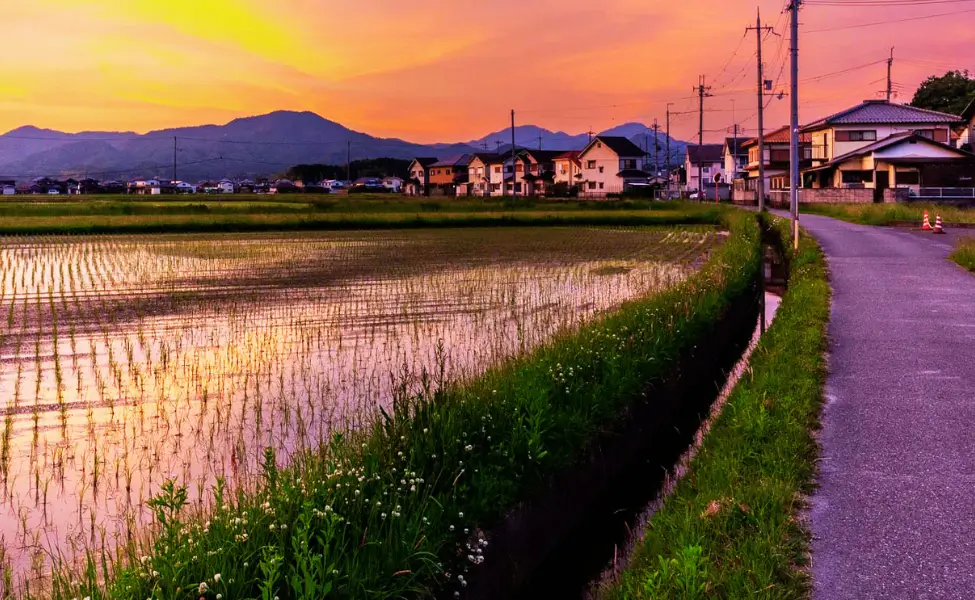
The first time many Western travellers come back from Japan, they feel vaguely cheated.
Not because the trip was bad, but because somewhere between the queues at Fushimi Inari and the crowds at Dotonbori, they got the nagging sense that the real country was right there, just one or two train stops past where everyone else got off, and they never quite reached it.
That feeling is accurate, and it has nothing to do with luck or language ability.
The Japan that most visitors see is a specific, well-worn circuit built around Tokyo, Kyoto, Osaka, perhaps Hiroshima or Nara, and then home.
A fine circuit, certainly.
It is also roughly what every foreign visitor has been doing for thirty years, which means the places on it have reshaped themselves around foreign tourists rather than around Japanese life.
The other Japan, the one that feels genuinely different, is not secret.
Finding it requires no insider knowledge.
These are simply the places where Japanese people actually live, travel, and take their own holidays.

The practical distance between the famous circuit and that other Japan is often no more than two hours on a train.
What Daily Life Actually Looks Like
Rural Japan has a pace that takes a day or two to recalibrate to.
Shops close by six or seven in the evening.
A bus might run twice in the morning and twice in the afternoon.
Neighbours know each other not as an abstract pleasantry but as a practical reality.

The neighbourhood association, the chonaikai, organises everything from road maintenance to the summer festival preparations.
You will notice quite quickly that you are the only foreigner for some distance.
This is not a problem in practice, though it can feel daunting in anticipation.
Japanese people in rural areas respond warmly to foreign visitors who make a genuine effort, and often go considerably out of their way to assist someone who is clearly lost.
A phone translation app, particularly Google Translate’s camera function for menus and signs, handles most practical situations.
The gap between the language barrier as it appears in advance and the language barrier as it actually presents itself is large, and almost entirely in your favour.
The rhythm of life follows seasons in a way that city life no longer does.
Rice fields run bright green through summer, go gold in autumn, and sit flooded and still in early spring.
Farmers tend small plots by hand.
Community events, festivals, school gatherings, and temple observances structure the year in ways that urban Japan has largely moved away from.
Festivals and How to Find Them
Each town and village in rural Japan runs its own festival, the matsuri, drawn from traditions that in some cases go back centuries.

These are not events staged for tourists. Local volunteer committees organise the floats, shrine processions, and ritual dances, and the audience is primarily the people who live in the town.
Foreign visitors are almost always welcome if they show basic respect.
Arriving early, watching before joining in, and accepting food or drink when it is offered tend to go down well.
Several towns run festivals that exist entirely for their own residents.
Finding festivals before you travel takes some effort because most are not advertised in English.
The Japan Tourism Agency’s Nippon Festival portal lists major events, but smaller local celebrations appear mainly on prefectural tourism websites.
Google Translate handles these adequately.
Searching in Japanese returns far richer results than any English-language source, and a translation app handles the process simply enough.
Your ryokan host is also worth asking. Most will tell you immediately if anything is happening locally during your stay.
Towns That Have Kept Their Shape
The Japan outside the major cities contains a remarkable number of places where the built environment has survived largely intact, not as a museum reconstruction but as a living streetscape that people still use.
The Samurai Towns of Tohoku
Kakunodate in Akita Prefecture is perhaps the best-preserved samurai district in the country.
Wide streets run past black wooden fences, behind which stand the original residences of samurai families who served the local domain during the Edo period.
Six houses are open to visitors, including the Aoyagi House, which holds an extensive collection of armour, weapons, and period documents across several buildings.
The Ishiguro House, where a member of the family still lives, opens part of the main building and a storeroom to visitors.
From Tokyo, the Akita Shinkansen reaches Kakunodate Station in roughly three hours, and the town is compact enough to explore on foot in a morning.
Ginzan Onsen in Yamagata Prefecture sits in a narrow valley and occupies a different register entirely.

The wooden hot spring inns that line the river date from the early twentieth century, and gas lamps light the streets after dark.
In winter, steam rises from the river while snow settles on the rooftops.
Arriving early in the day during peak seasons avoids the busiest periods.
Kanazawa and Its Districts
Kanazawa, a city on the Sea of Japan coast, escaped wartime bombing and has preserved a concentration of historic neighbourhoods that few Japanese cities can match.
The Higashi Chaya district retains its wooden latticed facades from the days when it served as a geisha quarter, and several buildings still function as tea houses where traditional performances take place.

Omicho Market, which has operated for more than 300 years, sells fish caught that morning alongside local vegetables, pickles, and cooked food at small counter restaurants inside the market building.
Coastal Villages
Ine, in the northern part of Kyoto Prefecture along the Sea of Japan coast, is a fishing village where around 230 traditional funaya boat houses line the bay.

The first floors open directly onto the water for storing fishing boats, and the second floors serve as living quarters.
Running for five kilometres around Ine Bay, the houses remain mostly private homes, but the bay cruise offers a clear view of the architecture, and a small number of converted funaya now operate as inns or cafes.
Castle Towns Worth the Journey
Japan has twelve surviving original castle keeps, meaning twelve castles where the historic main tower still stands in its original form rather than as a postwar concrete reconstruction.
These are worth treating as a separate category from the famous reconstructed castles, because the experience of walking through a building that has stood since the sixteenth or seventeenth century is meaningfully different.
Matsumoto Castle in Nagano Prefecture is among the most striking of the twelve.

Built in the 1590s, its black-lacquered walls earned it the nickname Crow Castle, karasu-jo, a contrast to the white-walled castles more commonly associated with the country.
The town around it has preserved a merchant quarter with Edo-period warehouse buildings and traditional shops, and the journey from Tokyo takes roughly two and a half hours by limited express train via Shinjuku.
Hirosaki Castle in Aomori Prefecture has a park with around 2,600 cherry trees, making it one of the most celebrated hanami destinations in northern Japan.
The town’s former samurai district sits separately from the castle grounds and contains preserved residences open to visitors.

Hirosaki sits four to five hours from Tokyo by Shinkansen to Shin-Aomori and local train, which makes it a natural part of a wider Tohoku itinerary rather than a standalone excursion.
Matsuyama on the island of Shikoku pairs its original castle with Dogo Onsen, a hot spring district with a history stretching back over three thousand years.
The Dogo Onsen Honkan bathhouse, built in 1894 and designated an Important Cultural Property, operates as a public bath open to anyone who pays the entry fee.

Locals use it daily alongside visitors.
Regional Museums and Craft Towns
The Ohara Museum of Art in Kurashiki, Okayama Prefecture, was Japan’s first private Western art museum, founded in 1930.
Its permanent collection includes works by El Greco, Monet, and Matisse in a town most foreign tourists have never visited.
Kurashiki itself has a preserved canal district with willow-lined waterways and converted Edo-period warehouses, which adds considerable context to the visit.

The Adachi Museum of Art in Shimane Prefecture is known as much for its gardens as for its collection of modern Japanese painting.
Six distinct gardens are maintained across the grounds, viewed primarily through windows designed to frame the scenery like paintings on a wall.
Its garden has held the top ranking in a specialist Japanese garden publication every year since 2003.
Shimane requires effort to reach but rewards the effort substantially.
Arita and Imari in Saga Prefecture have produced porcelain for over four hundred years, beginning when a Korean craftsman discovered kaolin clay in the region in 1616.
The Kyushu Ceramic Museum in Arita holds a comprehensive collection spanning the full history of the craft, and several working kilns around the town offer demonstrations or hands-on workshops.
Onsen Towns and What They Actually Offer
How These Towns Work
Hot spring towns in rural Japan operate quite differently from city hotels.

The experience centres on the water, the meals, and the rhythm of bathing, eating, and resting, repeated.
Most visitors arrive in the late afternoon, bathe before dinner, eat a formal multi-course meal at a set time, sleep, bathe again in the morning, eat breakfast, and leave.
Kurokawa Onsen in Kumamoto Prefecture sits in a mountain valley and has deliberately limited development to preserve its character.

The town has consciously protected a specific kind of evening.
Walk between bathhouses in a yukata robe after dark, lanterns along the path, forested hills on either side.
Even during peak seasons it stays quiet.
Nyuto Onsen in Akita Prefecture takes more effort to reach, requiring a bus from Tazawako Station on the Akita Shinkansen, but the destination is seven separate inns each drawing from its own spring with distinct mineral content and character.
In winter, outdoor baths sit surrounded by heavy snow and silent forest.

The oldest inn, Tsurunoyu, has records going back over 350 years.
Noboribetsu Onsen in Hokkaido sits above an active volcanic area known as Jigokudani, or Hell Valley, where steam vents and sulphurous pools feed the town’s bathhouses below.

The variety of spring water here is notable, and the volcanic landscape makes it unlike any other onsen town in the country.
Staying in a Ryokan
A genuine rural ryokan is not a hotel with Japanese aesthetics bolted on.
You sleep on a futon laid on tatami floors, meals arrive at set times in your room or a shared dining space, and the staff tend to know who you are and where you have come from by the time dinner is served.
The meals are the argument for staying in a proper inn rather than a guesthouse.
Kaiseki dinners in a mountain ryokan draw on whatever the kitchen can source locally.

Wild vegetables from the forest, river fish, and regional ingredients that do not travel well and therefore do not appear on restaurant menus in cities.
Breakfast typically includes rice, miso soup, grilled fish, pickled vegetables, and tamagoyaki.
Approximate pricing per person per night including two meals:
| Tier | Price per person per night | What to expect |
| Basic family inn | ¥10,000 to ¥15,000 | Simple rooms, shared or basic private bath |
| Mid-range | ¥20,000 to ¥35,000 | Private bath common, more refined meals |
| Luxury | ¥50,000 and above | High-end kaiseki, private outdoor baths |
A modest family inn in a quiet valley can deliver more than an expensive property in a famous resort.
The difference is that the former runs for the guests rather than for the volumes.
Booking directly by phone or email is possible for most properties, though it requires patience.
Many rural ryokan list on Jalan or Rakuten Travel, both of which have English interfaces.
Some appear on international booking platforms.
If you are uncertain whether a property is genuinely local or tourist-facing, look at who leaves reviews and what language they write in.
Getting Around Beyond the Shinkansen
Rural Trains and What to Expect
The shinkansen network is excellent, but it connects city to city.
Regional services are the trains that matter for rural travel, and understanding how they work removes most of the anxiety around using them.

A few things worth knowing before you travel by rural train in Japan:
- Many rural stations are unstaffed and some have no ticket machine. You take a numbered slip when boarding and pay the driver or conductor when you exit, based on the distance travelled.
- Rural lines often run three or four services per day. Planning around the timetable is straightforward, but it does require planning. Google Maps or the Jorudan app, both downloadable before you leave, handle this well.
- The JR Pass covers most shinkansen routes and all JR local lines. It does not cover private railways, which operate many of the most scenic rural routes. Check the operator before assuming coverage.
- Some regional passes cover specific areas far more economically than the national JR Pass, particularly if your itinerary concentrates on one part of the country.
These lines cut through rice fields and mountain valleys where the view changes every few kilometres, and you will often be one of very few passengers on board for long stretches of the journey.
Driving
Renting a car opens up areas that trains do not reach, and the driving experience in rural Japan is considerably more relaxed than city driving.

Roads are well maintained, GPS navigation comes standard in rental cars, most have an English mode, and parking is free in almost all rural areas.
You will need an International Driving Permit alongside your home licence before you leave, as Japan does not accept foreign licences directly.
The permit is inexpensive and straightforward to obtain from your national motoring association.
Drive through Nagano’s mountains in autumn and you pass farm stands, roadside restaurants, and small towns that rarely see foreign visitors.
Hokkaido’s coastal roads connect fishing villages with sweeping sea views and almost no traffic.
Fill the tank whenever you pass a petrol station in genuinely remote areas, as stations can be scarce and may close early.

Regional Food Beyond the Restaurant Strip
Every region in Japan has food that simply does not travel.
The kitchen of a mountain ryokan uses ingredients from the surrounding forest and rivers because those ingredients are there and fresh, not because of any marketing concept.
That is the version of Japanese food worth going out of your way to find.
Fukuoka’s yatai are outdoor food stalls that line the riverside in the evenings, serving ramen and grilled skewers to people sitting shoulder to shoulder on small stools.

The atmosphere makes the food taste better.
Sapporo’s ramen tradition is built around a rich miso broth that suits the northern climate, while Hakodate, on the southern tip of Hokkaido, does a clean salt-based broth that is quite different from either.

Early morning markets appear throughout rural Japan, usually running from six until noon and selling whatever is in season.
Farmers bring their own vegetables, homemade preserved foods, and regional sweets.

These markets exist for the people who live nearby, which is precisely what makes them worthwhile.
Language and Getting Around Without It
The anxiety about language is real, and worth addressing directly.
Rural Japan has less English than Tokyo or Kyoto.
Menus are often entirely in Japanese.
Station names may not appear in Roman characters on older lines.

Asking for help requires some tolerance for uncertainty.
In practice, this is considerably more manageable than it appears in advance.
Japanese people, particularly in rural areas where foreign visitors are still relatively uncommon, respond warmly to anyone who makes a genuine effort.
A few words of Japanese, a smile rather than impatience, and a phone translation app gets you through most practical situations.
The tools have also improved substantially.
Google Translate’s camera function reads Japanese text in real time and returns a workable translation of most menus, signs, and information boards.
Showing a taxi driver or a station attendant the name of your destination in Japanese on your phone works reliably.

Booking accommodation, buying train tickets, and ordering food in rural Japan are all achievable without Japanese.
The main requirement is comfort with improvising when the technology falls short.
The deeper truth is that navigating rural Japan without fluent Japanese is less about language and more about confidence.
Miss a connection, find the next train on your phone, and you recover easily.
Order something you cannot read on the menu and enjoy it.
Ask for directions through gestures and a phone map and get walked to where you need to be by someone who had nowhere particular to be.
By the third day of this, it no longer feels like a problem.
