

Saga doesn’t have one dominant sight.
There’s no single justification you can give a friend to explain why you went there.
That’s exactly why most Kyushu itineraries skip it, and partly why the ones that include it tend to feel quietly satisfying.
If you’re weighing whether to give Saga a day or two, this is what you need to know.
Yes, Saga is worth it.
Most travellers get the best out of it in one to two days, moving between a few different stops rather than treating it as a single destination to plant a flag in.
What Kind of Destination Saga Is
Saga is a small prefecture sandwiched between Fukuoka and Nagasaki on the northwest coast of Kyushu.
It has a coastline, a handful of historically significant towns, genuine onsen credentials, and a pottery tradition that goes back four centuries.
There is no single obvious reason to go.
That framing matters.
Saga works best for travellers who treat it as a cluster of stops rather than a destination in its own right.
Spend a day between the coast at Karatsu, the squid market at Yobuko, and an evening soak at Takeo Onsen.
The prefecture reveals itself quickly as something varied and unhurried.
Arrive expecting one landmark and you will likely feel shortchanged.
Nagasaki carries more historical weight and has the Peace Memorial as an emotional anchor.
Kumamoto has a more impressive castle and easier access to the Aso caldera.
Beppu is the right call if sheer onsen variety is the priority.
Saga sits below all of them on dramatic impact.
It sits above all of them on crowd levels, local atmosphere, and the sense that you have actually seen somewhere real.
The Places Worth Planning Around
Karatsu is the most compelling reason to visit Saga, and it functions well as a one-night base.
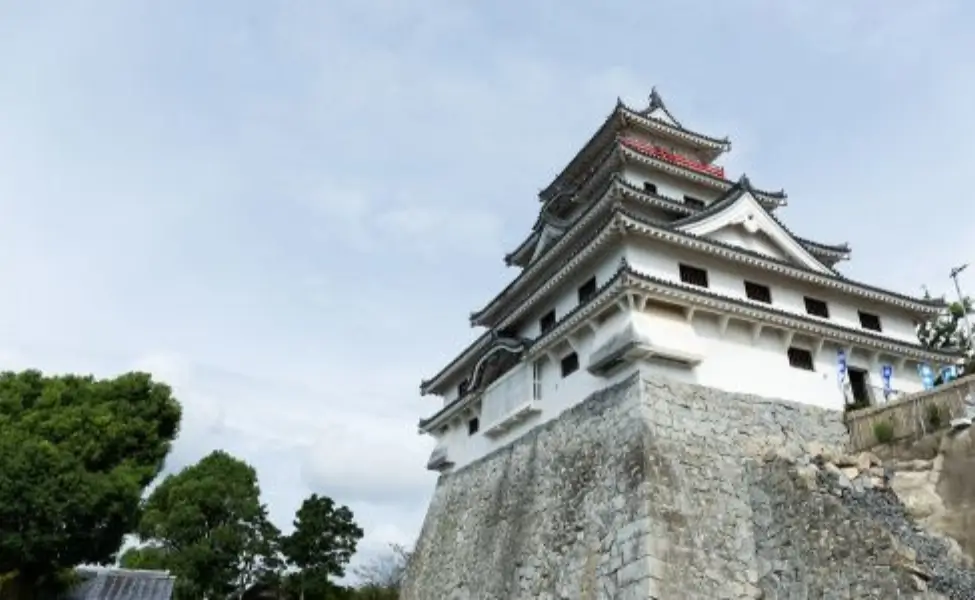
The town sits on the northern coast above a pine-fringed bay and has a relaxed, slightly weathered character that suits a slow day.
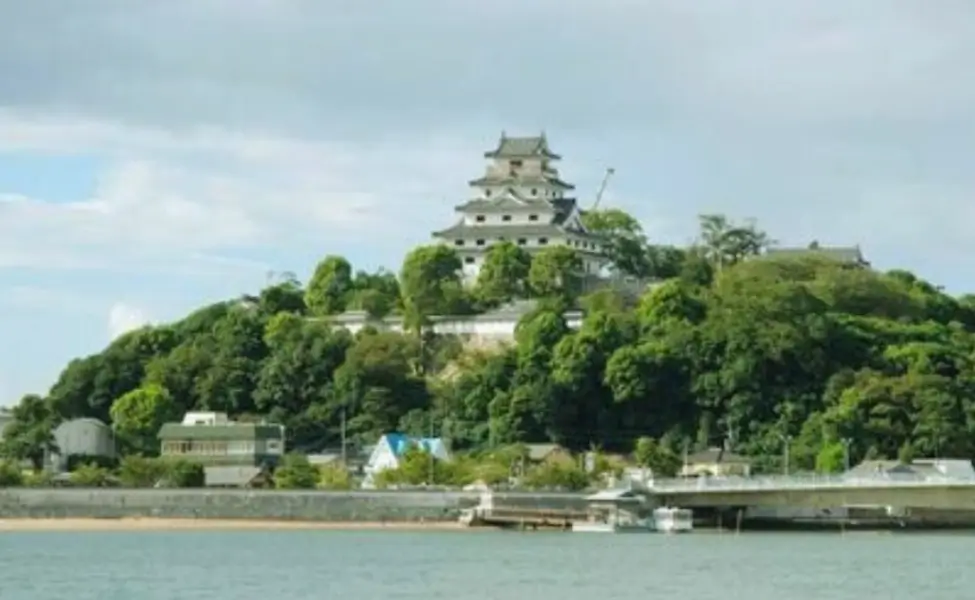
The castle stands on a small hill above the water.
A 1966 concrete reconstruction, the keep houses exhibits on local history and Karatsu pottery that are decent but not remarkable.
The setting, with stone walls rising from the bay and the town spread out below, earns the visit more than the interior does.
A short bus ride from Karatsu brings you to Yobuko, a fishing port with a morning market running every day from early morning.
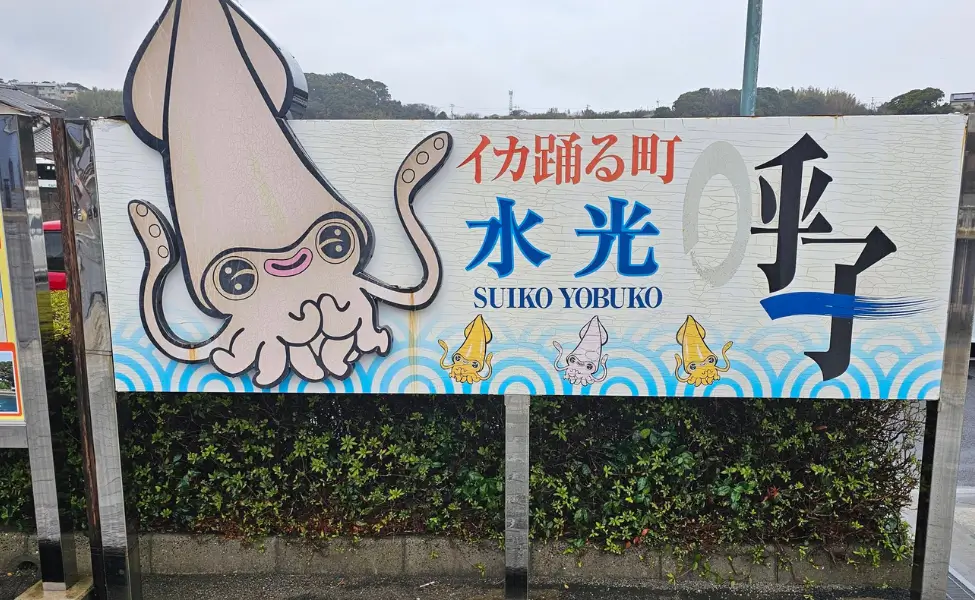
Squid is the speciality here, and the live version served at several market stalls has a translucent, clean sweetness quite different from squid found elsewhere.
Karatsu ware, a rough functional pottery tradition with centuries of use in Japanese tea ceremony, fills the shelves of shops throughout the town and gives Karatsu more cultural texture than its size would suggest.
Getting to Karatsu from Fukuoka is easy.
Take the subway to Meinohama and transfer to the JR Chikuhi Line limited express.
The journey from Hakata runs around 80 to 90 minutes and costs approximately 2,170 yen one way.
Yoshinogari Historical Park
Yoshinogari sits between Saga City and Tosu and is one of the more convenient sights in the prefecture to reach.
The park covers one of Japan’s largest Yayoi Period archaeological sites, a settlement occupied from roughly the third century BC through the third century AD.
Full-sized reconstructed buildings, watchtowers, and burial mounds spread across the site and give a real sense of the settlement’s scale.
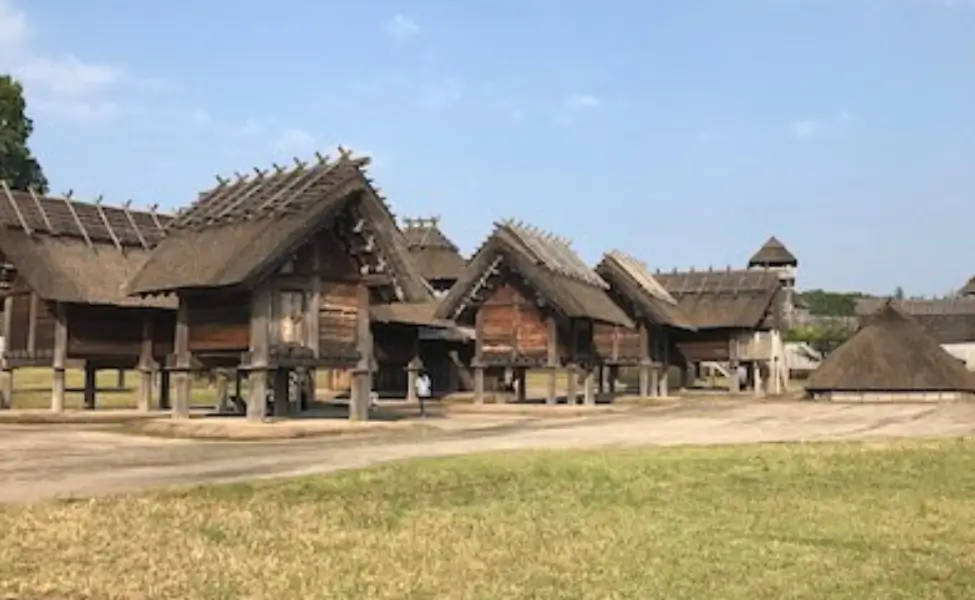
Most visitors spend two to three hours here.
Children generally get more out of it than adults expect, because the reconstructions are hands-on and easy to explore physically.
From Saga City, take the JR Nagasaki Main Line to Yoshinogari Koen Station.
The journey takes around twenty minutes and the park entrance is a short walk from the platform.
Yutoku Inari Shrine
Yutoku Inari Shrine in Kashima City is one of the three major Inari shrines in Japan, alongside Fushimi Inari in Kyoto and Kasama Inari in Ibaraki Prefecture.

Around three million people visit each year.
Unlike Fushimi Inari, crowd pressure outside festival season is minimal, and the approach through tunnels of torii gates on a steep wooded hillside takes on a quieter, more atmospheric quality.
The main hall was founded in 1687 and sits eighteen metres above the valley floor on wooden beams.
Behind it, a walking trail winds to a small inner sanctuary near the top of the hill, with a broad view over Kashima City and the Ariake Sea tidal flats.
An elevator handles the ascent to the main hall if the stairs are not appealing.
From Saga Station, take the JR Kamome line to Hizen-Kashima and then a ten-minute bus or taxi to the shrine entrance.
Hakata to Hizen-Kashima by limited express takes around an hour.
Saga Castle History Museum
Saga City itself is a working Japanese city without much tourist appeal outside the castle grounds.
The Saga Castle History Museum, however, earns its stop.
The building is a reconstruction of the Honmaru Goten, the main palace of Saga Castle, which the Nabeshima clan built between 1602 and 1611.
Most structures fell during the 1874 Saga Rebellion.
The reconstruction, completed in 2004, now stands as the largest wooden castle reconstruction in Japan.
Entry is free, which is unusual for a site of this quality, and English audio commentary helps fill in the context.
Controlling the port at Nagasaki gave the Nabeshima clan rare access to foreign technology, and the museum covers this period in enough depth to hold your attention.
Allow an hour to an hour and a half.
The Two Onsen Towns Worth Knowing
Saga has two onsen towns that serve different purposes, and both are worth a stop.
Takeo Onsen is the more accessible of the two, sitting on the JR line between Saga and Nagasaki.
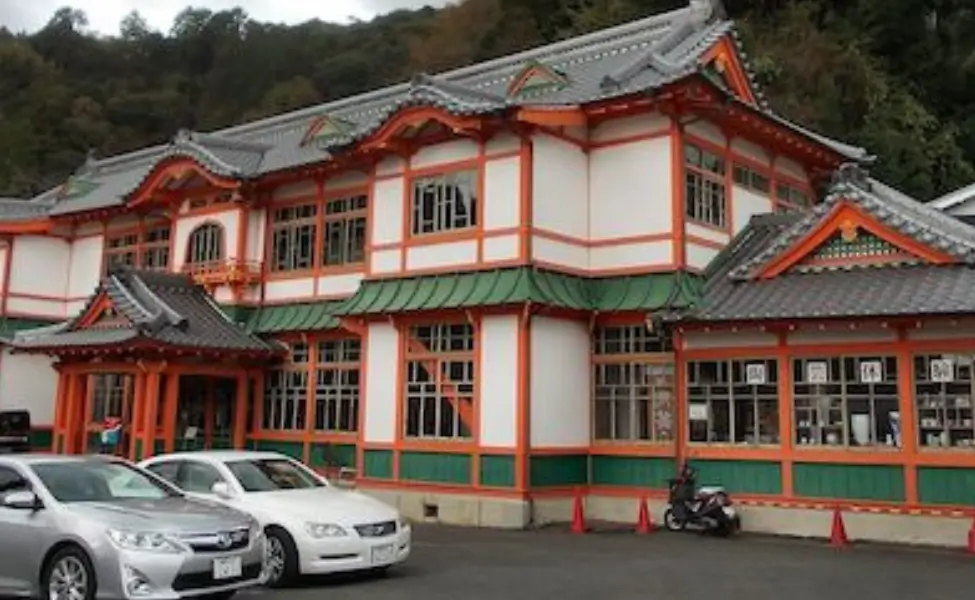
The town’s history stretches back over 1,300 years. Its most visible feature is the red-lacquered Romon Tower Gate, designed in 1915 by Tatsuno Kingo, the same architect who designed Tokyo Station.
Behind the gate sit three public bathhouses.
Motoyu is the cheapest and simplest, with a hot pool and a very hot pool for each gender.
The Tonosama-yu, a private bath originally built for the local feudal lord, takes bookings by the hour for something more secluded.
Takeo also makes a practical base for western Saga.
Arita and Imari are both reachable within an hour.
A night in a Takeo ryokan makes the western loop far easier than commuting from Fukuoka.
Ureshino Onsen is about thirty minutes south by road and has a noticeably different atmosphere.
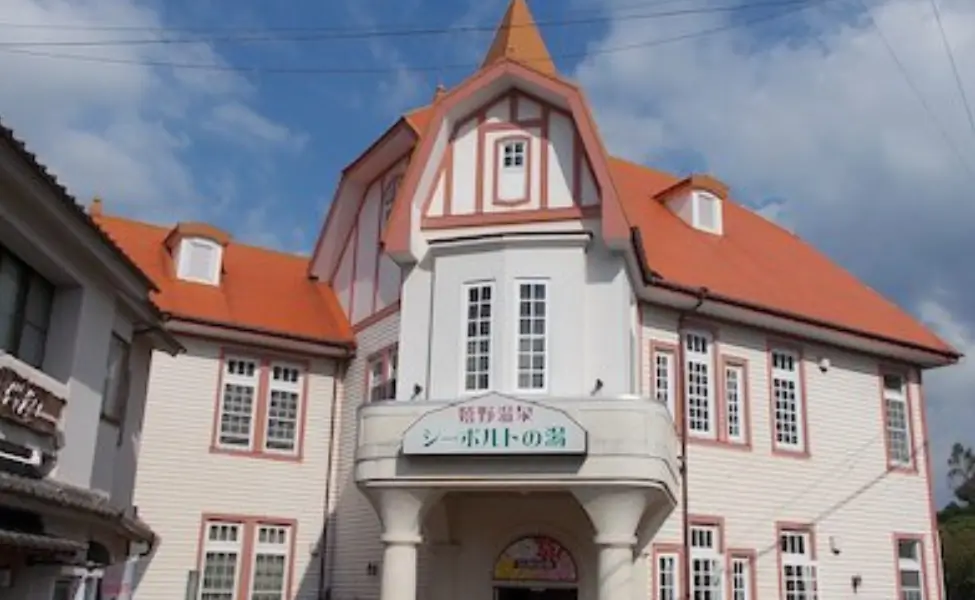
The water there is alkaline and slightly milky, and most visitors notice a softness to their skin after a soak.
Tea fields wrap around the town.
Local inns use the spring water to prepare onsen tofu, a regional dish worth trying.
Ureshino is harder to reach without a car. For travellers who want a proper overnight onsen experience, it has more depth than Takeo.
Arita and Four Centuries of Pottery
Arita sits in the hills of western Saga and has produced porcelain since Korean craftsmen settled there in the early seventeenth century.
The town’s main street, Sarayama-dori, runs for around seven hundred metres through old merchant buildings, galleries, and pottery shops.
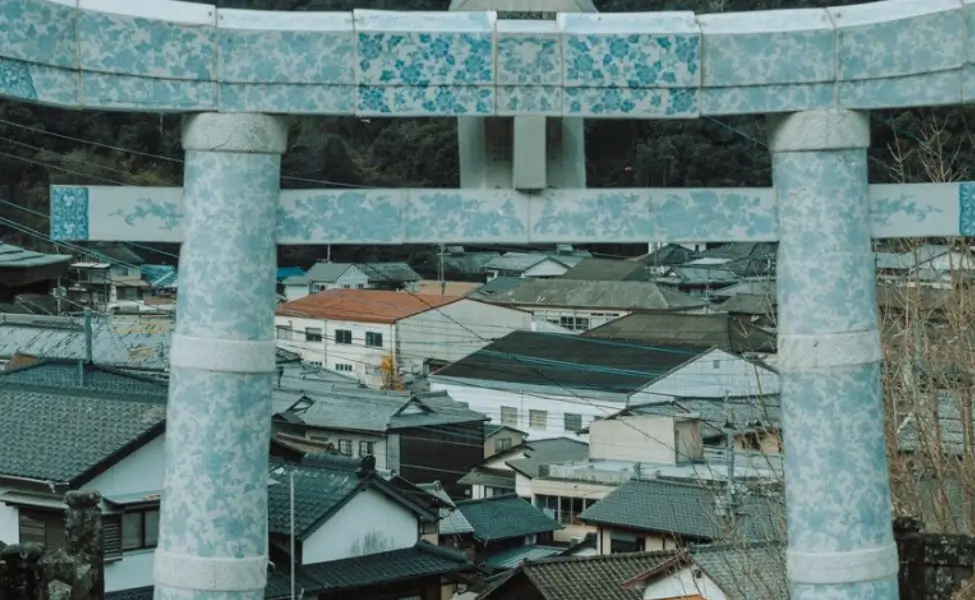
A walk along it takes a morning easily.
Arita ware features a bright white body with fine blue-and-white painted decoration.
During the Edo Period, the Nabeshima clan shipped it through the port of Imari to Europe, where collectors bought it under the name Imari ware.
European museums still hold significant collections.
For anyone with a genuine interest in Japanese craft, the shops here carry everything from affordable everyday pieces to collector-grade works, and this is a more honest place to buy than most tourist stops.
Arita is possible to reach by public transport but takes effort.
The Matsuura Railway connects it to Imari, and infrequent buses run from Saga City and Hakata.
Without a car, Arita fits better into a two-day loop based out of Takeo than as a standalone day trip from Fukuoka.
What Saga Is Known for Eating
Saga has a stronger food identity than most visitors expect.
These are the things worth looking for:
- Saga beef. A wagyu variety raised in the prefecture, with notable marbling. Yakiniku restaurants throughout Saga City and Karatsu serve it at prices well below Tokyo.
- Yobuko squid. The morning market at Yobuko is well-regarded across Kyushu for its live squid. Fresh from the water and served with the flesh still moving, it has a clean sweetness quite different from squid found elsewhere. Worth planning the morning around if you are near Karatsu.
- Ureshino onsen tofu. Silken tofu simmered in the local alkaline spring water, which changes the texture and gives it a delicate flavour. Most ryokan in Ureshino include it in the evening meal.
- Ureshino tea. The hills around Ureshino produce respected gyokuro and aracha varieties. Local farms welcome visitors and most cafes in the area serve it properly.
- Ariake Sea oysters. Roadside shacks along the Ariake coastline south of Saga City serve grilled oysters from autumn through early spring, right at the water’s edge.
Getting to Saga, Getting Around, and How Many Days to Give It
Getting there
Fukuoka is the practical entry point for almost all visitors.
From Hakata Station, the JR limited express reaches Saga City in around 45 minutes and runs frequently throughout the day.
The Japan Rail Pass covers it.
A direct bus from Fukuoka Airport to Saga City takes around 60 to 70 minutes and is slightly cheaper.
Saga Airport has a domestic route to Tokyo Haneda operated by ANA, plus international connections to Seoul and Taipei.
It is not a meaningful entry point for most visitors to the region and has no flight connections to Fukuoka, Nagasaki, or Kumamoto.
Here’s how the main routes from Fukuoka break down.
| Destination | Transport | Approx. journey time | Car-free |
|---|---|---|---|
| Saga City | JR limited express from Hakata | 40 to 50 minutes | Yes |
| Karatsu | JR Chikuhi Line from Meinohama | 80 to 90 minutes | Yes |
| Yoshinogari | JR Nagasaki Line from Saga City | 20 minutes | Yes |
| Takeo Onsen | JR Nagasaki Line from Saga City | 25 minutes | Yes |
| Yutoku Inari Shrine | JR to Hizen-Kashima then bus or taxi | 30 to 40 minutes from Saga | Yes, with bus |
| Arita | Bus or Matsuura Railway from Imari | 40 to 60 minutes from Takeo | Possible, but slow |
| Ureshino Onsen | Bus or taxi from Takeo | 30 minutes | Possible with planning |
| Yobuko | Local bus from Karatsu | 30 minutes | Yes |
Do you need a car?
The main sights in Saga are reachable without a car, but a car changes the experience significantly.
Yoshinogari, Karatsu, Takeo Onsen, and Yutoku Inari Shrine all connect to the JR network with reasonable bus or taxi access from stations.
Ureshino, Arita, and the Ariake coastline require more planning without wheels.
Bus frequency makes some of these impractical for a day visit.
Hiring a car from Hakata or at Saga Airport is straightforward.
Car-free travel in western Saga works best when based at Takeo Onsen, accepting that some connections will take longer than they would by road.
How many days?
One full day is enough to get a genuine feel for Saga.
Two days lets you cover either the northern coast (Karatsu, Yobuko, Niji-no-Matsubara) or the western arc (Takeo, Ureshino, Arita) properly.
Three days covers both.
A car-free two-day route that works in practice.
- Arrive at Saga City. Visit the Saga Castle History Museum (free, allow 90 minutes). Take the JR Nagasaki Line to Yoshinogari Koen and spend two to three hours at the historical park. Continue west by train to Takeo Onsen and check in for the night.
- Soak at Takeo’s public baths in the morning. Take the train or bus to Arita for the pottery street and lunch. Return to Saga or travel directly on to Fukuoka.
Who should visit, and who should skip it
Saga is a good match if you
- want somewhere quieter than Fukuoka or Nagasaki but still easy to navigate without a car
- have a genuine interest in ceramics, early history, or onsen culture
- are already using Fukuoka as a base and want an easy one or two-night extension
- prefer places that feel lived-in rather than designed for visitors
- are travelling late October to early November and want to see the Balloon Fiesta, one of Asia’s largest sky sports events
Saga is probably not the right stop if you
- have fewer than ten days in Japan and are still working through the main cities
- expect a single dominant sight to anchor the trip
- find slow, semi-rural destinations frustrating rather than restoring
- are not comfortable building an itinerary around infrequent buses
If you have the time and Fukuoka is already on your route, Saga is an easy extension to justify.
The sights are close together, the trains run reliably, and the prefecture has enough variety across history, coast, craft, and food to fill two days without feeling like a stretch.
It won’t be the most dramatic stop on your trip.
For many travellers, that turns out to be the point.
