
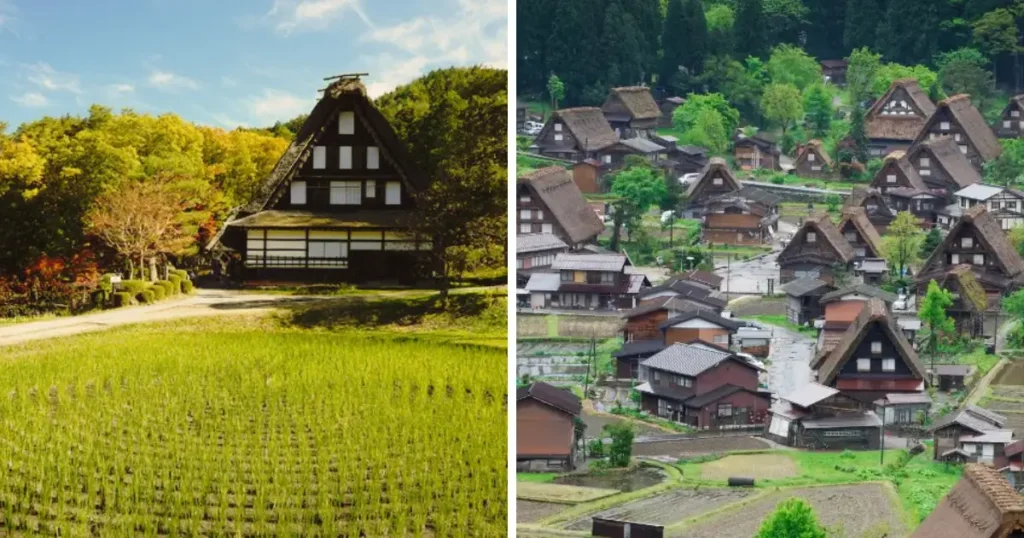
You have one spare day in Takayama, and the same two names keep coming up. Hida no Sato and Shirakawa-go both have traditional thatched roof houses, but they are not the same kind of day out. If you want the easier, calmer choice, go to Hida no Sato. If you came for that famous valley view and do not mind spending more time and money to get there, Shirakawa-go is the one to choose.
Your Quick Decision For One Day In Takayama
Here is how the choice actually breaks down for most travellers staying in Takayama. It comes down to time, energy, and how relaxed you want the day to feel.
- Pick Hida no Sato if you want an easy half day close to town, with low admission and no booking to worry about.
- Pick Shirakawa-go if the postcard valley view is the main reason you’re visiting this part of Japan, even with busier viewpoints and a longer ride.
- Pick both only if you can start early and accept a long day shaped by bus schedules.
What Each Place Actually Feels Like Once You’re There
The experience gap between these two places is bigger than the map suggests, and it has very little to do with the houses themselves.

Both sites protect genuine gassho-zukuri buildings, the steep thatched houses built so heavy snow slides off the roof instead of piling up.
So the architecture alone won’t settle this decision, since what actually separates the two is pace. Hida no Sato moves at the speed of a relaxed walk, while Shirakawa-go moves at the speed of a bus timetable you don’t control.
Why Hida no Sato Is More Than A Backup Plan
Hida no Sato sits a short distance from central Takayama, tucked into forest and built around a small pond. On a still day, smoke from the irori hearths drifts between the houses, and it never feels like a stage set put together for tourists. Walking paths loop past more than thirty original buildings, many of them built between the 1600s and the 1800s rather than recreated afterwards.
If you’re worried Hida no Sato will feel like a watered down copy of Shirakawa-go, the opposite is closer to the truth. Workers physically moved several of its gassho-zukuri farmhouses here from the wider Shirakawa-go region when the museum opened in 1971.
Four of its buildings now hold National Important Cultural Property status. You’re not looking at a stage replica. Instead, you’re walking through real Edo period houses that simply found a new home closer to town.
Shirakawa-go’s Reputation
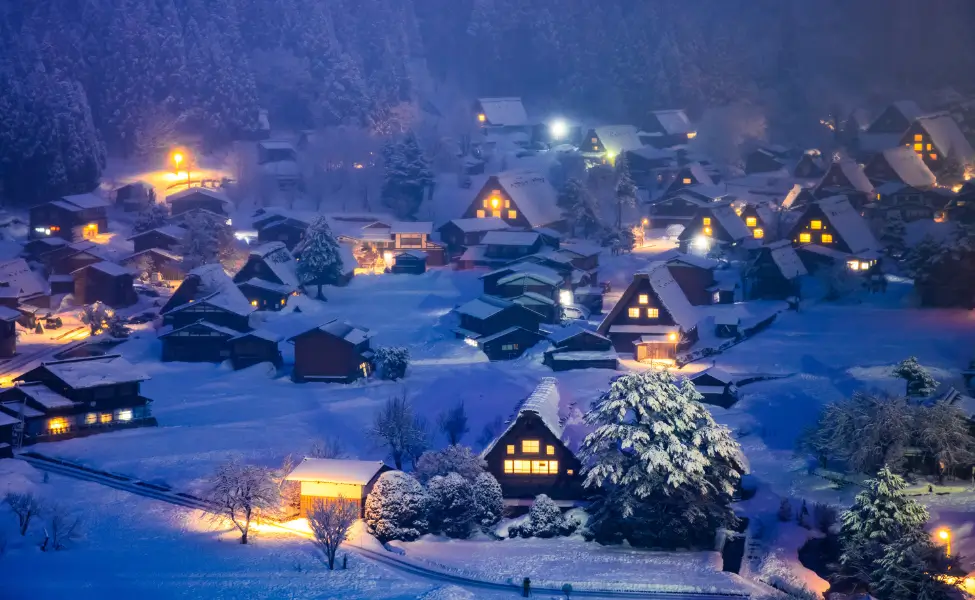
Shirakawa-go in the Ogimachi valley holds one of the largest concentrations of gassho-zukuri houses left in Japan.
UNESCO listed the area as a World Heritage Site for exactly that reason. Photos from the Shiroyama viewpoint above the village show why so many travellers build their entire Japan itinerary around this one image.
That fame comes with a real cost in time and money, and the numbers later in this article spell out exactly how much. None of that makes Shirakawa-go a mistake. It just means the famous view has to be worth the extra planning for you specifically.
Getting There From Takayama And What It Actually Costs
The transport gap between these two places matters as much as anything else in this decision. Seeing the numbers side by side makes that gap obvious.
| What you’re comparing | Hida no Sato | Shirakawa-go |
|---|---|---|
| Travel time from Takayama Station | About 10 minutes by bus, or 30 to 40 minutes on foot | About 50 minutes by bus |
| One way bus fare | 210 yen one way to Hida no Sato | About 2800 yen |
| Entry cost | 700 yen for adults, 200 yen for children aged 6 to 15 | Free to walk through the village, individual houses charge 300 to 500 yen each |
| Booking needed | None | Some departures require a seat reservation, especially on weekends, holidays, and during snow season |
| Visiting hours | 8.30am to 5pm, every day | Not a gated site, but tourists are asked to visit between 8am and 5pm |
| Comfortable time on site | 1.5 to 2 hours | 2 to 4 hours |
Nohi Bus warns that the Shirakawa-go route can run two hours or more behind schedule because of parking congestion, heavy snow, or a closed expressway. That kind of delay simply doesn’t happen on the short hop out to Hida no Sato.
Crowds, Timing, And How Much Of Your Day Each One Eats
Shirakawa-go gets much busier than Hida no Sato, and you feel that pretty much as soon as you arrive. Hida no Sato can feel like a quiet morning out. Shirakawa-go can feel more like working your way through the crowds.
Why Hida no Sato Feels Calm No Matter When You Go
Hida no Sato rarely feels overrun, even during busy seasons, because its paths and buildings spread visitors out instead of funnelling everyone toward one viewpoint. That makes it a safer bet for older travellers and for families who can’t move at a tour group’s pace.

You can also leave whenever you’re ready, instead of working backward from a fixed bus departure. If the kids tire out after an hour, or your parents need to sit down, nothing forces the visit to run longer than it should.
Why Shirakawa-go’s Crowds Are Part Of The Deal
Shirakawa-go gets busy, especially around midday and during the warmer months. Stand at the Shiroyama viewpoint when a tour bus pulls in, and the quiet platform turns into a wall of raised phones within minutes.
Arriving early, ideally on the first bus out of Takayama, sidesteps most of that crowd before it builds. Wait until midafternoon, though, and you’ll be sharing the view with everyone else who had the same idea.
Can You Actually Do Both In One Day
Squeezing both into one day is possible, but only just. Hida no Sato adds about two hours including transport. Shirakawa-go adds four to six hours including its bus ride and time on site.
Add it up, and six to eight hours of your day disappear before lunch, shopping, or a walk through the old town have even started. That’s before counting the wait at the Shirakawa-go terminal if your preferred return bus is already full. It is possible if you’re an early riser and a confident planner. But it leaves almost no room for anything to go wrong.
If You’re Picking Hida no Sato
- Start the morning with breakfast and a wander through central Takayama.
- Catch the Sarubobo Bus toward Hida no Sato, or walk the thirty to forty minutes if the weather is good.
- Spend ninety minutes to two hours inside the village, leaving time for the crafts centre next door if you want a souvenir.
- Head back into town by early afternoon, with most of the day still open.
- Use the afternoon for lunch, shopping along the old town streets, or a second light attraction without feeling rushed.
If You’re Picking Shirakawa-go
- Book your bus seat for the date you want as soon as your travel dates are confirmed, especially in peak season.
- Catch the earliest practical departure from Takayama Nohi Bus Center to beat the midday crowd.
- Head toward the Shiroyama viewpoint first if you want clear photos, then work your way down into the village itself.
- Budget two to four hours on site so you’re not rushing past the houses you came to see.
- Build your return trip around the bus schedule rather than your own pace. Treat the rest of the Takayama day as a bonus rather than a plan.
Who Should Pick Which, Plain And Simple
If you’re still torn, this comes down to who’s actually making the trip and how much patience everyone has left. The right call changes depending on who’s in your group.
- Families with young children generally do better at Hida no Sato. The visit ends whenever the kids are done, not whenever the bus says so.
- Older parents or anyone with mobility concerns usually fare better with the shorter transfer and the flatter, calmer paths at Hida no Sato.
- First time visitors with only one day in Takayama get more from keeping things simple at Hida no Sato. They can spend the afternoon in town.
- Anyone who came to Japan specifically for that one famous valley photo should still make the trip to Shirakawa-go and just plan the transport properly.
- Travellers with two or more days in Takayama can comfortably fit in both, splitting them across separate days instead of cramming them into one.
