
Transport fares, bus schedules, and service windows verified against current timetables. Confirm specific connections before travel as rural services update seasonally.
If you have already figured out that the Kiso Valley deserves more than a day trip, you are ahead of most people who research this region. The next question is harder, and it is the one that actually determines whether the trip works. Which towns? Which base? How do the trains connect, and what happens if you miss the local service at Nagiso?
This article answers those questions directly, with the transport steps, accommodation realities, and timing decisions that most planning content glosses over.
Why Two Nights Is the Minimum That Makes It Work
One night in the valley is technically possible, but it forces you to choose between the Magome to Tsumago walk and Narai, and it means your second day starts with a travel leg before you have really settled in. Two nights is the threshold where the trip stops feeling rushed.

With two nights, the most logical split is to spend your first night in or near Magome or Tsumago, walk the Nakasendo between those two towns, and then travel north by train to Narai or Kiso-Fukushima for your second night.
The two halves of the valley are genuinely separate destinations. Narai sits around 50 kilometres north of Magome and Tsumago, close to Kiso-Fukushima, so you are not wandering between them on the same afternoon.
Three nights opens up the Akasawa natural recreation forest and gives you time to move slowly through Kiso-Fukushima without feeling like you are ticking boxes. Beyond three nights, you are probably a hiker or someone specifically drawn to the wider valley, not just the post towns.
The thing that makes overnight worth it is not the walking. It is the timing.
Tour buses from Nagoya and day trippers from Tokyo arrive by mid-morning and clear out by late afternoon. If you stay the night, you get the post towns at dusk and at dawn, and that is a fundamentally different experience from the main street at noon with a hundred people queuing for gohei mochi.
The multi-course dinner at a minshuku, which typically runs to mountain vegetables, river fish, and local soba, is reason enough on its own to stay.
How to Get There Without Getting It Wrong
The Kiso Valley has no shinkansen station. Everything connects through the JR Chuo Line, which runs along the Kiso River between Nagoya and Matsumoto. The main limited express on this corridor is the Shinano, running approximately once an hour.

From Nagoya
The Shinano reaches Kiso-Fukushima in around 85 minutes and Nakatsugawa (the station for Magome) in about 50 minutes. The fare to Nakatsugawa is approximately 3,000 yen one way and the Shinano is fully covered by the JR Pass, though the local bus from Nakatsugawa to Magome (around 30 minutes, 800 yen in cash) is not.
From Kyoto
Take the shinkansen to Nagoya first. A Hikari service takes around 35 minutes and the full JR Pass covers it without a supplement, unlike the Nozomi.
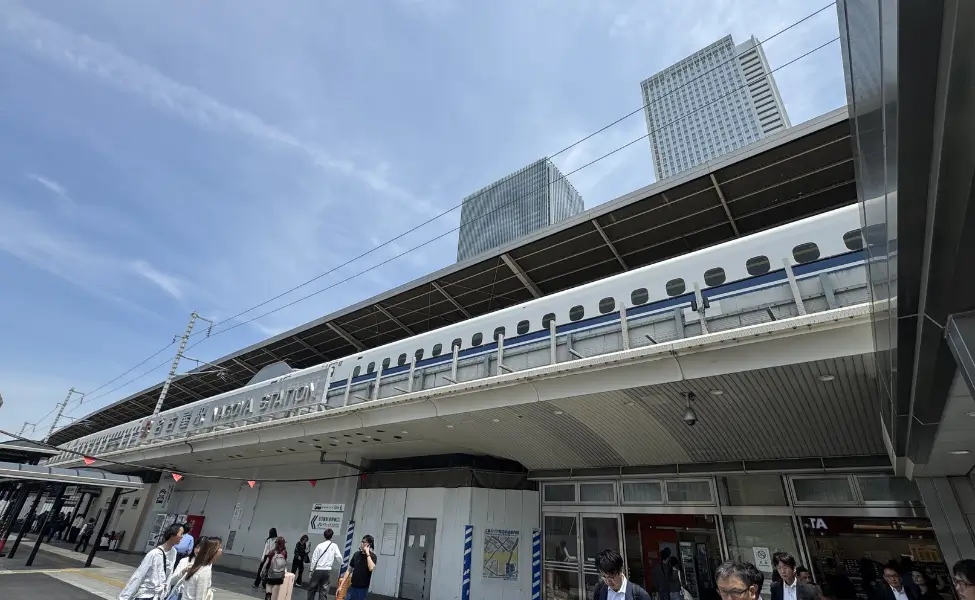
From Nagoya, transfer to the Shinano as above.
From Tokyo
Your starting point determines the better route. If Magome or Tsumago is your first stop, the via-Nagoya route on the Shinano works cleanly. If you are heading to Narai first, the Azusa limited express from Shinjuku to Shiojiri, then a local connection south into the valley, avoids the Nagoya detour entirely and takes around three hours from Shinjuku.
The highway bus from Shinjuku to Magome is another option, taking around 4.5 hours and costing 4,900 to 7,700 yen depending on the day. The bus drops you at the Misaka rest stop on the Chuo Expressway, a 20-minute walk from Magome.
From Takayama
The Nohi Bus operates one return service daily between Takayama, Magome, and Tsumago from April through November.
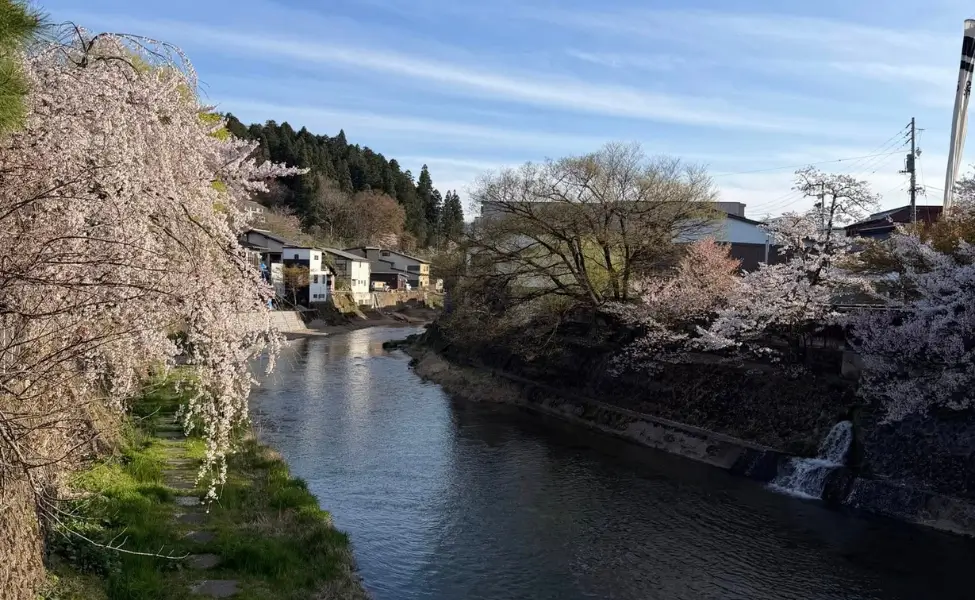
The fare between Takayama and the Kiso Valley is 5,000 yen one way. If you are combining Takayama and the Kiso Valley in the same trip, this service saves you a significant detour via Nagoya.
The Nagiso problem
This catches a lot of people out. Tsumago’s nearest station is Nagiso, but most Shinano limited express services do not stop there. You either need to book a seat on one of the services that does stop, or transfer to a local train at Nakatsugawa. The bus from Nagiso Station to Tsumago takes about seven minutes and costs 300 yen.
Missing the Nagiso connection is not a minor inconvenience because the local train frequency is low and a missed service can cost you two hours. Check your specific service before buying a seat, and build buffer time into this leg.
Which Town to Use as Your Base
The clearest way to think about this is to separate the post-town experience from the practical question of where to sleep when you cannot get a post-town room.
Tsumago
The town as a small number of traditional inns on and just off the preserved main street. The most reliable options directly within the preserved streetscape are traditional hatagoya-style inns with meals included. Expect around 10,000 to 15,000 yen per night with dinner and breakfast.

Shared bathrooms are standard in older properties, and rooms may not have locks. Book three to six months ahead for autumn weekends. Midweek in late October is noticeably quieter than weekends and slightly easier to book.
Magome
Magome has several minshuku on the cobbled main street but a small total room count, and several properties only accept direct bookings through their own websites rather than through international platforms.

If you find limited availability, it is not that the town is fully booked. It may simply mean the inns with rooms available do not list on that platform. Booking directly in Japanese is often necessary, and your accommodation can usually help arrange this in advance.
Narai
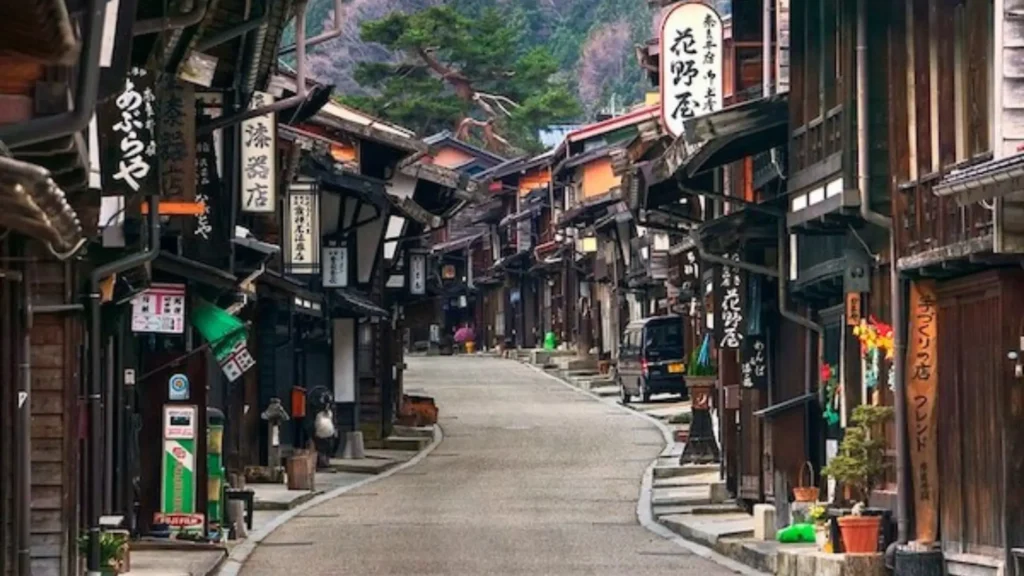
This area tends to be slightly easier to book than Tsumago or Magome and has a longer preserved streetscape than either. It is a different atmosphere, quieter and less visited, which suits some travellers better than the better-known southern towns.
Kiso-Fukushima
The practical base if you want flexibility. It has a direct Shinano stop, more accommodation options at various price points, restaurants open in the evening, convenience stores, and an ATM.

Day trips to Narai (about 20 minutes by local train), Tsumago, and Magome are all workable from there. If you are travelling as a group, prefer Western-style bedding, or are arriving without a confirmed booking, Kiso-Fukushima is where to base yourself.
Winter is the one season when post-town availability opens up. Some minshuku close entirely from December through February, but the ones that stay open are sometimes bookable with a week’s notice when they would otherwise fill months out. The towns under snow are genuinely atmospheric, and the quietness is extreme. Verify every service before you go, because the luggage forwarding service, the Nohi bus from Takayama, and several teahouses all close for winter.
The Transport Steps Between Magome, Tsumago, and Narai
These three towns are not a cluster. Walking between Magome and Tsumago is around eight kilometres along a well-marked section of the Nakasendo and takes two to three hours at a relaxed pace. The trail is relatively gentle with more uphill in the Tsumago-to-Magome direction, so most people walk south to north, starting at Magome and finishing at Tsumago.
If you are not walking, the direct bus between Magome and Tsumago runs around four times daily and takes about 27 minutes. The fare is in the 600 to 800 yen range. This service is not covered by the JR Pass and runs less frequently outside peak season, so check the current timetable before you build your day around it.

The luggage forwarding service run by the Tsumago and Magome tourist information offices operates from 20 March through 30 November. Drop your bags at either office between 8.30am and 11.30am, pay 1,000 yen per bag, and collect them at the other end between 1pm and 5pm. No advance reservation is needed. This service only runs during the tourist season, and if you arrive on 1 December expecting it to be operating, it will not be.
Narai has its own station on the JR Chuo Line. Getting to Narai from Nagiso or Nakatsugawa means checking the local JR Chuo Line timetable carefully. Some services run through without a transfer, while others require a change at Kiso-Fukushima depending on the time of day. The local train frequency between valley stations is low, and the last connection of the day in this part of the valley is not late. Plan buffer time into every leg.
When to Go and What It Does to Your Planning
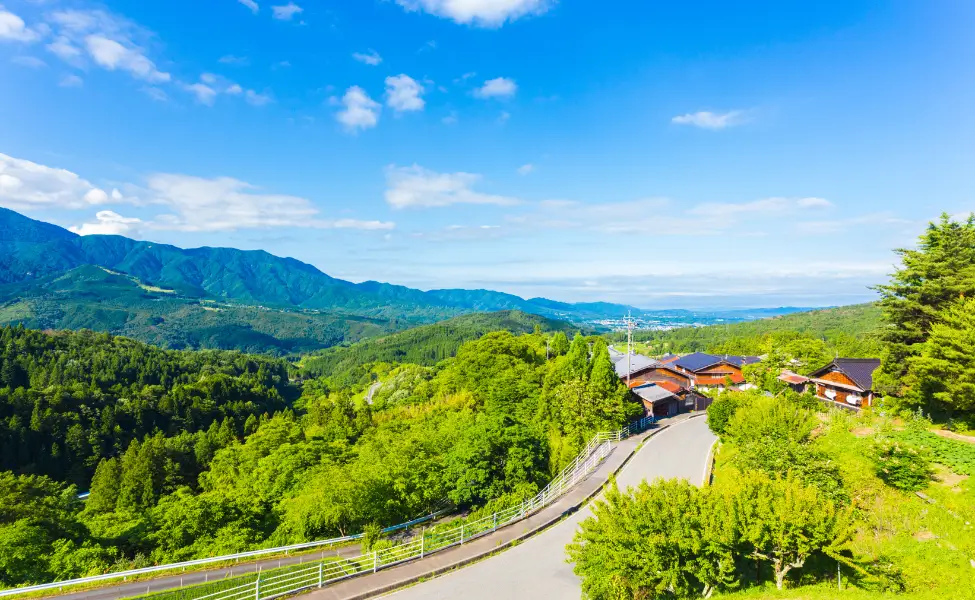
The Kiso Valley sits at altitude, so its seasons run slightly behind lowland Japan. Cherry blossoms in Narai arrive in late April, and the summer temperatures along the cedar canopy trails typically range from about 18 to 26 degrees, making it one of the more comfortable destinations in Japan during July and August.
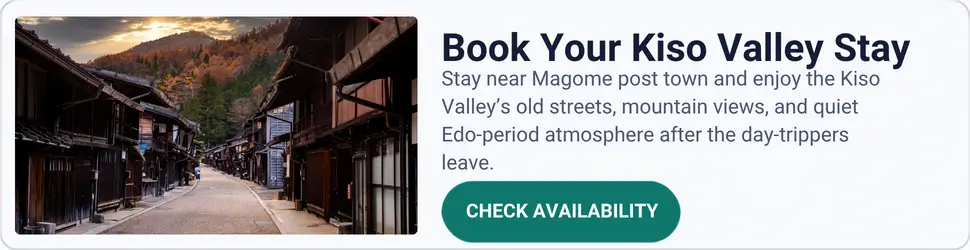
Autumn is the peak season, with foliage in the higher areas of the valley typically running from mid-October to early November. This is when the post towns look the way they do in every photograph, and it is when accommodation is hardest to find. Domestic tour groups claim a significant share of the limited room stock in Tsumago and Magome in October.
If you are targeting autumn, treat your accommodation booking as the first fixed action after deciding to go. Midweek visits in late October are noticeably quieter than weekends, and if you have any flexibility, a Tuesday to Thursday stay during that window is worth arranging.
Early October is a genuine shoulder window. The foliage has not quite peaked, the summer humidity is gone, and post-town minshuku are sometimes bookable with under a month’s notice on weekdays.
Late May falls into a similar category, with good walking weather and real availability compared to April.
Spring in April is busier than it looks at first glance because group walking tours regularly block-book the limited room stock. Late April and early May (Golden Week) are particularly pressured. The weeks before and after Golden Week are much calmer.
What to Eat and How to Handle Cash
The Kiso Valley has a food culture shaped by its mountain isolation.
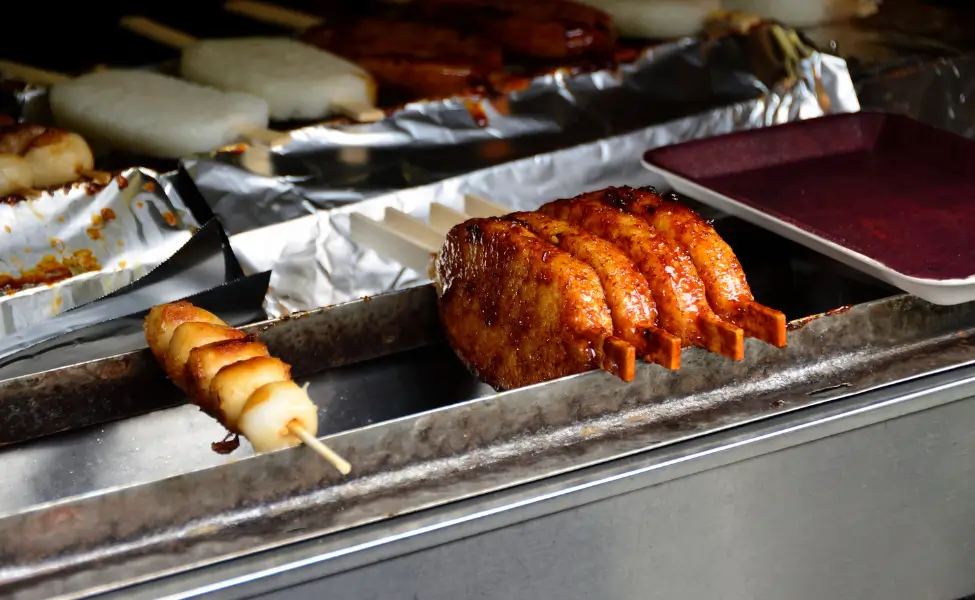
Gohei mochi is the valley’s signature snack. Rice pressed onto a wooden skewer, coated in walnut miso or sesame sauce, and grilled over charcoal at a roadside teahouse. Prices at stalls along the post towns are typically in the 200 to 400 yen range. Every post town has stalls, and eating one while walking the cobbled street is a reasonable use of your first ten minutes.
Kiso soba has a long local history, with clear mountain river water producing clean-tasting buckwheat noodles. Most soba shops serve it alongside sunki, a fermented turnip green pickle unique to this region that uses lactic acid rather than salt for preservation. Sunki appears primarily in winter and early spring, particularly on menus in the northern valley around Narai and Kiso-Fukushima.
Iwana, the mountain river char, arrives grilled whole on a skewer over an open hearth at many inns and on the better minshuku dinner menus. Sansai, wild mountain vegetables, appear as tempura, simmered dishes, or pickles throughout spring and summer.
Dinner outside your inn after 6pm is extremely limited in Tsumago and Magome. The teahouses and snack stalls close when the day visitors leave.
Book your minshuku or ryokan with dinner included, which is the standard arrangement anyway. If you arrive without a dinner booking and find the town quiet after 5pm, your options are essentially the convenience store in Kiso-Fukushima or whatever your inn can arrange.
Carry cash throughout the valley as a significant number of teahouses, roadside stalls, and smaller minshuku do not take cards. The nearest reliably accessible ATM serves visitors at a convenience store or post office in Kiso-Fukushima.
Frequently Asked Questions
You can, but you will see the main street at its busiest and miss the quieter hours that make the towns worth visiting. The journey from Nagoya to Nakatsugawa takes about 50 minutes by Shinano limited express, plus a 30-minute bus to Magome, which means a day trip leaves you limited time on the ground before the last convenient return.
The JR Pass covers the Shinano limited express between Nagoya, Kiso-Fukushima, and Nagiso, and the local JR trains between valley stations. It does not cover the local buses, including the Nakatsugawa to Magome bus, the Nagiso to Tsumago bus, or the direct Magome to Tsumago bus.
For weekends in October in Tsumago or Magome, three to six months ahead is realistic. The total room count in the preserved post towns is very small, and domestic tour groups book early. Narai tends to be slightly easier. Kiso-Fukushima has more availability but still tightens in peak foliage weeks.
The trail is around eight kilometres and takes two to three hours at a comfortable pace. It is well marked in English and Japanese and passes through countryside rather than serious mountain terrain. The Magome to Tsumago direction involves less uphill than the reverse, which is why most people walk it that way.
Several post-town inns only accept direct bookings and do not appear on international platforms. If you cannot find availability, that does not mean the town is full. Your accommodation can sometimes contact inns on your behalf, or a Japanese-speaking friend or travel agent can book directly.
