

Thinking of coming to Japan in May?
Visit Japan too early and you battle Golden Week chaos.
Go in May’s second half and you’ll find calm temples, clear Mount Fuji views, and normal hotel prices.
The difference is staggering.
A single week can turn a stressful trip into one of the best months to visit Japan.
Understanding May Weather in Japan
May marks spring’s final month before the rainy season begins in June.
Weather varies considerably between regions, creating different experiences depending on your destination.
Temperature by Region
| Region | Average High | Average Low | Rain Days | Notes |
|---|---|---|---|---|
| Tokyo | 23-24°C | 16°C | 9-11 days | Mostly sunny, occasional showers |
| Kyoto | 25°C | 16°C | 10-13 days | Pleasant, increasingly humid late month |
| Osaka | 25°C | 17°C | 10-11 days | Comfortable, light rain possible |
| Sapporo | 16-18°C | 6-10°C | 8-9 days | Cool, late cherry blossoms |
| Nagano | 20°C | 12°C | 10-12 days | Mild mountains, snow at high elevations |
| Fukuoka | 24-27°C | 17-19°C | 10-12 days | Warmer, more humid |
| Okinawa | 28°C | 22°C | 12-14 days | Hot, rainy season starts mid-May |
Precipitation: Tokyo receives approximately 140mm rainfall over 9-11 days in May, whilst Osaka sees around 145mm over 10-11 days.
Hokkaido remains drier with less frequent rainfall, though occasional showers occur.
The rainy season (tsuyu) begins in Okinawa and southern regions around mid-May, gradually moving northward through June.
Hokkaido experiences lighter rainfall patterns throughout May rather than a concentrated rainy season.
What to Pack: Short-sleeved shirts, light trousers, a cardigan for cooler evenings, comfortable walking shoes, sun protection, and a compact umbrella.
UV intensifies in May, so reapply sunscreen frequently.
Golden Week: Essential Planning Information
Golden Week comprises four national holidays creating Japan’s busiest travel period.
Understanding these dates determines whether your trip succeeds or becomes expensive frustration.

The Holiday Structure
Golden Week runs from 29 April through early May each year, though the exact length varies depending on how weekends fall.
Fixed Holidays:
- 29 April: Showa Day
- 3 May: Constitution Memorial Day
- 4 May: Greenery Day
- 5 May: Children’s Day
When these align favourably with weekends, many Japanese take additional leave creating 7-12 consecutive days off.
Check the calendar for your specific travel year.
Impact and Strategy
During Golden Week expect hotels booked solid months ahead, prices doubling or tripling, packed trains requiring advance reservations, and lengthy queues everywhere.
Your Options:
Avoid it entirely. Visit mid to late May (after 10 May) when crowds thin and prices normalise.
Book extremely early. Secure accommodation and transport 4-6 months ahead if travelling during this period.
Visit rural areas.
Explore smaller cities and countryside where impact lessens.
Most travellers benefit from avoiding Golden Week unless attending specific events justify the crowds and expense.
Regional Highlights for May
Rather than describing every major city, this section identifies regions and lesser-known areas that suit May conditions particularly well.
Central Japan Beyond the Tourist Trail
Kanazawa (Ishikawa) offers Kenrokuen Garden at its spring peak, historic Nagamachi samurai district, and the 21st Century Museum of Contemporary Art.

The city receives far fewer tourists than Kyoto whilst delivering comparable cultural experiences.
Local speciality: nodoguro (blackthroat seaperch) peaks in spring.
Takayama (Gifu) in the Japanese Alps showcases preserved Edo-period streets, morning markets, and sake breweries.

May temperatures remain comfortable for extensive walking through the old town.
Stay in a traditional machiya townhouse rather than standard hotels.
Naegi Castle Ruins (Gifu) near Nakatsugawa provides an excellent walking trail with minimal tourists.
The hilltop castle site offers panoramic views across the Kiso Valley, particularly stunning in May when the surrounding forests show fresh green growth.
Combine with walking the nearby Nakasendo trail between Magome and Tsumago post towns.
Noto Peninsula (Ishikawa)
This remote peninsula jutting into the Sea of Japan remains largely undiscovered by international tourists.
May brings ideal conditions before summer heat.
Why Go: Rugged coastline, traditional fishing villages, terraced rice paddies (senmaida) that begin flooding in May creating mirror-like reflections, and exceptional seafood including sweet shrimp, turban shells, and squid.

Access: Rent a car from Kanazawa (essential for exploring freely) or take limited bus services to Wajima and Suzu.
The peninsula requires 2-3 days minimum.
We drove all around it a year ago and it remains an amazing memory.
Highlights: Wajima morning market (one of Japan’s largest, operating 1,000+ years), Shiroyone Senmaida rice terraces, Mitsukejima Rock, and small fishing villages like Okunoto.
Stay in a traditional minshuku (family-run guesthouse) for home-cooked seafood dinners.
If you get the chance, also spend a few hours in Wakura onsen town.

Kyushu Beyond Fukuoka
Yufuin (Oita) offers hot spring baths with mountain views, art galleries, and Lake Kinrinko.
May provides comfortable onsen weather without oppressive heat.
Walk the town’s quiet lanes visiting small museums and craft shops.
Kurokawa Onsen (Kumamoto) is a mountain onsen village where traditional ryokan line a river valley. The village maintains strict building codes preventing modern development.

Purchase a “tegata” pass allowing entry to three different onsen.
May temperatures suit extended outdoor bath soaking.
Takachiho Gorge (Miyazaki) features dramatic cliffs and the Gokase River.
Rent a rowing boat to paddle through the gorge beneath waterfalls.

The area holds deep significance in Japanese mythology, with numerous shrines including Takachiho Shrine and Amanoiwato Shrine.
Crowds remain manageable in May compared to summer holidays.
Kagoshima’s Satsuma Peninsula provides coastal drives, samurai history in Chiran (former kamikaze pilot town), and sand baths at Ibusuki.
Mount Sakurajima volcano remains active, creating dramatic landscapes.
Local specialities include kurobuta (black pork) and kibinago (silver-stripe round herring).
Hokkaido’s Eastern Regions
Most tourists concentrate on Sapporo and Hakodate, missing Hokkaido’s best landscapes.
Akan-Mashu National Park encompasses three caldera lakes: Lake Akan, Lake Mashu (one of the world’s clearest), and Lake Kussharo.

May sees less snow than earlier months whilst avoiding summer crowds.
The indigenous Ainu culture remains strong here, with Akan Kohan Ainu Kotan village offering craft workshops and traditional performances.
Shiretoko Peninsula (UNESCO World Heritage Site) becomes accessible in May as snow clears from lower elevation trails.
The Five Lakes trail typically opens late April.
Spot brown bears, deer, and foxes.
Sea kayaking trips explore the coastline’s dramatic cliffs.
Lesser-Known Flower Spots
Nabana no Sato (Mie Prefecture) near Nagoya showcases extensive flower gardens.

May features roses, petunias, and other spring blooms.
The park’s massive scale creates impressive flower carpets.
Evening illuminations run year-round. Access via Kintetsu line from Nagoya.
Hitsujiyama Park (Saitama) features shibazakura (moss phlox) hills blooming late April to early May, creating pink carpets.
Located in Chichibu, easily combined with visits to the historic Chichibu shrines.

Far less crowded than famous locations like Fuji Shibazakura Festival.
Tonami Tulip Park (Toyama) displays over 3 million tulips in 300 varieties.
The Tonami Tulip Fair runs late April to early May.
The park’s Dutch windmill provides photogenic backdrops.
Few international tourists visit Toyama, making this genuinely peaceful compared to major sites.
Seasonal Experiences Unique to May
First Tea Harvest (Shincha Season)
May marks Japan’s first tea harvest (shincha or ichibancha).
Winter dormancy creates leaves with three times more L-theanine than later harvests, producing naturally sweet, mild tea with minimal bitterness.
As for harvest times, southern areas like Kagoshima begin late April while Shizuoka harvests late April to May and northern regions in May.
Where to Experience:
Purchase fresh shincha from tea shops in Shizuoka, Uji (Kyoto), or Kagoshima. Look for kanji 新茶 (shincha) to confirm current year’s harvest.

Visit tea plantations offering tours in Shizuoka Prefecture or Wazuka (Kyoto Prefecture, quieter than Uji).
Cultural Note: Drinking tea picked on Hachiju-hachiya (the 88th night after spring begins, typically 1-2 May) traditionally brings good health throughout the year.
Mountain Access and Hiking
Kamikochi (Nagano) opens 17 April annually.
May offers clear trails and comfortable temperatures (5-15°C) before summer crowds.
Popular routes include Kappa Bridge Trail (1 hour, easy) and walks to Taisho Pond.
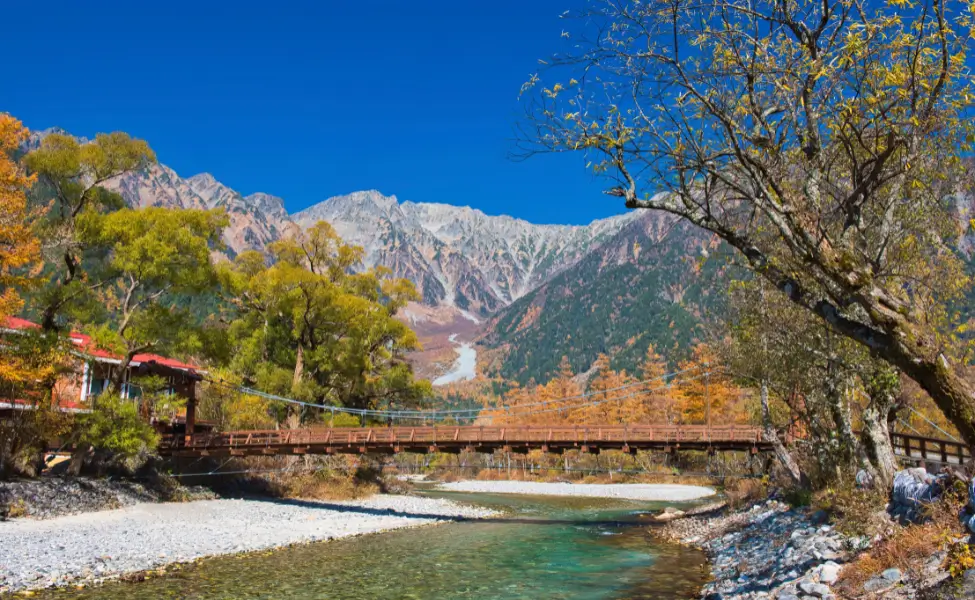
The car-free valley requires bus access from Matsumoto.
Mount Fuji Viewing (Not Climbing): The climbing season begins early July, making May impossible for summit attempts.
However, May provides excellent viewing conditions with clear skies.
Visit the Fuji Five Lakes area, travel to the 5th Station by bus, or photograph from Lake Kawaguchi and Hakone.

Tateyama Kurobe Alpine Route opens mid-April. May showcases the famous “snow corridor” where ploughed roads create walls up to 20 metres high.
Access the route from Toyama or Nagano sides.
Cultural Festivals
Sanja Matsuri (Tokyo): Third weekend of May at Asakusa Shrine.
Nearly 100 portable shrines parade through streets, with 1.5-2 million visitors across three days.
Aoi Matsuri (Kyoto): 15 May. Over 500 participants in Heian period costume process from Imperial Palace to Shimogamo and Kamigamo Shrines.
Kanda Matsuri (Tokyo): Mid-May in odd-numbered years only.
Large procession through central Tokyo.
Grand Sumo Tournament (Tokyo): Mid-May, 15 days at Ryogoku Kokugikan.
Tickets (¥3,500-40,000+) go on sale in early April.
Seasonal Food in May
May brings specific ingredients appearing briefly before disappearing until the following year.
Takenoko (Bamboo Shoots): Peak season. Try takenoko gohan (bamboo shoot rice) or in kaiseki courses.
Shincha (New Tea): First green tea harvest. Purchase from tea shops in Shizuoka or Uji.
Hatsu-gatsuo (First Bonito): Season’s first bonito catch, served as sashimi or tataki.
Sansai (Mountain Vegetables): Wild vegetables including udo, warabi, and fuki. Featured in tempura at mountain region restaurants.
Soramame (Fava Beans): Fresh broad beans served grilled or boiled at izakaya.
Practical Logistics
Accommodation and Transport
Book accommodation 2-3 months ahead for post-Golden Week dates in major cities, 4-6 months ahead for Golden Week itself if you must travel then.
Budget options include capsule hotels (¥3,000-4,000), hostels (¥2,500-3,500), and business hotels (¥6,000-8,000).

Mid-range encompasses standard hotels (¥10,000-15,000) and traditional ryokan with meals (¥15,000-25,000 per person).
Luxury properties start at ¥25,000+.
Japan Rail Passes cost approximately ¥50,000 (7-day), ¥80,000 (14-day), ¥100,000 (21-day). Regional passes cost less for focused itineraries.
Purchase before arriving in Japan.
During Golden Week, reserve shinkansen seats well ahead as trains fill completely.
Daily Budget
Budget travellers spend ¥8,000-12,000 daily (accommodation, food, local transport).
Mid-range costs ¥15,000-25,000 daily (comfortable hotels, varied restaurants, activities).
Luxury exceeds ¥30,000 daily.
Timing Your Visit
Early May (1-10 May): Overlaps with Golden Week.
Expect crowds and high prices.
Choose this only for specific festivals or southern wisteria blooms.
Mid-May (10-20 May): Optimal balance of weather, festivals, manageable crowds, and normal prices.
Late May (21-31 May): Excellent for avoiding crowds entirely. Humidity increases toward month’s end.
Important Notes
Festival schedules, accommodation prices, and transport availability change annually.
Verify current details through official sources when planning your specific travel dates:
- Sumo tournament schedules: Japan Sumo Association official website
- Festival dates: Municipal tourism websites
- Weather forecasts: Japan Meteorological Agency
- Transport reservations: Japan Railways official booking systems
Entry requirements and health regulations may apply depending on your departure country.
Check official government sources for requirements applicable to your travel dates.
Wrapping up Japan in May
May in Japan offers something special in every region, from blooming wisteria and late cherry blossoms to tea harvests and mountain trails.
With mild weather, vibrant festivals, and fewer crowds after Golden Week, it is one of the most rewarding times to explore the country.
