
Have you ever wondered when the best month to visit Japan is?
Every month brings something completely different to discover.
Japan undergoes a dramatic transformation with each season.
You’ll find fresh scenery, exciting events, and unique moods throughout the year.
Your perfect Japan trip timing depends on what excites you most.
Do you want cherry blossoms, summer festivals, autumn colours, or peaceful winter moments?
Let’s explore what awaits you in each month of the year.
The best month to visit on Japan depends on you.
Here are some recommended activities:
January: Skiing and Snow Monkeys in Nagano
Nagano becomes a winter wonderland in January.

Fresh powder snow blankets the mountains.
The air feels crisp and clean, creating perfect conditions for winter adventures.
Hakuba Valley gives you access to over 200 ski runs across multiple connected resorts.
Day passes cost around 5,500 yen.
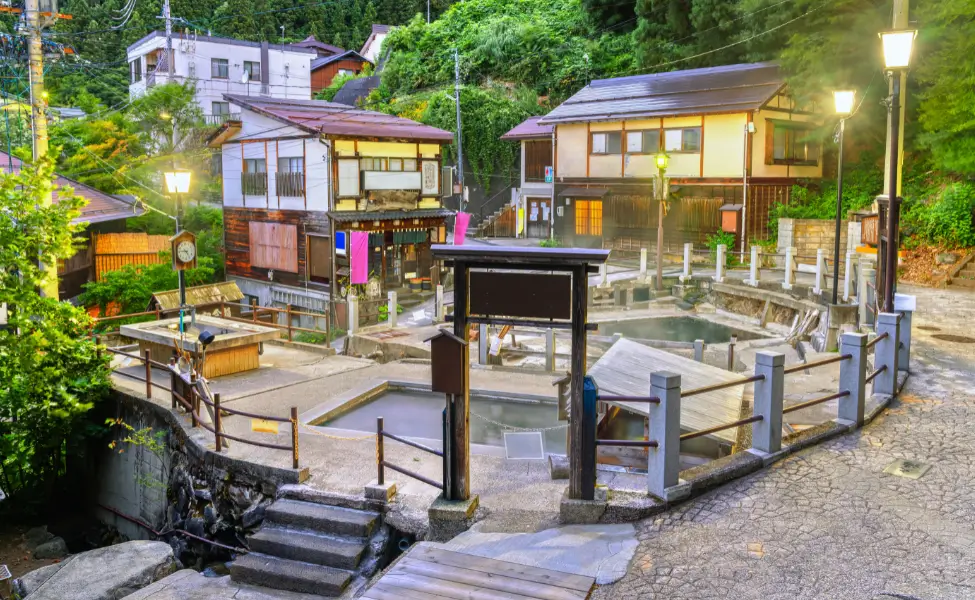
Nozawa Onsen combines excellent skiing with a traditional village feel and natural hot springs that date back 1,300 years.
Both locations welcome beginners and challenge experts.
The 1998 Winter Olympics took place here, adding historical significance to your visit.
But you don’t need to ski to enjoy Nagano.
The famous snow monkey park at Jigokudani creates unforgettable wildlife encounters.

Watch Japanese macaques soak in natural hot springs while snow falls around them.
Temple lodging options at places like Shibu Onsen offer cultural immersion.

You can collect stamps at nine public baths.
This lets you enjoy a traditional pilgrimage experience right in the village.
February: Sapporo Snow Festival and Early Plum Blossoms
February delivers the best of two seasons.
Northern Japan bursts into life with the famous Sapporo Snow Festival, while the south greets spring’s first flowers.

The snow festival runs for about one week in early February.
It starts on the first Thursday and continues until the following Tuesday.
Odori Park displays towering snow sculptures that reach 15 metres high.
Susukino district glows with intricate ice sculptures illuminated at night.

Tsudome site buzzes with snow slides and interactive activities.
You can enter everything for free.
Take the JR Airport Express from New Chitose Airport (37 minutes, 1,150 yen) to reach central Sapporo.
Meanwhile, plum blossoms begin blooming in warmer areas.
Kitano Tenmangu Shrine in Kyoto hosts its plum festival around 25th February.

Over 1,500 trees in 50 varieties create stunning displays.
Entry costs 1,000 yen during peak bloom.
March: Early Beach Season in Okinawa
Want to escape winter completely?
Okinawa emerges from its mild winter with warming temperatures around 20°C.

This makes it ideal for off-season beach visits.
Pack light jackets for cooler mornings and evenings.
Afternoons invite outdoor exploration without the crushing heat of summer.
For complete seclusion, try Kondoi Beach on Taketomi Island, famous for its star-shaped sand particles.
Adventure seekers can explore Nago Pineapple World, where you ride automated carts through tropical gardens while sampling fresh pineapple varieties.

Miyakojima offers some of Japan’s most spectacular beaches.
Yonaha Maehama’s powdery white sand stretches for miles, while Sunayama Beach features dramatic limestone arches framing turquoise waters.

Sea temperatures average 22°C, though locals generally consider swimming season to begin in April.
Many visitors enjoy snorkelling in March waters, while others prefer beach activities and coastal walks.
March brings peaceful beach moments and lively cultural events before the busy tourist season starts.
April: Peak Cherry Blossom Season
April represents Japan’s most celebrated season.
Cherry blossoms reach full bloom across the country, creating the iconic pink landscapes you’ve seen in photos.
Tokyo and Kyoto transform into pink wonderlands.

Temperatures stay nice, between 15 and 20°C.
During Hanami, locals enjoy time in parks under blooming trees.
Join them for an authentic cultural experience.
Ueno Park boasts over 1,000 cherry trees but attracts massive crowds.

Shinjuku Gyoen National Garden costs 500 yen to enter.
It’s a peaceful place for reflection since alcohol is not allowed.
Kyoto’s Philosopher’s Path provides a scenic 2km walk beneath hundreds of cherry trees.
Maruyama Park transforms into the city’s premier hanami destination.

Bloom periods last only one to two weeks.
This makes timing crucial for your visit.
Check forecasts in detail and book accommodation 2 to 3 months in advance for peak viewing areas.
May: Blue Pond Beauty in Hokkaido
Hokkaido reaches its most pleasant period in May.
Temperatures range from 10 to 20°C, perfect for outdoor exploration.
The famous Blue Pond in Biei showcases its most vivid colours under spring sunshine.

Natural minerals create the pond’s distinctive blue hue.
The colour appears most striking during sunny conditions.
Visit early morning or late afternoon for optimal lighting and fewer crowds.
Surrounding landscapes burst with fresh spring growth, creating perfect photo opportunities.
Matsumae Castle grounds feature over 10,000 cherry trees in 250 varieties.

This creates Japan’s northernmost sakura festival from late April to mid May.
Nearby Shirogane Onsen provides mountain-view hot springs, perfect after exploration days.
Furano’s lavender fields begin early growth, setting the foundation for summer’s purple displays.
One important note: avoid Golden Week (late April to early May) when domestic tourism peaks significantly.
June: Mountain Hiking in Northern Regions
Northern areas like Hokkaido showcase their greenest period in June.
Temperatures sit nicely between 15 and 25°C.
The trails are uncrowded, and the snow has fully melted, making hiking perfect.
Mount Rishiri offers challenging summit attempts that take 10 to 12 hours return.

Shorter Oshidomari routes provide easier access to wildflower meadows.
Take the ferry from Wakkanai to Rishiri Island (1 hour 40 minutes, 2,370 yen).
Rebun Island uses the same Wakkanai ferry route (1 hour 55 minutes, 2,540 yen).
It features an 8-hour trekking course through alpine flowers and coastal cliffs.
Kushiro Marshland presents boardwalk trails through Japan’s largest wetland.
Red-crowned cranes call across misty mornings, creating unforgettable wildlife encounters.
The JR Senmo Line connects Kushiro to key viewing points (30 minutes to Kushiro-shitsugen Station, 540 yen).
Forest wildflowers paint mountainous regions in purple lupins and white daisies.
June comes before July’s heavier rains, keeping trails mostly dry.
July: Forest Retreat in Wakayama
Japan gets hot and humid in July, but Wakayama provides relief.
Its mountainous terrain and coastal breezes offer cooling alternatives to sweltering cities.

Ancient cedar forests and sacred pilgrimage routes create natural air conditioning.
The Kumano Kodo pilgrimage network winds through shadowy woodlands with rest areas throughout.
The Nakahechi route spans 38km from Takijiri-oji to Hongu Taisha.
You can walk it in comfortable sections rather than all at once.
Express trains from Osaka to Kii-Tanabe take 2 hours (3,350 yen), then local buses reach trailheads.
The Koguchi to Nachi Taisha section boasts stunning waterfalls, like the 133-metre Nachi Falls.
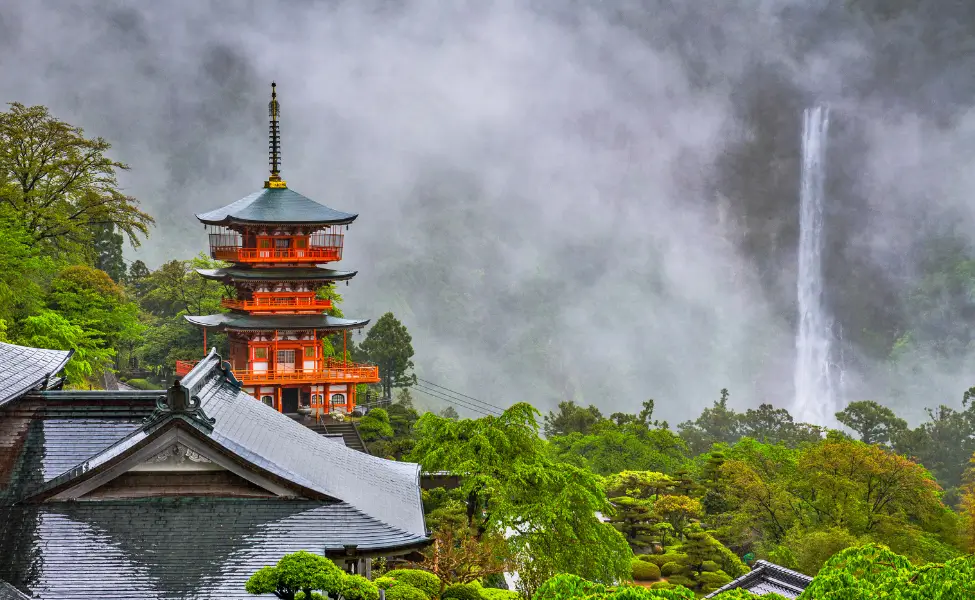
Koyasan’s spiritual centre maintains cool temperatures even during hot days.
The Nankai Koya Line from Osaka reaches Gokurakubashi Station (1 hour 30 minutes, 1,230 yen).
Cable cars then climb to the mountaintop temples.
Temple stays (called shukubo) at places like Kongobuji Temple cost 10,000 to 15,000 yen per person.
This includes traditional Buddhist meals served at 6am and 5pm.
Coastal Shirahama has Pacific Ocean breezes and outdoor baths by the crashing waves at Saki-no-yu.

JR express trains from Osaka take 2 hours 30 minutes (4,610 yen).
Sandanbeki cliffs provide dramatic seaside scenery with underground cave tours (1,400 yen entry).
August: Fireworks Festivals and Obon Celebrations
August explodes with energy across Japan.
Thunderous fireworks displays light up night skies.
Traditional Obon festivities celebrate ancestral spirits through dance and lantern light.
Tokyo’s Sumida River Fireworks Festival launches over 20,000 fireworks in 90 minutes.

It attracts nearly one million spectators.
Arrive at Asakusa by 4pm for prime riverside viewing positions.
The Awa Odori festival in Tokushima (12 to 15 August) features over 100,000 dancers in colourful happi coats.
They perform in organised groups called “ren” throughout city streets.
JR express trains from Osaka reach Tokushima in 2 hours 30 minutes (5,140 yen).
Obon traditions include Bon Odori circle dances where anyone can join.

Illuminated lantern displays create golden evening glows throughout cities.
Buddhist temples across the country welcome visitors to participate in traditional circle dances.
Simple steps are taught on-site, so don’t worry about experience.
Yukata (summer kimono) rentals cost 3,000 to 5,000 yen near festival sites.
This enhances your cultural participation significantly.
September: Early Autumn in Northern Mountains
September brings relief from summer heat as autumn colours begin appearing in northern regions.
Temperatures range from 20 to 28°C with decreasing humidity levels.
The change feels refreshing after August’s intensity.
Mount Asahidake, Hokkaido’s highest peak, displays the first autumn colours around mid September.

The mountain ropeway gives stunning views as alpine plants change to bright reds and golds.
This preview of autumn creates excitement for the full season ahead.
Lake Towada in northern Honshu begins its colour transformation.
Surrounding beech and maple forests gradually shift from green to yellow.
Pleasant temperatures make hiking comfortable without summer’s oppressive conditions.

The autumn equinox holiday, around 23rd September, marks harvest festivals across the country.
Fewer tourists create opportunities for quieter exploration of both cities and natural areas.
September blends late summer festivals with early autumn events, right before peak foliage starts.
October: Vibrant Autumn Colours in Aichi
Aichi prefecture transforms into brilliant displays of red, yellow, and orange foliage.
Autumn reaches central Japan with maple-lined gorges and temple grounds carpeted in fallen leaves.
Korankei Gorge near Toyota City becomes spectacular, with over 4,000 maple trees creating tunnels of colour along the Tomoe River.

Peak viewing usually happens from mid to late November.
In October, you’ll only see early colour changes at higher elevations.
Evening illuminations enhance night-time viewing during peak season.
Express trains from Nagoya to Toyota City take 30 minutes (470 yen), then local buses reach the gorge (20 minutes, 420 yen).
Obara in Toyota City offers a unique sight pale pink cherry blossoms and bright autumn leaves at the same time in October and November.
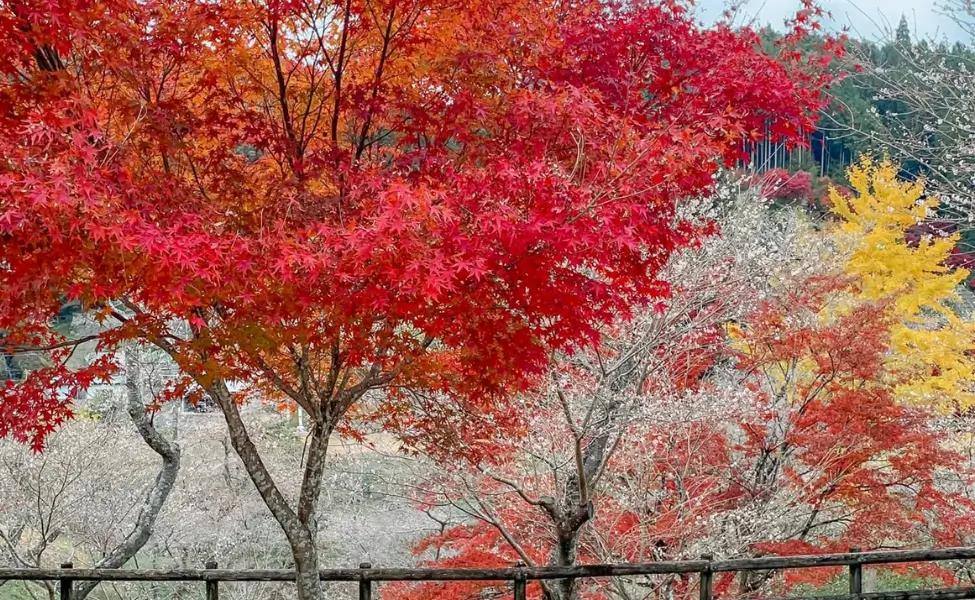
This botanical anomaly creates extraordinary photographic opportunities impossible elsewhere in Japan.
Oidaira Park has hiking trails winding through mixed forests.
In autumn, the trees change from green to gold to deep red, creating beautiful layers of colour.

The observation deck provides panoramic views across changing landscapes.
There is parking available and it was free when we went.
Though it was fairly busy.
Temperatures between 15 and 22°C are comfortable.
They make exploring outdoors pleasant across the prefecture.
November: Peak Foliage Season in Ishikawa
Ishikawa showcases Japan’s most stunning autumn displays in November.
Temperatures stay nice between 10 and 18°C.
Japanese maples burst into vibrant colours across the prefecture, making stunning natural displays.
Kenrokuen Garden in Kanazawa is one of Japan’s top three gardens.
It changes beautifully with maple reflections in its still ponds.

November brings installation of yukitsuri (rope tree supports).
These form unique cone shapes for winter snow and enhance garden scenes with artful touches.
The Kouyou Matsuri, or Autumn Leaves Festival, usually takes place in early November in different locations.
It celebrates autumn with food stalls, shows, and lanterns that brighten the night.
Yamanaka Onsen hot spring town nestles amongst coloured hills.

You can soak in outdoor baths surrounded by autumn scenery, combining relaxation with natural beauty.
Reduced tourist numbers compared to major cities create opportunities for quiet seasonal appreciation.
December: Winter Illuminations and Year-End Traditions
December transforms Japanese cities into sparkling wonderlands through elaborate illumination displays.
Traditional New Year preparations create bustling markets and ceremonial preparations throughout the country.

Tokyo Station’s Marunouchi district has amazing light tree corridors that run for 200 metres.
Roppongi Hills has traditional German Christmas Markets.
You’ll find wooden stalls serving glühwein for 800 yen and tasty European treats.
Most illuminations operate from 5pm to 11pm daily.
Nabana no Sato in Mie Prefecture showcases Japan’s largest illumination display.

Millions of LED lights create themed landscapes from late October through May.
The winter illumination tunnel stretches 200 metres with changing seasonal themes.
Entry costs 2,300 yen including a 1,000 yen voucher for use within the park.

Take the JR Kansai Line to Kuwana Station, which is 1 hour from Nagoya and costs 840 yen.
After that, shuttle buses provide direct service to the gardens for a return fare of 600 yen.
Understanding Japan’s Seasons
Japan’s distinct seasonal changes significantly shape travel experiences.
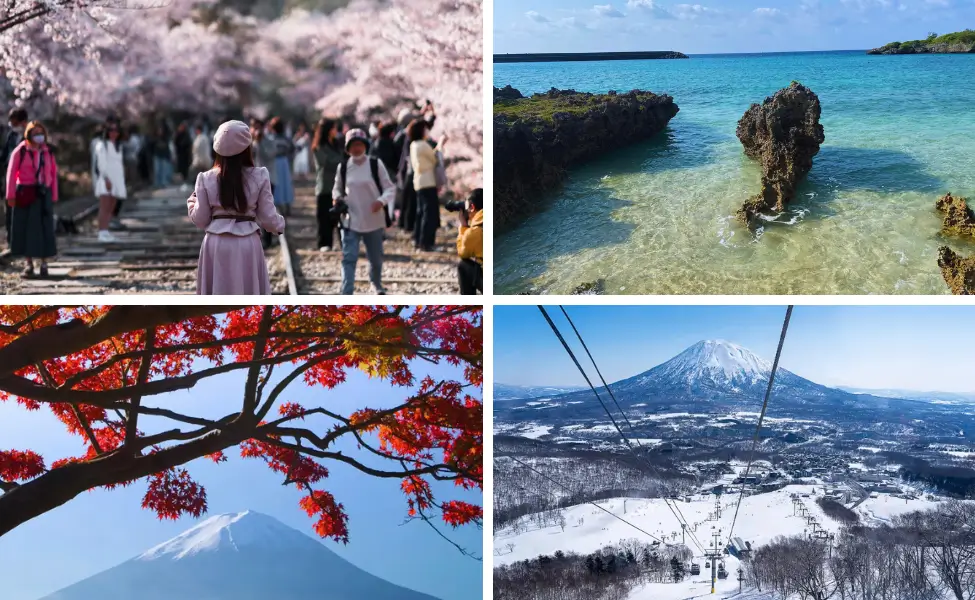
Spring brings cherry blossoms and mild weather.
Summer delivers festivals and hot humidity.
Autumn showcases spectacular foliage.
Winter provides snow sports and illuminations.
Regional Climate Variations
Northern Hokkaido experiences heavy snow and freezing temperatures perfect for winter sports.
Southern Okinawa maintains subtropical conditions year-round.
Central regions including Tokyo and Kyoto enjoy four distinct seasons with varying intensity.
Spring and autumn offer mild temperatures and comfortable conditions.
Summers become hot and humid with frequent rainfall.
Winters bring cold but generally manageable conditions with less snow than northern areas.
Essential Travel Planning Tips
Successful Japan trips require seasonal awareness and advance planning.
Each season brings unique opportunities and challenges worth considering before you book.
Spring tips: Cherry blossom season draws big crowds, so book your stay 2 to 3 months in advance.
Weather remains mild and pleasant for outdoor activities.
Summer planning: High temperatures and humidity demand lightweight, breathable clothing and frequent hydration.

Festival seasons provide cultural immersion opportunities despite heat challenges.
Autumn Advantages: Comfortable temperatures of 15 to 20°C make it great for outdoor adventures.
November offers particularly quiet periods at popular destinations.
Winter essentials: Temperatures range from 0 to 10°C in most regions.
Hot spring visits provide warming relaxation, whilst northern areas offer excellent snow sports.

Universal recommendations: Carry cash because many places, especially in rural areas, don’t accept cards.
Download weather apps for accurate forecasts and seasonal predictions.
Layer clothing for temperature variations throughout days.
Check local event calendars for festivals and seasonal celebrations.
Book popular attractions and accommodations well in advance during peak seasons.

