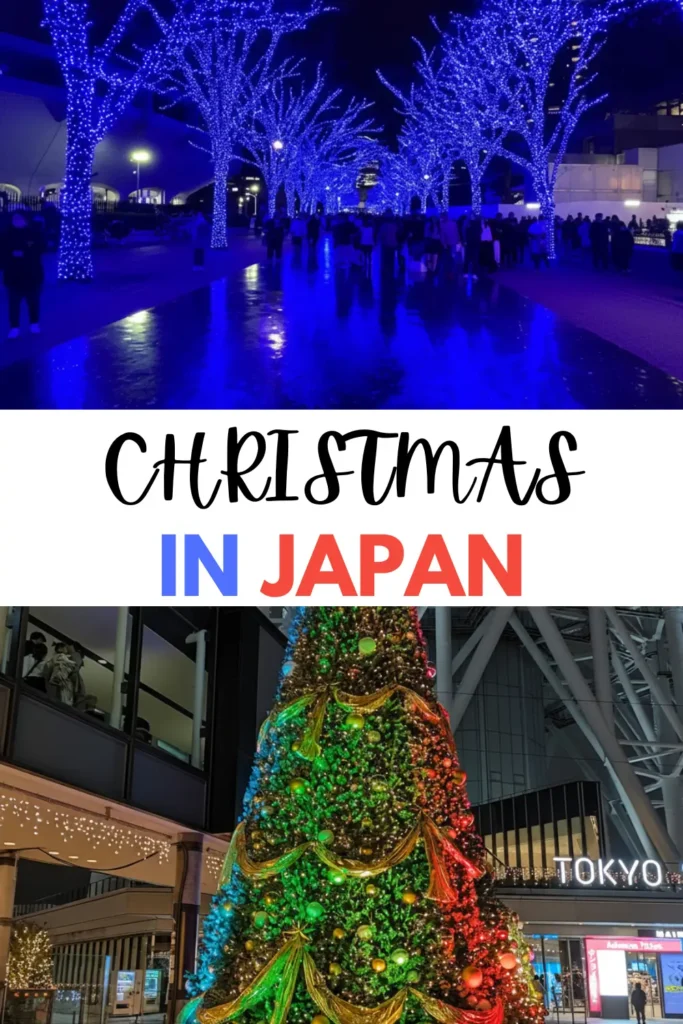

Christmas in Japan raises questions that seem impossible.
Why do 3.6 million families eat KFC on Christmas Day?
Why is Christmas Eve more important than Christmas itself?
And why do couples treat it like Valentine’s Day while families wait for New Year?
The answers reveal how Japan took Western traditions and reinvented them completely, creating something both familiar and foreign.
Quick Reference: Essential Christmas in Japan Facts
Key Dates:
- Mid-November: Illuminations begin
- 21 November: Christmas markets open
- 24 December: Christmas Eve (main celebration)
- 25 December: Regular working day
- 26 December: All Christmas decorations removed
- 28 December to 4 January: New Year holiday (everything closes)
Top 5 Experiences:
- Queue for KFC Christmas dinner (order 6 weeks ahead)
- View illuminations in Tokyo, Osaka or Kobe
- Visit Tokyo Christmas Market at Meiji Jingu Gaien
- Try strawberry Christmas cake
- Watch couples on romantic dates at Christmas Eve
Is Christmas a Holiday in Japan?
No.
December 25th is a regular working day.
Most Japanese people head to the office as usual.
Shops stay open.
Trains run their normal schedules.
Schools might close, but that’s only because the winter break happens to start around this time.
Only about 1% of Japan’s population identifies as Christian.
Christmas arrived through American influence after World War II.
It evolved into a commercial event rather than a religious one.
Think of it as imported entertainment, not inherited tradition.
The real family holiday comes a week later.
New Year celebrations run from 28th December through 4th January.
That’s when businesses close, families reunite and Japan shuts down completely.
Christmas is just the warm up act.
The KFC Christmas Phenomenon
Here’s the most surprising fact about Japanese Christmas.
Roughly 3.6 million families eat Kentucky Fried Chicken on Christmas Day.

You need to order your bucket six weeks in advance.
On Christmas Day itself, queues snake around city blocks for up to six hours.
KFC makes one third of its annual Japanese revenue during this single season.
Special party barrels cost around ¥4,000 and sell out everywhere.
This tradition started in 1974. KFC’s Japanese manager, Takeshi Okawara, launched the “Kentucky for Christmas” campaign.
He’d overheard foreigners lamenting the lack of Christmas turkey.
His solution?
Position fried chicken as the perfect substitute.
It worked spectacularly.
The Colonel’s white beard helped.
He looked enough like Father Christmas to seal the deal.
Plus, turkey costs a fortune in Japan and most homes lack ovens anyway.
Forget roast dinners and crackers.
This is chicken in a bucket, and everyone wants in.
Sound bizarre?
That’s Japanese Christmas.
Where to see it: Visit any KFC branch in major cities from mid-December to witness the queues firsthand.
Christmas Cake: The Strawberry Sensation
This isn’t your dense fruitcake.
It’s a light sponge layered with whipped cream and topped with bright red strawberries.
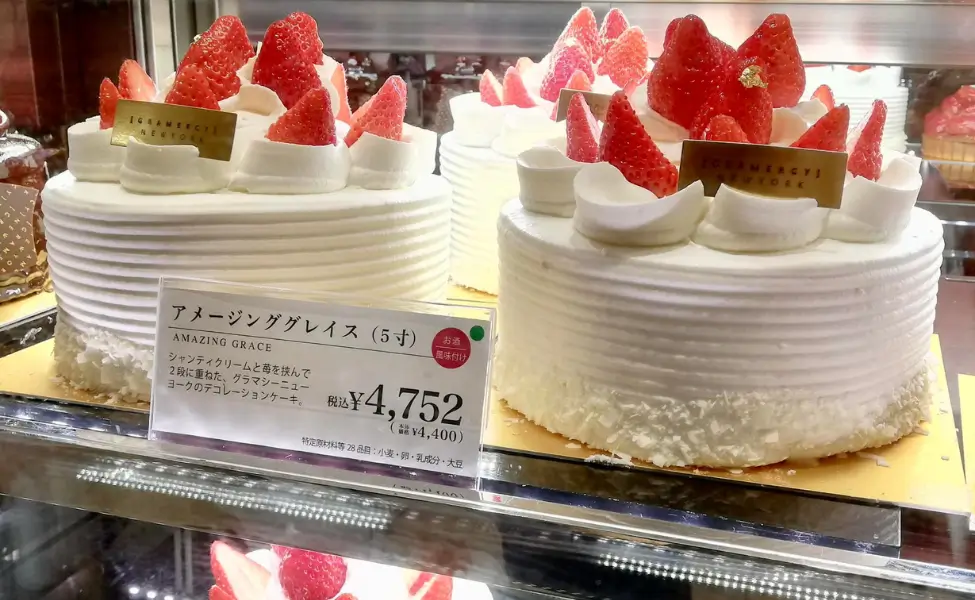
Picture a birthday cake with festive decorations.
You’ll spot chocolate Santas and tiny snowmen perched on top.
Notice those colours?
They’re no accident.
Red and white represent the Japanese flag.
Together, they symbolise good fortune and celebration.
But the cake means more than aesthetics.
After Japan’s defeat in World War II, the country lay in ruins.
Food was scarce. Sweets represented impossible luxury.
American soldiers occasionally handed out chocolates.
To children living through postwar poverty, those treats symbolised future prosperity.
As Japan rebuilt and the economy boomed, the Christmas cake became a symbol of recovery.
The confectionery company Fujiya launched it in 1922 with the simple slogan: “Let’s eat cake at Christmas.”
By the 1950s, everyone wanted one.
You’ll find them everywhere in December.
Bakeries, supermarkets, even convenience stores stock them.
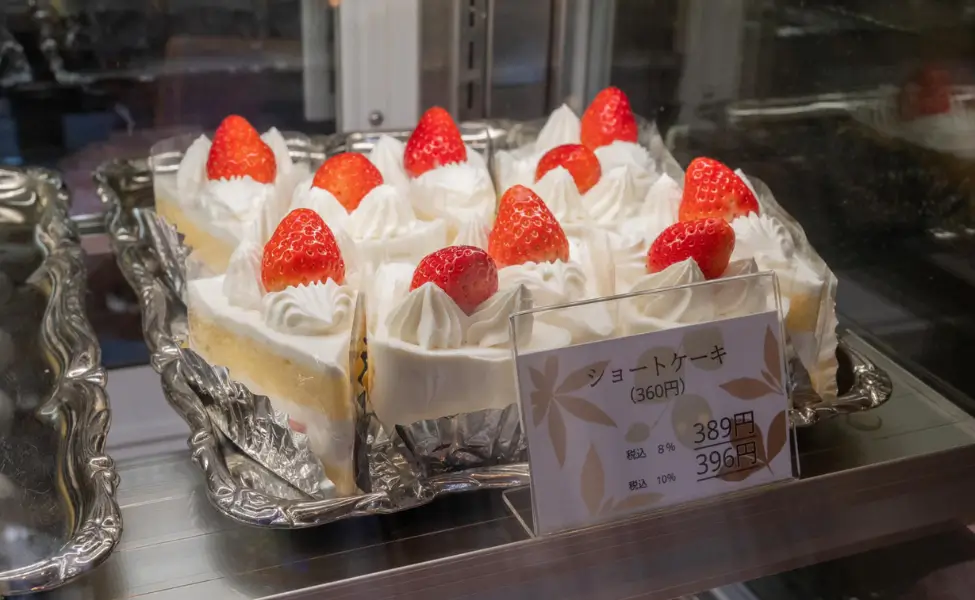
Pre order yours or face empty shelves on Christmas Eve.
One dark cultural note. Unmarried women over 25 were once called “urenokori”.
It means unsold Christmas cake, past its sell by date.
Thankfully, this offensive comparison is fading, but it shows how deeply the cake embedded itself in Japanese culture.
Best places to order: Department store food halls (depachika) in Mitsukoshi, Takashimaya or Isetan offer premium versions.
Convenience stores like 7-Eleven stock budget-friendly options.
Christmas as Valentine’s Day
In Japan, Christmas belongs to couples.
Christmas Eve ranks as the most romantic night of the year.
It outshines Valentine’s Day.
Young couples book restaurants two or three months ahead.
Fancy hotels fill up even faster.
If you’re single, you might experience “kuribottchi”.
That’s Christmas loneliness, the pressure of being alone when everyone else pairs off.
Gift exchanges unfold between romantic partners, not families.
The streets fill with people dressed up for dates.
Those romantic dates?
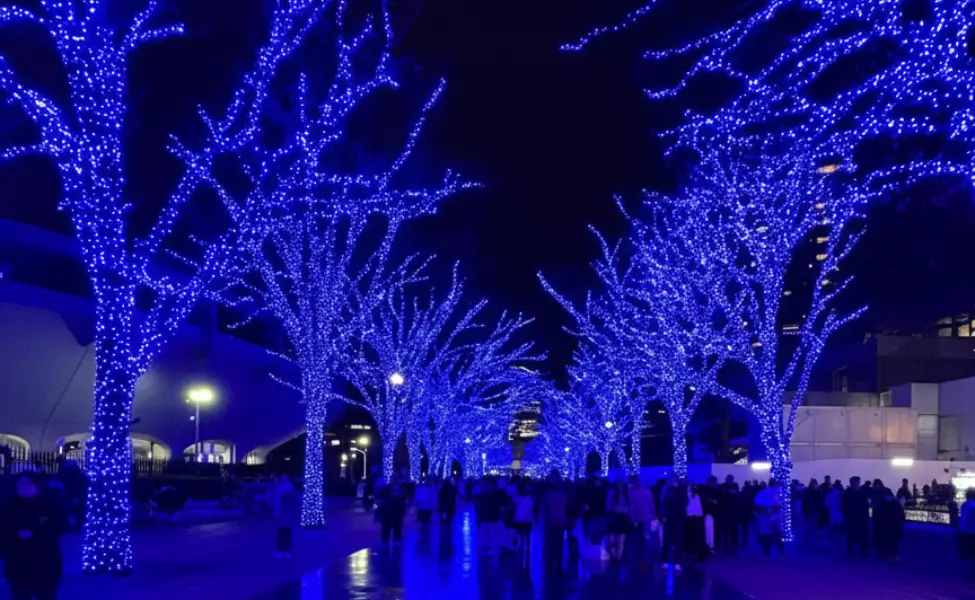
They happen under millions of twinkling lights.
This tradition possibly stems from a 1982 hit song called “My Lover is Santa Claus”.
The lyrics reinforced Christmas as a time for romantic love.
Marketing campaigns ran with it.
Now it’s an unwritten rule everyone follows.
Christmas Day is quieter.
Some friends gather for parties.
Families might spend time together.
But it lacks the intensity of Christmas Eve.
You’ll still find people shopping, visiting theme parks or just treating it like any Saturday.
The family holiday comes later.
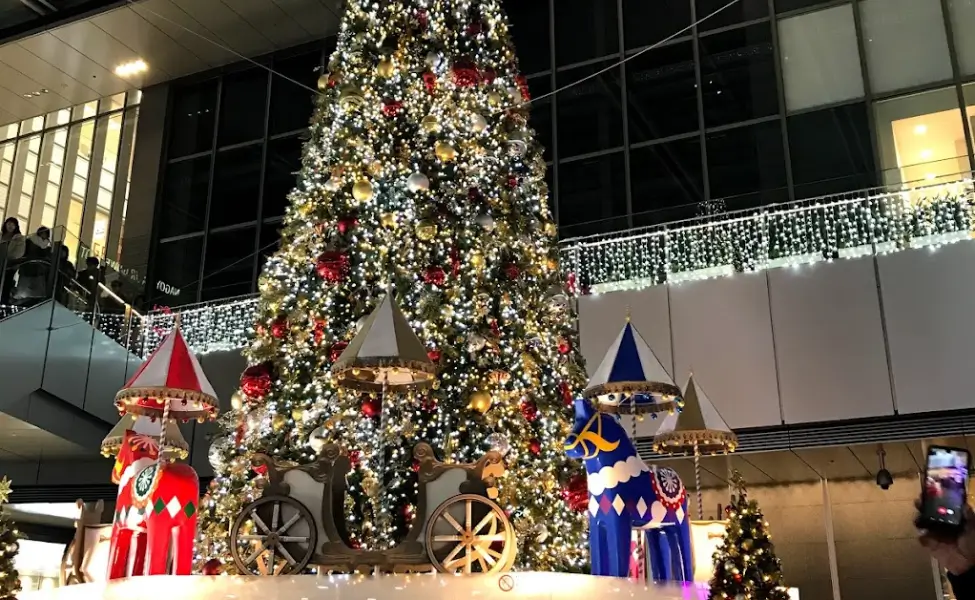
New Year is when Japanese people travel home, gather with relatives and celebrate together.
Christmas is for couples. New Year is for family.
This divide remains absolute.
Photo opportunity: Capture couples strolling through illuminated parks at Roppongi Hills or Tokyo Midtown on Christmas Eve for quintessentially Japanese Christmas scenes.
Winter Illuminations: Light Up Your Night
Japan transforms entire cities into galaxies of light from mid November through February.
These aren’t your neighbourhood Christmas decorations.
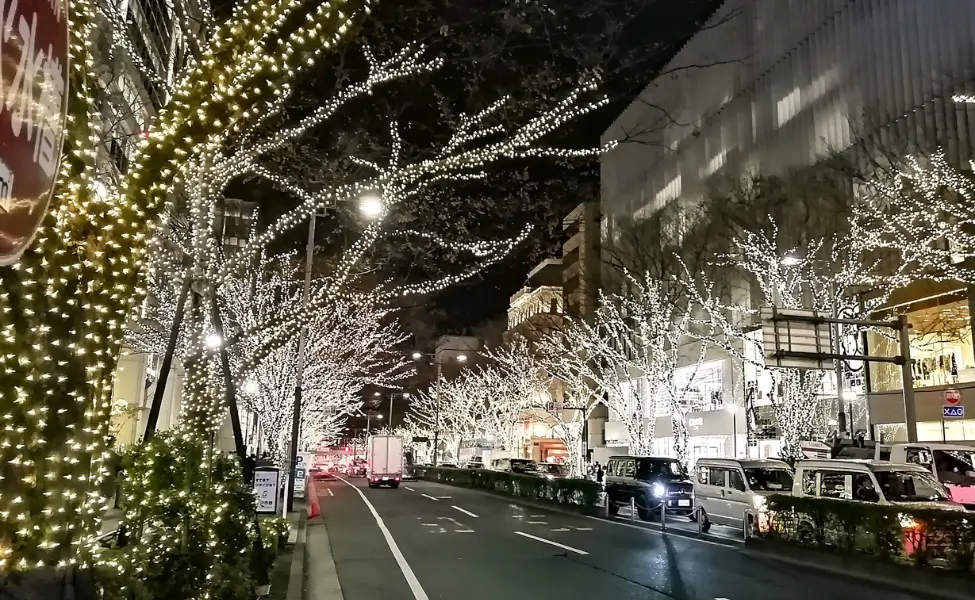
These aren’t accidents.
They’re engineered spectacles that combine art, technology and pure visual excess.
Cities compete to create the most stunning displays.
Tokyo’s Best Spots
Where should you go?
Let’s start with Tokyo.
Roppongi Hills deploys over 800,000 lights along Keyakizaka Street.

The illuminations synchronise with music.
You can view them from ground level or from the Mori Tower observation deck above.
Tokyo Midtown creates an “Ensemble Lights” display with 560,000 bulbs.
The garden transforms into a twinkling fairy tale landscape.
An ice rink adds to the winter atmosphere.
Shibuya’s Blue Cave stretches from Yoyogi Park through the shopping district.
Around 600,000 blue LEDs create an underwater fantasy.
This year marks the 10th anniversary with special additions.
Yomiuriland amusement park covers every surface in 6.5 million jewel toned lights.
Even the roller coasters glow.
The displays stay lit well into spring, giving you plenty of time to visit.
Best photo spots: Arrive at Roppongi Hills around 5pm for sunset shots with Tokyo Tower in the background.
At Tokyo Midtown, the reflection pool creates stunning mirror images.
Beyond Tokyo
Osaka’s Midosuji Street runs for three kilometres with continuous illuminations.
It’s one of the world’s longest illuminated streets.
Kobe’s Luminarie started as a memorial to the 1995 earthquake victims.
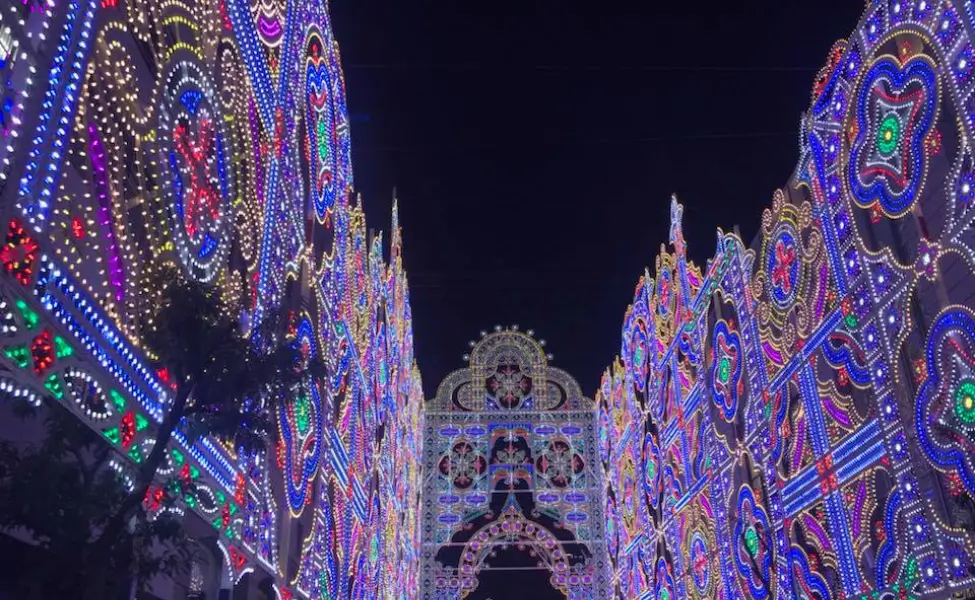
The Italian designed light festival has become an annual tradition that honours the past while celebrating the present.
Nabana no Sato in Mie Prefecture ranks among Japan’s largest displays.
Light tunnels stretch hundreds of metres.
An observation deck lifts you above the spectacle for aerial views.
Illuminations are free or charge modest admission.

They’re hugely popular with couples.
Dress warmly because you’ll spend hours outside.
The displays photograph beautifully, so charge your camera.
Christmas Markets: European Flavour in Japan
Craving bratwurst and mulled wine?
German style Christmas markets appear across major cities every December.
Tokyo’s largest market operates at two locations in 2025.
Meiji Jingu Gaien and Shiba Park both host versions.
The German Embassy and German Tourism Association support the events.
A 14 metre Christmas pyramid imported from Germany anchors the Meiji Jingu site.
Around 60 vendor stalls sell everything from ornaments to sausages.
Admission costs ¥1,000 to ¥2,000 depending on the date.
The final three days command premium prices.
Your ticket includes a festive mug for mulled wine.
The markets run from 21st November through 25th December.
Walk through and you’ll discover authentic German food.
Bratwurst, pretzels and stollen sit alongside Japanese fusion dishes.
Hot mulled wine and German beer flow freely.
The smell of cinnamon and roasted nuts fills the air.
Handcrafted ornaments, toys and winter accessories fill the shopping stalls.
Live music performances add atmosphere throughout the day.
Yokohama’s Red Brick Warehouse hosts another popular market.

The waterfront setting and historic building create picture perfect scenes.
It’s less than an hour from central Tokyo.
Smaller markets appear in shopping districts and at landmarks.
Roppongi Hills, Tokyo Skytree and various department stores all host festive stalls and entertainment.
Travel tip: Visit markets on weekday evenings to avoid weekend crowds.
Purchase advance tickets online to skip queues and secure your souvenir mug.
Gift Giving on Christmas Eve
Beyond food and lights, there’s another tradition worth knowing.
For couples, Christmas Eve is the main gift exchange day.
Romantic presents take centre stage.
Jewellery, accessories and fashion items prove most popular.
Sometimes Christmas cards appear, though these remain rare and mostly for couples.
For children, the story differs.
They typically receive one gift only from “Santa-san”.
Much more limited than Western countries.
Main gift giving happens at New Year through “otoshidama”.
These are monetary gifts in special envelopes from relatives.
Cultural differences run deep.
Children rarely give gifts to parents or siblings.
No extensive family gift exchanges happen.
Limited compared to Western Christmas.
The focus stays on quality over quantity.
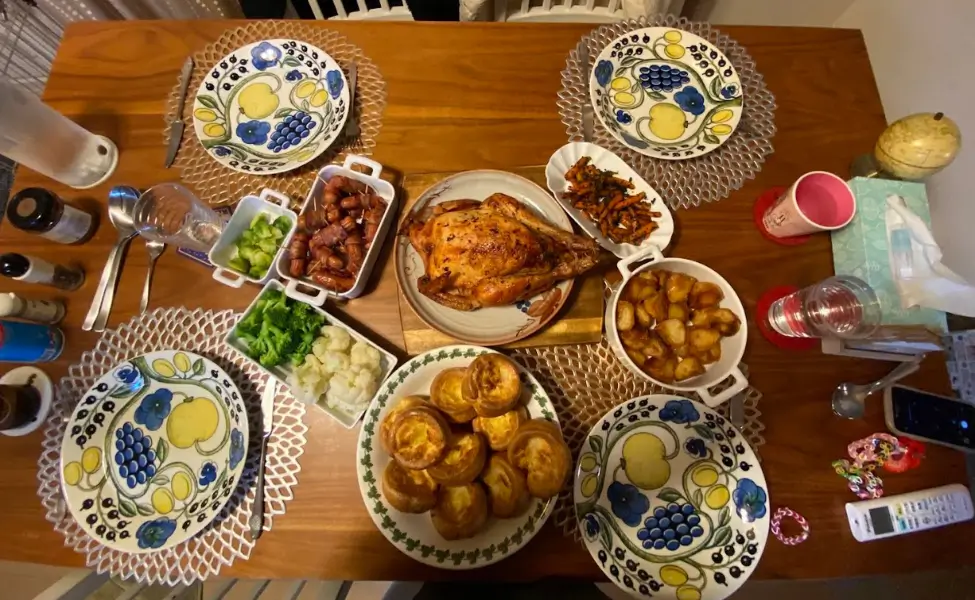
Santa-san in Japan
Japanese children do believe in Father Christmas.
They call him “Santa-san” or “Santa Kuroosu”.
Young children especially hold this belief.
He appears “like a ghost” because Japanese homes lack chimneys.
He leaves presents while children sleep.
His role differs from the West though.
He’s less central to celebrations overall.
Fewer decorations feature him in homes.
His job is limited to children’s presents.
Family traditions don’t heavily feature him.
Japan also has Hoteiosho, a Buddhist god of fortune.
He’s completely unrelated to Christmas but sometimes gets mentioned as an alternative gift bringer.
The gift reality stays modest.
One present per child is typical.
Less emphasis than in Christian countries.
New Year’s otoshidama carries more significance.
After Christmas: The Real Holiday Begins
Blink and you’ll miss it.
On 26th December, Christmas vanishes completely.
Decorations come down overnight.
New Year ornaments replace them immediately.
Kadomatsu (bamboo and pine arrangements) appear at entrances.
Shimekazari (sacred rope decorations) hang above doorways.
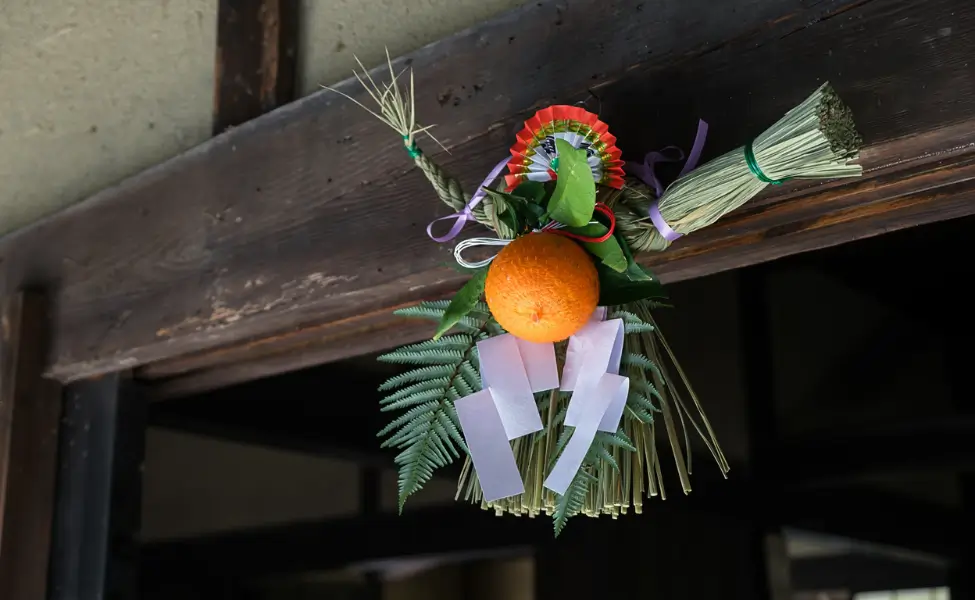
The whole aesthetic shifts from Western red and green to Japanese natural materials.
Want to see traditional Japan?
New Year, or Oshogatsu, is Japan’s most important holiday.
Everything closes from around 28th December through 4th January.
Public transport runs limited schedules.
Many restaurants shut completely.
Convenience stores stay open but with reduced hours.
Families travel to ancestral homes.
They clean their houses top to bottom before the new year.
On New Year’s Eve, they eat toshikoshi soba (year crossing buckwheat noodles) for longevity.
Many stay up to watch special television programmes.
New Year’s Day brings hatsumode, the first shrine visit of the year.

Millions of people crowd into major shrines and temples.
They pray for good fortune, buy good luck charms and drink sacred sake.
Families feast on osechi ryori, elaborate boxed meals where each dish symbolises prosperity, health or happiness.

Children receive otoshidama, monetary gifts in decorative envelopes.
The amounts vary by age and relationship.
This is Japan’s Christmas equivalent.
This is when families gather, traditions matter and religious customs hold sway.
The week long celebration dwarfs the single night of Christmas Eve.
Planning Your Japanese Christmas
So you’re convinced?
Good.
Now book everything ridiculously early.
Christmas Eve restaurants fill up two months ahead.
KFC orders open six weeks before Christmas.
Christmas cakes need booking by early December.
Popular illumination spots with paid entry sell out on weekends.
Hotels in central Tokyo, Osaka and Kyoto raise prices and fill quickly.
Book accommodation three months ahead if possible.
Consider staying slightly outside city centres for better availability and prices.
Wondering when to visit?
Remember that 25th December is a working day.
Museums, shops and attractions stay open.
You can sightsee normally.
But brace yourself for crowds at popular spots.
Christmas Eve sees peak traffic at illuminations and restaurants.
December in Tokyo averages 5 to 10 degrees Celsius.
You’ll spend hours outside viewing lights and visiting markets.
Layers, scarves and gloves are essential.
Don’t expect Christmas Day to feel special beyond decorations.
It’s Thursday afternoon at the office for most Japanese people.
The magic happens on Christmas Eve and in the weeks of illuminations leading up to it.
Plan around New Year if your trip extends past Christmas.
Most businesses close from 28th December onwards.
Trains run reduced services.
Many restaurants shut.
Convenience stores and some tourist attractions stay open, but options shrink dramatically.
Conversely, if you want to experience Japanese tradition, stay for New Year.
Shrine visits, traditional foods and cultural customs offer something completely different.
Just accept that shopping and dining options will be limited.
The Magic of Japanese Christmas
Christmas in Japan is commercial, romantic and spectacular.
You won’t find religious meaning here.
The illuminations alone reward a December visit.
The Christmas markets offer genuine festive atmosphere.
And yes, the KFC queues are absolutely real.
Japa took Western traditions and reinvented them completely.
The result feels both familiar and foreign, recognisable yet unique.
If you’re travelling to Japan in December, embrace the differences.
Try the strawberry cake.
Hold hands under a million twinkling lights.
Experience Christmas Japanese style.