
Most people never discover the real secret behind handling trash in Japan that goes far beyond what tourists see on the surface.
While visitors struggle to find bins anywhere, they miss the fascinating story of how an entire nation transformed its approach to waste disposal.
This system reveals something remarkable about Japanese society that completely changes how you think about rubbish management.
The truth involves a terrorist attack, ancient cultural values, and a community approach to responsibility that most countries could never achieve.
From Security Crisis to Cultural Adaptation
The lack of public bins stems directly from one of Japan’s worst terrorist attacks.
Understanding this event explains how an entire nation adapted its waste habits.
The 1995 Sarin Attack and Its Aftermath
On 20 March 1995, members of the Aum Shinrikyo cult released sarin gas on five Tokyo subway lines during morning rush hour.
Thirteen people died immediately, with thousands more injured.

The attack targeted Japan’s busiest transport network, creating widespread fear about hidden dangers in public spaces.
The government’s response was swift and comprehensive.
Within weeks, authorities sealed waste bins across train stations and major public areas.
The reasoning was clear: bins could conceal bombs, chemicals, or other weapons.
Even transparent bins were considered risky, as they might still hide dangerous materials.
This security measure extended beyond transport hubs.
Shopping districts, parks, and tourist areas also saw their bins removed or sealed.
During important events or VIP visits, bins still have polite notices about their temporary closure.
Evolution of Safety Measures
Some locations now use blast-resistant bins designed to contain small explosions.
These pill-shaped containers appear in high-traffic areas like Omotesando and major train stations.
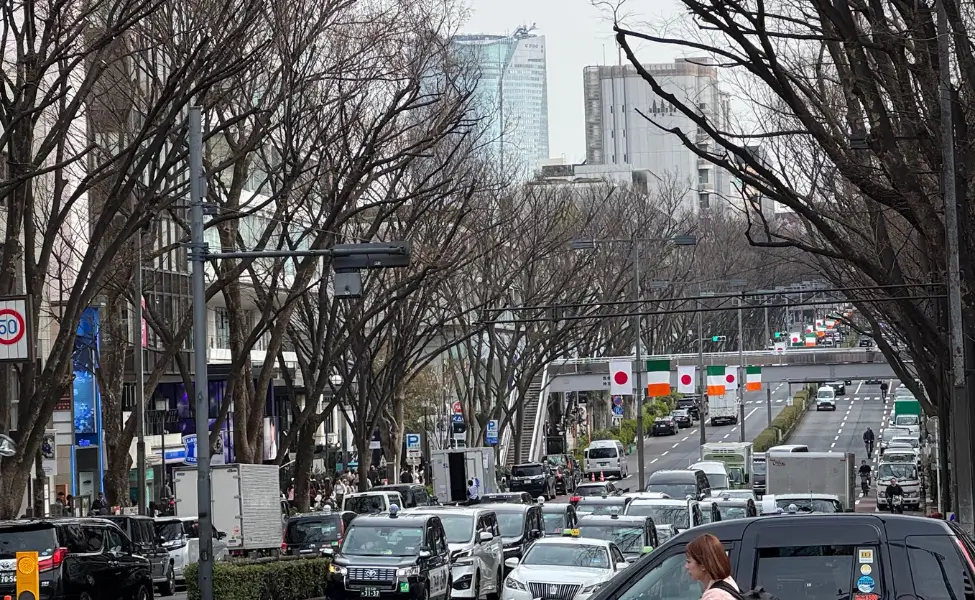
Airport express trains reintroduced bins in 2006, but only with enhanced security features.
Tourism pressure has led to gradual improvements.
Many popular tourist spots now have more bins with labels in different languages.
However, these bins are still fewer than those in other countries.
Cultural Values That Make It Work
Japan’s bin-free system succeeds because of deep cultural attitudes towards personal responsibility and community care.
These values, rooted in centuries of tradition, make the absence of public bins manageable.
Personal Responsibility and ‘Mottainai’
Japanese culture emphasises taking care of your own waste.
Children learn early to carry rubbish home rather than looking for street bins.
This habit stems from ‘mottainai’, a philosophy about not wasting resources and respecting what you have.
Most people carry small bags or pouches specifically for rubbish when they go out.
Food wrappers go into handbags, drink bottles into rucksacks.
This isn’t seen as inconvenient but as normal courtesy.
The concept of ‘meiwaku’ (not causing trouble for others) reinforces this behaviour.
Talking loudly on trains is frowned upon for the same reason, as it inconveniences others.
Littering makes extra work for cleaners and ruins shared spaces.
It’s another type of meiwaku that Japanese people try to avoid.
Community Standards and Social Pressure
Cleanliness reflects social responsibility in Japan.
How you handle rubbish shows respect for your neighbours and society.
This creates powerful social pressure to do the right thing.
Children participate in school cleaning activities from an early age, learning that maintaining shared spaces is everyone’s job.
Neighbourhoods organise regular cleanup events where residents work together to keep areas tidy.
The expectation to conform is strong.
People worry more about social embarrassment than legal penalties when it comes to littering.
How the System Actually Functions
Without street bins, Japan relies on strict home-based waste separation and limited public disposal points.

This system works through careful organisation and clear rules.
Home-Based Waste Sorting
Japanese households sort rubbish into several categories:
- Burnable waste (like food scraps and paper)
- Non-burnable waste (such as ceramics and small metal items)
- Various recyclables
Each type has designated collection days and requires specific colour-coded bags.
Collection schedules vary by district.
Burnable waste gets collected twice weekly, non-burnable waste once weekly, recyclables on specific days for each type, and large items by appointment only.
Residents must buy official bags from local shops, with different areas using different systems.
Moving between districts means learning new sorting rules and buying new bags.
Strategic Bin Placement
The few public bins that exist serve specific purposes.
Vending machines often have attached bins, but only for drinks purchased from that machine.

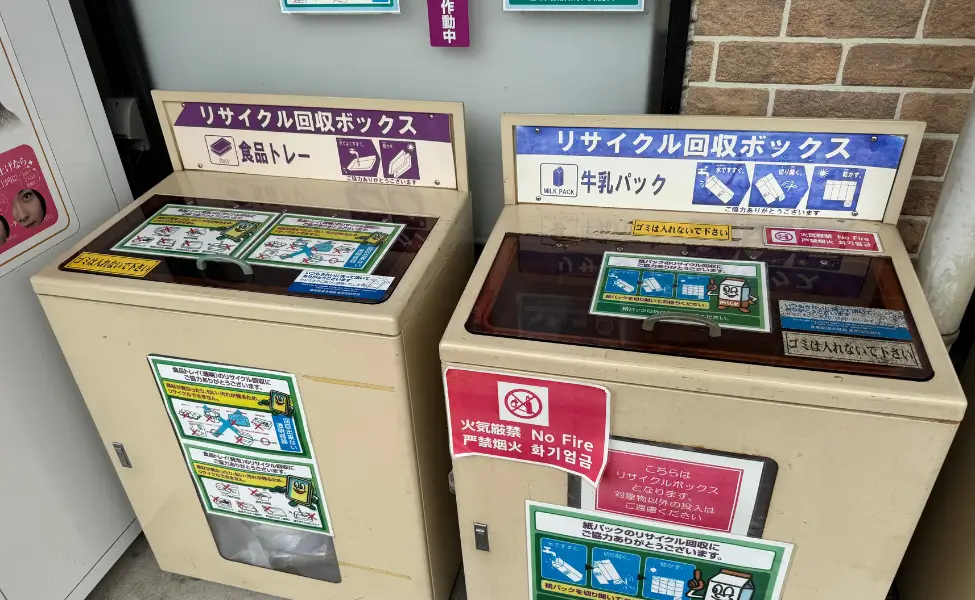
Convenience stores provide sorting bins outside, typically for customers who’ve bought items inside.
Train platforms in major stations may have bins near ticket gates, though many stations have none at all.
Tourist areas increasingly feature multilingual bins, but these remain exceptions rather than the rule.
Legal Framework and Enforcement
Local regulations support the waste system with fines for violations.
Littering penalties range from ¥2,000 to ¥10,000 depending on the area and offence type.
Incorrect sorting or using wrong collection days can result in fines of ¥2,000 to ¥7,000.
However, social pressure proves more effective than legal penalties.
Neighbours often report improperly sorted rubbish, and repeat offenders face community disapproval alongside financial consequences.
Practical Guidance for Visitors
Tourists need strategies to cope with Japan’s limited public bins.
Planning ahead and understanding local expectations helps avoid frustration.
Carrying Your Own Solutions
Bring small bags or pouches for rubbish when exploring.
Compact, reusable bags work well and take up little space.
Try to consume food and drinks near places with bins.
Convenience stores, train stations, and shopping centres offer the best chances of finding disposal options.
Finding Acceptable Disposal Points
Convenience stores (7-Eleven, FamilyMart, Lawson) are reliable for rubbish disposal, though courtesy suggests buying something first.

Department stores and shopping centres usually have bins near food courts or customer service areas.
Hotels and accommodations always accept guests’ rubbish and often explain local sorting requirements.
Tourist information centres may also provide disposal facilities and guidance.
Respectful Disposal Practices
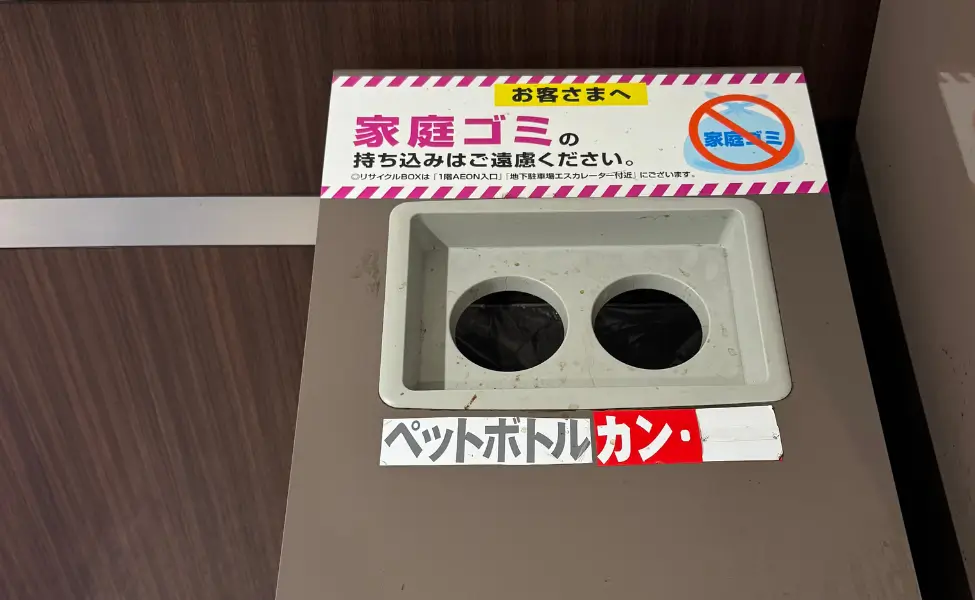
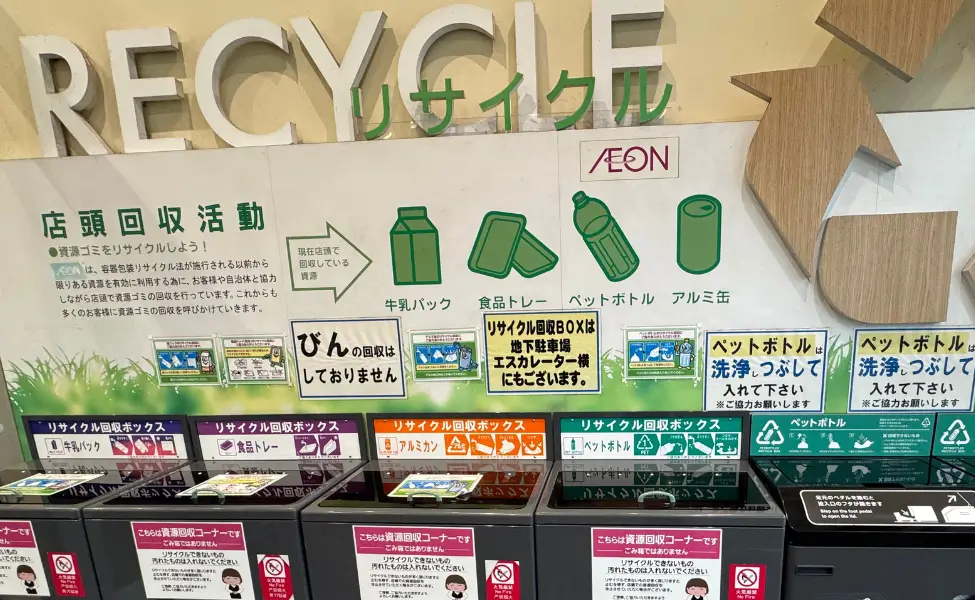
Sort rubbish into local categories: plastic bottles, cans, and general waste usually go in different compartments.
Remove bottle caps and labels when required as many recycling systems demand this separation.
Never leave rubbish beside full bins or on the ground (yes, some locals do it too, not just foreigners).
If no appropriate bin exists, carry waste until you find one.
Please don’t use shop bins unless you’ve bought something.
It can cause issues for staff and seems rude to locals.
Understanding the Broader Impact
Japan’s way of handling public waste shows how it adapts to security concerns using cultural values.
The system poses challenges for visitors, but it shows how societies can tackle problems.
They do this by using existing social norms instead of just depending on infrastructure.
The bin-free system works because Japanese culture values personal responsibility and community care.
Rather than seeing waste disposal as the government’s job, people view it as part of their social duty.
This results in very clean public spaces, even without easy disposal options.
The system shows that security measures can be sustainable.
This happens when they match cultural values.
Then, they create solutions that meet both safety and social needs.
