You’ve likely walked through Japanese gift shops and felt overwhelmed.
The cheap plastic trinkets often scream “tourist trap.”
It can be tough to find meaningful souvenirs from Japan.
Walking past rows of mass-produced items with cartoon characters, you wonder where the authentic pieces are hiding.
The truth is that Japan’s best souvenirs require knowing where to look and what makes each item special.
The country offers amazing treasures, from hand-carved wooden dolls to ceramic tea sets made by skilled artisans.
Once you know what to look for, it’s easy to find them.
1) Kokeshi Dolls
Kokeshi dolls make charming gifts from Japan.
Artisans have hand-carved these wooden figures for over 150 years in northern Japan.

Every kokeshi doll has its own look.
Colours and designs change depending on the region.
People buy them as home decorations or friendship gifts.
The dolls represent life in Japanese tradition.
Shops often sell seasonal versions painted with cherry blossoms or autumn leaves.
2) Furoshiki Wrapping Cloths
You’ll spot these beautiful wrapping cloths all over Japan.
They’re usually made from soft cotton with eye-catching designs.
Furoshiki work as eco-friendly wrapping paper, but you can also use them as bags or even scarves.
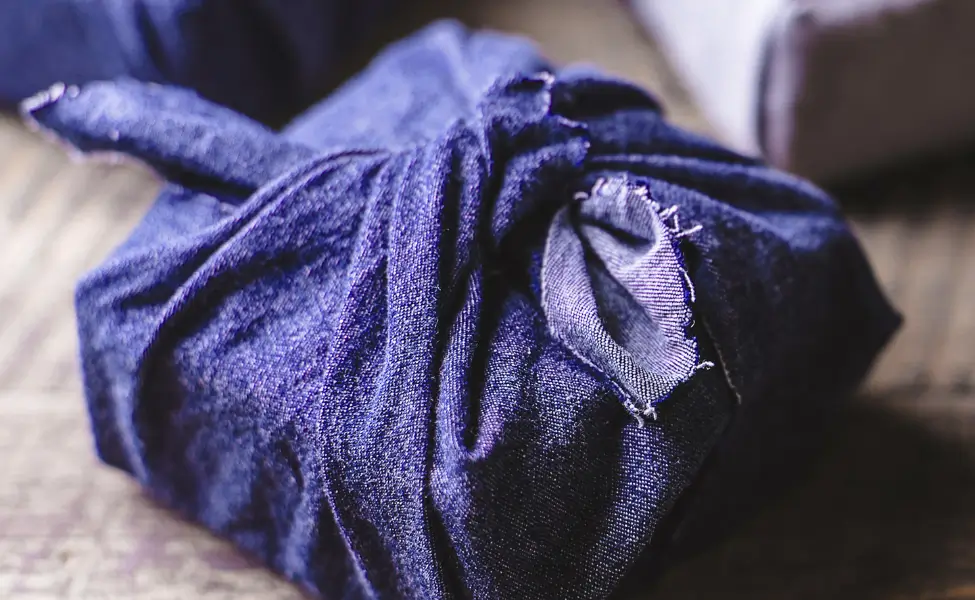
These cloths come from Kyoto and have a history stretching back over a thousand years.
They’re practical and help cut down on waste from regular wrapping paper.
You can fold them into all sorts of bag shapes for shopping or carrying things.
3) Matcha Green Tea Powder
Matcha powder is easy to find throughout Japan and makes a great souvenir.
This vivid green powder is a staple in Japanese tea culture.
Kyoto is famous for top-quality matcha.
The city has been perfecting tea-making for centuries.

You can pick from different grades.
Ceremonial grade is best for classic tea ceremonies, while culinary grade works for baking and desserts.
Matcha comes in a range of prices, from affordable to high-end.
The flavour is a unique mix of bitter and sweet, perfect for drinks or treats.
4) Sensu Folding Fans
Sensu folding fans are classic souvenirs that combine beauty and practicality.
These fans started in Japan and became popular in the early 20th century.
They’re made from paper or fabric on wooden frames, often with colourful designs that show off Japanese artistry.
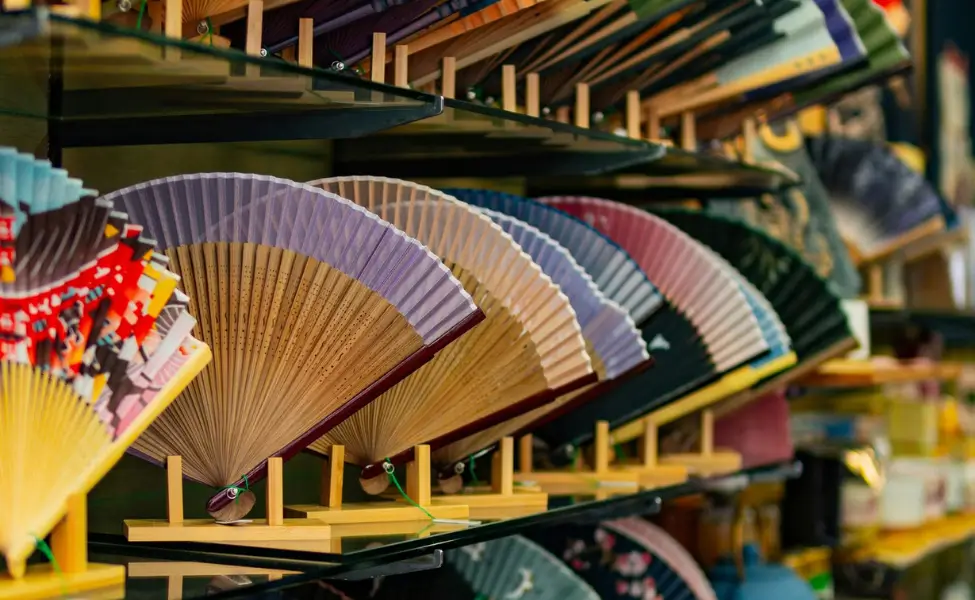
Sensu fans fold up, so you can stash them in your bag.
They’re handy on hot days and look great as decorations, too.
Shops offer everything from simple fans to elaborate, artistic ones.
They’re easy gifts for friends or yourself.
5) Japanese Incense Sticks
Japanese incense sticks bring calming scents home with you.
They’re deeply tied to Japanese spiritual life.

Temples in Kyoto and Nara burn sandalwood and agarwood incense crafted by families who’ve passed down their recipes for generations.
You can buy these same incense sticks as keepsakes.
They’re used for purification rituals at shrines and temples all over Japan.
6) Tenugui Hand Towels
Tenugui are thin cotton towels that make perfect souvenirs.
They measure about 35 by 90 centimetres and usually feature lovely Japanese patterns.
The name comes from the words for “hand” and “wipe.”
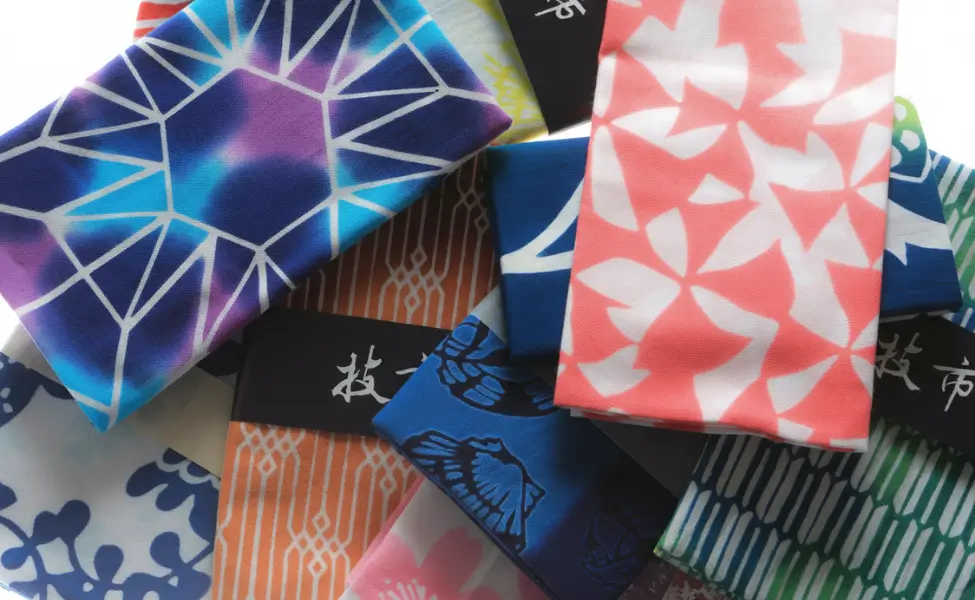
They’re much lighter than Western towels.
Tenugui work as hand towels, cleaning cloths, or even wall hangings.
Some people use them for gift wrapping in the furoshiki style.
They’re compact and easy to pack. You’ll find hundreds of designs, from classic to modern.
7) Daruma Dolls
Daruma dolls show up everywhere in Japan.
They’re based on Bodhidharma, the founder of Zen Buddhism.

These round red dolls are meant to bring luck and help you meet your goals.
Many people keep them at home or work.
When you buy a Daruma, its eyes are blank.
You paint in one eye when you set a goal, and the other when you achieve it.
They make thoughtful gifts for friends.
You can find them at temples and tourist shops.
8) Tetsubin Cast Iron Teapots
Tetsubin teapots are among Japan’s most treasured crafts.
These cast iron teapots have a 400-year history.
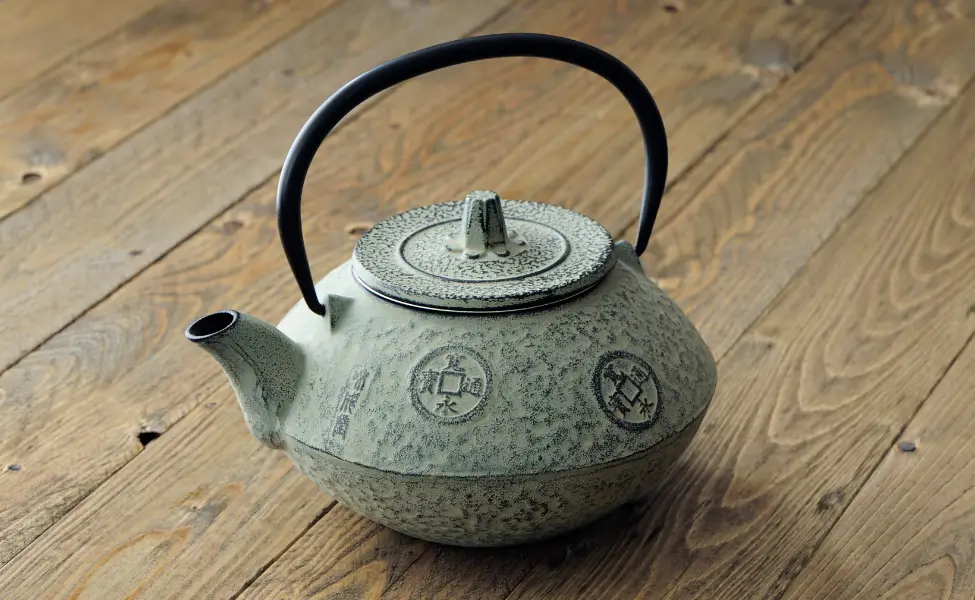
“Tetsubin” means “iron pot.”
People first used them in tea ceremonies for boiling water.
They keep tea hot for ages and come with metal infuser baskets for loose leaf tea.
Nanbu tetsubin from Iwate are especially well-known for their craftsmanship.
You can buy authentic ones straight from Japanese makers.
9) Maneki Neko Cat Figurines
Maneki Neko lucky cats are everywhere in Japan.
The figurine has a raised paw, like it’s waving you in.
They come in all sizes and colours, but the classic is a calico Japanese Bobtail.
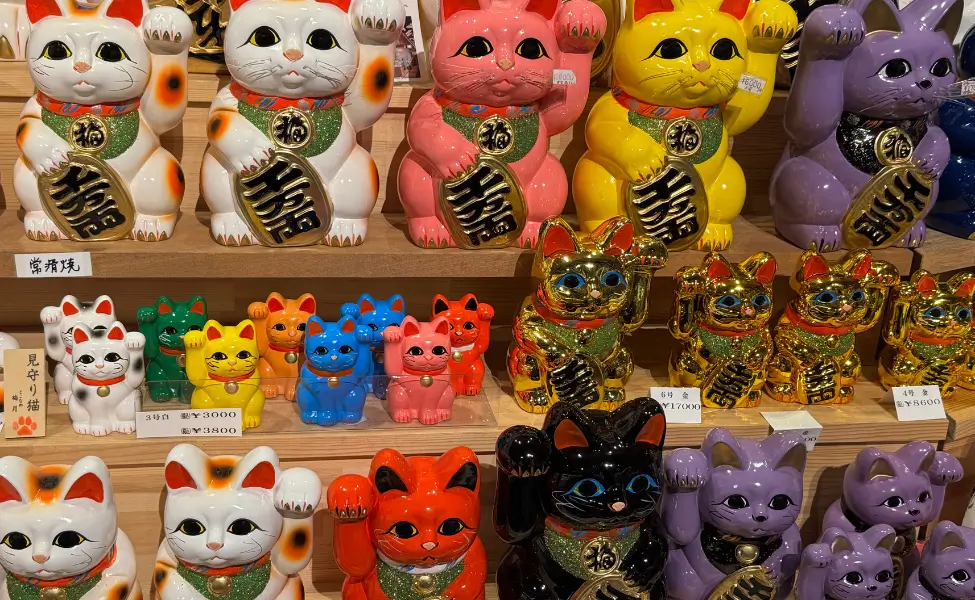
People believe these cats bring good luck and happiness.
You can put them at home or in the office.
They’re small, easy to pack, and found in gift shops all over Japan.
10) Yukata Lightweight Summer Kimono
A yukata is a perfect summer souvenir.
These lightweight cotton robes are simpler than formal silk kimonos.
You can wear a yukata at festivals or just lounge at home.

The fabric is breathable and keeps you cool in warm weather.
Traditional designs make yukatas both beautiful and authentic.
Shops offer options in lots of colours and patterns.
Many places sell yukatas starting at around ¥4,000
They’re easy to pack and make great gifts.
11) Hanko Personal Name Stamps
Hanko stamps are traditional Japanese personal seals.
People use them instead of signatures on official documents.
Each stamp features your name in kanji, katakana, or even English.

Every Japanese person owns at least one for things like banking or contracts.
You can get your name translated into Japanese characters for a unique souvenir.
Many shops offer custom hanko carving services.
The result is a one-of-a-kind stamp that connects you to Japanese culture.
12) Wagashi Traditional Japanese Sweets
Wagashi are Japan’s most beautiful traditional sweets.
They’re made from sweet bean paste, mochi, and natural flavours like matcha.
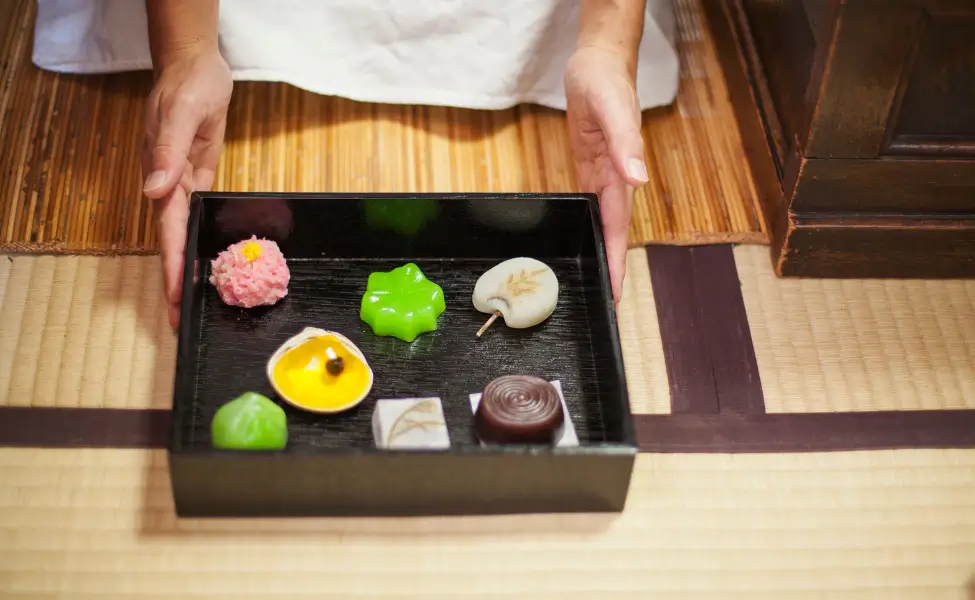
Each piece looks like edible art.
Shapes and colours change with the seasons, making them special gifts.
You can buy wagashi at sweet shops, department stores, and temples across Japan.
Kyoto has an especially good selection.
13) Ghibli Studio Merchandise
Studio Ghibli souvenirs are a dream for anime fans.
Donguri Republic shops across Japan sell everything from Totoro plushies to Spirited Away figurines.

There are over 40 locations, including Tokyo Station and Tokyo Skytree.
You’ll spot Totoro soft toys, Princess Mononoke accessories, and Howl’s Moving Castle collectibles.
The merchandise covers clothing, stationery, homeware, and toys.
These authentic Ghibli items make perfect gifts for fans.
14) Japanese Kendama Toy
The kendama is a classic wooden toy and a fun souvenir.
It’s a cup-and-ball game that tests your hand-eye coordination.
The toy has a wooden handle with cups and a ball attached by string.
You catch the ball in different cups or spike it on the pointed end.
Kendama is popular with kids and adults.
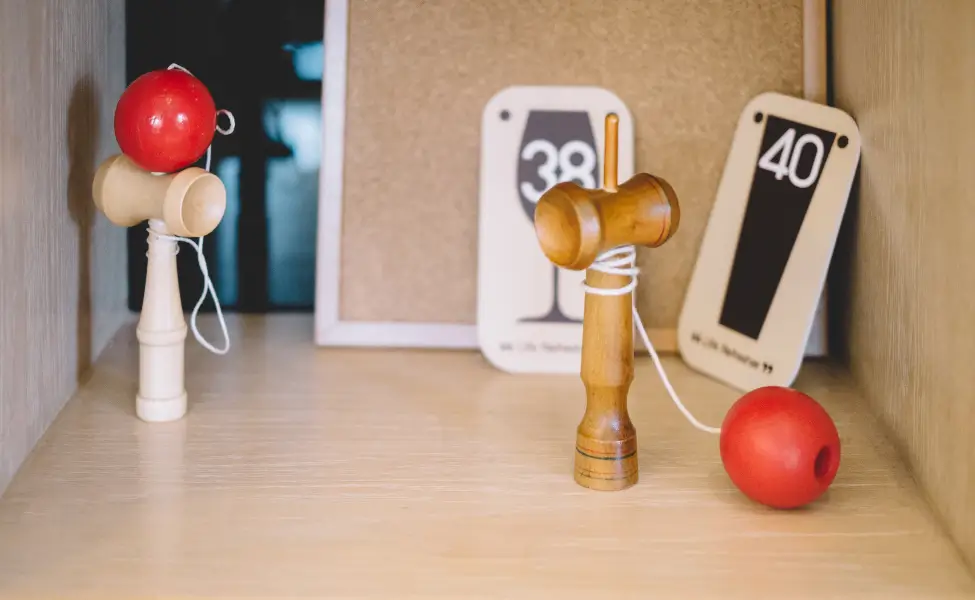
You can start with easy tricks and work up to more complicated moves.
Authentic kendama toys come in traditional wood or bright colours.
They’re lightweight and easy to pack.
15) Kintsugi Repair Kit
Kintsugi kits let you bring home the Japanese art of golden repair.
These sets teach you how to fix broken pottery with gold.
Kintsugi means “golden joinery.”
Instead of hiding cracks, you turn them into beautiful features with gold lines.
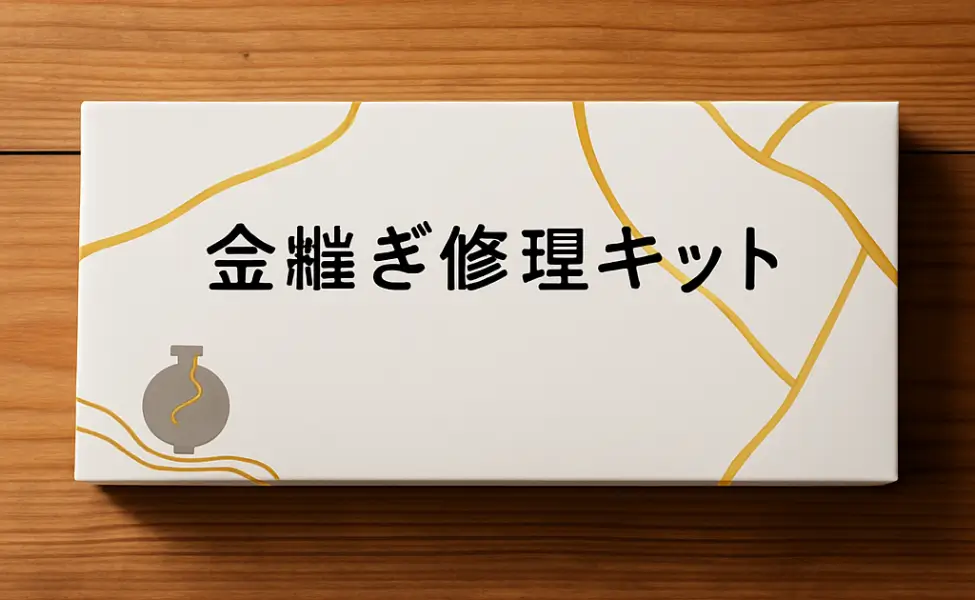
Authentic kits include urushi lacquer and real gold powder.
Some even have food-safe materials for dishes you use daily.
Complete sets come with instructions and all the supplies.
It’s a meaningful souvenir that lets you practice a mindful Japanese philosophy.
16) Shiboridashi Kyusu Teapots
Shiboridashi teapots are perfect for brewing premium green teas.
These handless clay vessels have a flat design that’s quite different from regular teapots.
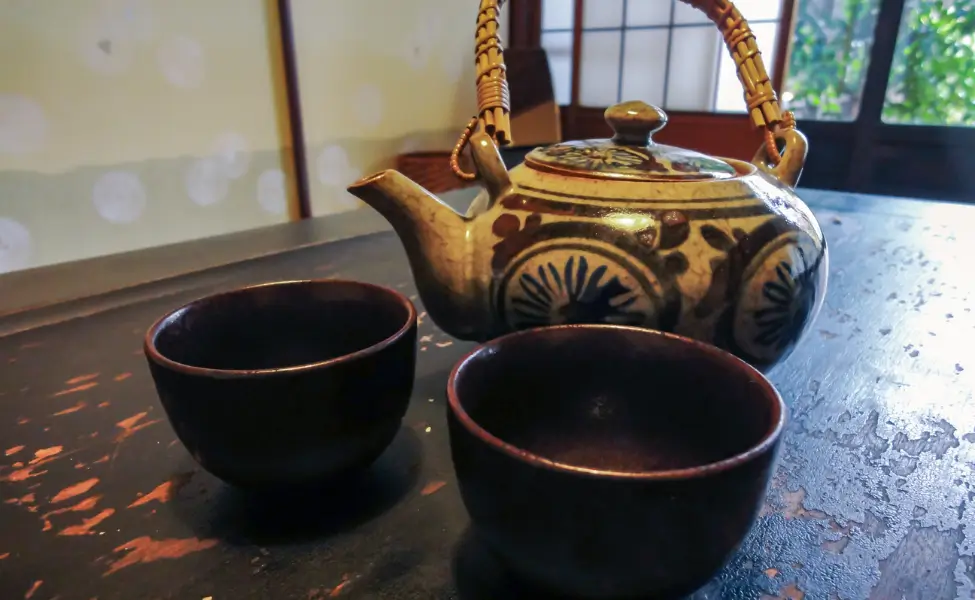
They’re ideal for gyokuro and high-quality sencha teas.
You use more tea leaves and just a little water for intense, flavourful cups.
The small size makes each brewing feel special.
Handmade pieces are available in traditional pottery shops across Japan.
17) Japanese Chopstick Rests (Hashioki)
These small decorative pieces hold your chopsticks off the table during meals.
Hashioki come in countless shapes.
For example, miniature animals, flowers, geometric designs, or seasonal motifs.
They’re made from ceramic, wood, glass, or even metal.

Each one is like a tiny piece of art that serves a practical purpose.
Traditional Japanese dining etiquette considers it important to rest chopsticks properly between bites.
You can collect different designs to match seasons or occasions.
They’re incredibly affordable, usually costing just a few hundred yen each.
Hashioki are small enough to slip into any corner of your luggage and make charming gifts for anyone interested in Japanese dining culture.
18) Pokemon Collectibles
Pokemon items from Japan make perfect souvenirs for fans of all ages.
You’ll find exclusive merchandise you can’t get anywhere else.
Japanese Pokemon shops sell authentic plush toys, trading cards, and figurines.

The quality is better than the knock-offs found outside Japan.
Look for limited edition items at Pokemon Centres in Tokyo and Osaka.
Rare collectibles sometimes pop up in second-hand shops, too.
19) Omamori Lucky Charms
Omamori are small Japanese amulets sold at shrines and temples.
The word means “to guide or protect,” and they’re believed to bring luck or protection to whoever carries them.
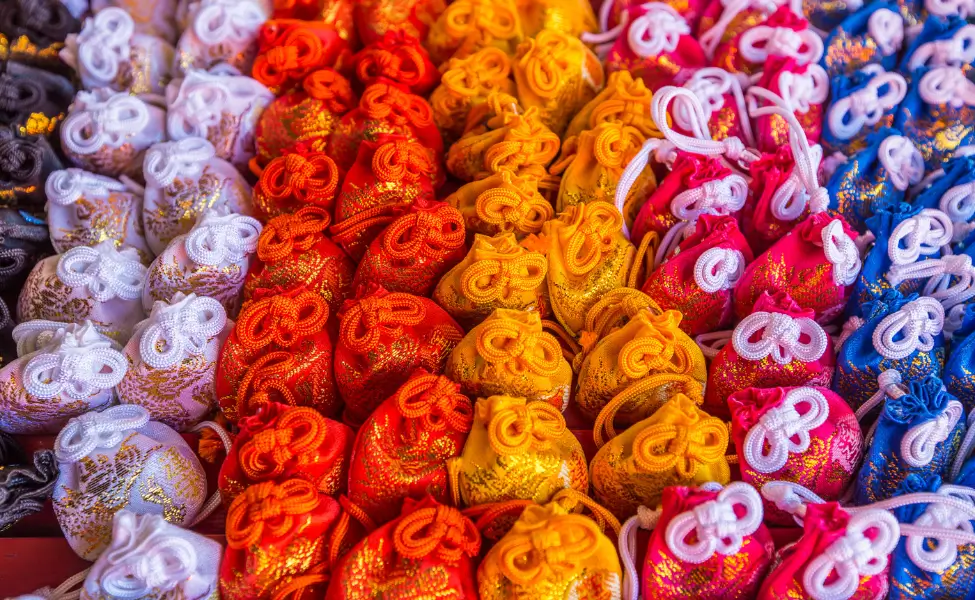
These cloth pouches have written prayers inside.
People tuck them into phones, purses, wallets, or pockets for daily protection.
Different omamori offer blessings for health, love, success, or safe travel.
Each shrine has its own unique designs.
You don’t need to follow any religion to buy omamori.
They’re thoughtful gifts for friends and family back home.
20) Ukiyo-e Woodblock Prints
These traditional Japanese prints make stunning wall art for your home.
Ukiyo-e means “pictures of the floating world” and dates back to the 17th century.
You’ll spot prints showing beautiful landscapes, kabuki actors, and scenes from daily life.
Hokusai and Hiroshige created some of the most famous pieces.
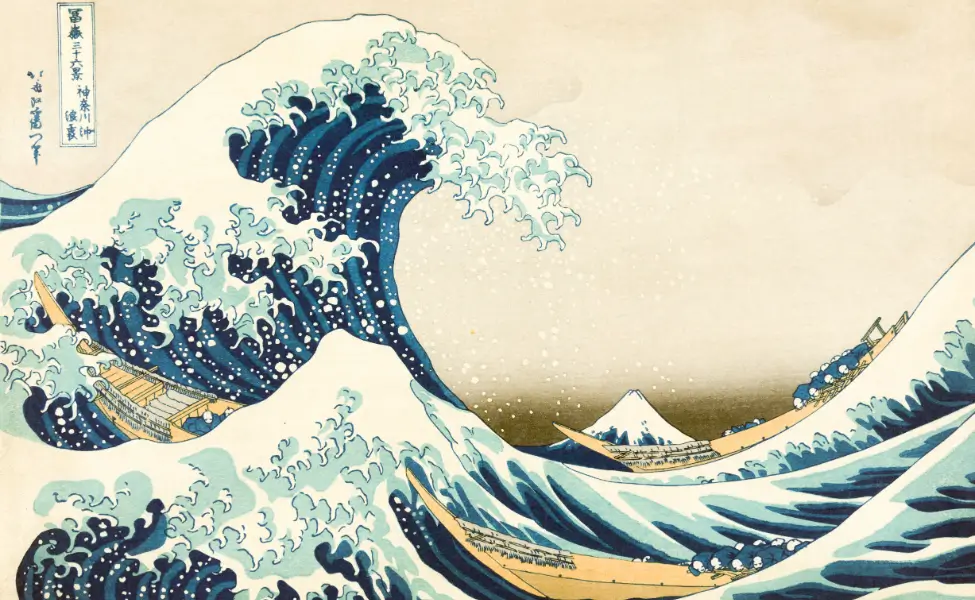
Original antique prints can get pricey.
Luckily, you can pick up affordable reproductions in Tokyo galleries or souvenir shops.
They’re lightweight and easy to pack in your luggage, which is always a bonus.
21) Sake Set Ceramic Cups and Bottle
A traditional ceramic sake set makes a perfect Japanese souvenir.
These sets include a bottle called a tokkuri and small cups known as ochoko.
Japanese artisans handcraft these sets, using old techniques passed down through generations.
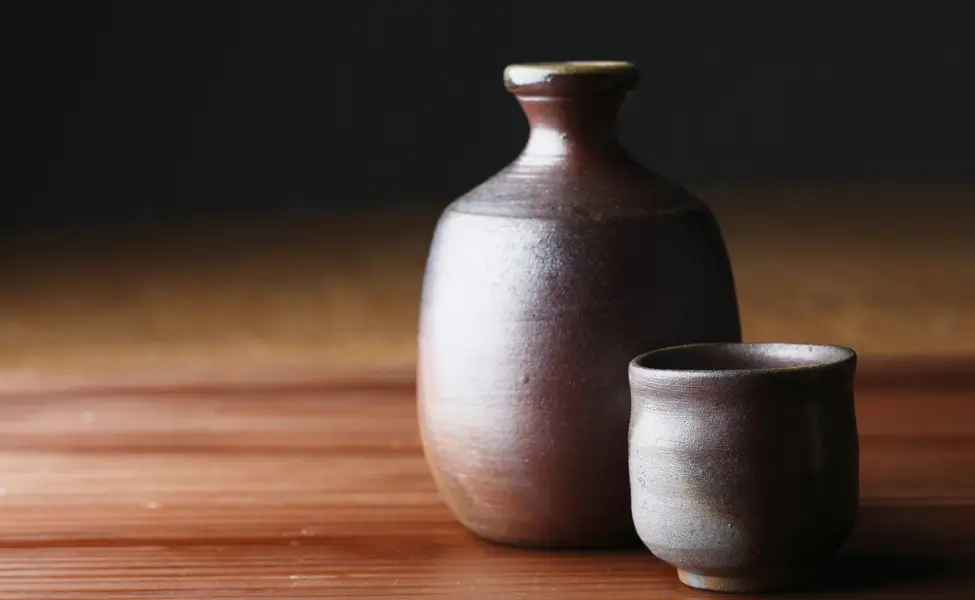
The ceramic keeps sake at a nice temperature while you drink.
You’ll find authentic sets in Tokyo shops or through specialist retailers.
Each set lets you enjoy a bit of Japanese drinking culture at home.
The designs range from simple white porcelain to decorated pieces with traditional patterns.
They work for special occasions or casual get-togethers with friends.
22) Chopsticks
Chopsticks make perfect lightweight souvenirs from Japan.
These eating utensils have been used in Japan for over 1,000 years.
You’ll find chopsticks made from bamboo, wood, plastic, and even lacquered varieties.
Traditional wooden chopsticks often feature beautiful painted designs or carved patterns.

Many shops sell personalized chopsticks with your name written in Japanese characters.
High-end chopsticks use premium woods like cherry or maple.
They’re incredibly practical since you can use them at home for Japanese meals.
Chopsticks are compact, lightweight, and easy to pack in your luggage.
They make thoughtful gifts for friends who love Japanese food or want to learn proper chopstick technique.
23) Happi Festival Jackets
You’ll see these colourful cotton jackets at festivals across Japan.
Happi coats used to be uniforms for workers and servants.
These jackets come in bright colours with bold designs.
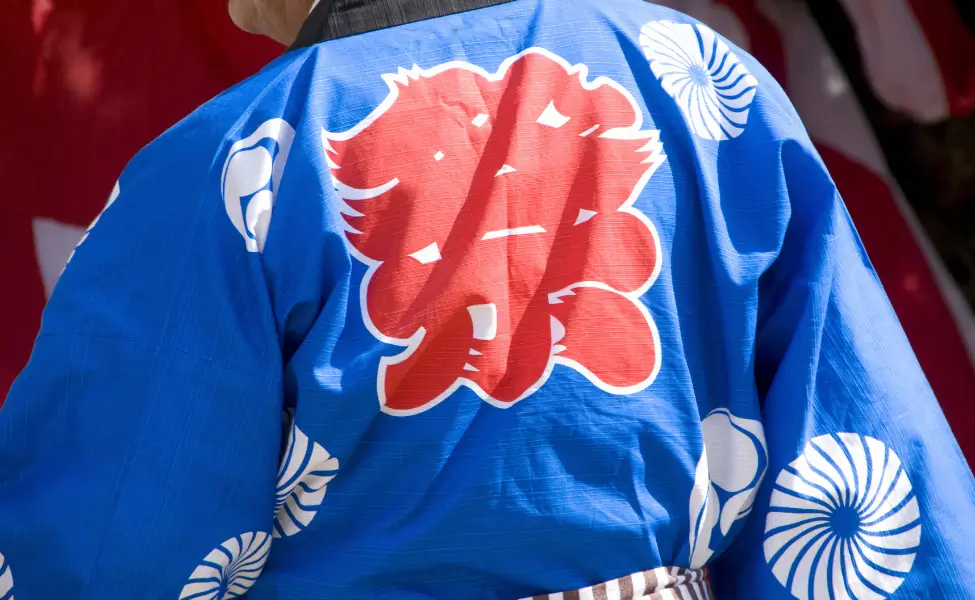
Many show off traditional patterns or symbols.
You can wear them over your regular clothes and tie them at the waist.
Modern happi coats work for festivals, casual wear, or even as unique loungewear.
They’re usually made from 100% cotton and come in unisex sizes.
24) Sencha Loose Leaf Tea
Sencha is a lightweight, easy-to-pack souvenir from Japan.
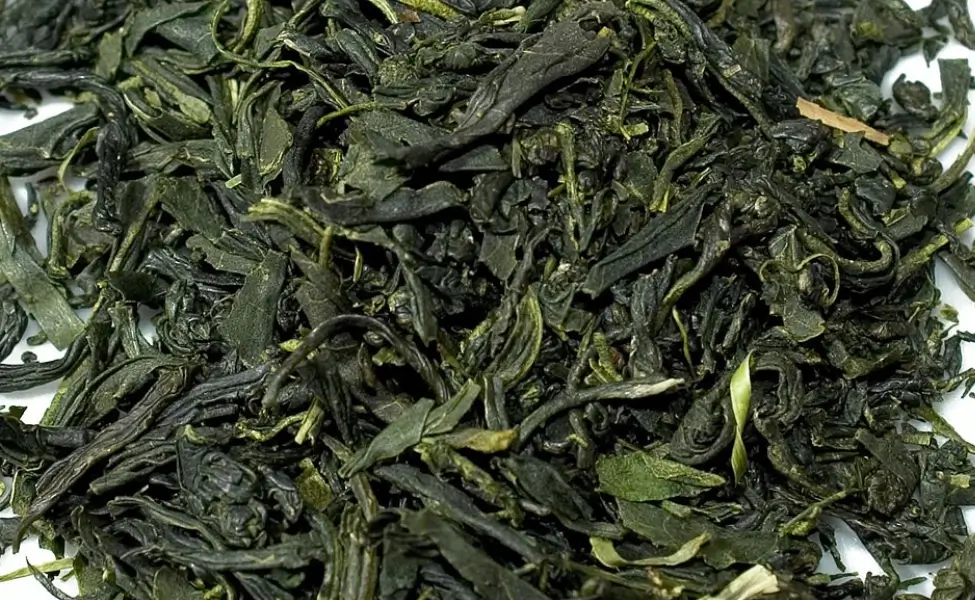
This green tea is probably the country’s favourite variety.
Sencha grows in regions like Shizuoka and Kagoshima.
The leaves grow in direct sun, which gives sencha its fresh taste.
This loose leaf tea offers health benefits and a clean, vegetal flavour.
You can brew it hot or cold, whatever you’re in the mood for.
It makes a thoughtful gift for tea lovers back home.
25) Japanese Ceramic Tea Bowls
Japanese ceramic tea bowls are fantastic souvenirs for tea lovers.
These bowls come from pottery regions like Arita and Seto.

You’ll find both traditional and modern styles.
Many have beautiful glazes and unique patterns that show off Japanese craftsmanship.
Tea bowls work for matcha ceremonies or just daily tea.
They’re functional and bring a bit of Japan into your routine.
26) Japanese kitchen goods
Japanese kitchen supplies are great souvenirs for anyone who loves to cook.
You’ll find practical items that make kitchen life easier with smart design.
100-yen shops are treasure troves for affordable kitchen supplies.
You can pick up measuring spoons, rice paddles, and silicone molds for just 100 yen each.
Bamboo steamers help you make perfect dumplings and vegetables.

Japanese measuring cups often have multiple measurement systems printed on them.
Specialty stores sell traditional items like wooden rice scoops and ceramic soy sauce dishes.
These supplies bring Japanese functionality to your kitchen and remind you of your trip every time you cook.
27) Bento Lunch Boxes
Bento boxes are practical Japanese souvenirs you’ll actually use.
They blend beauty and function in one neat container.
You can pick from traditional wooden designs or modern plastic versions.
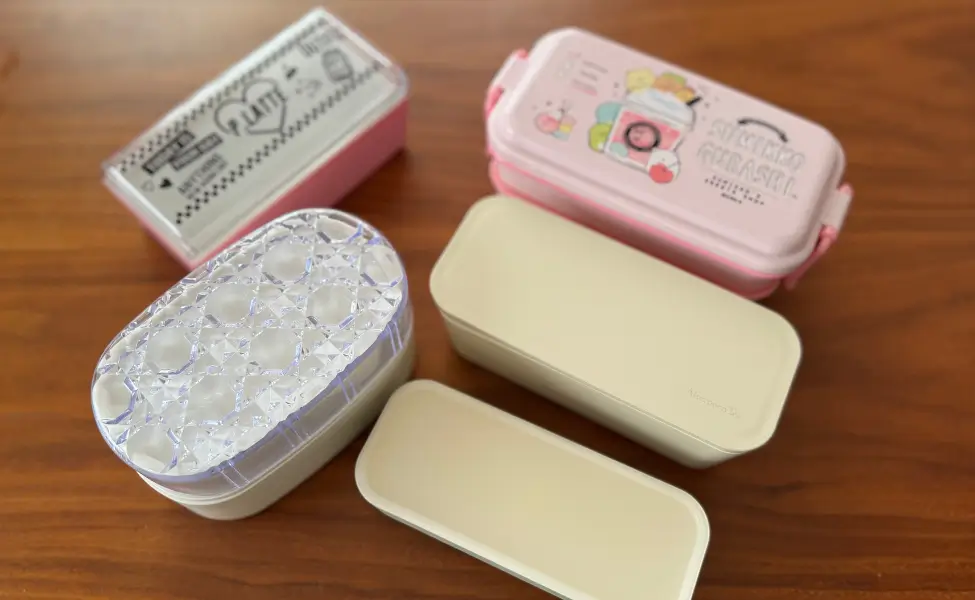
Both work great for meal prep and healthy eating on the go.
Japanese bento boxes show off amazing craftsmanship and attention to detail.
They reflect Japan’s food culture, which cares about both taste and looks.
These souvenirs help you eat better and cut down on waste.
You’ll find authentic options made in Japan that ship worldwide from specialist shops.
28) Sumi Ink and Brushes for Calligraphy
Sumi ink and brushes are classic souvenirs from Japan.
These tools are used for Japanese calligraphy, called Shodo.
You can get complete calligraphy sets with everything you need.
Most sets include brushes, ink sticks, an ink stone, and a water dropper.
The brushes are handmade from animal hair, like weasel or horse.
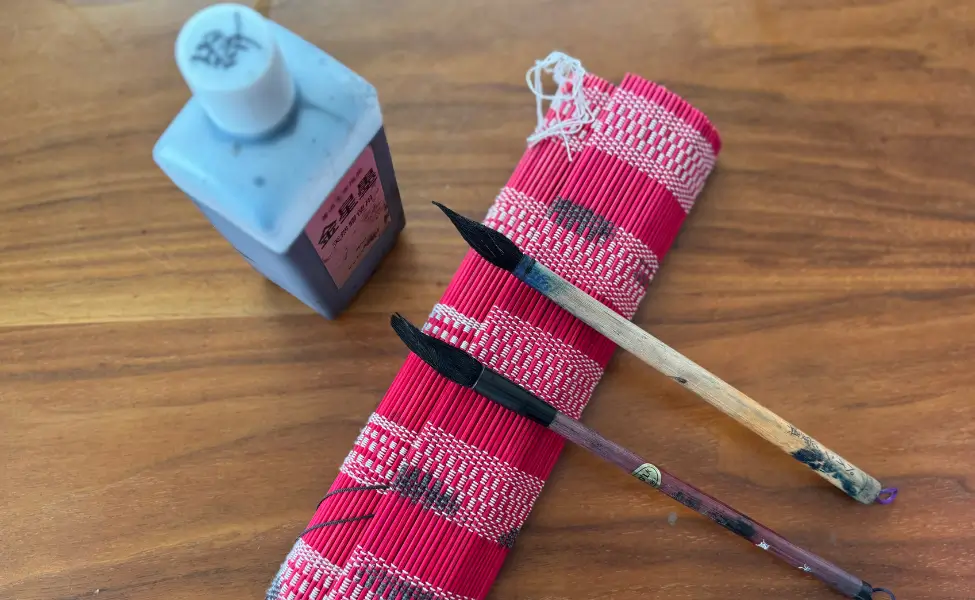
They come in different sizes for different writing styles.
Sumi ink creates deep black strokes on paper.
You can try out this art form at home and get a feel for Japanese culture.
29) A Japanese knife
A Japanese knife is a souvenir that’s both beautiful and practical.
These knives are famous for their sharp blades and skilled craftsmanship.
Knife makers in Japan use techniques handed down through generations.
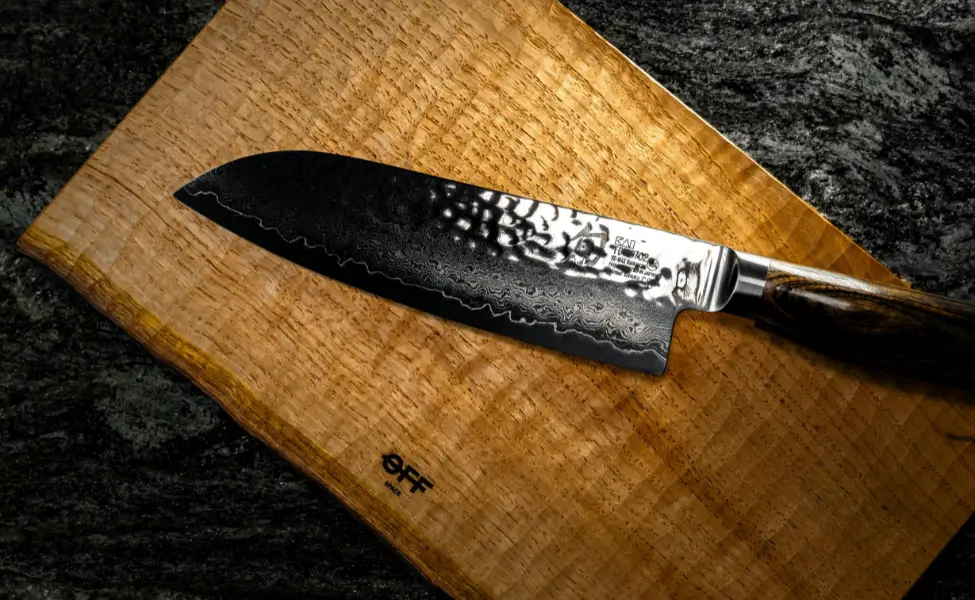
The blades usually stay sharp longer than most Western knives.
You’ll find these knives in kitchen shops all over Japan.
They’re great for cooking at home and remind you of your trip every time you use them.
There are different styles, like santoku or nakiri knives, each suited for different kitchen tasks.
Packing And Bringing Souvenirs Home
Packing your Japanese treasures safely takes a bit of planning.
Fragile items like ceramics and glassware need some extra care if you want them to survive the journey.
Best Packing Practices For Fragile Items
Bubble wrap is your best friend for delicate souvenirs.
Wrap each ceramic or glass item individually with at least two layers.
Place wrapped items in the centre of your suitcase.
Surround them with soft clothing like jumpers or t-shirts for extra cushioning.
Hard-shell suitcases protect better than soft bags.
They won’t compress under pressure from other luggage.
Can I Bring Knvies Back from Japan?
To prevent complications, keep your knife sealed in its original packaging and don’t open it while in Japan.
Take time at the store to carefully examine your knife and photograph it for documentation purposes.
Consider purchasing the knife toward the end of your Japanese visit to minimize potential issues.
When departing, consult with airport personnel and pack all knives in checked baggage.
Before heading to the airport, verify that your kitchen knives are properly stored in checked luggage rather than carry-on bags.
The original sealed packaging should remain intact since the knives haven’t been used.
Always confirm requirements with your airline representative beforehand.
Regardless of regulations, it’s wise to proactively declare your purchase to airport security staff for transparency and to avoid any misunderstandings.