

Most people who have been to Tokyo and Kyoto will tell you they are ready for something different.
The temples are done, the ryokan box has been ticked, and the search for something more real keeps running into the same five articles.
What almost none of those searches will turn up is the fact that you have been flying past one of the most substantial prefectures in Japan at 285 kilometres an hour.
Shizuoka sits on the Pacific coast midway along the Tokaido Shinkansen line.
Most visitors see it for about forty seconds before the window fills with tunnel. That is a considerable mistake.
More Than the View from the Train
Shizuoka stretches from the foot of Mount Fuji across to the tip of the Izu Peninsula, covering a long diagonal slice of central Honshu.

The prefecture produces roughly 40 percent of Japan’s total tea output, making it the country’s dominant tea region and the origin point of most of the green tea you have ever drunk.
Drinking it within a few kilometres of the plantation that grew it is a noticeably different experience from anything available in a Kyoto teahouse.
The other misconception worth correcting early is about Mount Fuji.
Most travellers assume the mountain belongs to the Fuji Five Lakes area on the Yamanashi side, which handles the bulk of tourist traffic.
Fuji actually straddles the border between Yamanashi and Shizuoka.
The Shizuoka side has its own trails, its own viewpoints, and considerably fewer people at any of them.
There is a Japanese saying that a wise person climbs Fuji once, and only a fool climbs it twice.

Having made the climb myself in 2001, the wisdom holds.
The summit has vending machines, a souvenir shop, and a post office.
Getting there is worth every step.
Going again is not.
Shiraito Falls
Shiraito Falls, on the southwestern slopes of Fuji, is one of the more unusual sights in the region.
Underground snowmelt from the mountain filters through volcanic rock for between ten and fifteen years before emerging from a lava cliff face 150 metres wide.

There is no river feeding the falls and no visible source.
The water simply appears from the rock and drops 20 metres into the pool below.
Nihondaira
Nihondaira, a plateau above Shizuoka city, has held a place on Japan’s top 100 landscapes list since 1927.
On clear days the plateau gives simultaneous views of Fuji, Suruga Bay, and the Southern Alps.
A ropeway crosses a steep gorge from there to Kunōzan Tōshōgū, the original burial site of Tokugawa Ieyasu, founder of the Edo period.
His Shizuoka shrine is equally ornate to the famous Nikkō version and receives a fraction of its crowds.
Shuzenji and What a Ryokan Night Actually Looks Like
If one place in Shizuoka earns its own overnight stay, it is Shuzenji.
The town sits in a forested valley on the Izu Peninsula about an hour south of Shizuoka city by train.
Narrow streets cluster around a twelfth-century temple with a bamboo grove behind it.
The whole arrangement is compact enough that cars feel like visitors rather than residents.
There are no chain hotels.

What the town has instead is a collection of traditional ryokans ranging from reasonable to expensive, most with outdoor baths fed by local hot springs and kaiseki dinners drawing on whatever the Izu coast produced that morning.
A night here typically runs between 15,000 and 35,000 yen per person including dinner and breakfast.
That sounds steep until you count what it covers.
Two full meals come with the stay, along with unlimited bath access and a tatami-floored room with sliding paper screens.
For anyone arriving from a week of Tokyo hotels, the shift is fairly dramatic.
The temple at the centre of town is where the second Kamakura shogun was exiled and killed in the twelfth century.
A bamboo grove sits directly behind it and takes five minutes to walk through.
Unlike the Arashiyama version in Kyoto, almost no one else is in it.
Shuzenji looks, sounds, and operates like somewhere that was not built to be photographed.
That is precisely what makes it worth the detour.
The Izu Peninsula: What Actually Matters
The Izu Peninsula extends south from Atami, and it is easy to lose a day reading about it without landing on what to actually prioritise.

Atami is the entry point, sitting only 35 to 40 minutes from Tokyo by Shinkansen.
Its main draw is Kinomiya Shrine, where a camphor tree estimated at over 2,000 years old measures more than 24 metres around the trunk.
Walking once around it is said to add a year to your life, which keeps the path well worn.
The town itself is a working coastal resort with a lived-in quality that distinguishes it from the more polished stops further south.
Shimoda, at the southern tip, is where Commodore Perry’s ships arrived in 1854 to force Japan open to foreign trade.
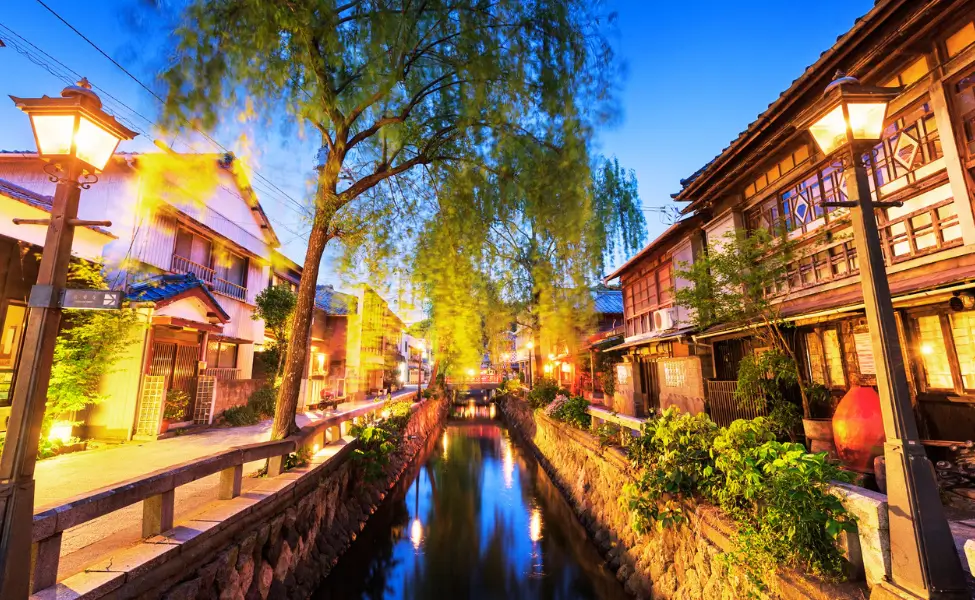
The town has good beaches, reasonable accommodation prices, and a relaxed pace that is hard to find this close to Tokyo.
The combination of history, coast, and accessibility makes it the second stop worth committing to.
Mishima, in between, has a fine shrine and easy Fuji views, but if you are short on time it works better as a brief stop than an overnight.

The Izu Peninsula is frequently sold as a day trip from Tokyo.
Give it two nights and it stops feeling like a box to tick.
Food Worth Going Out of Your Way For
Shizuoka’s food identity is more specific than most Japan travel content suggests.
The places to target and what to order when you get there:
- Sakura ebi in Shimizu district. Tiny pink shrimp from Suruga Bay, served fresh in spring and autumn. Look for small lunch restaurants near the port area and order them raw over rice. They bear no resemblance to the dried version sold as a snack across the rest of Japan.
- Fresh wasabi anywhere in the Izu region. Most of Japan’s wasabi comes from Shizuoka. The paste in most sushi restaurants outside the prefecture is an approximation. At restaurants in the Izu area, ask for hon-wasabi and watch it grated fresh. The difference is not subtle.
- Green tea at a plantation café. The hills above Shizuoka city and the Makinohara plateau have farm cafés that serve tea grown on the same slope. Order whatever they recommend. The first cup will recalibrate your expectations.
- Eel in Hamamatsu. Lake Hamana in the west of the prefecture is one of Japan’s most respected freshwater eel-producing areas. If your itinerary passes through this stretch, a lunch stop here earns its place.
Getting Here and Getting Around
The single most useful thing to know before booking is that the Nozomi, the fastest Shinkansen service on the Tokaido line, does not stop at Shizuoka Station.

If you are travelling on a JR Pass, this does not matter because the Pass covers Hikari services anyway and Hikari is what you want.
If you are buying individual tickets, search for Hikari departures rather than Nozomi.
Most things in Shizuoka are reachable without a car.
The JR Ito Line runs south from Atami into the Izu Peninsula, connecting to the Izu Kyuko Line for the rest of the journey to Shimoda.
Connections are straightforward and run regularly.
| Route | Train | Approximate time |
|---|---|---|
| Tokyo to Shizuoka city | Hikari Shinkansen | 60 minutes |
| Tokyo to Atami | Hikari or Kodama | 35 to 40 minutes |
| Atami to Shuzenji | Izu Hakone Railway | 35 minutes |
| Atami to Shimoda | JR Ito Line and Izu Kyuko | Around 90 minutes |
| Shizuoka to Kyoto | Hikari | Under 2 hours |
The Oigawa Railway runs east from Kanaya along the Oi River valley into the mountains, using vintage rolling stock from Japan’s Showa era.
Steam locomotive services have been temporarily suspended from early 2026 while a locomotive undergoes restoration.
Electric locomotive-hauled trains with the same heritage coaches are running on the same timetable.
The valley scenery and the hot spring stops along the route remain unchanged.
How to Actually Fit Shizuoka Into Your Trip
The standard Tokyo to Kyoto itinerary treats Shizuoka as scenery from a window seat.

These three alternatives convert it into the part of the trip you come home talking about.
Two nights, easy add-on. Tokyo, then two nights in Shuzenji, then Kyoto.
The Shinkansen from Shuzenji back to the main line takes under an hour.
This is the lowest-effort version and it works well as a first Shizuoka trip because Shuzenji alone justifies the detour.
Three nights, fuller picture. Tokyo, one night in Atami or Shimoda for the coastal Izu experience, one night in Shuzenji, then onward to Kyoto.
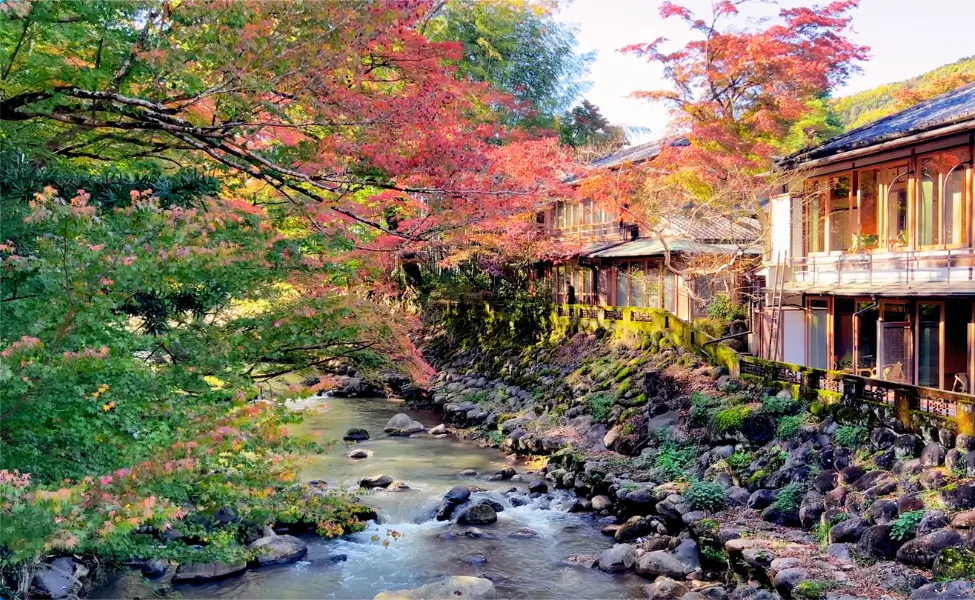
This covers the peninsula and the most atmospheric part of the prefecture without feeling rushed.
Three nights is enough to feel properly oriented rather than passing through.
Short stop, no overnight needed. Break the Tokyo to Kyoto journey with a half-day in Shizuoka city.
Use the time for Nihondaira and the ropeway to Kunōzan Tōshōgū, then find a farm café on the Makinohara plateau for tea before catching the afternoon Hikari west.
You will arrive in Kyoto having seen something no one in your travel party expected.
If you are planning a second Japan trip and have already done the obvious circuit, two nights in Shuzenji inserted between Tokyo and Kyoto adds almost nothing to journey time and a considerable amount to the trip itself.
The Japan that feels like your own is not usually in the most obvious direction.
Sometimes it is on the same train, one stop before where everyone else gets off.
This time, you know to get off there.
