
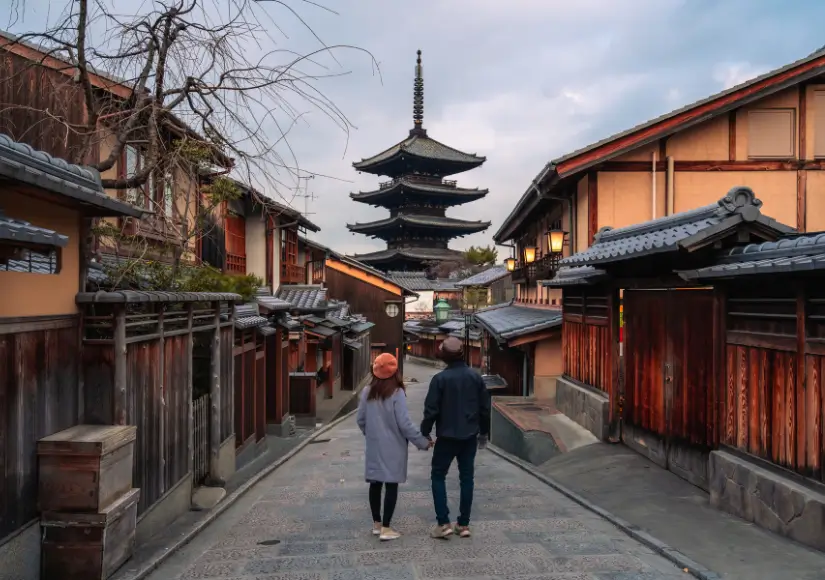
Repeated visits to Kyoto reveal certain experiences that stand out above others.
They’re not the busiest attractions nor the ones everyone photographs.
They’re the ones where couples genuinely connect.
Most people move differently here.
The temples and gardens are arranged in ways that make you linger.
Walking beneath flowering trees, sitting over tea whilst the world continues without you, finding quiet corners in an ancient city.
These are the moments couples tend to remember long after the trip ends.
What follows are nine experiences that work because you can’t rush them.
Some links on this page may be affiliate links. If you use them, it helps support the site at no extra cost to you.
Planning Your Time in Kyoto
These nine experiences don’t need to happen in order, nor do you need to do all of them.
Some work alone.

Others pair naturally with nearby temples or streets.
Use this the way you actually plan days, not the way guidebooks pretend you do. Skip what doesn’t fit.
Stay longer at what does.
Seasons matter here more than in most cities.
Cherry blossom season (late March through early April, with 2026 forecast showing full bloom around 1 April) transforms several of these experiences entirely.
Autumn (October through November) brings its own appeal.
Summer and winter both work, though they invite different pacing.
Walk Through Arashiyama’s Bamboo Forest
What You’ll Experience
The main bamboo grove in Arashiyama feels genuinely different from everywhere else in Kyoto.
Paths take you between towering stalks so dense that the surrounding city simply vanishes.
Light filters through the leaves above, casting shifting patterns across the ground as you move through.
People enter and slow down instinctively.
Bamboo creates natural walls that make you conscious of where you’re standing, what’s beside you, what’s ahead.

Most visitors come between 10am and 4pm, which means if you want the experience the section actually offers, arrive before 8:30am or after 5pm.
Early morning feels quieter in a way the rest of the day never quite matches.
You might see only a handful of people.
The light angles differently.
By late afternoon, once evening crowds start arriving for sunset photos, the grove becomes what most guidebooks describe.
By that I mean a popular place where you’re navigating between other people rather than moving through something special.
Evening can feel rushed despite the bamboo’s inherent calm.
Logistics and Location
The walk takes 20 to 30 minutes for the main section alone.
Nearby Tenryu-ji Temple sits close enough that you could visit after without making it feel like a separate trip.
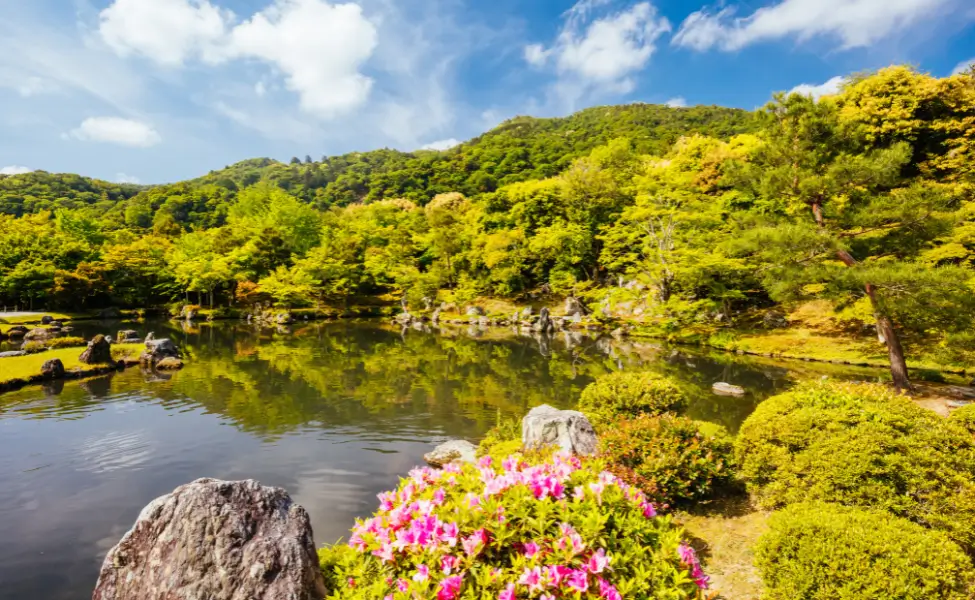
Kameyama Park sits uphill and rewards the climb with views back across the valley.
The entire district is about 15 minutes by train from central Kyoto. Free admission.
Watch Sunset From Kiyomizu-dera’s Wooden Stage
Why This Moment Matters
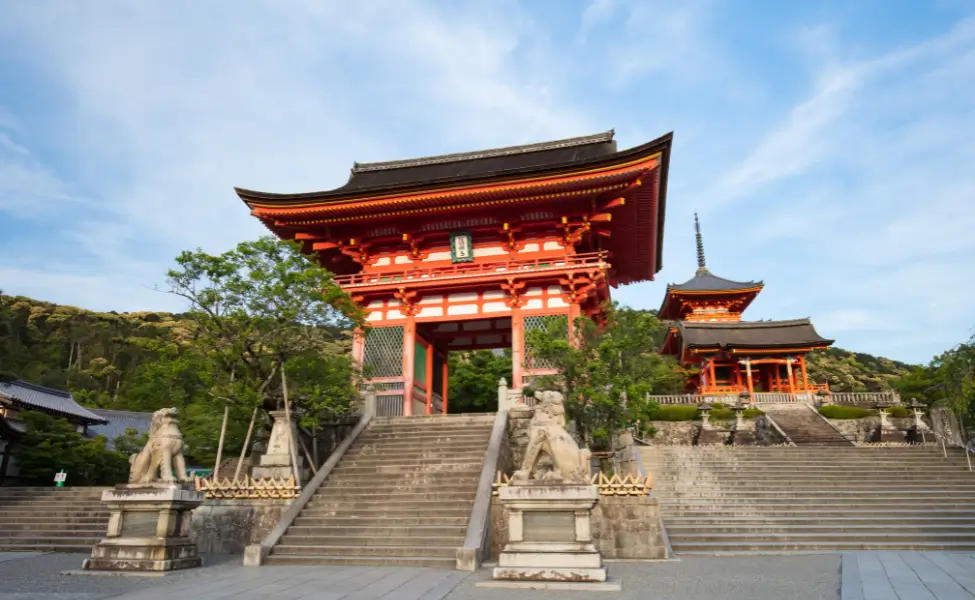
Kiyomizu-dera’s wooden stage extends above the hillside with the kind of presence it’s held for centuries.
The structure floats above the valley.

Distant mountains stretch beyond the city.
The sky changes colour as you’re standing there.
This temple matters for couples because the viewpoint doesn’t demand you go anywhere else to complete the feeling.
You arrive, you stand, you watch the light shift.
That’s the whole experience.
Traditional construction holds the platform without nails.
Massive wooden pillars support the weight.
You don’t think about the engineering until you’re standing on it, realising how solid it is.
When to Visit
Sunset typically occurs between 5pm and 7pm depending on season.
Plan to arrive perhaps an hour before.
This gives you time to explore the temple grounds without rushing towards the viewpoint just as crowds arrive.
Within the temple complex sits Jishou Shrine, which focuses on relationships and matchmaking.
Two stones stand about six metres apart.
The tradition involves walking between them with eyes closed, with the belief that success represents good fortune in relationships.
Whether you find this charming or silly doesn’t matter much.
What matters is that it gives you something playful to do together.
Cherry blossoms (late March through early April, expected around 1 April in 2026) and autumn foliage (October through November) add colour to what’s already a strong viewpoint.
The temple opens at 6am, with extended evening hours during illumination periods (usually around certain seasonal transitions).
Practical Details
Admission: ¥500 per person Hours: 6am to 6pm (extended during special illumination seasons)
Access: 10 minutes by bus from Kyoto Station (routes 100 or 206 to Gojo-zaka stop), then 10 minute walk uphill
Give yourselves time here without watching the clock.
The light changes whether you’re thinking about it or not.
Stroll the Philosopher’s Path Together
What Makes This Walk Different
This canal side path through Higashiyama feels like the antidote to everywhere else in Kyoto.
A stone footpath follows a quiet waterway bordered on both sides by cherry trees.
The walk works as a half day activity once you factor in stops, or as a simple 40 minute walk if you move through without detours.
During cherry blossom season (late March and early April, with 2026 peak around 1 April), the canopy overhead turns pink.

Petals fall onto the water constantly.
It sounds banal in photos, but being there is different.
You actually feel like you’re part of it, not just watching.
The path earns its name from philosopher Nishida Kitaro, who walked here daily in the early 20th century for meditation.
It actually does make you think differently.
Most couples move more carefully here than they do elsewhere in the city.
What You’ll Find Along the Way
Small cafés line the path where you can stop for tea.
Local craft shops sell handmade pottery and textiles without any pressure to purchase.
You can browse as long as you want.
Nothing feels rushed.
Ginkaku-ji sits at the northern end.

Nanzen-ji anchors the south.
Either makes a natural starting or stopping point if you want to visit temples alongside the walk.
Best Times to Visit
Visit before 10am for a peaceful stroll away from crowds.
The period from 11am to 2pm is the busiest, so avoid this window if you prefer quieter moments. Late afternoon works equally well.
Some days feel livelier than others regardless of timing, and both versions of the walk are fine.
Admission: Free
Duration: 40 minutes to 2 hours depending on stops
Access: Ginkaku-ji is accessible by bus (routes 5, 101, 102 from Kyoto Station to Ginkakuji-michi stop)
Share a Picnic at Kyoto Botanical Gardens
The Appeal of This Space
Kyoto Botanical Gardens offers something straightforward that most tourists miss entirely.
Pack a blanket and food, then spend an afternoon in green space where you have room to actually spread out.
The gardens contain multiple sections.
Flower beds burst with colour depending on season.
Quiet ponds sit surrounded by walking paths.
You’re not navigating a famous landmark so much as occupying actual space.
Spring brings cherry blossoms creating a backdrop worth the visit alone.
Autumn turns trees into shades of red and orange and yellow that feel almost improbable.
You’ll want to stay longer in both.
The gardens see fewer visitors than major temples, which means couples get genuine privacy rather than the feeling of public viewing.

Two to three hours here feels unhurried.
Practical Information
Admission: ¥500 per person (gardens), ¥200 additional for conservatory
Hours: 9am to 5pm (last entry 4pm) – Greenhouse 10am to 4pm (last entry 3:30pm)
Closed: 28 December to 4 January
Access: Subway Karasuma Line to Kitayama Station (north entrance), about 15 minutes from Kyoto Station
This is affordable and actually worth it.
Most botanical gardens in major cities aren’t, but this one is.
Experience Cherry Blossoms at Maruyama Park
The Full Bloom Experience
When cherry trees bloom, Maruyama Park becomes Kyoto’s primary destination for flower viewing.
The park sits beside Yasaka Shrine, where spring evenings stretch long beneath branches full of blossoms.

Over 680 cherry trees fill the space.
One massive weeping cherry dominates the park’s centre, spreading branches in a dramatic cascade.
At night during peak bloom, illuminations light the tree, creating a view that draws considerable crowds.
Worth seeing regardless.
The park’s landscape design features a central pond with winding paths that lead through different viewing areas.

This layout lets you find slightly quieter spots even when the park fills up.
Understanding the Timing
Peak bloom typically occurs during the first week of April. In 2026, forecast shows full bloom around 1 April.
The window is narrow.
The park stays open 24 hours with no admission fee.
Daytime viewing at Maruyama feels completely different from evening. Daytime is crowded picnics and group energy.
Evening, particularly after 8pm once most day visitors have left, is actually quiet.
The illuminated tree is still dramatic (illuminations run 6pm to 10pm during bloom), but you’re basically alone.
You can actually sit still and look at it.
What to Bring
Bring a blanket and join hanami, the practice of flower viewing that forms a core part of Japanese spring culture.
What people often misunderstand is that different times of day at Maruyama feel like completely different experiences.

If peak blossom season coincides with your visit, don’t skip this.
If it doesn’t, the park remains pleasant but honestly doesn’t offer much beyond what other parks provide.
Walk Beneath Fushimi Inari’s Vermillion Gates
The Distinctive Feature
Fushimi Inari Shrine contains thousands of bright vermillion torii gates that form corridors along winding mountain trails.
Gates donated over centuries create these iconic pathways, making this one of Kyoto’s most photographed locations.

What people don’t realise is that the most striking section (the Senbon Torii where gates stand so densely they form an almost enclosed tunnel) sits just minutes uphill from the main shrine.
You can walk through in five minutes if you want the photo, or you can climb further and discover something different.
The Full Hike Experience
The full circuit to the summit and back takes roughly two hours depending on pace.
The hike winds past smaller shrines and stone fox statues which serve as messengers of Inari.
Various viewpoints overlook Kyoto city, offering different perspectives as you gain elevation.
Most couples who come here arrive intending a quick visit and end up staying longer because the experience changes the higher you climb.
The torii gates thin out.
The path becomes actual mountain hiking.
It stops feeling like a landmark and starts feeling like a real hike.
Quieter times (weekday mornings, early evening) make an enormous difference.
Weekends and peak season can feel congested at the lower sections.
The higher you climb, the fewer people you encounter regardless.
Logistics
Admission: Free Hours: Open 24 hours, year round
Shops and facilities: Open 9am to 5pm
Access: 2 stops from Kyoto Station on JR Nara Line to JR Inari Station (5 minutes, 150 yen), or about 30 minute walk from Kyoto Station

Lanterns illuminate parts at night, making the gates look eerie and strange.
Mountain trails themselves remain largely unlit.
Dine in a Traditional Gion Machiya
The Setting Matters
Gion’s restored machiya townhouses are where these meals happen.
These historic wooden buildings, some dating back well over a century, have been converted into restaurants whilst keeping their traditional architecture intact.

You’ll remember the space longer than you remember the food.
Inside feels genuinely special.
Exposed wooden beams, tatami mat rooms, and preserved architectural details transport you backwards.
Many machiya restaurants sit tucked into quiet backstreets, offering the kind of privacy that suits couples well.
What to Expect
You can choose from various dining styles.
Kaiseki multi course meals represent Kyoto’s culinary traditions through seasonal ingredients presented with careful attention.

Mid range kaiseki typically costs ¥8,000 to ¥15,000 per person.
Budget friendly set meals start from ¥3,000 to ¥5,000.
Reservations are essential, particularly when Kyoto approaches peak season.
Hotel concierges can usually help if you don’t speak Japanese.
Some restaurants book through online platforms designed for tourists, though contacting directly tends to produce better results.
You’ll think about these spaces longer than you think about the food. That’s the actual value.
Participate in a Traditional Tea Ceremony
Why Tea Ceremony Matters for Couples
Tea ceremony is sitting still for an hour with your partner while someone walks you through an ancient ritual.
You can’t rush it.

You can’t zone out.
It forces you to actually be present, which is the whole point.
Kyoto is headquarters for three main schools of Japanese tea ceremony, so you’ll learn from someone who actually knows what they’re doing.
Teahouses are in gardens with traditional buildings, so the setting feels real, not touristy.
What the Experience Includes
Sessions typically last 30 to 60 minutes and include explanations of the ritual’s history and underlying philosophy.
You’ll learn careful movements, proper etiquette, and what each gesture means.
Nothing about it is casual or quick.
Some venues offer kimono rental during your ceremony for an additional fee.
Experiences cost ¥4,000 to ¥10,000 per person, with premium sessions in private settings costing more.
How to Book
Book in advance, especially during cherry blossom or autumn foliage season when popular venues fill quickly.
The pace forces you to slow down, whether you planned to or not.
And that’s the whole point.
Dress in Yukata for Couples Photos
Why This Experience Works
Renting yukatas together creates the kind of experience that produces photos you actually want to keep.
These lightweight summer kimonos prove more comfortable than traditional kimonos, which matters if you plan to actually move around rather than sit for photographs.
Rental shops offer couple packages typically ranging from ¥4,000 to ¥8,000 for both people.
You choose from numerous styles matching your personalities, from classic patterns to modern colours.

Rentals include the yukata, obi belt, sandals, bags, and accessories.
Seasonal Considerations
Yukatas are traditionally worn during summer months from June through September, with peak season being July and August for festivals.
Some shops operate from May through September.
Standard rental periods give enough time to explore without feeling hurried.
Bringing It Together
These nine experiences don’t need a rigid schedule.
They need time and attention.
Two Day Visit
Focus on one neighbourhood.
Arashiyama works as a standalone morning (bamboo grove, temple, park).
The Higashiyama district accommodates Philosopher’s Path, Kiyomizu-dera, and Gion machiya dining in a single outing.
Three Day Visit
Explore differently.
Day one could be Arashiyama while day two could be Higashiyama (path, temple, dinner).
Day three could be Maruyama Park (any season, but particularly blossom season), tea ceremony, and yukata rental if you want something active.
Five Day Visit
Let yourself breathe.
Add Fushimi Inari as its own morning.
Add Botanical Gardens as an afternoon when you want less structure.
Try multiple machiya restaurants.
Book a more immersive tea ceremony experience.
Let yourself stay places longer without worrying about what comes next.
The Point of This
The value isn’t in doing more.
It’s in noticing better.
Most places push you forward.
Here you can actually stop.
And when you stop long enough, couples see each other again.

