

Engimono are lucky charms that promise prosperity, safety, and happiness.
From the waving cat to the red daruma doll, each Engimono has a story that links everyday life to centuries of tradition.
In Japan, even small objects can carry powerful meaning.
What Are Engimono and Why Do They Matter?
Engimono are traditional Japanese lucky charms that bring good fortune and protection.
These objects carry deep cultural meaning and play a role in daily life through their connection to temples, shrines, and old beliefs.
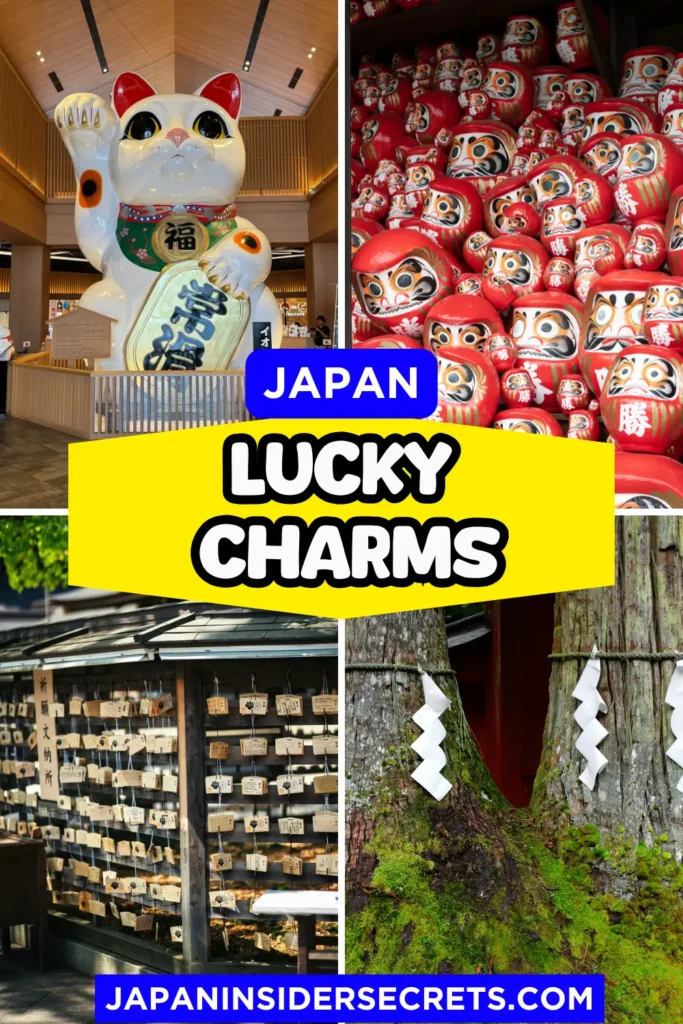
Definition and Origins of Engimono
Engimono are Japanese lucky charms passed down through generations.
The word combines “engi” (good fortune or auspicious signs) with “mono” (thing or object).
These charms came from Japan’s old belief system.
People believed gods existed in everything around them, including nature and even household items.
You’ll find engimono at sacred sites across Japan.
Temples and shrines sell these charms during special events.
They’re also tied to important historical people and events.
The charms come in many forms and colors, each serving a specific purpose or representing different hopes for the future.
Meaning of Engi and Good Fortune
Engi means good omens, auspicious signs, and positive fortune in Japanese culture.
When you own engimono, you’re carrying symbols meant to attract good fortune.
These charms help with specific goals and ambitions.
People use them to pray for a good harvest, business success, or family safety.
They also bring wishes for health, peace, and long life.
Different types of charms focus on specific wishes, such as health, family harmony, business success, or protection.
The charms act as reminders of your hopes.
They connect you to centuries of Japanese spiritual tradition and belief in positive energy.
Role in Japanese Culture and Daily Life
Engimono play a big role in how Japanese people think about luck and protection.
You’ll see them everywhere during New Year celebrations at temples and shrines.
Many people buy engimono as gifts for loved ones.
They’re popular souvenirs and often represent specific regions of Japan.
Each area has its own unique charms with local meaning.
The most common engimono include maneki-neko (beckoning cats) and daruma dolls.
You’ll spot these in shops, homes, and businesses.
They aren’t just decorations as they represent hope and faith in daily life.
People use them to feel connected to their cultural heritage and spiritual beliefs.
Iconic Types of Engimono Lucky Charms
Japan’s most beloved engimono include the famous beckoning cat and daruma dolls.
Maneki-Neko: The Beckoning Cat
The maneki-neko is Japan’s most recognized lucky charm worldwide.
You’ll see these ceramic cats with raised paws in shop windows and homes.
Each paw position means something different.
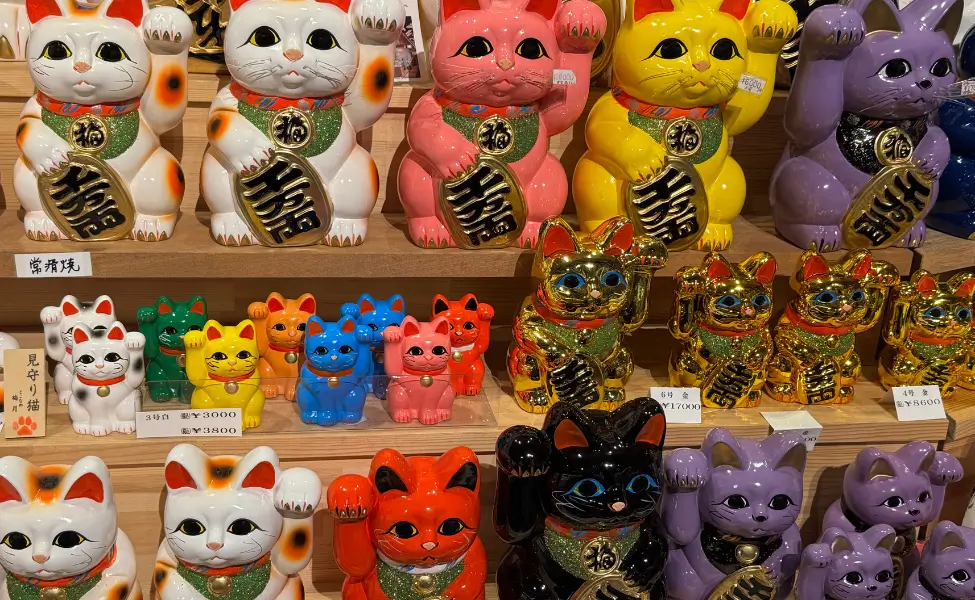
A raised left paw beckons customers and people, while a raised right paw attracts money and good fortune.
Color meanings matter too:
- White: happiness and purity
- Black: protection from evil
- Gold: wealth and prosperity
- Red: protection and health
- Pink: love and relationships
The maneki-neko often holds coins or fish, symbols that boost its power to bring financial success.
Many feature a koban coin marked 万両 (manryō), symbolising a large fortune.
You can find maneki-neko in all sizes.
Small ones sit on desks, while large versions guard shop entrances.
The most effective spot is facing the front door or cash register.
Daruma Dolls for Perseverance
Daruma dolls help people achieve goals through determination.
These round, red shapes stand for Bodhidharma.
He was a Buddhist monk famous for his meditation and persistence.

When you buy a daruma, both eyes are blank.
You paint in the left eye while making a wish or setting a goal.
The right eye stays empty until you succeed.
The doll’s weighted bottom makes it always return upright when knocked over.
This design teaches the saying “nana korobi ya oki” which basically means fall down seven times, get up eight.
Traditional daruma colors include:
- Red = classic luck and perseverance
- Gold/Yellow = wealth or business success
- White = purity/new beginnings
- Black = protection/warding off misfortune
You should put your daruma somewhere visible.
It’s a daily reminder to stay focused on your goals.
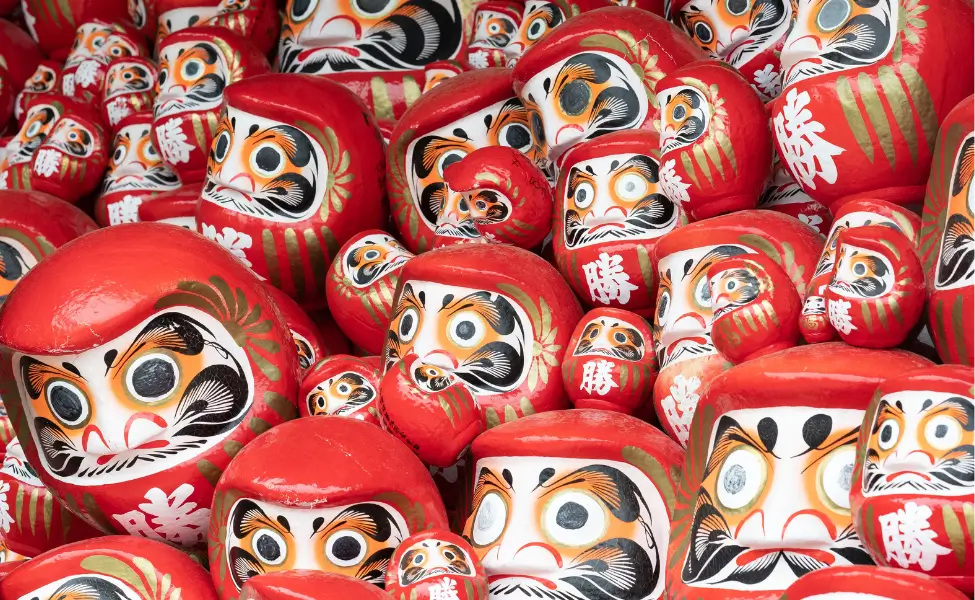
Once you succeed, paint the second eye and give thanks.
Akabeko and Regional Good Luck Charms
Each region develops unique engimono based on local legends.
These charms connect deeply with community history and beliefs.
You can collect regional varieties while traveling across Japan.
The Seven Lucky Gods and Treasure Ship
The seven lucky gods sail on their takarabune treasure ship, bringing prosperity and good fortune.
You’ll often see this image during New Year celebrations.
The divine crew includes:
- Daikokuten: wealth and commerce
- Ebisu: fishing and honest work
- Bishamonten: warriors and defenders
- Benzaiten: music and wisdom
- Jurojin: longevity and happiness
- Hotei: contentment and abundance
- Fukurokuju: luck and wisdom
Each god carries special symbols.
Daikokuten holds a magic mallet, Ebisu carries a tai sea bream, and Hotei shows off his treasure bag.
The treasure ship overflows with precious items.
Gold coins, coral, scrolls, and jewels represent different types of good fortune.
Placing takarabune images under your pillow on New Year’s Eve brings lucky dreams.
Kids especially love this tradition for starting the year off right.
Cultural Significance and Where to Find Engimono
Engimono hold deep meaning in Japanese culture.

You’ll find them at religious sites and festivals.
These lucky charms use traditional materials.
They show symbols linked to ancient ideas of good fortune.
Temples, Shrines, and Religious Festivals
You’ll find engimono for sale at Buddhist temples and Shinto shrines across Japan.
These sacred places are the main sources for authentic lucky charms.
During religious festivals, vendors line the sando (temple approach paths) and shrine grounds.
They sell engimono to visitors hoping for good luck in the coming year.
New Year celebrations are the best time to buy engimono.
Temples and shrines hold special events where you can get charms like hamaya (lucky arrows) and kumade (decorative rakes).
Monzen-machi (temple towns) and Toriimae-machi (towns near shrine gates) also sell engimono year-round.

These areas have strong ties to nearby religious sites.
Kadomatsu (bamboo decorations) sit outside homes during New Year to welcome good spirits.
These large engimono mark doorways and entrances.
Popular festivals like Hatsumode (first shrine visit) attract huge crowds.
You’ll see stalls offering engimono along with traditional foods and entertainment.
Each temple or shrine often has its own unique engimono tied to their specific kami (Shinto deity) or Buddha.
This creates regional differences in charm designs and meanings.
How Engimono Are Used and Displayed
You can display engimono at home, at work, or carry them for protection.
Placement depends on the type of charm and what you want it to do.
Smaller charms like daruma dolls go on shelves or desks where you’ll see them every day.
You set goals by coloring in one eye, then finish the other when you succeed.
Ema (wooden prayer plaques) hang at shrines after you write wishes on them.

People leave these for the kami to receive their prayers.
Business owners often put engimono near cash registers or in offices.
This shows how spiritual beliefs mix with modern business life.
Traditional Materials and Symbolism
Engimono use materials that hold spiritual meaning in Japanese culture.
Paper, wood, and natural fibers form the base of most traditional charms.
Mizuhiki (decorative paper cords) appear on many engimono in specific colors.
Red and white together mean celebration and good fortune.
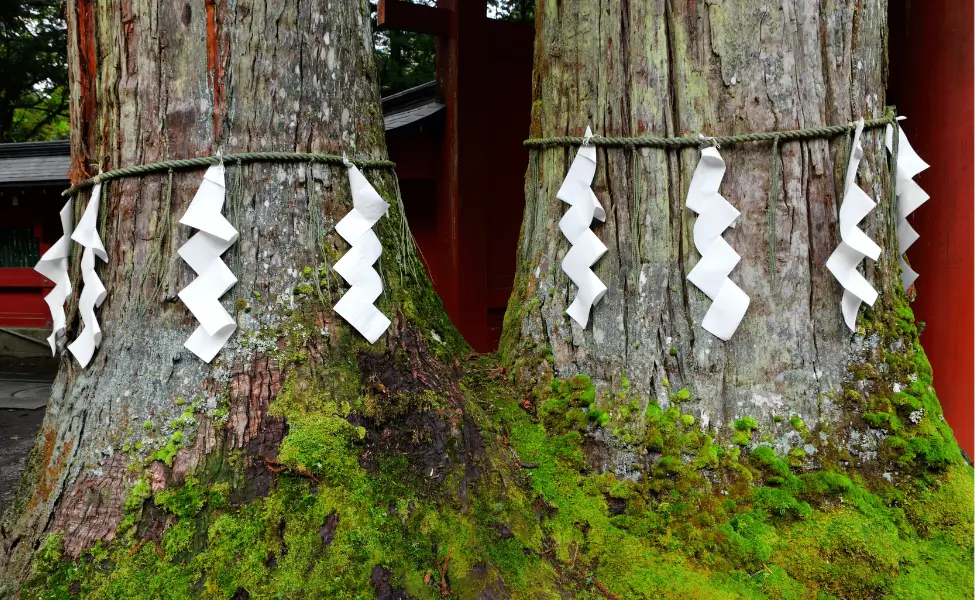
Shimenawa (sacred rope) marks holy spaces and appears on protective charms.
These twisted straw ropes often have paper streamers called shide.
Colors have deep meaning in engimono design.
Red stands for life force and protection, while gold means prosperity and success.
Common symbols include:
- Cranes for longevity
- Turtles for wisdom
- Pine trees for endurance
- Bamboo for flexibility
Natural materials link engimono to Japan’s animistic beliefs.
Many Japanese people believe spirits inhabit all objects, so material choice matters.
Handmade engimono carry more spiritual weight than mass-produced ones.
Artisans follow techniques passed down for generations.
Modern Trends and Collecting Engimono
Today’s engimono scene blends old traditions with modern tastes.
You’ll find both classic designs and new interpretations.
Popular charms, like maneki-neko, remain favorites.
Regional specialties are gaining attention through online collecting and gift exchanges.
Regional Variations and Gift Giving
Different regions make unique engimono based on local traditions and materials.
Well-known regional engimono include:
Takasaki Daruma (Gunma Prefecture) – the most famous daruma-producing region
Akabeko (Fukushima Prefecture) – red cow charm for health and protection
Shigaraki Tanuki (Shiga Prefecture) – ceramic raccoon dogs for business prosperity
Kokeshi dolls (Tohoku region) – wooden dolls symbolising good wishes for children
Shisa (Okinawa) – guardian lion-dogs placed on rooftops or gates for household protection

These are popular gifts for weddings and business openings.
Gift-giving customs vary by region:
- New Year: Temples and shrines offer seasonal charms
- Business openings: Colleagues exchange prosperity symbols
- Tourist visits: Regional specialties make meaningful souvenirs
You’ll often get engimono wrapped in special paper or in decorative boxes.
The presentation adds to their meaning as thoughtful gifts.
Tips for Collecting and Caring for Engimono
Start your collection by focusing on one type, like Japanese lucky charms from certain regions or animals.
This makes it easier to learn about their origins and meanings.
Storage and care:
- Keep engimono in dry, clean spots
- Dust wooden items gently with a soft cloth
- Avoid direct sunlight to prevent fading
- Store fragile pieces in protective boxes
When buying, stick to reputable sources like temple shops, established craft stores, or trusted online sellers.
Authentic pieces usually include info about their origins and meanings.
Take photos and notes about each piece’s source, date, and significance.

This builds a personal record of your good luck charm journey.
Some charms are refreshed annually, and many shrines encourage returning old items for ritual disposal.
Specific charms may also have small rituals to maintain their effectiveness.
Frequently Asked Questions
People often wonder how to choose the right engimono and how to use these traditional charms.
Questions cover everything from types like daruma dolls and maneki-neko cats to where to put them and how to care for them.
What are the traditional good luck charms in Japanese culture?
The most recognised engimono are maneki-neko cats, daruma dolls, omamori amulets, and regional figures like tanuki or shisa.
Each carries a different form of good fortune, from perseverance to prosperity.
See the main sections above for full details.
What’s the historical significance behind Japan’s engimono traditions?
Engimono developed from Japan’s mix of Shinto, Buddhist, and folk beliefs, where spiritual power was seen in everyday objects.
Temples and shrines became the main places to obtain them, and many regional charms reflect local history and legends that have been passed down for generations.
How do you properly care for and display Japanese lucky charms in your home?
Keep charms clean and away from damp or direct sunlight.
Place them in a respectful, visible spot such as an entrance or shelf.
When a charm becomes worn, return it to a temple or shrine for disposal and replace it with a new one.
