
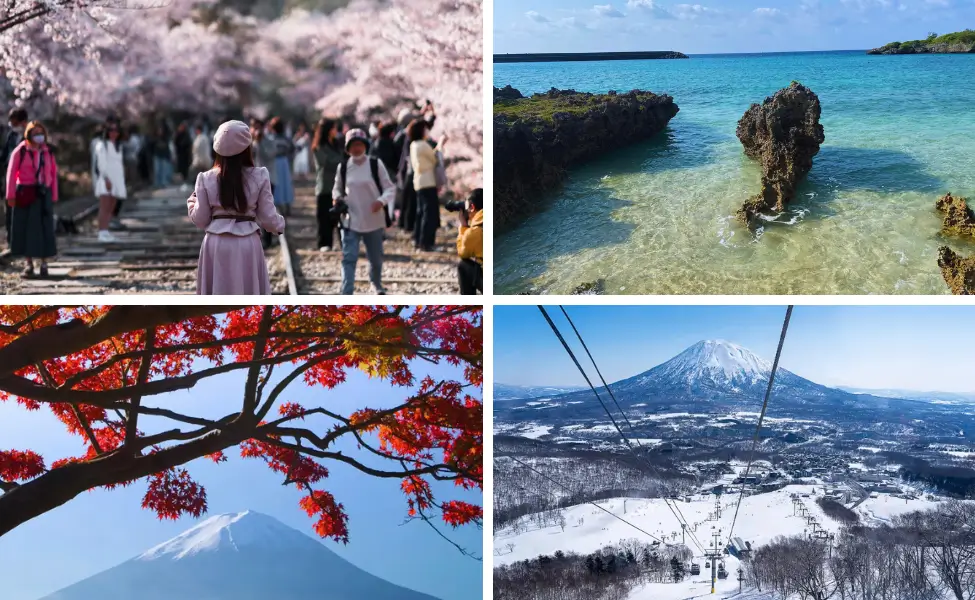
Japan’s climate varies dramatically from the snowy mountains of Hokkaido to the tropical beaches of Okinawa.
Understanding these seasonal patterns helps find the best time to visit Japan.
Whether you want to see cherry blossoms, autumn leaves, or simply enjoy comfortable weather for sightseeing.
As someone who has lived in Japan for over two decades, I’ve experienced every season firsthand.
This deep understanding allows me to offer insights beyond typical travel guides.
Understanding Japan’s Four Distinct Seasons
Spring (March to May): Cherry Blossoms and Renewal
Spring temperatures range from 8°C to 25°C, gradually warming as the season progresses.
March starts cool at 8°C to 15°C, while May can reach 18°C to 25°C.

This season brings the famous cherry blossom period and marks the end of winter’s chill.
Summer (June to August): Heat, Humidity, and Festivals
Summer begins with the rainy season (tsuyu) in June, followed by hot, humid conditions.

Temperatures reach 29°C to 33°C in major cities like Tokyo and Osaka.
Humidity levels often exceed 70%, making the heat feel more intense.
Autumn (September to November): Colorful Leaves and Clear Skies
Autumn offers relief from summer’s humidity with temperatures between 15°C and 27°C.

September retains some summer warmth, while October and November provide crisp days and vibrant scenery perfect for outdoor activities.
Winter (December to February): Mild Cities, Snowy Mountains
Winter brings mild temperatures to central and southern Japan, with cities averaging 5°C to 15°C.

Northern regions like Hokkaido experience proper winter conditions with heavy snowfall and temperatures well below freezing.
Regional Climate Differences
Tokyo and Central Honshu
Tokyo represents Japan’s moderate climate zone.
Winters are mild with sunny days around 10°C, while summers reach 30°C with high humidity.
Spring and autumn provide the most comfortable conditions for sightseeing.
Kyoto and Osaka (Kansai Region)
Similar to Tokyo but slightly warmer.
Winter temperatures average 9°C to 13°C, while summer peaks at 31°C to 33°C.
The surrounding mountains can create slightly different microclimates.
Hokkaido (Northern Japan)
Japan’s coolest region offers escape from southern summer heat.
Even summer temperatures rarely exceed 26°C.
Winters are harsh with heavy snow, making it perfect for winter sports from December through March.
Okinawa (Subtropical South)
This tropical paradise maintains warm temperatures year round.
Winter stays around 19°C to 24°C, while summer reaches 31°C.
The trade winds help moderate the heat compared to mainland Japan.
Japanese Alps and Mountain Regions
Mountain areas experience cooler temperatures and more snow than coastal regions.

Summer provides excellent hiking conditions, while winter transforms these areas into premier skiing destinations.
Best Months for Travel
April and May: Peak Comfort Season
These months offer the ideal combination of pleasant temperatures (18°C to 24°C), manageable humidity, and mostly clear skies.
Late May is particularly appealing as Golden Week crowds disperse and summer heat hasn’t arrived.
October and November: Autumn Excellence
After summer’s humidity subsides, autumn delivers crisp air, comfortable temperatures (15°C to 22°C), and stunning fall colors.
October works well for mountain areas, while November is perfect for temple visits in Kyoto.
March: Southern Comfort, Northern Caution
Southern and central Japan warm up nicely in March, but northern regions remain quite cool. This month works well if you’re focusing on Tokyo, Kyoto, and areas south.
Late September: Transition Period
As summer heat fades, late September can provide good conditions, though typhoons occasionally affect travel plans during this period.
Spring Travel: Cherry Blossoms and Festivals
Cherry Blossom Timing by Region
The sakura front moves from south to north across Japan, creating different viewing windows:

Okinawa: January through February
Tokyo, Kyoto, Osaka: Late March through early April
Nara and Kamakura: Early April
Northern Honshu: Mid to late April
Hokkaido: Late April through early May
Weather During Cherry Blossom Season
Spring weather can be unpredictable.
March temperatures range from 8°C to 15°C, requiring layers and light jackets.
April provides the most stable conditions at 14°C to 20°C. May warms to 18°C to 25°C but can become humid toward month’s end.
Rain occasionally interrupts hanami plans, and wind can shorten the blooming period.
Checking weather forecasts becomes essential when planning flower viewing activities.
Popular Hanami Locations and Events
Ueno Park in Tokyo hosts over 1,000 cherry trees and becomes incredibly popular during peak bloom.
Kyoto’s Maruyama Park offers a more traditional atmosphere for flower viewing.
Many locations offer nighttime illuminations, transforming the experience completely.
Chidorigafuchi in Tokyo and the Philosopher’s Path in Kyoto provide magical evening strolls.

Major festivals include Hirosaki’s famous 2,600 cherry trees and Osaka Castle’s Spring Festival, which combines historical sites with natural beauty.
Autumn Travel: Fall Colors and Perfect Weather
Autumn Foliage Progression
Like cherry blossoms, autumn colors move systematically across Japan:

Hokkaido: September through October (Daisetsuzan National Park, Sapporo)
Japanese Alps: Late September through October (Nagano mountains)
Central Japan: October through November (Kanazawa, mountain areas)
Kyoto and Southern Japan: Mid November through early December (temple gardens)
Autumn Weather Conditions
Autumn provides Japan’s most reliable weather.
Temperatures stay comfortable between 15°C and 22°C, humidity drops significantly, and rain becomes less frequent.
Clear skies make the fall colors more vibrant and photography more rewarding.
Typhoon season typically ends by October, making late autumn particularly stable for travel planning.
Peak Autumn Experiences
October showcases the Japanese Alps at their most dramatic, with gold and red mountainsides creating spectacular landscapes.
Nagano’s highlands become particularly photogenic.
November brings peak foliage to central and southern Japan.

Kyoto’s temple gardens reach their colourful peak from mid November onward, creating some of Japan’s most iconic autumn scenes.
Kenroku-en Garden in Kanazawa exemplifies autumn perfection in late October, while cultural festivals add depth to the seasonal experience.
Summer Travel: Festivals and Heat Management
Managing Summer Conditions
Summer temperatures reach 29°C to 33°C in major cities, with humidity often exceeding 70%.
The combination creates challenging conditions for extensive outdoor activities.
The rainy season (tsuyu) typically lasts from early June to mid July, bringing heavy downpours and increased humidity.
This period can disrupt travel plans but also provides relief from heat.
Summer Festival Season
Despite challenging weather, summer hosts Japan’s most spectacular festivals.
Kyoto’s Gion Matsuri in July features elaborate floats and traditional performances.

Aomori’s Nebuta Matsuri in August showcases massive illuminated floats and energetic street dancing.
These festivals offer unique cultural experiences but require preparation for heat and crowds.
Regional Summer Strategies
Hokkaido provides the best summer escape, with temperatures rarely exceeding 26°C and low humidity.
Mountain regions also offer cooler alternatives to sweltering cities.
Air conditioning is ubiquitous in Japan, making indoor attractions and transportation comfortable even during peak summer heat.
Winter Travel: Snow Sports and Mild Cities
Winter Regional Variations
Central and southern Japan experience mild winters with sunny days around 10°C to 15°C.
Snow is rare in cities like Tokyo and Osaka, making sightseeing comfortable with proper clothing.
Northern regions transform into winter wonderlands.
Hokkaido receives heavy snowfall, creating excellent conditions for skiing and snow festivals.
Winter Highlights
The Sapporo Snow Festival in February attracts visitors worldwide with elaborate ice sculptures and winter activities.
Niseko and other Hokkaido resorts offer world class powder skiing.

Hot springs (onsen) become particularly appealing in winter, providing warm relaxation after cold weather exploration.
Rainy Season and Typhoons
Understanding Tsuyu (Rainy Season)
The rainy season affects different regions at different times:
- Okinawa: Early May to mid June
- Southern Japan: Early June to mid July
- Northern Japan: Mid June to late July
This period brings heavy rainfall, high humidity, and overcast skies.
While not ideal for sightseeing, it provides essential water for agriculture and creates lush green landscapes.
Typhoon Season
Typhoons can affect Japan from May through November, with peak activity from July through September.
Modern forecasting provides adequate warning, and infrastructure is well prepared for these storms.
Southern regions face higher typhoon risk, while northern areas are less frequently affected.
Regional Destination Timing
Hokkaido: Summer Paradise, Winter Wonderland
Visit Hokkaido from June through August for comfortable hiking, lavender fields, and city exploration without oppressive heat.

Winter (December through March) offers excellent skiing and unique ice festivals.
Okinawa: Winter Beach Paradise
October through April provides the best Okinawa weather with lower humidity and comfortable temperatures for beach activities.
Avoid the rainy season (May to June) and peak typhoon period (July to September).
Japanese Alps: Seasonal Extremes
Summer hiking season runs from July through September when mountain trails are snow free.
Winter transforms the region into premier skiing territory from December through March.
Tokyo and Central Japan: Year Round Destinations
Spring (April to May) and autumn (October to November) offer optimal conditions.
Summer requires heat management strategies, while winter provides comfortable city exploration.
Festival and Holiday Impact
Golden Week and Obon: Peak Travel Periods
Both Golden Week (late April to early May) and Obon Week (mid August) create peak travel conditions, with high demand for hotels and transport.
Despite excellent weather during Golden Week, crowds and higher prices make both periods challenging for international visitors.

Planning well ahead becomes essential during these times.
Major Festival Periods
Summer festivals occur during the hottest months, requiring balance between cultural experience and comfort.
Spring and autumn festivals often provide better weather conditions for extended outdoor activities.
Practical Planning Tips
Booking Considerations
Reserve accommodations well in advance for cherry blossom season, autumn foliage periods, and major festivals.
Popular destinations like Kyoto fill up months ahead during peak seasons.
Packing for Japanese Seasons
Spring requires layers for changing conditions and light rain protection.
Summer demands lightweight, breathable clothing and sun protection.
Autumn calls for light layers as temperatures fluctuate.
Winter needs warm clothes for northern regions but only light jackets for southern cities.
Weather Monitoring
Japanese weather forecasting is highly accurate.
Check conditions regularly when planning outdoor activities, especially during cherry blossom season and typhoon periods.
The Japan Meteorological Agency provides detailed forecasts and seasonal predictions, including cherry blossom and autumn foliage timing.
Making Your Decision
Choose spring (April to May) for cherry blossoms, mild weather, and outdoor festivals.
Select autumn (October to November) for fall colors, clear skies, and comfortable hiking conditions.
Consider summer only if you can handle heat and humidity or plan to focus on northern regions and indoor attractions.
Winter works well for southern sightseeing, northern snow sports, and hot spring experiences.
Your ideal timing depends on personal weather preferences, desired activities, and tolerance for crowds during peak seasons.
Japan offers rewarding experiences throughout the year with proper planning and realistic expectations.

