
Picture this: you’ve got 30 days to explore Japan, but where do you even start?
After 26 years of living here and guiding countless visitors, I’ve cracked the code for the perfect month-long adventure.
This isn’t just another generic itinerary.
It’s your roadmap to experiencing Japan like someone who actually lives here, not like a tourist checking boxes.
Plan your one month Japan itinerary with some of these amazing experiences:
What Is the Best One Month Japan Itinerary?
A perfect one month Japan itinerary covers Tokyo (7 days), Mount Fuji and Central Japan (7 days), Kyoto/Osaka (7 days), and Chugoku or Okinawa (7 days).
Budget ¥350,000-1,200,000 per person depending on your travel style, including domestic transport.
Choose between a single 21-day JR Pass (¥50,000) or two 14-day passes (¥94,500 total) depending on your week 4 travel plans.
Book accommodation 2-3 months ahead for popular destinations and seasons.
How to Use This One Month Japan Itinerary
This itinerary is perfect for first-time visitors who want to explore Japan’s culture, history, and landscapes properly.

Having lived here since 2000, I’ve watched tourism patterns change and refined this route to balance must-see destinations with authentic local experiences.
The route covers the big cities like Tokyo and Osaka but also includes less touristy spots in the Alps and central regions that many visitors miss.
Who Is This Itinerary For?
This one-month plan works best if you’ve got a flexible schedule and want a proper introduction to Japan.
From my experience hosting visitors over the years, it’s ideal if you’ve never been before and want to see both the famous sights and hidden gems that only locals know about.
You can use it as a solo traveller, a couple, or a small group.
I’ve included budget options like hostels and pricier experiences, based on what I’ve seen work for different types of visitors.

First-timers get a nice mix of must-see places and cultural stops.
The route takes you from busy cities to peaceful temples and mountain villages, giving you the full Japanese experience I’ve come to love over my decades here.
If you have mobility concerns, cities have excellent public transport.
Some mountain areas, though, do mean more walking or hiking, which I always warn visitors about.
Itinerary Overview and Route
The route follows a logical path and avoids lots of backtracking, something I learned after watching too many visitors exhaust themselves zigzagging across the country.
You’ll start in Tokyo to ease into Japan, then explore central Japan and Mount Fuji, before heading to the cultural heartland of Kyoto and Osaka, and finish in western Japan.
Week 1: Tokyo and Surroundings (7 days)
2: Mount Fuji and Central Japan (7 days)
3: Kyoto, Osaka and Kansai Region (7 days)
4: Western Japan – Choose Your Final Adventure (7 days)
Japan’s train system makes this route easy, and after years of using it myself, I can tell you it’s incredibly reliable.

The JR Pass helps with longer distances, and for city travel, grab a local transport card.
Major highlights include the Peace Memorial Park in Hiroshima, traditional temples in Kyoto and Nara, modern attractions in Tokyo, and mountain villages in Takayama and Shirakawa-go that I visit regularly from my home in Nagoya.
Adapting the Itinerary to Your Interests
Your trip should fit your interests, and I’ve learned this from years of helping visitors customise their plans.
If you love food, spend extra time in Osaka, which many call Japan’s kitchen.

Having eaten my way through the city countless times, I can confirm this reputation is well-deserved.
History buffs might want more days in Kyoto and Nara.
Nature lovers should add days in the Alps, which I visit regularly for hiking and onsen.
You can skip some city days for hiking and outdoor adventures.
If you’re after culture, stay longer in traditional spots like Kyoto.
Try temple visits and cultural workshops that I often recommend to visitors seeking authentic experiences.
Adjusting your budget is simple.
Hostels instead of hotels, convenience store meals (which are surprisingly good in Japan), and free parks over paid attractions can save a lot.
If you’re short on time, a two-week version could focus on Tokyo, Kyoto, and Osaka.
For just a week, stick to Tokyo and day trips nearby, though I always tell people they’ll want to come back for more.
Seasons matter tremendously.
Spring brings cherry blossoms and crowds, autumn has amazing colours, and winter is colder but great for snow sports.

After experiencing all seasons here, I have specific recommendations for each.
One Month Japan Budget Breakdown
Based on my experience helping visitors plan extended trips over the years, expect these costs per person:
Budget Option (¥350,000-500,000)
Accommodation: ¥8,000-12,000/night (hostels, business hotels)
Food: ¥3,500-5,000/day (convenience stores, local restaurants)
Transport: ¥50,000 (21-day JR Pass) + ¥30,000 local transport
Activities: ¥40,000-70,000
Mid-Range (¥500,000-750,000)
Accommodation: ¥12,000-18,000/night (mid-range hotels, some ryokan)
Food: ¥5,000-7,500/day (mix of restaurants, some splurges)
Transport: ¥50,000 (JR Pass) + ¥45,000 local transport
Activities: ¥70,000-120,000
Luxury (¥750,000+)
Accommodation: ¥22,000-45,000/night (luxury hotels, premium ryokan)
Food: ¥9,000-15,000/day (high-end restaurants, kaiseki meals)
Transport: Green Car JR Pass (premium pricing above standard rates), taxis, and other luxury transport options
Activities: ¥120,000-225,000
Living here, I’ve learned that the biggest money-saving tip is eating like locals do.
Convenience store meals, local ramen shops, and department store food courts offer incredible value and quality.
Note: All prices listed are approximate and subject to change.
Check current rates when planning your trip.

Essential Planning Tips for a Month in Japan
Planning a month here takes some thought about timing, transport, and where to stay.
After decades of navigating these decisions myself and helping others, this is what I’ve found.
Best Time to Visit Japan
Spring (March to May) is all about cherry blossoms, but it’s crowded and prices jump.
Having lived through 26 sakura seasons, I can tell you the crowds are intense but the beauty is worth it if you plan carefully.

Summer (June to August) gets hot and humid, and June-July is rainy season.
But the summer festivals and fireworks are honestly worth sweating through, and I attend several every year.
Autumn (September to November) feels comfortable and the foliage is stunning.
It’s my personal favourite time for temple visits and onsen, with perfect weather for being outside.
Winter (December to February) brings snow up north and fewer tourists.
Accommodation is cheaper now, and you’ll discover more authentic experiences.
However, some mountain spots may be off-limits.
From my experience, the best value months are November, January, and February, which usually have lower prices and decent weather.
Choosing and Using the JR Pass
For a 30-day trip, you have two JR Pass strategies:
Option 1: Single 21-day pass (¥50,000) covering weeks 1-3, then buy individual tickets for week 4 regional travel (budget ¥15,000-25,000 extra).
Best for budget travelers.
Option 2: Two 14-day passes (¥47,250 each = ¥94,500 total).
Use the first for weeks 1-2, rely on local transport in Kyoto/Osaka for week 3, then activate the second pass for week 4 long-distance travel or flights to Okinawa.
Best for extensive week 4 travel.
Tokyo to Osaka alone costs ¥13,500 one way, so the pass pays off quickly with multiple long-distance trips.
Buy from an authorised dealer before you arrive or at major JR stations in Japan (pricing may vary by location).
Exchange vouchers at major JR stations upon arrival.
The pass doesn’t work on Nozomi or Mizuho trains, but Hikari and Sakura serve the same destinations with minimal time difference.
Reserve seats ahead of time for busy routes, especially during peak seasons.
Budgeting and Booking Accommodation
Expect to pay ¥12,000-22,000 a night for mid-range hotels in Tokyo and Osaka.
Traditional ryokan inns with onsen cost ¥18,000-45,000, but the experience is worth it if you can swing it.
I’ve stayed at dozens over the years.

Book 2-3 months in advance for popular spots.
During cherry blossom (March-May) or fall foliage seasons (October-November), book 4-6 months ahead, something I learned the hard way in my early years here.
Money-saving tips from my experience:
•Business hotels are clean and efficient, usually ¥9,000-13,500 per night
•Capsule hotels in Tokyo are unique and can be under ¥6,000
•Try temple stays (shukubo) for an affordable, cultural experience
Many hotels won’t charge you until you arrive, so you can keep plans flexible.
Go for refundable rates when you can, since your plans might change over a month.
Credit cards work in big cities, but always carry cash for rural areas, small restaurants, and temples..
Week 1: Tokyo and Surroundings
Your first week is a chance to settle into Tokyo’s rhythm and explore its famous neighbourhoods and some nearby cities.
Tokyo Neighbourhood Highlights
Shibuya is classic Tokyo.

If you’re up for it, head to Shibuya Sky for panoramic city views (¥1,800).
Sunset is especially nice, though I prefer early morning for fewer crowds.
Shinjuku is neon-bright and buzzing with entertainment.
At night, tiny bars hide in narrow alleys and department stores stay open late.
I’ve explored these alleys for years and still discover new places.
Harajuku is all about quirky fashion.
Takeshita Street is packed with colourful shops, kawaii accessories, and crepe stands.

To me it’s a little overrated but for first time visitors, it’s fun.
Akihabara is the go-to for electronics and anime.
Multi-storey stores, manga shops, and themed cafés fill the area.
Even after decades here, the energy still amazes me.
Nezu feels quieter, with traditional wooden houses and local shops.
It’s more residential and gives you a peek at everyday life in Tokyo that many tourists miss.
Iconic Sights and Attractions
Sensoji Temple in Asakusa is Tokyo’s oldest, and I’ve watched it evolve over my years here.

Walk through Nakamise Shopping Street, full of snack stalls and souvenirs, to reach the temple.
The red Kaminarimon Gate marks the entrance.
Try to visit early to dodge the big crowds, something I always recommend to visitors.
The Imperial Palace sits in central Tokyo, surrounded by gardens.
The palace itself is closed, but the East Gardens are open for peaceful walks.

Cherry trees here look amazing in spring, and I often jog through these grounds.
Ueno Park has several museums and Tokyo’s zoo.
It’s packed during cherry blossom season but worth visiting any time.
The National Museum (¥1,000) has Japanese art and cultural artefacts.
Set aside at least half a day to see the park properly.
Day Trips: Kamakura & Yokohama
Kamakura is just an hour south by train (¥920 from Tokyo).

Once Japan’s capital, it’s full of historic temples that I visit regularly for their peaceful atmosphere.
The Great Buddha (¥300 entry) is Kamakura’s top sight.
You can actually walk inside this huge bronze statue from 1252, something that still impresses me after all these years.
Bamboo groves and hiking trails connect different temples.
The Enoshima Electric Railway gives you scenic rides between spots, and I like this nostalgic train line.

Yokohama has a modern vibe and an international feel.
Chinatown serves up great Chinese food, and the Red Brick Warehouse hosts markets and events that I attend regularly.
Cosmo World amusement park has a giant Ferris wheel (¥800) with harbour views.
The Landmark Tower’s observation deck (¥1,000) shows off the whole city.

Both cities are easy day trips from Tokyo.
Trains run late, so you won’t be rushed, and I often combine both in a single day trip.
Experiencing Japanese Food and Culture
Japanese cuisine is way more than just sushi, and after decades of eating here, I can guide you to the real gems.
Try ramen at small counter shops (¥800-1,200), where you usually order from a vending machine.
Conveyor belt sushi spots are affordable and fun (¥150-500 per plate).
Department store food courts (basements, usually) have a wild variety and quality that still surprises visitors I bring there.
Izakaya (Japanese pubs) are great for local dining.
You’ll share small plates with beer or sake in a laid-back setting.
•Takoyaki (octopus balls) ¥500-800
•Taiyaki (fish-shaped pastries) ¥200-300
•Yakitori (grilled chicken skewers) ¥150-300
Train stations often have the best options, something I discovered early in my time here.
Cooking classes are a fun way to learn (¥5,000-8,000).
Most include a market visit so you can pick out fresh ingredients.
Don’t ignore convenience stores either.
Onigiri (rice balls) ¥150 and bento boxes ¥500-800 are cheap, tasty, and perfect for a quick meal.
Week 2: Mount Fuji and Central Japan
This week, you’ll head into Japan’s mountains via Hakone, then work your way through the Japanese Alps to Kanazawa, before ending in Nagoya, which is an area I know well as it’s my base.
Soak in hot springs with Mount Fuji as your backdrop, and explore alpine towns tucked away in the Japanese Alps.

You’ll see ancient castles, traditional crafts, and some of the country’s most stunning natural scenery.
It’s a change of pace from the big cities that I particularly love.
Exploring Hakone and Mount Fuji
Hakone is an ideal base for Fuji adventures.
The town sits inside a volcanic crater with epic views of the mountain, weather permitting.
I’ve learned that clear Fuji views are never guaranteed, so appreciate them when they happen.
The pirate ship cruise (¥1,200) is a bit touristy but fun, and the views of Fuji are best in the morning before clouds roll in, something I’ve observed countless times.

Hakone Shrine sits right on the lake, with its red torii gate in the water.
It’s over 1,200 years old and one of the most photographed spots in Japan.
I still find it magical after all these years.

Onsen are a must in Hakone.
Tenzan Tohji-kyo (¥1,300) is a favourite for outdoor baths with mountain views.
Some ryokan hotels offer private onsen if you want more privacy, and I can recommend specific ones based on experience.
The Hakone Ropeway cable car (¥1,550) climbs Mount Hakone.
On a clear day, you’ll get awesome Fuji views from Owakudani Valley.
The volcanic activity here cooks black eggs (¥500) in sulphur vents.

Try one if you’re feeling adventurous.
If you want to climb Mount Fuji, July and August are the only safe months.
Book mountain huts ahead if you’re planning to go all the way up.
Matsumoto and the Japanese Alps
Matsumoto sits at the doorstep of the Japanese Alps, an area I visit regularly from Nagoya.
This historic city mixes castle architecture with mountain adventures.
Matsumoto Castle (¥700) stands as one of Japan’s finest original castles.
Locals call it “Crow Castle” because of its black exterior, and I never tire of seeing it against the mountain backdrop.

Climb the steep wooden stairs for panoramic city views.
The castle grounds burst with cherry blossoms in spring and fiery maple leaves in autumn, both seasons I’ve enjoyed here many times.
Kamikochi is about three hours from Matsumoto by bus and train (¥2,450).
This alpine valley has some of Japan’s best hiking trails, and I’ve hiked here in multiple seasons.
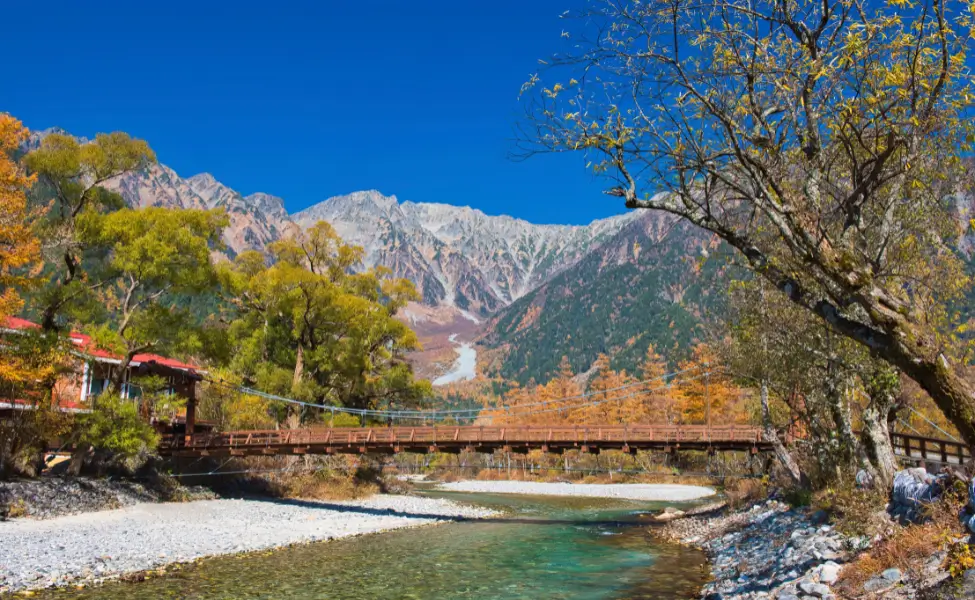
The Kappa Bridge offers beautiful mountain reflections in the Azusa River.
You can choose an easy walk to Myojin Pond or a tough trek up Mount Hotaka, depending on your fitness level.
Mountain huts along the routes serve hot meals and offer overnight stays for hikers who want to go further.
The area closes from November to April because of heavy snow.
Kanazawa and Toyama
Kanazawa keeps traditional Japanese culture alive better than most cities.

Its historic districts show off samurai and geisha heritage that I find fascinating every time I visit.
Kenroku-en Garden (¥320) is considered one of Japan’s top three gardens.
Each season brings its own charm, from cherry blossoms to snow-covered pines.
I’ve seen it in all seasons and each has its magic.
The Higashi Chaya District has preserved tea houses where geishas once entertained guests.
Many buildings now serve as cafés or craft shops selling local specialties.

Try Kanazawa’s famous gold leaf products.
The city makes 99% of Japan’s gold leaf, used in temples and artwork.
Toyama is an easy day trip from Kanazawa (¥1,170).
It gives you access to the Tateyama Kurobe Alpine Route, sometimes called the “Roof of Japan.”
This mountain route (¥11,050 for full route) opens from April to November.
In spring, snow walls can reach 20 metres high when the road reopens, a spectacular sight I try to see annually.
Nagoya and Gifu
Nagoya acts as central Japan’s main transport hub and my home base for 26 years.
The city rebuilt itself after wartime destruction but kept important cultural sites.
Nagoya Castle (¥500) is a faithful reconstruction of the original.

The tiger-fish on the roof are meant to protect against fire, and the interactive exhibits inside explain samurai history.
Nagoya’s food scene is packed with unique local dishes that I’ve grown to love.
Try miso katsu (¥1,200), hitsumabushi grilled eel (¥2,500), and kishimen flat noodles (¥800).
These are regional specialties you won’t find elsewhere in Japan.
Gifu Prefecture lies just north of Nagoya, and I visit regularly.
The historic village of Shirakawa-go features thatched-roof farmhouses called gassho-zukuri.

These UNESCO World Heritage buildings were built to handle heavy snow.
Some houses are museums (¥300), while others work as guesthouses (¥8,000-15,000/night).
The village looks especially beautiful during winter illuminations or autumn leaves.
Book accommodation early if you want to stay overnight, as I learned from experience.
Week 3: Kyoto, Osaka and Kansai Region
Week three drops you into Japan’s cultural heartland, an area I know intimately from decades of visits.
Ancient temples sit next to lively food markets, and sake breweries pop up near modern entertainment districts.

The Kansai region offers day trips to deer-filled parks, UNESCO castles, and some of Japan’s best food scenes.
Historic Kyoto: Temples and Shrines
Kyoto makes a great base for exploring over 2,000 temples and shrines.
Start early at Kinkaku-ji Golden Pavilion (¥500), where the gold-leafed temple glows over its pond.

The well-known Kiyomizu-dera Temple (¥400) gives sweeping city views from its wooden stage.
Visit during cherry blossom or autumn if you want the best colours, though I find it beautiful year-round.
Fushimi Inari-taisha has thousands of bright orange torii gates winding up the mountain.
Hiking to the summit takes 2-3 hours, but you can turn back whenever you like.

Nijo Castle (¥1,300) shows off the Tokugawa shogun’s power with ornate rooms and “nightingale floors” that squeak to warn of intruders.
The gardens bloom magnificently in spring.
Try to visit temples early to avoid crowds.
Most charge entrance fees of ¥300-600. Some require you to remove your shoes before entering, standard etiquette I always explain to visitors.
Day Trips: Nara and Uji
Nara, Japan’s first permanent capital, sits just 45 minutes from Kyoto by train (¥760).
Nara Park is home to over 1,200 free-roaming deer, considered sacred.
I bring every visitor here because the experience is uniquely Japanese.

Buy deer crackers (shika senbei) for ¥200 to feed them.
The deer have even learned to bow for treats, something that still makes me smile after all these years.
Kasuga Taisha shrine lines its paths with thousands of bronze and stone lanterns.
Lantern Festivals in February and August light up all 3,000 lanterns at once, a magical sight I attend annually.
Uji is famous for matcha green tea, and I often take visitors here for authentic tea experiences (¥2,000-3,000).

You can join a tea ceremony or visit traditional tea shops by the river.
The town also has Byodo-in Temple (¥600), which you’ll see on the ¥10 coin.
Both Nara and Uji work well as day trips from Kyoto.
Nara usually needs 6-8 hours, while Uji takes about 4-5 hours to see properly.
Osaka’s Culinary Delights
Osaka lives up to its nickname “Japan’s Kitchen” with amazing street food and lively restaurants.
After eating my way through this city for decades, I can confirm it’s a food lover’s paradise.

Dotonbori buzzes with neon, food stalls, and the famous Glico running man sign.
Try takoyaki octopus balls (¥600), okonomiyaki savoury pancakes (¥800), and kushikatsu fried skewers (¥150 each).
Street vendors sell each for reasonable prices.
Shinsekai offers a grittier, retro dining vibe.
The Tsutenkaku Tower (¥900) looks out over this area packed with kushikatsu restaurants.

I have favourite spots here that I’ve been visiting for years.
Osaka Castle (¥600) adds a dose of history between snacks.
The reconstructed castle has a modern museum and city views from the top floor.
Kuromon Ichiba Market opens early with fresh sushi (¥300-800 per piece), wagyu beef samples, and seasonal fruit.
Arrive before 10am if you want the best picks and prices, advice I give every food-loving visitor.
Modern Marvels in Kobe and Himeji
Kobe blends international port vibes with mountain scenery.
Kobe beef restaurants start around ¥12,000 per person, but the meat really does melt in your mouth.

The Kobe Port Tower (¥700) gives you harbour views.
Kitano district has Western-style houses from the 1800s, many of which are now small museums (¥300-500) or cafés.
Himeji Castle (¥1,000) stands as Japan’s best original castle and a UNESCO World Heritage site.

The white wooden structure somehow survived World War II and earthquakes, making it incredibly precious.
The castle’s defences include maze-like paths and steep stairs to slow down attackers.
Audio guides explain the military design and samurai history.
Give yourself a full day for each place.
Kobe is great for lunch and wandering, while Himeji Castle deserves at least 3-4 hours.
Week 4: Choose Your Final Adventure
Your final week offers two distinct paths based on your interests and remaining budget.
Option A covers Chugoku Region (Hiroshima & surroundings) for ¥80,000-150,000, best for history buffs.
Option B is Okinawa tropical escape for ¥150,000-250,000 including flights, best for beach lovers wanting a completely different Japan experience.
Choose one path for your final week.
Both provide a perfect finale to your month-long journey through Japan.
Option A: Hiroshima and Miyajima Island (Chugoku)
Hiroshima needs at least one full day, and I always prepare visitors emotionally for this powerful experience.
Start at the Atomic Bomb Dome, the skeletal remains of a building that survived the 1945 bombing.

The nearby Atomic Bomb Museum (¥200) tells the story of the tragedy and what came after.
Walk through Peace Memorial Park to see the Children’s Peace Monument.
This memorial honours young victims and displays thousands of paper cranes.
Many people find this spot the most emotional part of their visit, and I always allow extra time here.
Check out Hiroshima Castle (¥370), a rebuilt fortress showing off the city’s life before the war.
The museum inside covers samurai culture and local traditions.
Take a quick train ride to Miyajimaguchi Station (¥420) and hop on the ferry (¥200) to Miyajima Island.

The floating torii gate of Itsukushima Shrine looks magical at sunset or high tide.
Stay overnight on Miyajima if possible (¥12,000-25,000/night).
This way, you can see the torii gate lit up at night and again at sunrise without the crowds, something I highly recommend.
The island also has hiking trails up Mount Misen (¥2,000 ropeway) for wide-open views.

Kurashiki and the Seto Inland Sea
Kurashiki is a perfect day trip from Hiroshima or Okayama (¥1,170).
The Kurashiki Bikan Historical Quarter keeps white-walled storehouses lining quiet canals.
These 400-year-old buildings now hold museums, cafés, and craft shops.
Visit the Ohara Museum of Art (¥1,500), Japan’s first museum of Western art.

You’ll see works by El Greco, Monet, and Picasso, plus Japanese pieces.
The Seto Inland Sea offers island-hopping between Honshu and Shikoku.
Naoshima Island is dotted with contemporary art museums (¥1,050-2,100) and outdoor installations.

If you’re active, try cycling the Shimanami Kaido bridge route.
This 70-kilometre path links six islands with beautiful sea views.
Rent a bike in Onomichi (¥1,100/day) and return it in Imabari if you want the full ride.
The area is known for excellent seafood and treats like Okayama white peaches.
Many islands have small ryokan inns that make for peaceful overnight stops.
Option B: Okinawa and Miyakojima
If you crave tropical relaxation, fly to Okinawa for your last week (¥25,000-40,000 flights).
The Ryukyu Islands feel totally different from mainland Japan in culture, food, and scenery.

Okinawa’s main island offers pristine beaches, World War II sites, and unique Ryukyu architecture.
Local dishes use bitter melon, purple sweet potatoes, and Okinawan pork you won’t find on Honshu.
Miyakojima is even more about the beach, with world-class snorkelling and white sand.
The island’s turquoise waters and beaches like Sunayama and Yonaha Maehama often top Japan’s best-of lists.

Both Okinawa and Miyakojima need separate flights from major Japanese cities.
This route fits if you love beach holidays and want a break from temples and city life.
Okinawa’s beaches are at their best in summer, so consider this option if you’re visiting then.
Experiencing Japanese Culture and Unique Activities
Spending a month in Japan gives you endless chances to explore real cultural experiences.
After 26 years here, I’ve participated in countless traditional activities and can guide you to the most authentic ones.
Traditional Tea Ceremony and Ryokan Stays
The Japanese tea ceremony is all about tradition and mindfulness.

Kyoto, Tokyo, and other big cities offer authentic tea experiences (¥2,000-5,000) that I often recommend to visitors seeking cultural depth.
Many temples and cultural centres run lessons that last 1-2 hours.
The ritual uses precise movements and deep respect for each step.
Ryokan stays are the perfect way to add to your cultural journey.
These traditional inns come with tatami mat floors, futon beds, and shared dining areas.
Most ryokans serve kaiseki meals, which are multi-course dinners showing off seasonal ingredients.

You’ll eat while sitting on floor cushions around low tables, an experience I never tire of.
Popular ryokan spots include:
•Hakone (near Mt Fuji) ¥15,000-35,000/night
•Takayama (Japanese Alps) ¥12,000-28,000/night
•Kinosaki Onsen (hot spring town) ¥18,000-40,000/night
Book ryokans early, especially during cherry blossom season.
Prices usually include both dinner and breakfast, and I can recommend specific properties based on experience.
Discovering Onsen and Wellness
Onsen, or hot spring baths, play a big role in Japanese culture and relaxation.

Japan has more than 25,000 hot springs scattered across the country, and I’ve visited hundreds over my years here.
There are some etiquette rules you really have to follow.
Wash up thoroughly before you get in the bath.
No clothing or towels are allowed in the water.
It might feel strict, but it’s all part of the experience.
Top onsen destinations include:
•Beppu (Kyushu island) ¥500-1,500/day
•Kusatsu (Gunma Prefecture) ¥600-2,000/day
Many onsen towns have outdoor baths with mountain or ocean views.
If you visit in winter, the snow makes everything feel extra magical, something I experience regularly.
Some places allow tattoos, but a lot of traditional onsen still say no.
It’s worth checking ahead or asking your accommodation for advice, which I always help visitors with.
Day passes usually cost between ¥500 and ¥2,000.
If you want the full experience, stay overnight at an onsen hotel for multiple baths and traditional meals.
Japanese Festivals and Local Events
Japan throws thousands of festivals every year, and I attend many local ones near my home in Nagoya.
Some are small neighbourhood gatherings, others take over whole cities.
Spring festivals revolve around cherry blossoms.
Hanami parties fill parks from March to May, with locals picnicking under the trees.

I participate in these community celebrations annually.
Summer brings vibrant matsuri with fireworks, street food, and performances.
The Gion Matsuri in Kyoto and Awa Odori in Tokushima are especially worth seeing.
Autumn festivals celebrate the harvest.

Temple grounds fill with food stalls and performances that I often attend with visiting friends and family.
At local festivals, you’ll see portable shrines (mikoshi), traditional drums, and colourful costumes.
Visitors are often welcome to join in, and I encourage participation when appropriate.
Check local tourism boards for festival dates.
Sometimes the smaller, regional festivals feel more genuine than the big tourist ones, something I’ve learned from years of attending both types.
Practical Tips and Travel Advice
Spending a month in Japan takes a bit of planning.
Here’s what really matters for a successful trip.
Transport and Connectivity
The Japan Rail Pass (JR Pass) is a lifesaver for long trips.
The 21-day pass (¥50,000) covers most major routes and saves you money over buying individual Shinkansen tickets, which I’ve calculated many times for visitors.
Choose your JR Pass strategy based on your week 4 plans.
A single 21-day pass for budget travel, or two 14-day passes if you’re doing extensive week 4 long-distance travel.
For remaining days without JR Pass coverage, use local trains and buses for regional travel.
Pick up an IC card such as Suica, PASMO, or ICOCA (¥2,000 deposit + credit) for city transport.
All work nationwide and are rechargeable for trains, buses, and even some shops.
Buy at major stations or airports.
Each region has preferred cards, but they’re interchangeable.
Google Translate’s camera feature really helps.
Just point your phone at signs and you’ll get instant translations, though I always encourage learning basic phrases too.

Sort out an eSIM before your trip or rent a pocket Wi-Fi at the airport (¥700-1,200/day).
Most hotels have Wi-Fi, but you’ll want internet while you’re out and about.
Packing Essentials for a Month in Japan
Pack light layers, not bulky stuff.
Japan’s weather changes a lot with the seasons, so check the forecast for your dates.
Bring comfy walking shoes with decent support.
You’ll probably walk 15,000 to 20,000 steps a day in cities like Tokyo or Kyoto, something I do regularly.
A small day rucksack is handy for daily trips.
If you need to stash your bag, most train stations and some major attractions have coin lockers (¥300-600).
Essential items:
•Portable phone charger
•Cash wallet (Japan still uses cash a lot)
•Small towel (budget places don’t always provide one)
•Any prescription meds
•Universal adapter
Leave some room for souvenirs.
If your bag gets full, Japan Post can send items home for you (¥2,000-5,000 depending on size), and it’s super reliable.
Safety and Etiquette
Japan is easily one of the safest countries out there.
Violent crime is rare, so you can usually walk alone at night without worry, something I do regularly as a resident.
Key etiquette rules:
•Don’t eat or drink while walking
•Keep quiet on trains and avoid talking on your phone
•Bow a little when you greet people
•Take off your shoes when entering homes or certain restaurants
It’s not part of the culture and might just confuse or even offend someone, which I’ve seen happen with well-meaning visitors.
Always carry cash.
A lot of restaurants and smaller shops won’t take cards, especially if you’re outside a big city.
Try to learn a few basic phrases like “arigatou gozaimasu” (thank you) and “sumimasen” (excuse me).
People genuinely appreciate the effort, even if your accent’s a bit off.
Frequently Asked Questions
Is one month enough time for Japan?
After 26 years here, I’d say one month gives you an excellent introduction to Japan’s main regions without feeling rushed.
You can experience cities, culture, nature, and food properly.
However, Japan has enough to keep you busy for years.
This itinerary covers the essential highlights that I recommend to every first-time visitor.
What’s the best time for a month-long Japan trip?
April-May (spring) and October-November (autumn) offer the best weather and scenery, but expect crowds and higher prices.
I often recommend November or February-March for better value and fewer tourists, though you’ll miss cherry blossoms.
Having experienced all seasons here, each has its unique advantages.
Do I need a visa for Japan?
UK citizens get 90 days visa-free, perfect for a month-long trip.
Just ensure your passport is valid for the entire stay.
No advance visa application needed, which makes planning much simpler.
Japan is planning an ETA system in the near future though.
How much does a month in Japan really cost?
Budget ¥350,000-1,200,000 per person depending on your style.
The biggest expenses are accommodation (¥8,000-45,000/night) and the JR Pass (¥50,000).
Food can be surprisingly affordable if you eat like locals do. I’ve helped visitors plan trips across all budget ranges.
Can I use my phone in Japan?
Most phones work with international roaming, but it’s expensive.
I recommend getting an eSIM before arrival or renting pocket WiFi at the airport for ¥700-1,200/day.
This gives you reliable internet access throughout your trip.
Is it safe to travel alone in Japan?
Absolutely.
Japan is one of the world’s safest countries, and I regularly see solo travellers of all ages exploring confidently.
The biggest challenge is usually the language barrier, not safety concerns.
What should I pack for a month in Japan?
Pack layers for changing weather, comfortable walking shoes, and a small day bag.
Bring cash, a portable charger, and any prescription medications.
Leave room for souvenirs, as you’ll definitely want to bring things home.
How do I get around Japan without speaking Japanese?
The transport system is well-signposted in English, and Google Translate’s camera feature helps with signs.
Most station staff in major cities speak some English.
I always encourage visitors to learn basic phrases, but you can navigate successfully without fluent Japanese.
This comprehensive month-long itinerary draws from my 26 years of living in Japan and helping countless visitors experience the country properly.
It balances must-see destinations with authentic cultural experiences, giving you the perfect introduction to Japan’s incredible diversity.