

If you have been planning a Japan trip around seeing giant pandas at Ueno Zoo, there is something critical you need to know before you go any further.
As of January 27, 2026, Japan has no giant pandas.
The last two, twin siblings Xiao Xiao and Lei Lei, returned to China that day, ending more than 50 years of panda presence in the country.
There are currently no confirmed plans to bring new pandas to any Japanese zoo.
What this article gives you accurate, practical information on the zoos that genuinely deliver for children aged 5 to 12, city by city, with real ticket prices, transport directions you can act on, honest time estimates, and a frank view of which parks are worth a dedicated day and which work better as a casual half-morning.
Prices throughout are correct as of early 2026.
Verify on official websites before you travel, as admission fees do occasionally change between seasons.
At a Glance: Japan’s Best Family Zoos
| Zoo | City | Adult | Child | Closed | Time needed |
| Ueno Zoo | Tokyo | ¥600 | Free (under 13) | Monday | 2 to 3 hours |
| Inokashira Park Zoo | Tokyo (Kichijoji) | ¥400 | Free (under 12) | Monday | 1 to 2 hours |
| Tama Zoological Park | Tokyo (Hino) | ¥600 | Free (Tokyo residents, junior high and under) | Wednesday | 2 to 3 hours |
| Zoorasia | Yokohama | ¥800 | Free (below school age) | Tuesday | 3 to 5 hours |
| Nogeyama Zoo | Yokohama | Free | Free | Monday | 1 to 2 hours |
| Asahiyama Zoo | Asahikawa, Hokkaido | ¥1,000 | Free (junior high and under) | Seasonal closures | 3 to 4 hours |
| Higashiyama Zoo | Nagoya | ¥500 | Free (junior high and under) | Monday | 4 to 6 hours |
| Tennoji Zoo | Osaka | ¥500 | ¥200 (elementary/junior high) | Monday | 2 to 3 hours |
| Kyoto City Zoo | Kyoto | ¥750 | Free (under 15) | Monday | 2 to 3 hours |
| Fuji Safari Park | Shizuoka | ¥3,200 | ¥2,000 (ages 4 to junior high) | Feb maintenance | 3 to 4 hours |
| Kyushu African Safari | Oita | ¥2,600 | ¥1,500 (ages 4 to junior high) | Open every day | 3 to 4 hours |
Tokyo
Ueno Zoo
Ueno Zoo is Japan’s oldest, established in 1882, sitting inside Ueno Park about five minutes on foot from JR Ueno Station’s Park Exit.
The zoo covers 14.4 hectares and houses more than 3,000 animals across around 400 species, which is large enough to fill half a day, though most families with children aged 5 to 10 cover the main highlights in two to three hours at a comfortable pace.
The zoo’s best-known feature has changed.

With all pandas now returned to China, the current standout exhibit is the polar bear enclosure, which includes a glass-walled underground corridor that places visitors directly alongside the bears as they swim overhead.
The zoo also holds Asian elephants, Sumatran tigers, gorillas in a large forested habitat, and one of the only aye-aye exhibits in the world outside Madagascar.
The nocturnal animal house is a reliable favourite with children who respond to smaller, stranger creatures.
Weekends and school holidays bring serious crowds, particularly near the main entrance.
The Benten Gate, about five minutes from JR Ueno’s Shinobazu Exit, typically offers shorter queues and puts you closer to the central animal areas.
Ticket sales close at 4:00 PM sharp, so arriving after 3:00 PM makes a satisfying visit impossible.
- Hours: 9:30 AM to 5:00 PM (last entry 4:00 PM). Extended summer hours apply on some days.
- Tickets: ¥600 adults, ¥200 junior high school students, free for elementary age and below. Junior high students living or attending school in Tokyo enter free.
- Closed: Mondays (Tuesday if Monday is a national holiday), December 29 to January 1.
- Getting there: 5-minute walk from JR Ueno Station Park Exit or Shinobazu Exit.
Inokashira Park Zoo
Inokashira Park Zoo sits within a lakeside park in Kichijoji and divides into a main wildlife section and a smaller aquatic bird and freshwater aquarium area.
It focuses on native Japanese species and runs at a quieter pace than Ueno, making it a better fit for younger children or families who want a pleasant half-morning without committing to a full-day experience.

Adults pay ¥400, and children under 12 enter free.
- Hours: 9:30 AM to 5:00 PM (last entry 4:00 PM).
- Tickets: ¥400 adults, ¥250 older adults, free for children under 12. Tokyo resident junior high students enter free.
- Closed: Mondays (Tuesday if Monday is a national holiday).
- Getting there: Short walk from Kichijoji Station, served by JR Chuo Line, Keio Inokashira Line, and Tokyo Metro Tozai Line.
Tama Zoological Park
Tama Zoo sits in Hino on the western edge of greater Tokyo and suits families who want space and lower crowds over central location.
The lion bus, a vehicle that drives through the lion enclosure, consistently draws strong reactions from children aged 5 and up.

Adults pay ¥600, and the park closes on Wednesdays rather than Mondays, which makes it a useful option when your Tokyo schedule pushes a zoo day mid-week.
- Hours: 9:30 AM to 5:00 PM (ticket booths close at 4:00 PM).
- Tickets: ¥600 adults, ¥350 older adults, free for Tokyo resident children below junior high age.
- Closed: Wednesdays.
- Getting there: Tama Zoological Park Station on the Keio Dobutsuen Line sits adjacent to the zoo entrance.
Yokohama
Zoorasia
Zoorasia, the Yokohama Zoological Gardens, organises its animals into geographic ecosystems rather than a standard perimeter layout.

Walking through the park takes you from the Asian Tropical Forest to the African Savannah to the Oceanian Grassland, and that variety keeps children genuinely engaged over a longer visit.
The okapi, one of the rarest large animals on the zoo circuit, lives here and appears on display reliably.
Budget three to five hours for a proper visit.
Zoorasia closes on Tuesdays rather than Mondays, which sets it apart from almost every other zoo in Japan.
If Monday is unavailable on your Tokyo itinerary, this is your clearest fallback in the Greater Tokyo area.
- Hours: 9:30 AM to 4:30 PM (last entry 4:00 PM).
- Tickets: ¥800 adults, free for children below elementary school age.
- Closed: Tuesdays.
Nogeyama Zoo
Nogeyama Zoo in central Yokohama charges no admission at all.
Adults and children enter free, and the zoo holds around 1,400 animals from over 100 species.

Established in April 1951, it operates on a smaller scale than Zoorasia and suits families who want a genuine animal morning without the cost or full-day commitment.
It closes on Mondays in line with most Japanese zoos.
Hokkaido
Asahiyama Zoo
Located just outside central Asahikawa in Hokkaido, it built its reputation on enclosures that push animals to demonstrate their natural abilities rather than simply standing visible in a space.
A glass tunnel runs through the bottom of the penguin pool, putting visitors directly beneath the birds as they shoot past overhead at full speed.
A glass dome rises into the polar bear enclosure, so you press your face against the surface while a bear investigates from above.
Orangutans travel between towers 17 metres in the air on rope bridges directly over the visitor path below.
Plan three to four hours.
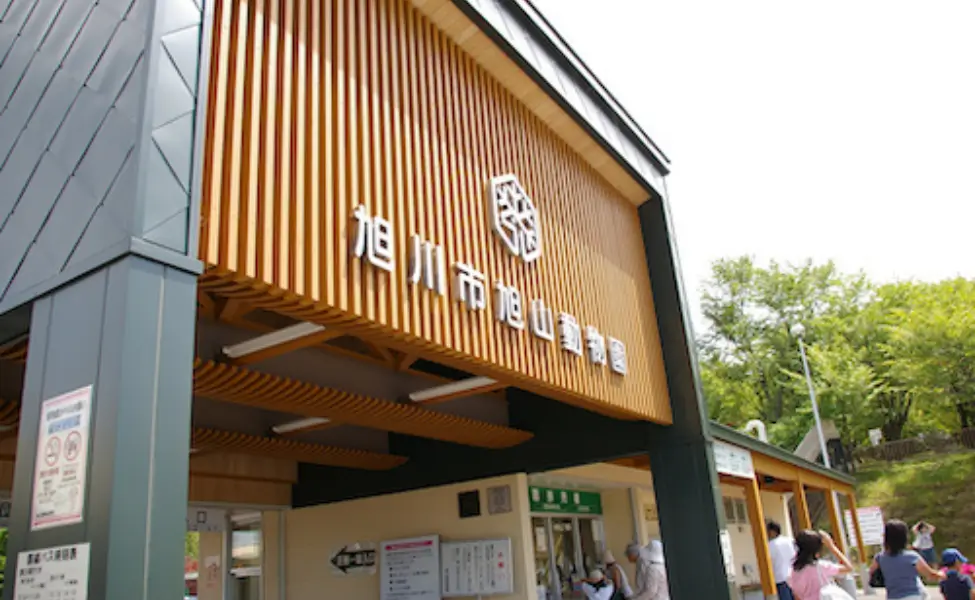
Families visiting in winter come specifically for the penguin walk, a daily outdoor parade across the snowy grounds that runs from December through to mid-March, typically at 11:00 AM and 2:30 PM.
Opening hours change dramatically by season.
In winter, the zoo opens at 10:30 AM and closes at 3:30 PM, giving you roughly five hours on site.
In summer, it runs from 9:30 AM to 5:15 PM.
A winter family visit means catching the first bus of the morning from Asahikawa Station actually matters.
From Sapporo, the JR Lilac or Kamui limited express reaches Asahikawa in about 80 minutes.
From Asahikawa Station, buses 41, 42, or 47 reach the zoo in about 40 minutes and cost ¥500 each way, running roughly twice per hour.
- Hours (summer, late April to mid-October): 9:30 AM to 5:15 PM (last entry 4:00 PM).
- Hours (winter, mid-November to early April): 10:30 AM to 3:30 PM (last entry 3:00 PM).
- Tickets: ¥1,000 adults, free for junior high students and younger.
- Closed: Approximately one week in November, and December 30 to January 1. Open all other days.
- Getting there: Bus 41, 42, or 47 from Asahikawa Station, approximately 40 minutes, ¥500 each way.
Maruyama Zoo
Maruyama Zoo sits within Maruyama Park in central Sapporo and works well as a half-day option for families who want an animal experience without the longer journey to Asahikawa.
It focuses on Hokkaido native wildlife including bears, deer, and a white-tailed eagle, and adults pay ¥800 while children up to junior high age enter free.

The zoo opened on Children’s Day in May 1951 and remains a well-used local destination.
For families based in Sapporo with a free morning and no plans to travel to Asahikawa, it provides a solid couple of hours without requiring a full day out of the city.
- Hours: 9:00 AM to 4:00 PM.
- Tickets: ¥800 adults, free for junior high students and younger.
- Closed: Check the official website, as closure days are not fixed year-round.
Nagoya
Higashiyama Zoo and Botanical Gardens
Higashiyama makes a strong case for the best-value zoo day available on a standard Japan family itinerary.
The complex covers around 60 hectares and combines a full zoo with a botanical garden, a small amusement park, and the Higashiyama Sky Tower.
The zoo houses over 450 animal species, one of the highest totals in the country.
Its koala exhibit is the highlight that most families remember longest.
A small group of koalas occupies a purpose-built enclosure with eucalyptus branches at eye level, and the animals are reliably visible and close in a way that matters more than you might expect when you have a seven-year-old alongside you.
The zoo also houses Asian elephants, giraffes, polar bears, Sumatran tigers, red pandas, and Komodo dragons.
Its gorilla family includes Shabani, a western lowland gorilla who attracted national media attention in Japan for his appearance, and who remains an active and visible part of the enclosure.
Allocate at least four hours and bring your own lunch.
Picnic areas run throughout the grounds, and eating in the park saves meaningful money over the on-site cafes.
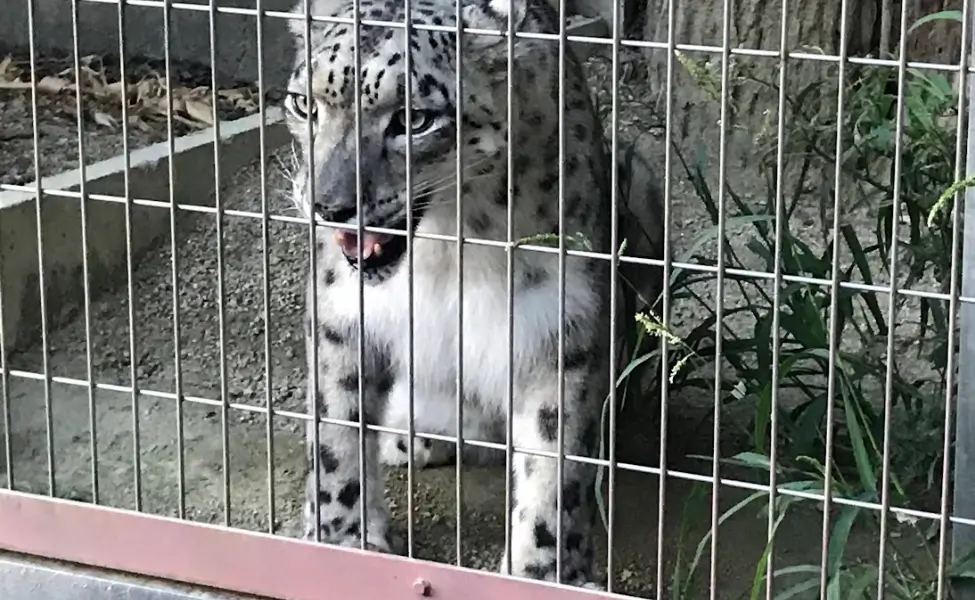
In summer, a night safari operates on selected evenings from July through September, with dates posted on the official website in advance. Getting there is simple.
Take the Higashiyama Line subway from Nagoya Station to Higashiyama Koen Station and walk three minutes from Exit 3.
- Hours: 9:00 AM to 4:50 PM (last entry 4:30 PM).
- Tickets: ¥500 adults, free for junior high students and younger.
- Closed: Mondays (Tuesday if Monday is a national holiday), December 29 to January 1.
- Getting there: Higashiyama Line subway to Higashiyama Koen Station, 3-minute walk from Exit 3.
Osaka and Kyoto
Tennoji Zoo
Tennoji opened on January 1, 1915, making it Japan’s third oldest zoo, and its location inside Tennoji Park in central Osaka makes it easy to pair with a morning in the Shinsekai district or an afternoon at Abeno Harukas.

Adults pay ¥500, and preschool children enter free.
However, elementary and junior high school students pay ¥200 each, which several articles about Tennoji get wrong by stating children enter free across the board.
Tennoji has attracted mixed visitor reviews in recent years, and those reviews deserve acknowledgment rather than brochure-style dismissal.
The zoo houses lions, polar bears, giraffes, hippos, penguins, and around 200 species across a compact 11-hectare site.
Some visitors find the enclosures dated.
Others appreciate the accessible location and low price.
For families on a tight schedule in Osaka who want a couple of hours with young children near Shinsekai, it works well.
For families who want a zoo to anchor an entire day, Higashiyama in Nagoya or Kyoto City Zoo would deliver a more considered experience.
- Hours: 9:30 AM to 5:00 PM (last entry 4:00 PM). Extended to 6:00 PM on weekends and national holidays in May and September.
- Tickets: ¥500 adults, ¥200 elementary and junior high students, free for preschool children.
- Closed: Mondays (Tuesday if Monday is a national holiday), December 29 to January 1.
- Getting there: 5 to 10-minute walk from Tennoji Station (JR or Osaka Metro), or from Dobutsuen-mae Station (Osaka Metro).
Kyoto City Zoo
Kyoto City Zoo opened in 1903, making it Japan’s second oldest zoo after Ueno, and it sits in Okazaki Park within easy walking distance of Heian Shrine and Nanzen-ji Temple.
If your Kyoto day already includes the northern Higashiyama area, adding the zoo requires no extra travel time at all.
Adults pay ¥750, and anyone aged 15 and under enters free, which makes it one of the better-value options among older Japanese city zoos.

The zoo undertook a major renovation in 2015.
It now houses gorillas in a large tropical rainforest habitat, elephants in an open-air enclosure called Elephant Forest, and tigers in a Wild World area where they walk across overhead bridges built directly above the visitor path.
Two to three hours covers most of the zoo at a relaxed pace, which suits families who want an animal experience without sacrificing an entire day of Kyoto sightseeing.
Hours vary by season: from March to November the zoo closes at 5:00 PM, while December to February closing time is 4:30 PM.
- Hours (March to November): 9:00 AM to 5:00 PM (last entry 4:30 PM).
- Hours (December to February): 9:00 AM to 4:30 PM (last entry 4:00 PM).
- Tickets: ¥750 adults, free for anyone aged 15 and under.
- Closed: Mondays (Tuesday if Monday is a national holiday).
- Getting there: Kyoto City Bus to Okazaki-koen Dobutsuen-mae stop, 2-minute walk, or 10-minute walk from Higashiyama Station on the Tozai subway line.
Safari Parks
Fuji Safari Park
Fuji Safari Park sits on the southern slopes of Mount Fuji at 850 metres altitude, and on clear days the mountain appears directly behind the animals as you move through the park.
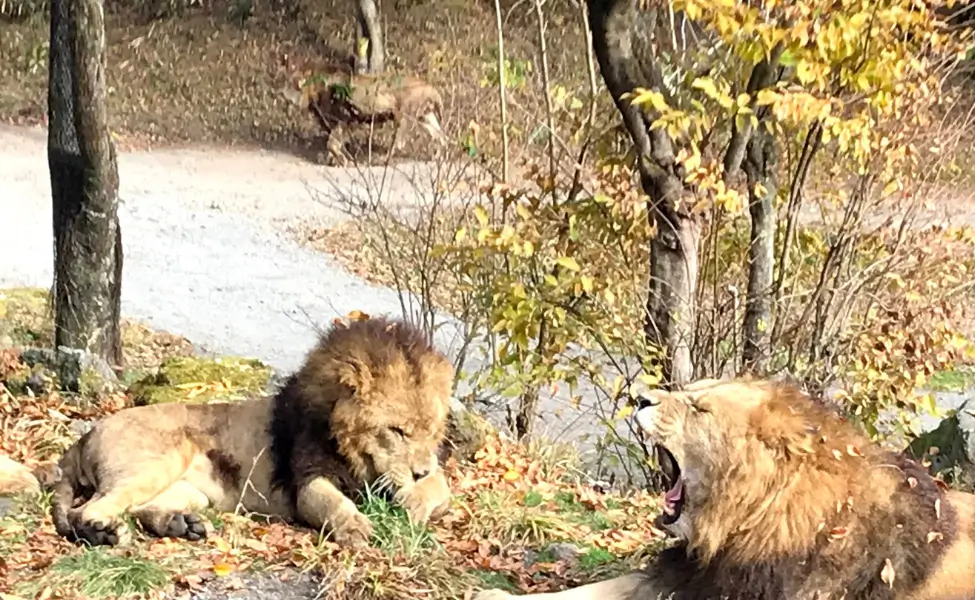
Around 800 animals from 60 species, including lions, cheetahs, tigers, elephants, bears, and giraffes, roam across a large open safari zone you access by private car or jungle bus.

The jungle bus is what most families come for.
Steel mesh replaces glass in the windows, and animals approach closely enough during feeding stops that you can hear them breathing through the mesh.
A single circuit takes about 50 minutes, and children aged 5 and up tend to experience it as genuinely different from anything a standard zoo visit offers.
Budget this one carefully before you commit.
Admission costs ¥3,200 per adult and ¥2,000 per child aged 4 to junior high, and the jungle bus adds ¥1,500 per person on top of that.
A family of two adults and two children, all taking the bus, spends around ¥15,400 before food or souvenirs.
Without a car, take the Tokaido Shinkansen from Tokyo to Mishima Station in roughly 50 minutes, then a local bus from Mishima to the park in approximately 50 minutes more.
Hours vary considerably by season, so check before booking transport.
- Hours (March to October): 9:00 AM to 4:30 PM.
- Hours (November): 9:00 AM to 3:30 PM.
- Hours (December to early March): 10:00 AM to 3:30 PM.
- Tickets: ¥3,200 adults, ¥2,000 children ages 4 to junior high, free for children under 3. Jungle Bus adds ¥1,500 per person.
- Closed: Occasional maintenance closure in early February each year. Check the official website before travelling.
Kyushu Natural Animal Park African Safari
The African Safari park near Beppu in Oita Prefecture is Japan’s largest safari park, covering 115 hectares of highland terrain with around 1,400 animals from 70 species.
Lions, tigers, elephants, giraffes, zebras, bears, and rhinos roam across a 6-kilometre safari road divided into seven sections, each modelled on a different natural environment.
For families visiting Kyushu and combining a stop here with Beppu’s hot springs or the inland areas around Yufuin, this fits cleanly as a full day out.
Children aged 5 and above respond strongly to the jungle bus option, a 50-minute circuit with open wire mesh windows that allows direct feeding of animals at multiple stops along the route.
Jungle bus tickets sell on a first-come, first-served basis, so book or queue early on busy days.
This park stays open every day of the year, including Mondays, which sets it apart from nearly every other zoo in Japan.
Hours run longer in the warmer months and shorten in winter.
By car, the park sits about seven minutes from the Beppu Bay Smart IC on the Higashi-Kyushu Expressway.
By bus, the Kamenoi Bus from JR Beppu Station reaches the park in approximately 50 minutes.
- Hours (March to October): 9:30 AM to 4:30 PM (safari zone admission closes 30 minutes before park closing).
- Hours (November to February): 10:00 AM to 3:30 PM.
- Tickets: ¥2,600 adults, ¥1,500 children ages 4 to junior high. Jungle Bus requires an additional ticket purchased on the day.
- Closed: Open all year round, including Mondays.
- Getting there: 7 minutes by car from Beppu Bay Smart IC, or approximately 50 minutes by Kamenoi Bus from JR Beppu Station.
Monday Closures and What to Do When They Catch You Out
Most Japanese zoos close on Mondays, and most close on the following Tuesday when Monday falls on a national holiday.
Japan’s national holiday calendar is dense, particularly during Golden Week in late April and early May, and around the September and November holiday clusters.
If you plan a zoo day during these periods, check the exact closure calendar on the official website before booking transport or other activities around it.
The most useful exceptions to the Monday rule are Fuji Safari Park and the Kyushu African Safari, both of which operate every day of the year.
Zoorasia in Yokohama closes on Tuesdays rather than Mondays, making it a strong alternative if a Monday gap appears in your Tokyo itinerary. Tama Zoo closes on Wednesdays, which gives it a different place in the week as a backup.
If you arrive at a closed zoo, the surrounding area usually offers a workable recovery plan. Ueno Zoo sits inside Ueno Park, which holds multiple museums, temples, and a lively market street.
Higashiyama Zoo in Nagoya shares its grounds with a botanical garden that often operates on different closure days.
Kyoto City Zoo sits a short walk from Nanzen-ji and Heian Shrine, both of which absorb several hours of a family’s time regardless of whether the zoo gates are open that day.

Appreciate the step-by-step breakdown. Very beginner friendly.
Spot on analysis! When dealing with day-to-day operations, maintaining smooth access to critical tools while enforcing MFA standards. When managing multiple staging environments, physical phone authenticators quickly become a major bottleneck. I personally use https://get2f.com/ when I need to generate 2FA verification codes on the fly, and it’s streamlined my workflow tremendously. Appreciate the effort you put into detailing these steps.